





Edwardian Silver Glass Carafe
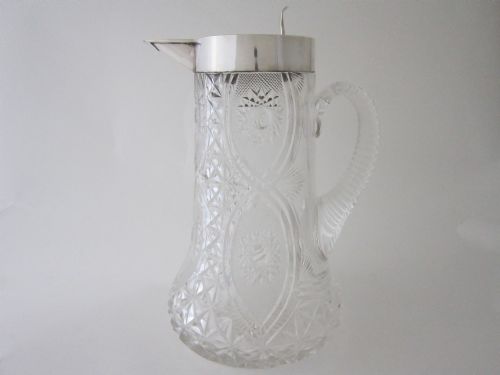
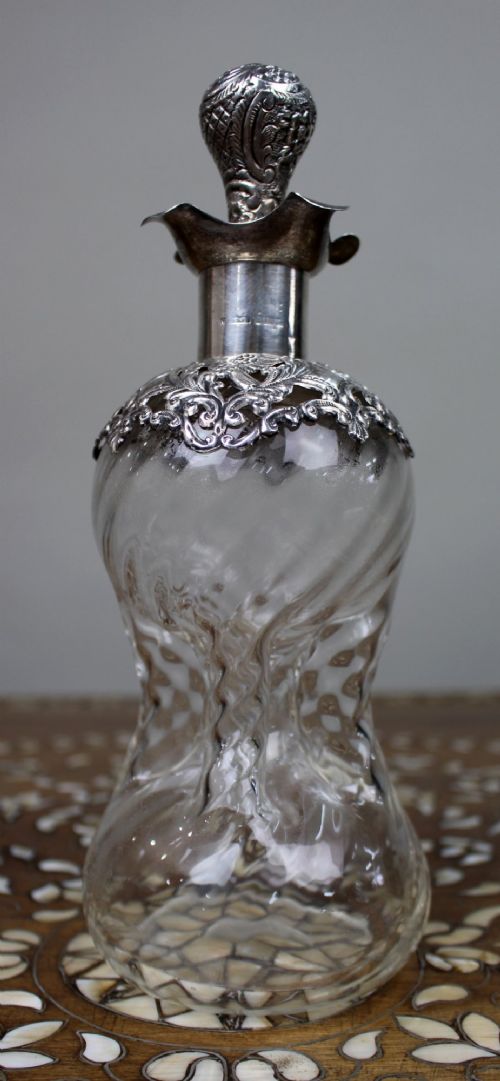
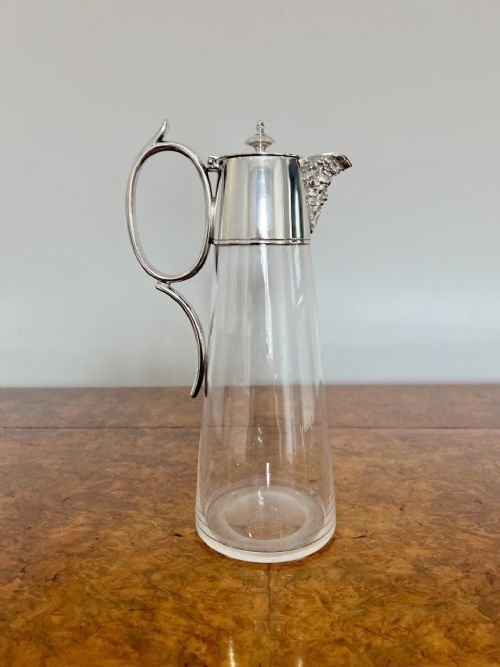
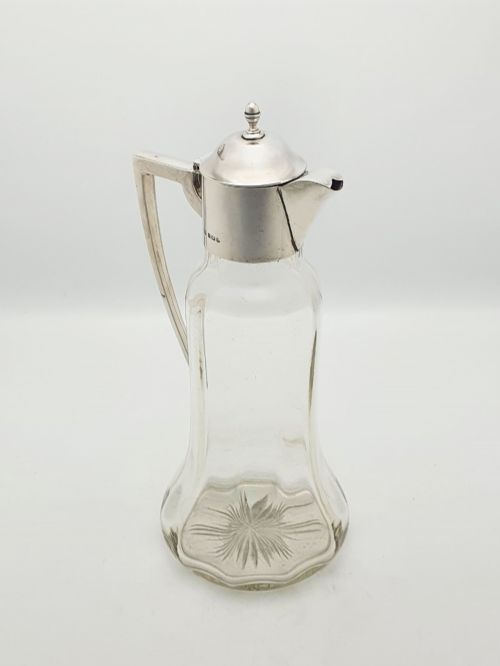
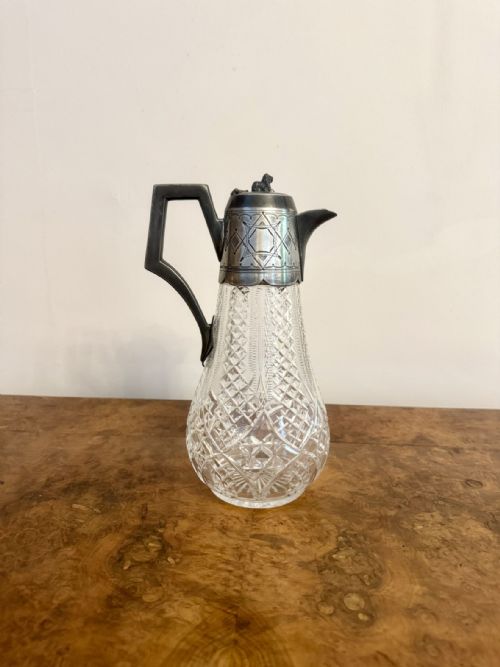
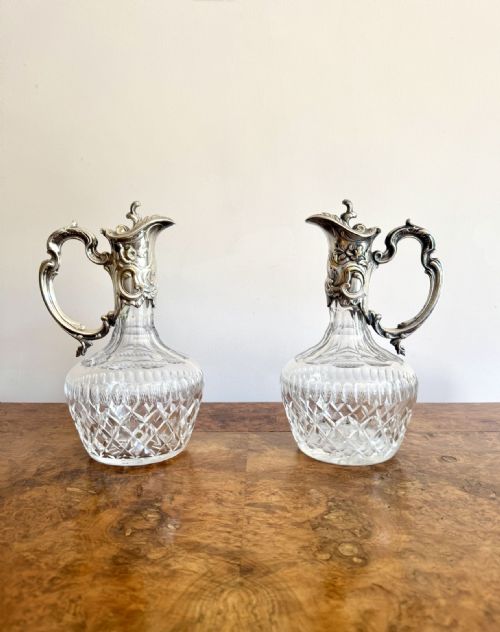
An edwardian silver glass carafe brings together cut crystal and hallmarked mounts for the dining table.
Edwardian Silver Glass Carafe
An edwardian silver glass carafe combines vessel glass with metal collars, mounts, and handles intended for serving wine and spirits. Buyers searching this phrase encounter claret jugs, whiskey noggins, and spirit bottles originating primarily from the Edwardian period alongside Victorian and George V examples.
The forms range from tall cut glass decanters to specialised vessels like Scottish thistle novelties and colonial chota peg jugs. Most pieces pair clear or coloured glass bodies with silver plate or sterling silver hardware.
Origins span late nineteenth and early twentieth century English workshops, utilising styles that encompass Arts and Crafts, Art Nouveau, and Highland Revival alongside straightforward Edwardian designs.
How they were made
The glass elements rely on traditional blowing and cutting techniques, yielding heavy lead crystal, cut glass, and coloured bodies such as cranberry and ruby glass. Artisans shaped these vessels before adding metal components.
Mounts, collars, and hinged covers utilise sterling silver or silver plate, often secured around the neck of the bottle with specialised adhesives or mechanical collars. Silversmiths applied chasing, engraving, and hallmarks to the metalwork.
Edwardian Silver Glass Carafe Retail Price Guide 2026
Typical asking prices for edwardian silver glass carafe among the pieces listed under this phrase on Sellingantiques today, from the lower quarter to the upper quarter. They describe what is for sale here now, not the wider market.
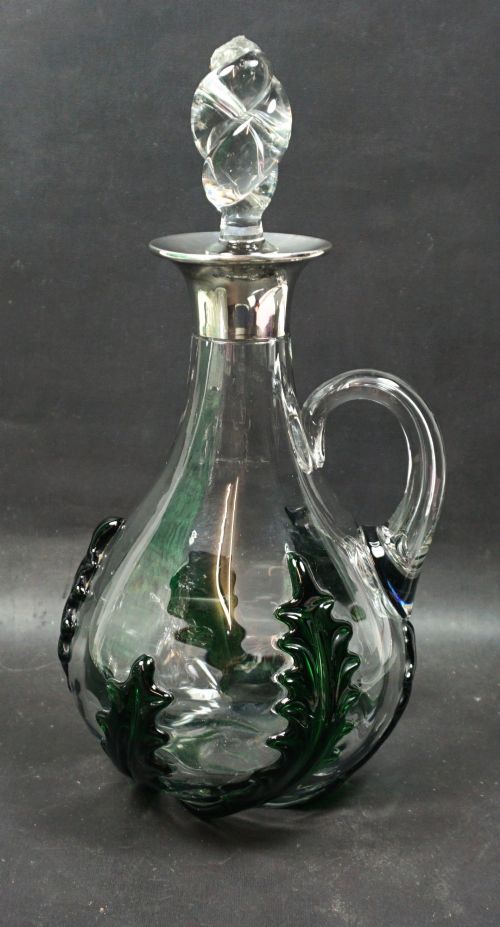
Several vessels take the distinct form of a Scottish thistle.
What varies in quality
The distinction between tiers rests upon the weight and clarity of the crystal body and the thickness of the silver or silver plate. Crisp, deep cutting on the glass and clear hallmarks on solid silver components distinguish finer examples.
Design ambition separates standard production from notable works, with specific makers and avant-garde styles like Art Nouveau or Arts and Crafts exhibiting superior artistry in handle design and mount integration.
Hukin & Heath·Archibald Knox for Liberty·William Davenport
The Edwardian Silver Glass Carafe Glossary
- Claret jug
- A specialised pouring vessel designed for red wine, featuring a handle, hinged metal cover, and a glass body. These pieces often combine cut crystal with sterling silver mounts.
- Whiskey noggin
- A small spirit decanter used for individual servings of whisky, frequently paired with a small silver-mounted handle and matching pouring lip. They appear in Edwardian and George V groupings.
- Cranberry glass
- A rich pinkish-red glass produced by adding gold chloride to the molten batch during the blowing process. It frequently appears in wine decanters from the late nineteenth and early twentieth centuries.
- Silver plate
- A layer of silver fused to a base metal substrate, commonly utilised on nineteenth and twentieth century drinks ware for durability and appearance.
- Hallmark
- An official stamp applied to precious metals indicating the standard of purity, the assay office, and the date letter for the year of manufacture.
Edwardian Silver Glass Carafe: Frequently Asked Questions
What is an edwardian silver glass carafe used for?
These vessels were originally manufactured to hold and serve wines, claret, and spirits at the dining table or sideboard. They allowed hosts to decant bottled beverages into decorative containers for formal entertaining.
Today, buyers utilise them for serving drinks or display them as examples of early twentieth century silversmithing and glass production.
How do I identify an Edwardian piece?
Edwardian items date from the reign of King Edward VII between 1901 and 1910, though pieces from adjacent years share similar stylistic traits. Hallmarks on the silver mounts often provide precise assay dates.
Stylistic indicators include clean Edwardian proportions alongside lingering Victorian motifs and emerging Art Nouveau or Arts and Crafts influences.
What is the difference between sterling silver and silver plate?
Sterling silver consists of solid precious metal meeting a specific legal purity standard, usually marked with assay office symbols. Silver plate involves a thin coating of silver applied over a base metal foundation.
Both materials appear frequently across these glass vessels, with solid silver carrying official hallmarks indicating the maker and year.
How should I clean and care for my decanter?
Maintenance requires gentle hand washing with warm water and mild detergent, avoiding harsh abrasives that could scratch the glass or wear thin silver plate. The interior can be cleaned using specialised bottle brushes.
Silver mounts benefit from periodic polishing with a non-abrasive cloth to prevent tarnish while avoiding contact with the glass body.