

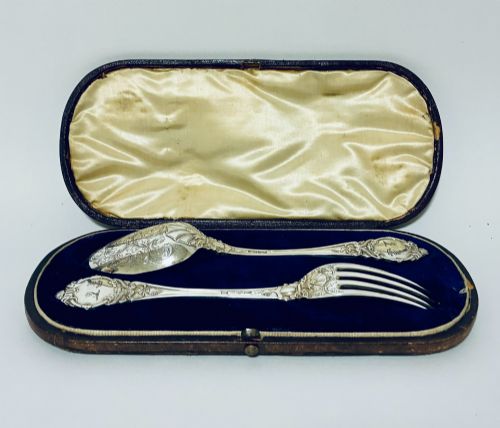


Edwardian Silver Forks
Edwardian silver forks bring tangible elegance to the table, uniting period craftsmanship with practical utility for modern dining.
Edwardian Silver Forks
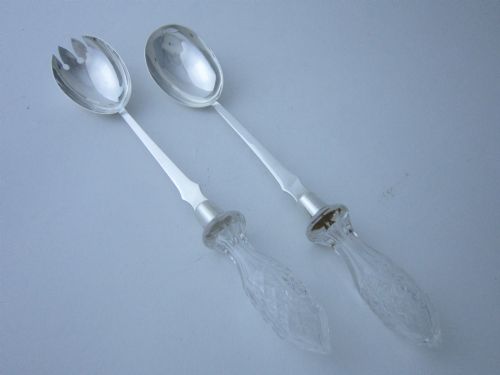
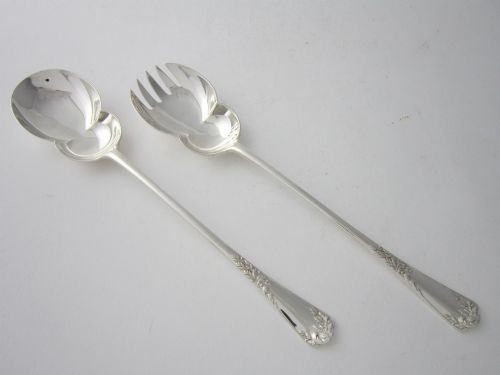
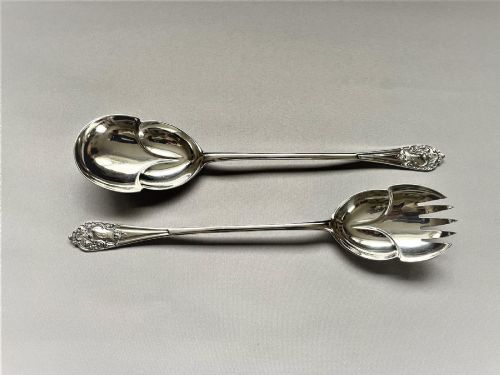
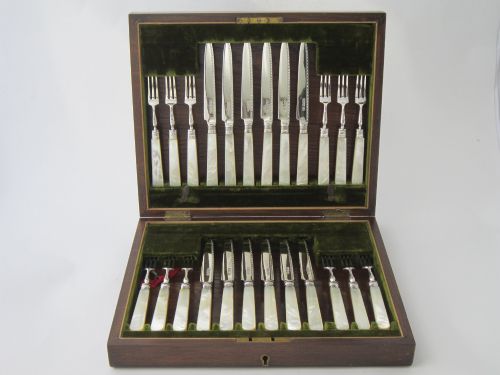
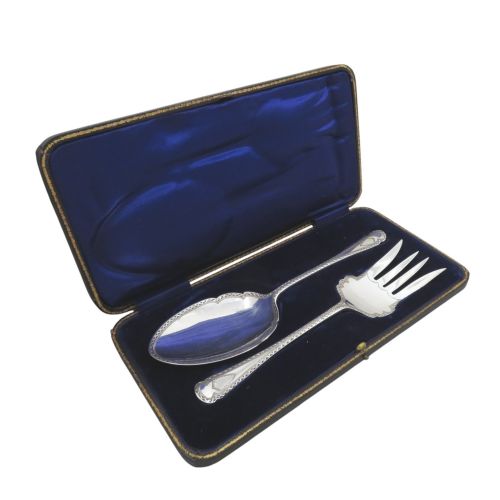
When you search for edwardian silver forks, you encounter a specialised range of cutlery designed for specific dining rituals rather than everyday use. These items include dessert forks, pickle forks, and serving sets often accompanied by fitted cases lined with silk or velvet.
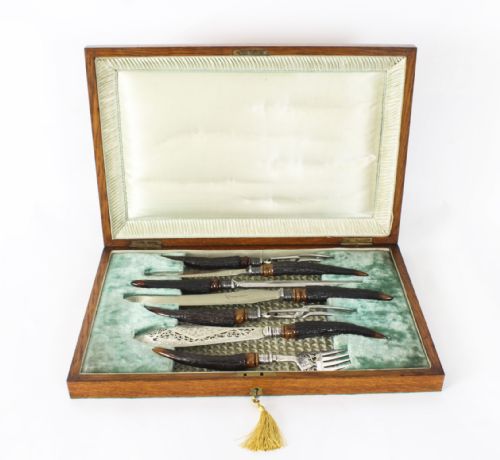
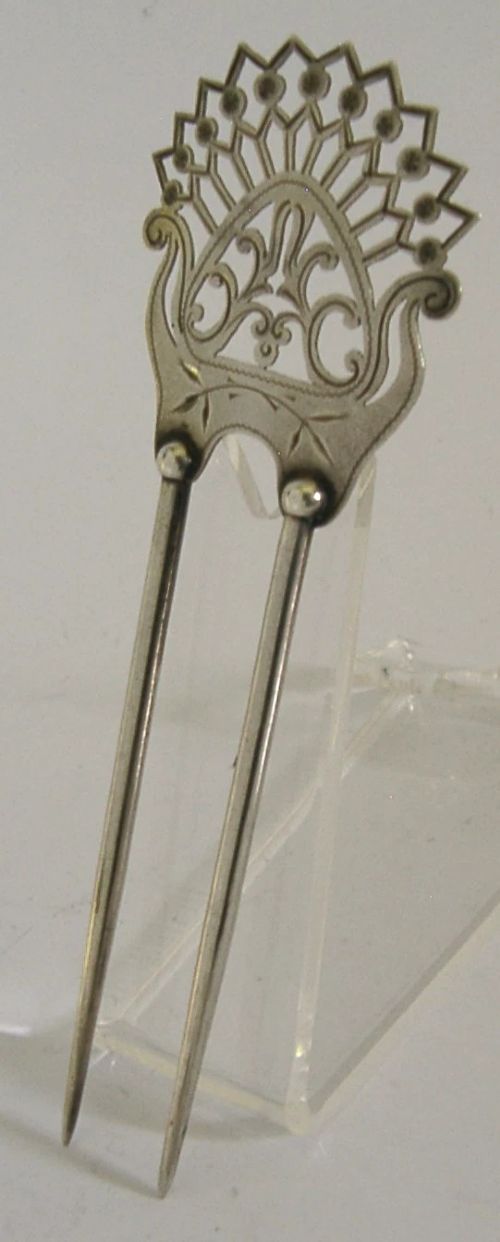
The pieces on this page span the periods surrounding the Edwardian era, incorporating styles from Victorian designs through to Art Deco and George V. Makers combined sterling silver and silver plate with organic materials such as mother of pearl, ivory, and antler handles.
Most examples originate from British workshops and Birmingham silversmiths, appearing as single pieces, pairs, or complete cased sets intended for gifting or formal entertaining.
How they were made
Silversmiths utilised sterling silver and silver plate for the tines and bowls, shaping the metal through pressing, casting, and hand-engraving. Hallmarks stamped directly into the silver record the assay office, date letter, and maker's mark.
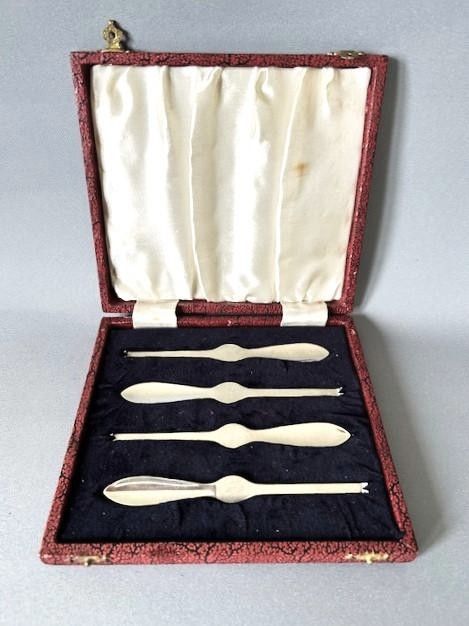
Handles required different disciplines, joining metal ferrules to natural materials including mother of pearl, wood, ivory, and antler horn. Fitted presentation boxes utilised wood frameworks covered in leatherette and lined with plush fabrics to protect the contents.
Edwardian Silver Forks Retail Price Guide 2026
Typical asking prices for edwardian silver forks among the pieces listed under this phrase on Sellingantiques today, from the lower quarter to the upper quarter. They describe what is for sale here now, not the wider market.
The archive and active inventory record specialised serving items including pickle forks, fish servers, and lobster picks alongside standard cutlery.
What varies in quality
Quality rests upon the crispness of the stamped ornamentation and the integrity of the joins between handle and tine. Superior pieces maintain tight tolerances where organic handles meet silver ferrules without movement or gaps.
The presence of original fitted cases, complete sets, and legible hallmarks elevates the standing of individual pieces. Master silversmiths achieved better balance and more finely pierced or engraved details than mass-produced factory alternatives.
William Devenport·Adie & Lovekin·Waring & Gillows·Alvin·H H Curtis
The Edwardian Silver Forks Glossary
- Hallmark
- A series of official stamps applied to precious metals indicating the standard of purity, assay office, and year of manufacture. These marks provide the definitive history of a silver piece.
- Mother of Pearl
- The iridescent internal layer of mollusc shells utilised for decorative cutlery handles. This organic material requires careful handling to prevent splitting.
- Sterling Silver
- An alloy consisting of ninety-two point five percent silver by mass and seven point five percent other metals, usually copper. This standard defines quality British silverware.
- Silver Plate
- A base metal substrate coated with a thin layer of pure silver. This technique offered an affordable alternative to solid sterling silver during the period.
- Rat Tail
- A distinctive strengthening tongue of metal running down the back of a spoon bowl or fork junction. It traces its origins to earlier centuries but appears on serving pieces.
Edwardian Silver Forks: Frequently Asked Questions
How do I clean edwardian silver forks?
Use a soft microfibre cloth and a dedicated silver polish designed to lift tarnish without removing the underlying metal. Avoid abrasive pads and harsh chemical dips that strip away the fine engraved details.
For pieces with mother of pearl or ivory handles, keep the organic components entirely dry during cleaning. Apply polish only to the silver tines and wipe clean with a damp cloth immediately afterwards.
Are these forks safe to use for dining?
Solid sterling silver and silver-plated forks remain entirely safe for regular food use today. The materials are durable and non-reactive with standard foodstuffs.
Take care with antique pieces featuring hollow handles or organic materials like mother of pearl and ivory. Hand wash them gently in warm soapy water rather than placing them in a modern dishwasher.
Why do some forks have mother of pearl handles?
Mother of pearl provided a luxurious, iridescent contrast to bright polished silver during the period. It did not react with acidic foods like fruit, making it the preferred choice for dessert and fruit sets.
The material required skilled hand-carving to shape each handle correctly, marking out sets intended for formal dining rooms and wealthy households.
How can I tell the exact year they were made?
Locate the small stamped hallmarks on the back or neck of the silver fork. These tiny symbols include a date letter corresponding to specific assay office lookup tables.
Additional stamps typically show the lion passant for sterling silver and a maker's mark indicating the specific silversmith or firm responsible for production.