

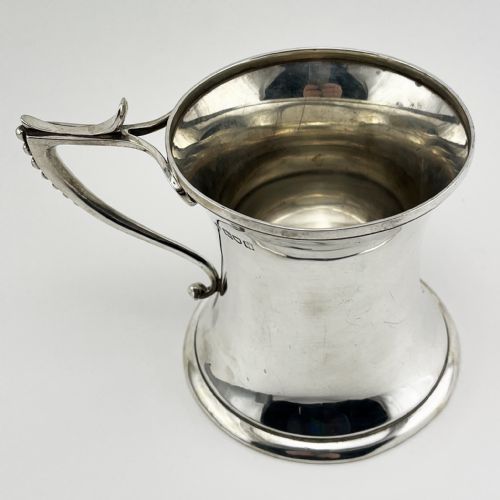

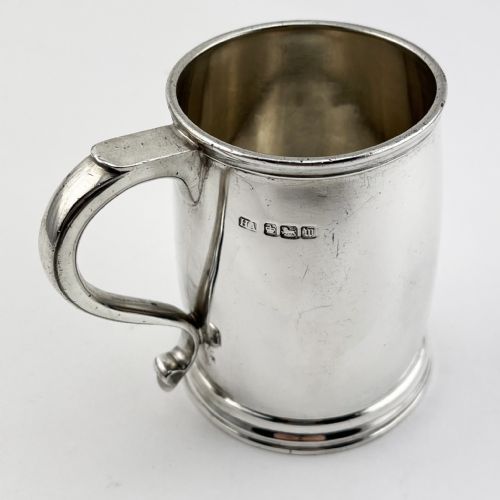


Edwardian Silver Christening Cup
These small silver vessels carry early twentieth-century marks and domestic history, offering an edwardian silver christening cup that makes a traditional keepsake.
Edwardian Silver Christening Cup
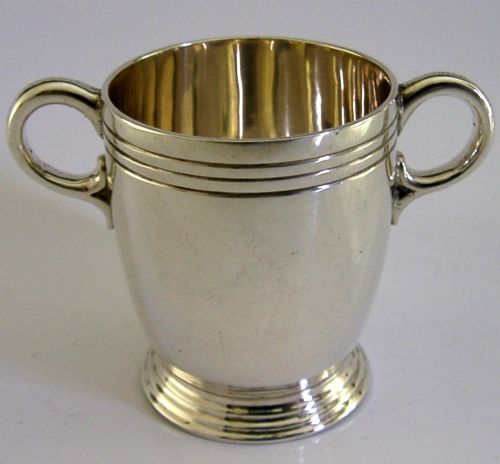
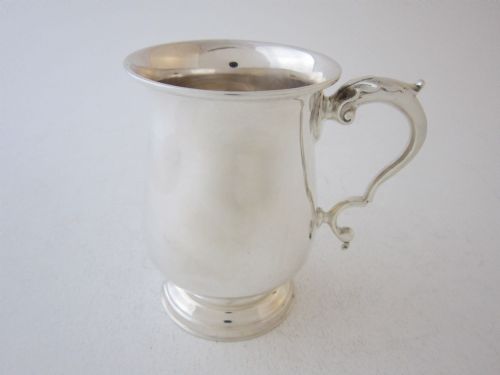
An edwardian silver christening cup is a small drinking vessel presented to mark a birth or baptism during the early decades of the twentieth century. The selection includes traditional mugs, tankards, porringers, and two-handled loving cups made in sterling silver or silver plate.
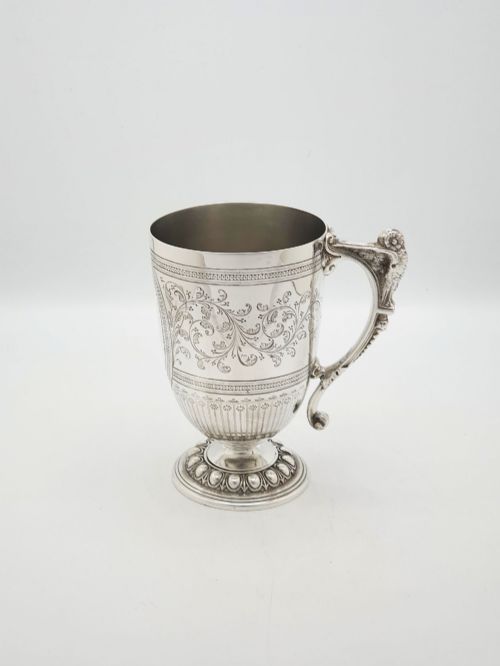
Most examples date from the Edwardian period or slightly later George V years, featuring simple cylindrical bodies or rounded bowls. Makers often applied scroll handles, while occasional pieces display Arts and Crafts style details or figural elements such as owl handles.
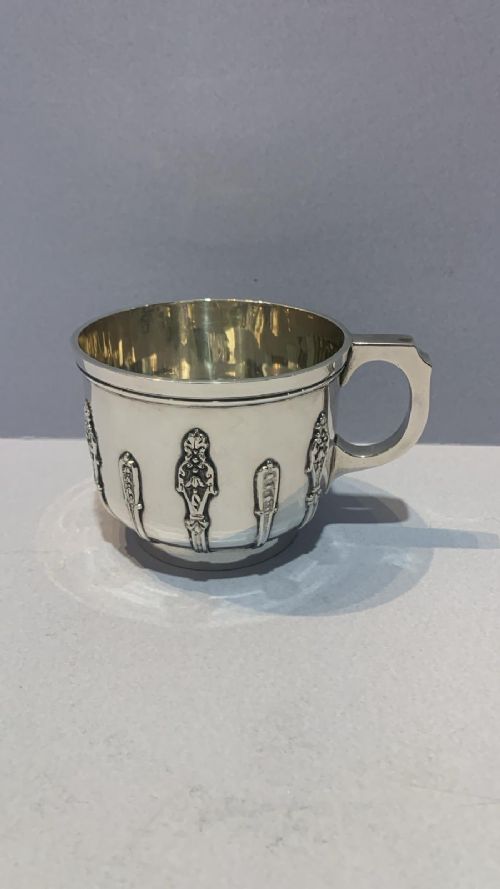
Buyers also encounter cased sets containing a matching spoon or bowl alongside the main mug. These domestic objects survive in various forms, ranging from plain polished silver to pieces with gilt interiors.
How they were made
Silversmiths formed these vessels primarily from sterling silver, shaping the metal into mugs and tankards alongside alternative items in silver plate and nickel silver. Some pieces incorporate internal gilding, applying a thin layer of gold over the silver surface to create a contrasting interior finish.
Handles were cast separately and soldered onto the bodies, utilising scroll, loop, or figural designs like owls to provide a secure grip for a child. Makers also produced boxed presentation sets lined with materials such as silk and leather to protect the metalware.
What varies in quality
The weight of the metal distinguishes standard production wares from substantial presentation pieces, with heavier silver gauges providing greater structural rigidity. Finer examples display crisp hallmarks from specific assay offices alongside precise hand-finished details on handles and rims.
The presence of original fitted presentation boxes lined in silk and leather enhances the completeness of a piece. Design ambition also varies, separating simple cylindrical mugs from pieces featuring distinct Arts and Crafts styling or unusual figural handles.
Tiffany and Co
The Edwardian Silver Christening Cup Glossary
- Sterling silver
- A silver alloy containing 92.5 percent pure silver by mass, forming the primary material for the majority of these cups and mugs.
- Porringer
- A small, two-handled bowl used historically for porridge or broth, often listed among early twentieth-century christening items.
- Tankard
- A tall, single-handled drinking vessel with a cylindrical body, sometimes featuring decorative elements like figural handles.
- Gilt
- A thin layer of gold applied to the interior surface of a silver cup to protect the metal and provide a decorative contrast.
- Assay office
- An official body that tested precious metals and stamped items with town marks and date letters to guarantee purity.
Edwardian Silver Christening Cup: Frequently Asked Questions
How were these cups used?
While intended for domestic use as a child's drinking vessel, many served primarily as decorative presentation pieces or family keepsakes.
Over generations, they were often kept in fitted presentation boxes rather than used daily at the table.
How do you date an edwardian silver christening cup?
Dating relies on the stamped hallmarks, which include specific letters corresponding to the year of assay and town marks indicating where the silver was tested.
Stylistic cues such as Arts and Crafts influences or plain Edwardian forms also help narrow down the period of manufacture.
Are these cups made only of solid silver?
While the majority consist of sterling silver, some examples are manufactured from silver plate or nickel silver over a base metal core.
Internal surfaces of solid silver pieces were occasionally gilded with a thin layer of gold.
How should you care for silver christening cups?
Regular dusting and gentle cleaning with a soft cloth help maintain the polished surface of the metal without harming engraved details or hallmarks.
Storing pieces away from damp environments and keeping them in lined presentation boxes protects the silver and any fitted leather or silk interiors.