
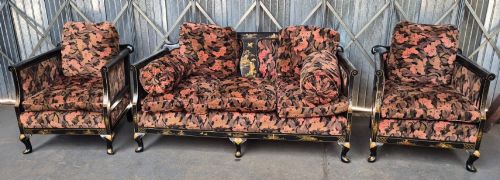


Edwardian Settee Frame
An edwardian settee frame provides the robust timber skeleton and exposed show-wood lines for a traditional upholstered sofa.
Edwardian Settee Frame
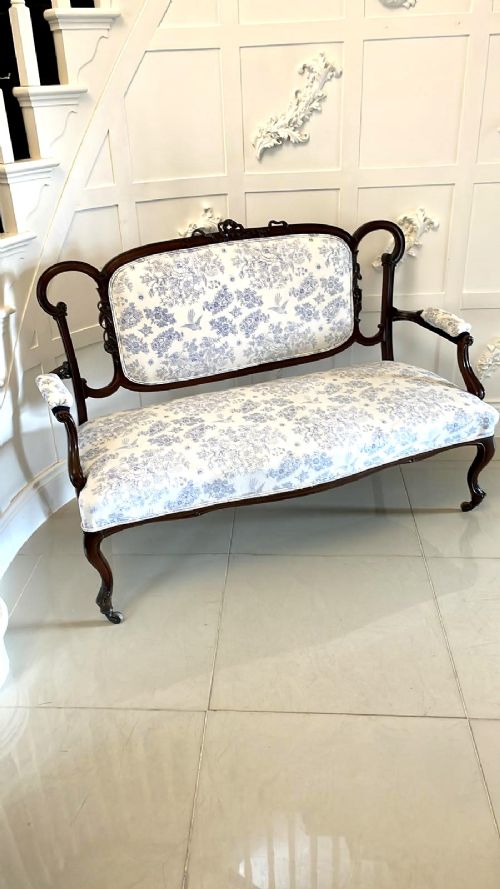
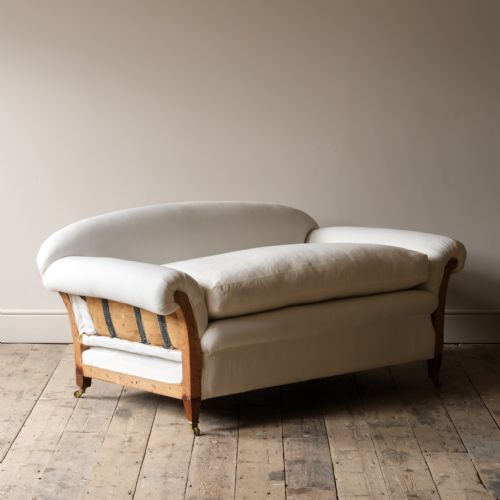
An edwardian settee frame comprises the structural wooden carcass and exposed show-wood of a two-seater sofa or salon suite piece produced during the early twentieth century. These skeletons are stripped back for restoration or retained in original timber, often constructed to support deep seats and high backs.
The pieces appearing in this category span standard Edwardian production alongside adjacent periods like the late nineteenth century and the nineteen-twenties, incorporating styles such as English Country House, Arts and Crafts, and Chinese Chippendale Revival. Forms range from compact salon settees to expansive three-piece suites and deep-seated country house couches.
Buyers encounter frames fashioned from mahogany, satinwood, walnut, and rosewood, frequently accompanied by remnants of older coverings like hessian, velvet, or damask fabric. Many examples require re-upholstery, presenting an open canvas to apply modern or period-appropriate textiles directly onto the exposed woodwork.
Determinants of quality
The distinction between ordinary and superior pieces rests upon the selection of timber and the sophistication of the carving or inlay work. Mahogany and walnut frameworks with crisp, unbroken mouldings and refined proportions command greater attention than utilitarian carcases.
Stylistic ambition also divides the range, moving from plain structural supports to elaborate Chinoiserie motifs or Arts and Crafts joinery. The integrity of the underlying woodwork and the survival of original show-wood finishes determine the enduring merit of each frame.
Archival records show consistent interest in mahogany two-seater frames upholstered over hessian and webbing foundations.
Howard and Sons·James Shoolbred
The Edwardian Settee Frame Glossary
- Show-wood
- The exposed, polished wooden portions of a framed seating piece that remain visible around the upholstery. This term distinguishes the decorative framework from the hidden internal padding.
- Salon Settee
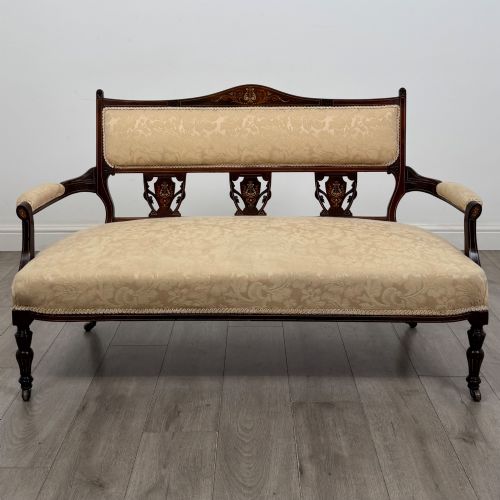
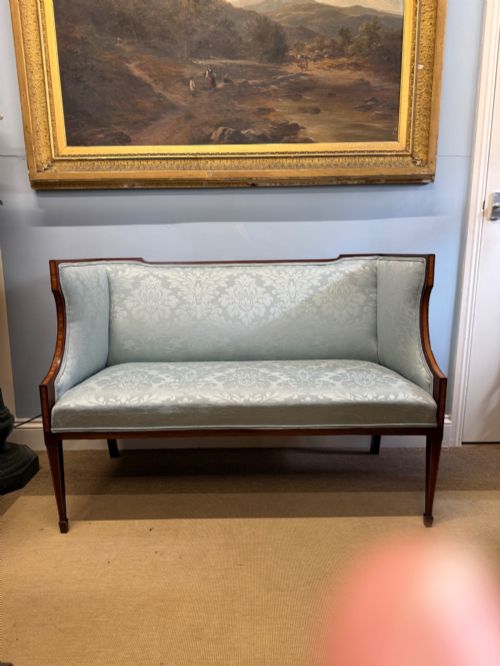
- A light, elegant sofa designed for formal entertaining rooms rather than heavy domestic lounging. These pieces often feature slender inlaid legs and delicate woodwork.
- Camelback
- A sofa back featuring a graceful, undulating serpentine curve that resembles a camel's hump. This profile was frequently revived during the Edwardian era in mahogany and walnut.
- Inlay
- A decorative technique where contrasting woods or materials are set flush into the surface of the primary timber. Satinwood and lighter veneers were commonly applied to darker mahogany carcases.
Edwardian Settee Frame: Frequently Asked Questions
What is an edwardian settee frame?
An edwardian settee frame is the bare wooden structure of a sofa or salon seat, stripped of its top covers or preserved with exposed timber show-wood. These skeletons reveal the foundational joinery and wood types used by cabinetmakers at the turn of the twentieth century.
Buyers acquire these frames to undertake bespoke re-upholstery projects. This approach allows complete control over the final textile choice, from simple linens to heavy decorative damasks.
How do I choose fabric for re-upholstery?
Selecting fabric depends on the intended room and the historical style of the wooden framework. Formal salon frames suit lighter silks and satinwood complements, whilst robust country house models tolerate heavy velvets and traditional leather.
Matching the weight of the textile to the scale of the timber ensures the finished sofa retains proper visual balance. Hessian and webbing foundations must be inspected and renewed to support the chosen upholstery weight safely.
How do I date an edwardian settee frame?
Dating relies on identifying specific stylistic revivals, timber choices, and construction characteristics typical of the period around nineteen hundred to nineteen ten. Lighter mahogany frames with satinwood inlay or subtle Arts and Crafts influences point directly to Edwardian workshops.
Comparing the turned leg profiles and arm shapes against documented pieces helps separate Edwardian examples from earlier Victorian heavy furniture or later interwar production.
Where were these settees originally used?
These seating pieces furnished the drawing rooms, country house libraries, and formal reception spaces of Edwardian homes. Compact salon settees suited intimate entertaining areas, whereas deep-seated country house sofas provided relaxed comfort.
Their placement dictated the decorative finish, with intricate Chinoiserie and inlaid rosewood reserved for public reception rooms. Plain walnut and mahogany frameworks often served family sitting rooms and libraries.