
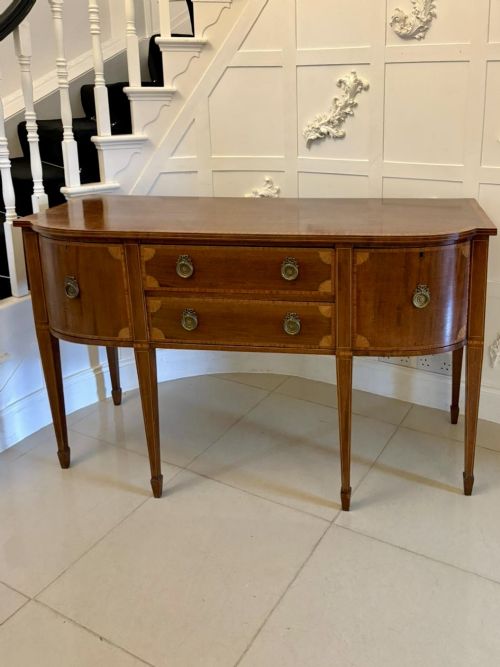
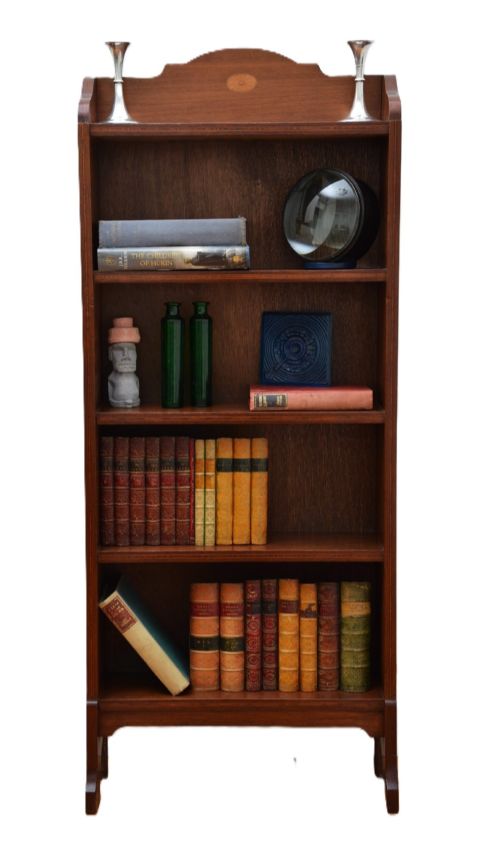
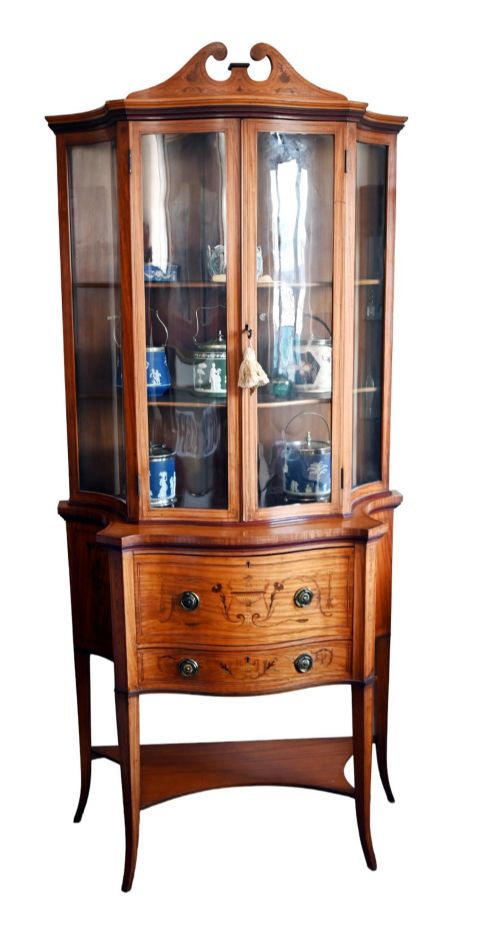
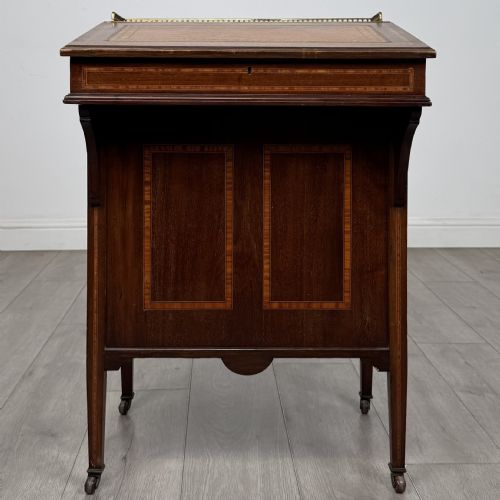
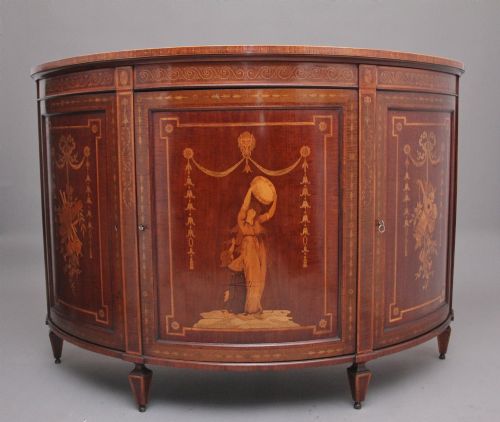
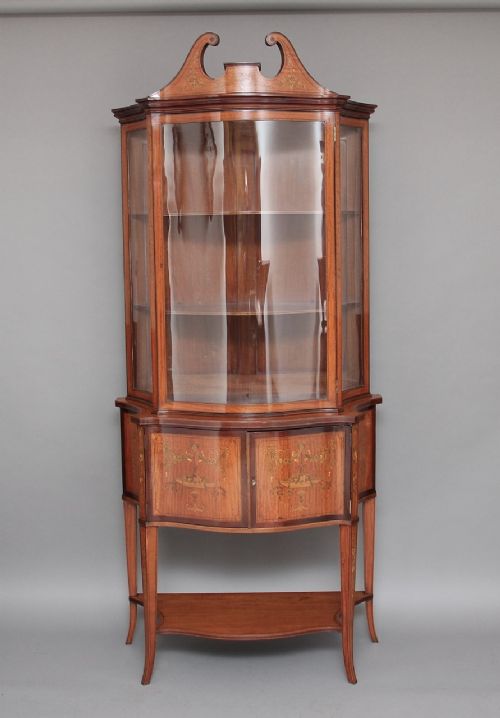
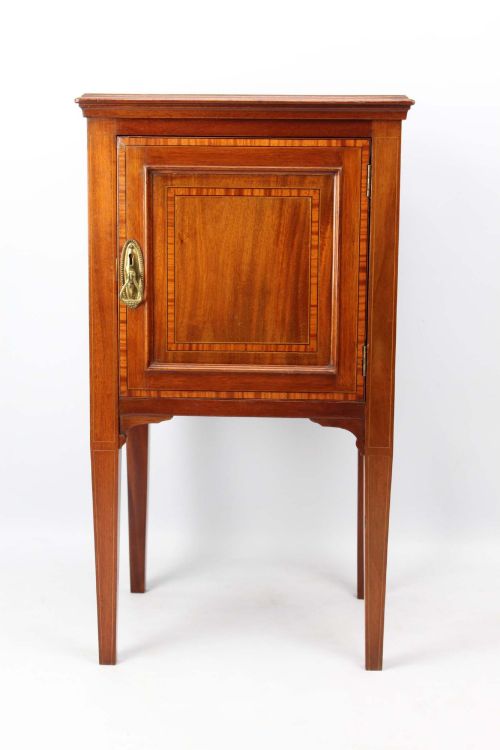
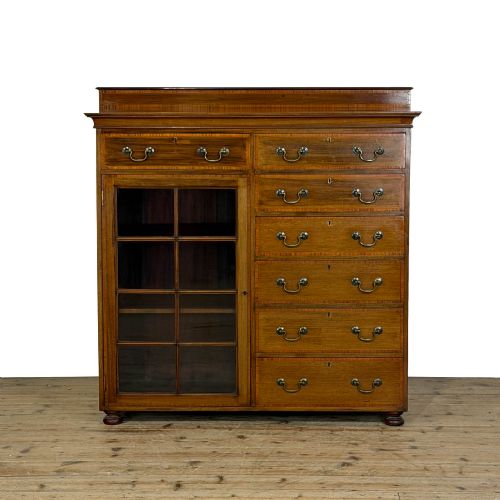
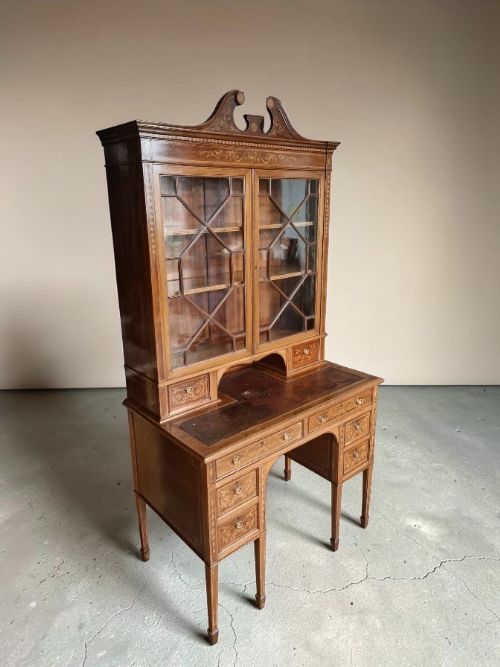
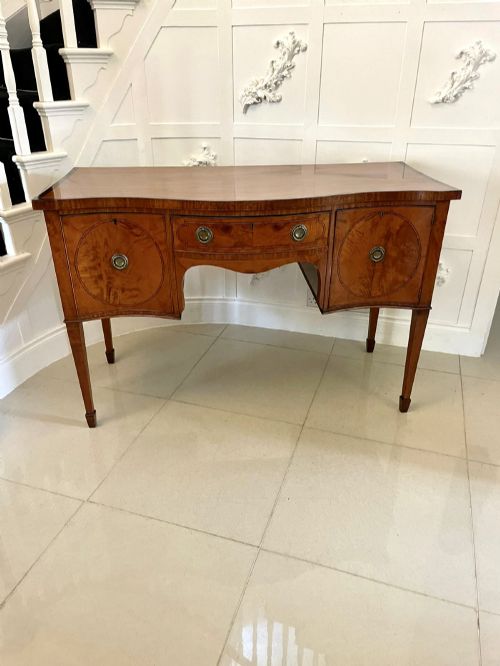
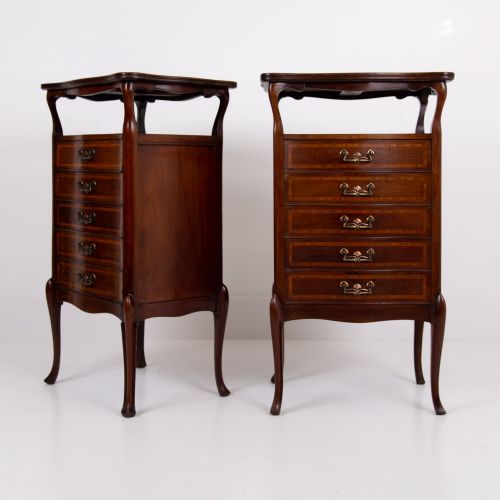

Edwardian Satinwood Inlaid Cabinet
An edwardian satinwood inlaid cabinet brings polished timber and delicate stringing into a room, offering a bright surface to hold china or books.
Edwardian Satinwood Inlaid Cabinet
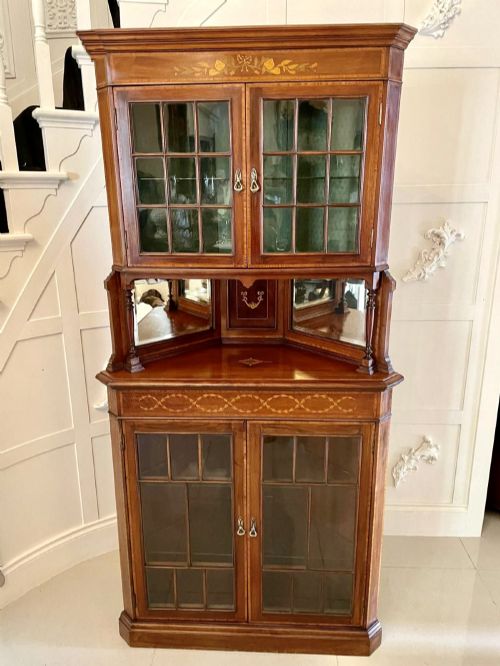
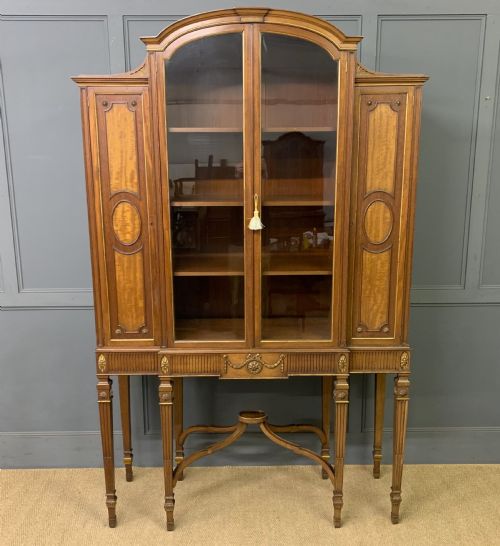
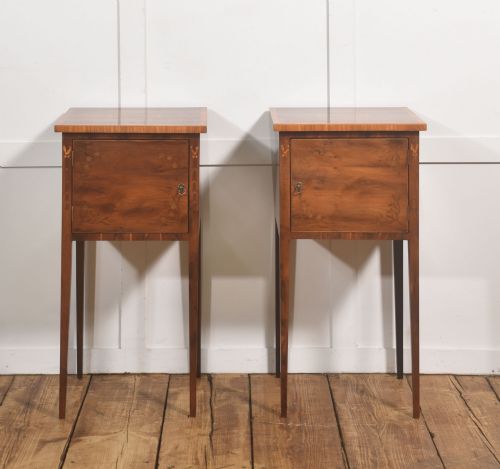
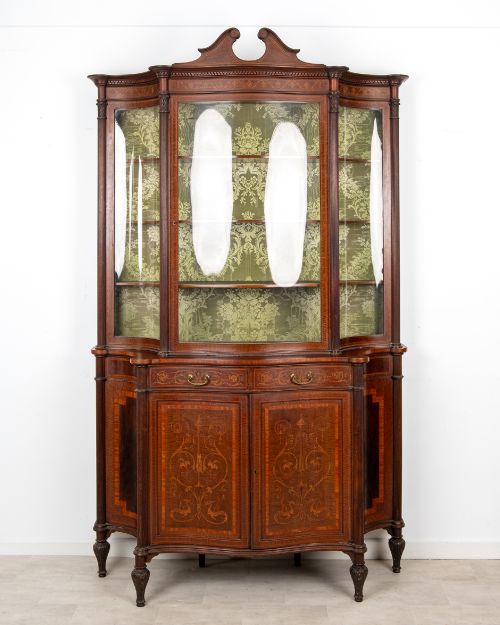
An edwardian satinwood inlaid cabinet typically emerges from the late nineteenth or early twentieth century, drawing heavily on Sheraton revival idioms. The items found here span display cabinets, bedside pieces, and sideboards, alongside compactums and corner cupboards.
Most examples lean towards lighter timber grounds, often combining mahogany carcases with satinwood veneers and contrasting boxwood stringing. The visual weight remains graceful rather than heavy, suiting formal sitting rooms and reception spaces.
Materials and construction
Cabinet makers utilised dense mahogany or native hardwoods as a stable carcase foundation, applying pale satinwood veneers across the visible exterior surfaces. This method allowed workshops to achieve striking grain patterns without risking the movement inherent in solid exotic timber.
Inlay and marquetry form the primary decorative vocabulary, incorporating boxwood, rosewood, and ebony lines to create geometric borders or floral motifs. Brass hardware, mirrored backs, and glazed panel doors appear frequently to complete the assembly.
Materials appearing across current stock include brass, glass, rosewood, and boxwood alongside satinwood and mahogany.
Assessing the execution
Differentiation in these pieces rests upon the precision of the cabinet work and the crispness of the marquetry. Superior examples display tightly fitted door joints, accurately aligned stringing, and hand-cut timber veneers that show minimal shrinkage over time.
The hand of the workshop matters, as demonstrated by branded pieces from notable firms compared to anonymous provincial output. Greater attention to secondary timbers inside drawers and finished backboards signals a higher tier of original manufacture.
Edwards and Roberts·Morant and Co·Maple and Co·Druce and Co·Shapland and Petter·D. Hill Carter and Co·A. F. Lloyd
The Edwardian Satinwood Inlaid Cabinet Glossary
- Satinwood
- A lustrous tropical timber known for its golden-yellow sheen and natural chatoyancy. It serves as the primary veneer surface on many revival pieces.
- Stringing
- Thin lines of contrasting wood inlaid into grooves on drawer fronts or cabinet doors. It defines the geometric panels characteristic of the period.
- Sheraton Revival
- A design movement that reinterprets late eighteenth-century neoclassical furniture forms. It dominates the decorative style of these cabinets.
- Marquetry
- The art of applying pieces of veneer to a structure to form decorative patterns. It differs from inlay by assembling the picture before gluing it down.
- Compactum
- A large fitted wardrobe combining hanging space, drawers, and shelving within a single multi-door carcass. These items offer substantial storage capacity.
Edwardian Satinwood Inlaid Cabinet: Frequently Asked Questions
How do I clean satinwood veneer?
Dust the surface regularly with a soft, dry cloth to prevent grit accumulation. Avoid modern silicone polishes that build up a film.
Apply a traditional microcrystalline wax sparingly once or twice a year to nourish the timber. Buff gently with a clean cloth to restore the natural sheen without dampening the veneer joints.
Where should I place a display cabinet?
Position the cabinet away from direct sunlight to prevent the pale satinwood veneers from fading or yellowing unevenly. Keep it clear of radiators and damp exterior walls.
Stable indoor humidity protects the secondary timbers and prevents the delicate stringing from lifting out of the carcass grooves over time.
What is the difference between revival and original pieces?
Revival furniture dates from the late nineteenth or early twentieth century, imitating the lighter neoclassical styles of earlier decades. Construction methods, screw types, and secondary timbers help separate them.
Eighteenth-century examples utilise older joinery techniques and period-specific native pine or oak linings. Check the interior construction and lock mechanisms for clues to the exact era.
Can I use a bedside cabinet for storage?
These small cupboards and drawer units suit modern bedrooms well, offering compact bedside surfaces for books and lighting. Their enclosed spaces hide contemporary clutter.
Ensure drinks or moisture are kept off the top surface unless a protective glass sheet is fitted. Use coasters to protect the polished wood finish from rings.