
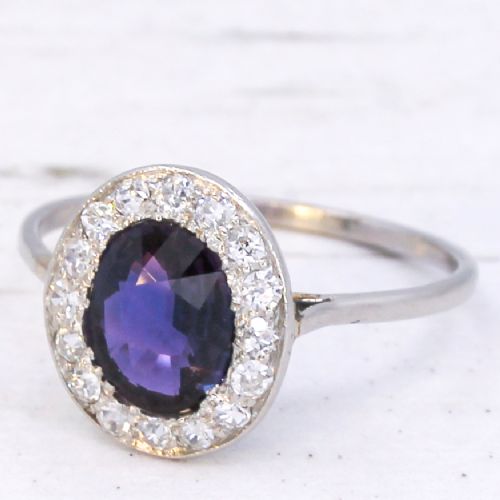
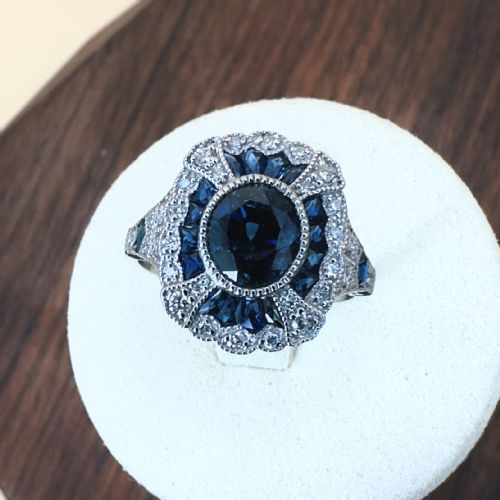
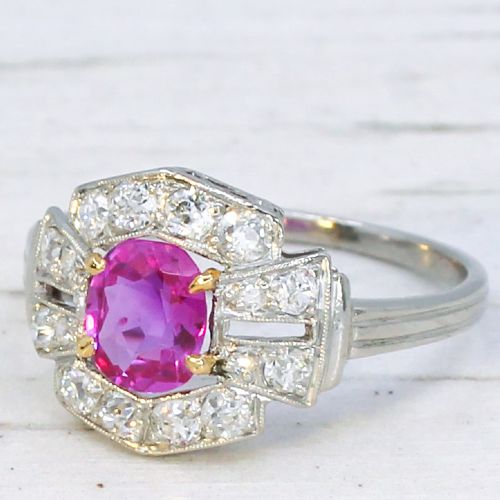
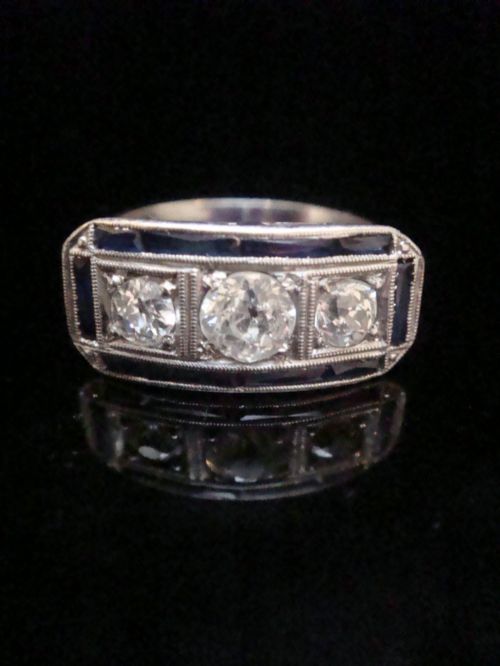


Edwardian Sapphire Platinum Ring
An edwardian sapphire platinum ring brings together bright white metal and deep blue stones in forms that define early twentieth-century jewellery.
Edwardian Sapphire Platinum Ring
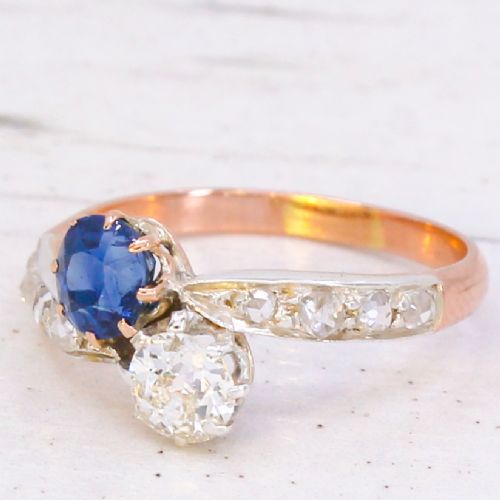
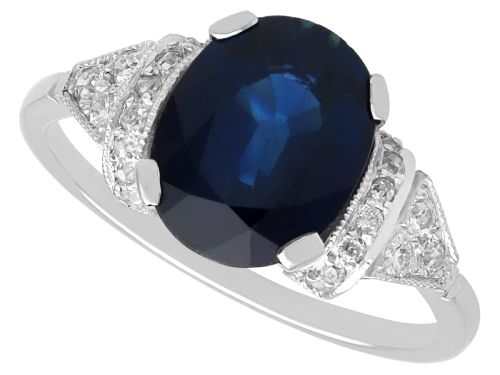
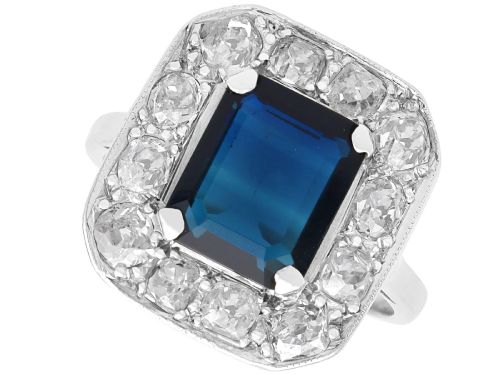
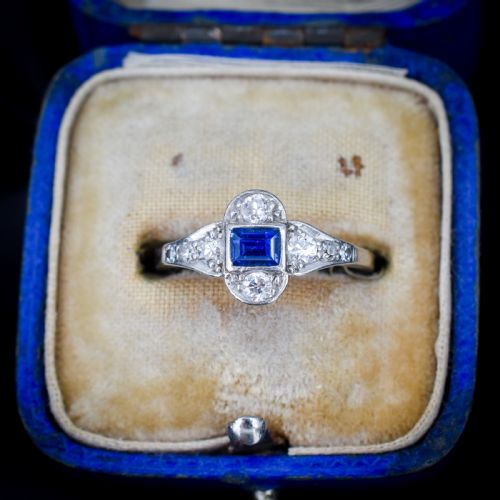
The selections here range from delicate daisy clusters to geometric target designs and elongated plaque rings. Metals include platinum, often paired with yellow or white gold, supporting stones originating from regions such as Ceylon, Burma, and Madagascar.
Materials and construction
Craftsmen utilised platinum for its strength, allowing for delicate millegrain edges and fine wirework that could hold stones securely with minimal metal visible. Gold in various karats frequently forms the inner band or gallery while platinum tops the stone settings.
Diamonds are commonly old European or old mine cut, paired with sapphires shaped as cabochons, steps, or calibrated accents. Stones are hand-set into intricate bezels, channels, and claw configurations typical of the period.
Certain French rings manage to sneak three different gold colours and a rainbow of gems into a single band.
Separating top examples from ordinary ones
Quality rests in the precision of the metalwork and the origin and treatment of the stones. Unheated natural sapphires with strong saturation command higher regard than treated stones.
The finesse of the hand-cut diamonds and the intact preservation of millegrain detailing distinguish superior workshop output from simpler production.
The Edwardian Sapphire Platinum Ring Glossary
- Millegrain
- A decorative technique featuring a raised border of tiny metal beads along the edge of a setting. This adds texture and softens the transition between metal and skin.
- Cluster ring
- A design featuring a central stone surrounded by a border of smaller gems, usually diamonds encircling a sapphire. This arrangement maximises visual impact and light reflection.
- Navette
- A boat-shaped ring setting that tapers to points at either end along the finger. The elongated silhouette is characteristic of Edwardian and Art Deco taste.
- Calibré cut
- Small gemstones specifically shaped and cut to fit tight geometric channels in a mounting. This method creates continuous lines of colour without visible gaps.
- Trilogy ring
- A ring set with three stones representing past, present, and future, often pairing a central sapphire with flanking diamonds.
Edwardian Sapphire Platinum Ring: Frequently Asked Questions
How do I care for an antique platinum ring?
Clean these pieces gently using warm water and a soft brush, avoiding harsh chemical dips that can harm the metal or stones. Professional inspection of the prongs ensures the gems remain secure during daily wear.
Store each ring separately in a lined box to prevent scratching between diamond surfaces and softer metals or gemstones.
Are these sapphires heat treated?
Many stones from this era are completely natural and unheated, while others have undergone traditional heating to improve colour and clarity. Certification documents often accompany unheated stones to confirm their origin.
Laboratory reports provide specific details regarding geographical source and thermal history for high-value gems.
What is the difference between Edwardian and Art Deco styles?
Edwardian designs tend to feature lace-like platinumwork, floral motifs, and airy garlands influenced by eighteenth-century aesthetics. They emphasise softness, asymmetry, and intricate pierced galleries.
Art Deco pieces shift towards rigid geometry, symmetry, strong lines, and high-contrast colour combinations. This later style embraces industrial precision and abstract motifs.
Can I wear an antique ring every day?
Platinum provides a durable platform for daily wear, though the delicate settings require mindfulness during rigorous physical activities. Removing the jewellery before heavy lifting or gardening protects the fine claw work.
Regular checks by a jeweller help maintain the structural integrity of older mountings.