




Edwardian Sailing Vessel
An edwardian sailing vessel captures maritime movement through detailed model boats and marine paintings that anchor a room in nautical history.
Edwardian Sailing Vessel
When you search for an edwardian sailing vessel, you encounter a focused selection of maritime objects that span paintings, model boats, and decorative silver. These works capture the enduring appeal of traditional sailing craft during a period of intense maritime heritage.
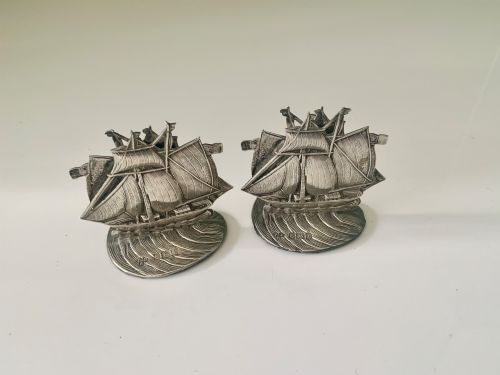
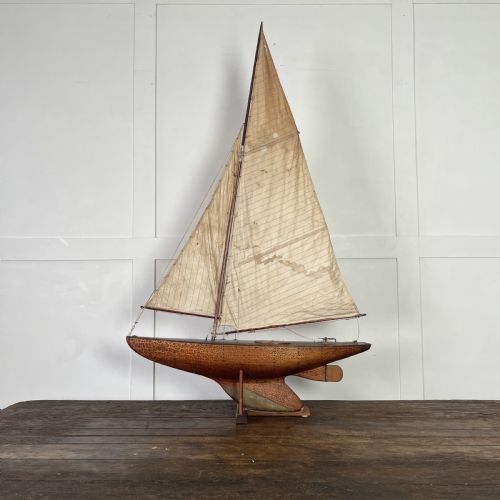
The objects on this page most commonly appear as framed marine paintings in oil or watercolour alongside tangible representations like pond yachts and silver menu holders. Each piece reflects the visual language of the early twentieth century through depictions of barques, junks, and tall-masted ships.
Originating from the broader Edwardian era and surrounding decades, these items offer a direct connection to historical shipping and coastal life. Collectors find that these pieces serve as both decorative focal points and historical documents of seafaring craft.
Materials and construction methods
Makers utilised traditional mediums such as oil on canvas and watercolour on paper to capture the movement of water and light on canvas. These paintings rely on layered pigment and careful brushwork to depict the rigging and hulls of vessels.
Three-dimensional objects incorporate carved wood, canvas, and metal, often complemented by sterling silver components in smaller decorative items. The construction of model boats and menu holders demonstrates skilled assembly of delicate maritime parts.
Edwardian Sailing Vessel Retail Price Guide 2026
Typical asking prices for edwardian sailing vessel among the pieces listed under this phrase on Sellingantiques today, from the lower quarter to the upper quarter. They describe what is for sale here now, not the wider market.
The materials in these listings include sterling silver, wood, canvas, and oil paint applied across paintings and decorative objects.
Distinctions in quality
Quality rests upon the artist's ability to render nautical rigging and water dynamics with convincing accuracy and proportion. Superior paintings exhibit greater depth in the treatment of stormy or calm seas.
In physical models, the precision of the woodwork and the fidelity of the miniature sails determine the overall standard of the piece. Well-preserved surfaces without heavy restoration command higher regard among collectors.
The Edwardian Sailing Vessel Glossary
- Barque
- A sailing vessel with three or more masts having the fore and mainmasts square-rigged and the mizzenmast fore-and-aft rigged. This rig was common for long-distance cargo transport.
- Galleon
- A large sailing ship used for trade and war from the 15th through the 18th centuries. In later decorative arts, they appear as small silver table ornaments.
- Watercolour painting
- A method in which the paints are made of pigments suspended in a water-based solution. This technique creates translucent washes of colour particularly suited for marine skies.
- Pond yacht
- A toy or model sailing boat designed to be sailed on a pond. These objects combine functional hull shapes with scaled masts and canvas sails.
Edwardian Sailing Vessel: Frequently Asked Questions
What defines an edwardian sailing vessel?
An edwardian sailing vessel refers to maritime artworks and models produced during the early twentieth century, capturing traditional ships at sea.
These pieces range from detailed watercolour paintings to carved wooden model boats and silver table ornaments.
How were these marine paintings created?
Artists used oil on canvas or watercolour on paper to record the appearance of ships in various water conditions.
Brushwork focused heavily on capturing the play of light across sails and the movement of choppy waters.
Where do these maritime objects originate?
The items originate from the Edwardian period and adjacent decades, reflecting global shipping routes and coastal scenes.
Subjects include named vessels, foreign ports such as Hong Kong, and generic trading ships.
How do I display a model boat?
Model boats require stable surfaces away from direct sunlight and excessive humidity to protect wood and canvas components.
Proper placement ensures the delicate rigging remains undamaged over time.