




Edwardian Ruby Band Ring
An edwardian ruby band ring brings together bright red stones and yellow or rose gold in low-profile settings made for everyday wear.
Edwardian Ruby Band Ring
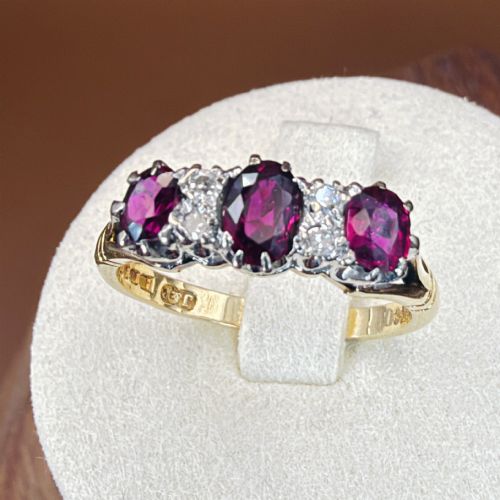
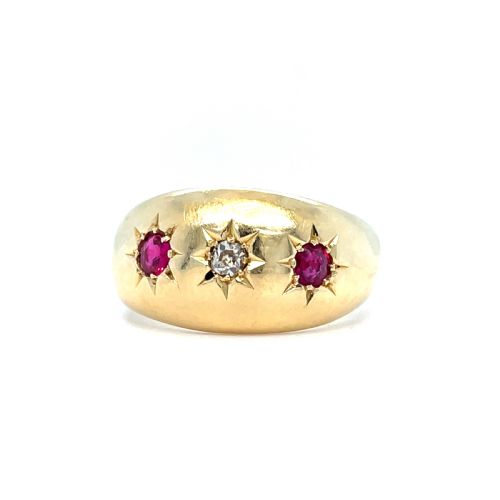
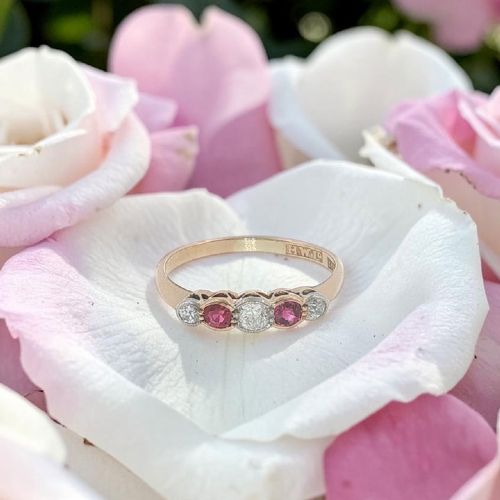
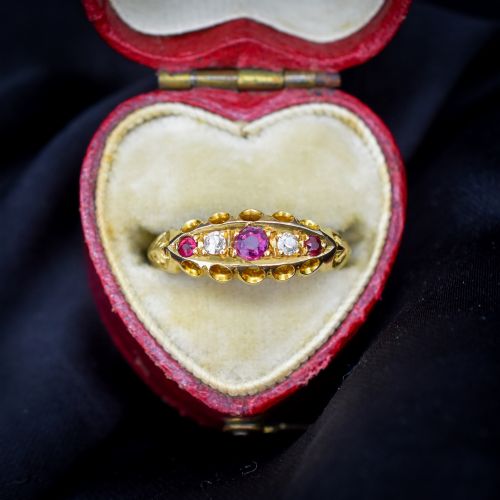
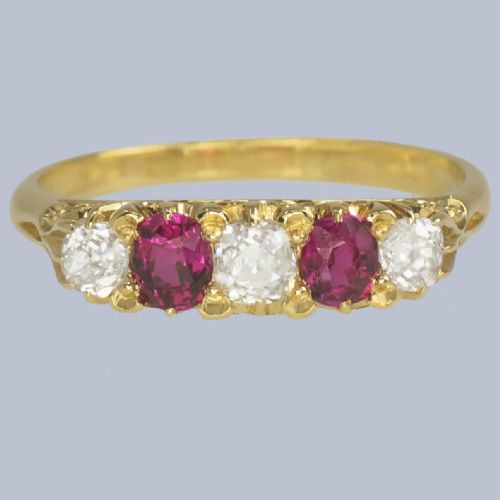
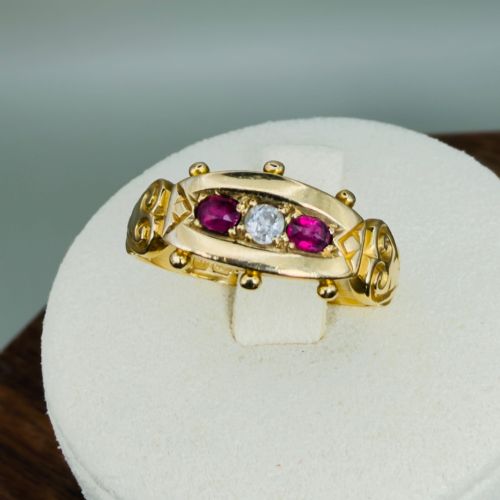
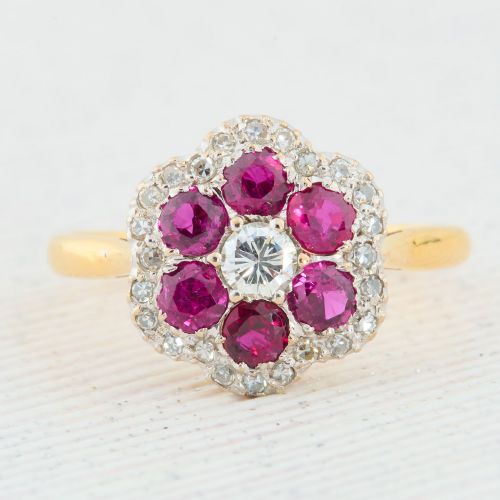
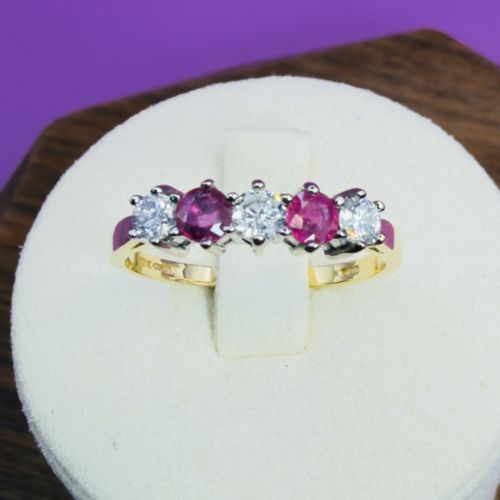
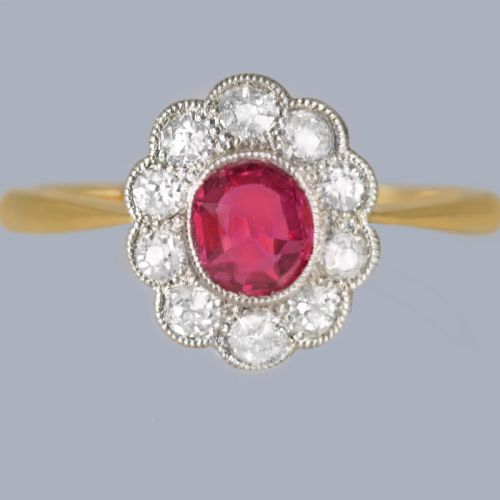
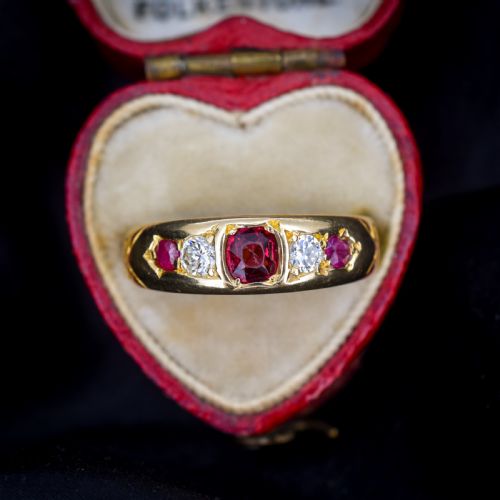
An edwardian ruby band ring sits low to the finger, combining rich red rubies with diamonds, pearls or further gemstones in yellow or rose gold settings. These pieces span traditional band formats, gypsy settings and boat shapes designed to sit smoothly against the hand.
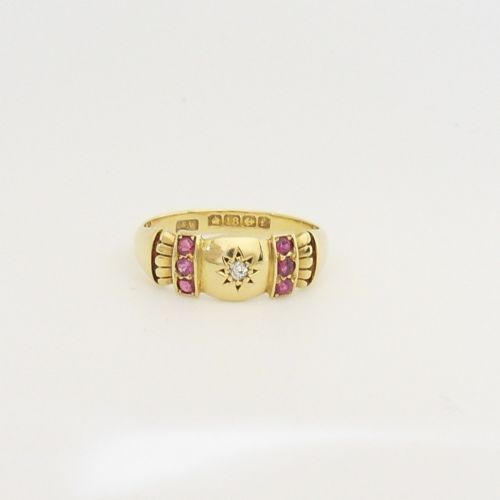
The selections encountered most frequently on this page date from the early twentieth century, alongside Victorian precursors and later twentieth-century interpretations. Makers utilised 18ct gold, 15ct gold and platinum to construct mounts that hold starburst clusters, trilogy arrangements and five-stone layouts.
Materials and construction methods
Goldsmiths of the period employed 18ct gold and 15ct gold for the shanks and settings, occasionally combining platinum for white-metal accents around old-cut diamonds. Rubies are secured alongside pearls, garnets and diamonds using starburst engravings, flush gypsy mountings or claw settings.
Hallmarks stamped inside the bands often reveal assay office origins such as Chester or Birmingham alongside precise production dates from the opening decades of the twentieth century.
Secret stacking bands ensure your fingers stay properly dressed even when you are supposed to be sleeping.
Distinguishing quality across examples
Quality rests upon the saturation and match of the rubies, the crispness of hand-engraved starbursts or gypsy shoulders, and the integrity of the original claw or flush settings. Finer examples retain clear hallmarks and well-matched old-cut diamonds that complement the central red stones.
Wear to the gold band, softened claw tips or replaced stones alter the original character of the piece, distinguishing untouched survivals from heavily altered rings.
The Edwardian Ruby Band Ring Glossary
- Gypsy ring
- A style where stones are flush-set directly into a thick tapering gold band so the surface remains smooth. This technique protects the gemstone girdles during daily wear.
- Trilogy ring
- A setting featuring three principal stones, typically a central ruby flanked by two diamonds. The arrangement represents past, present and future.
- Navette ring
- A boat-shaped mounting that extends along the finger with a pointed silhouette. This elongated form accommodates multiple stones in a cluster.
- Old-cut diamond
- A hand-faceted diamond cut before modern machinery standardised proportions, featuring a small table and a high crown. These stones catch candlelight with broad, soft flashes.
Edwardian Ruby Band Ring: Frequently Asked Questions
How do I clean an edwardian ruby band ring?
Warm soapy water and a soft brush remove everyday oils safely from both the gold mount and the rubies. Avoid harsh chemical dips, which can harm pearls or softer surrounding gems.
Pat the ring dry thoroughly with a lint-free cloth after washing, and store it separately to prevent the harder diamonds from scratching the gold band.
Can I wear an edwardian ruby band ring daily?
Most surviving examples were built for daily use, featuring low-profile settings that catch less on clothing. Flush gypsy styles offer particularly robust protection for the stones.
Consider removing the ring during heavy manual work or gardening to protect the claws and softer pearls if present in the cluster.
How do I identify an Edwardian hallmark?
British hallmarking systems from the period typically include a standard purity mark such as 18 for gold, alongside a sponsor's mark and an assay office stamp like the anchor for Birmingham or the three sheaves for Chester.
A date letter stamped inside the band points to the exact year of assay, allowing collectors to verify the period of production.