
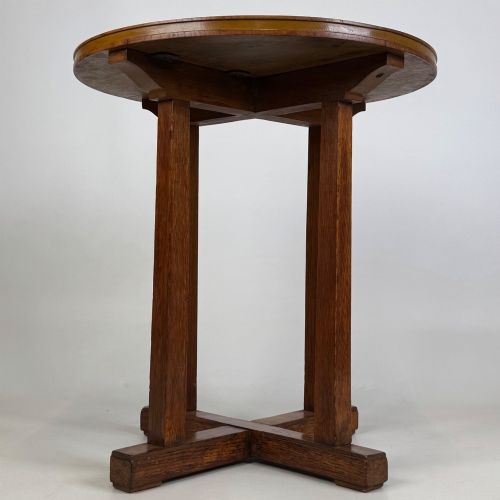
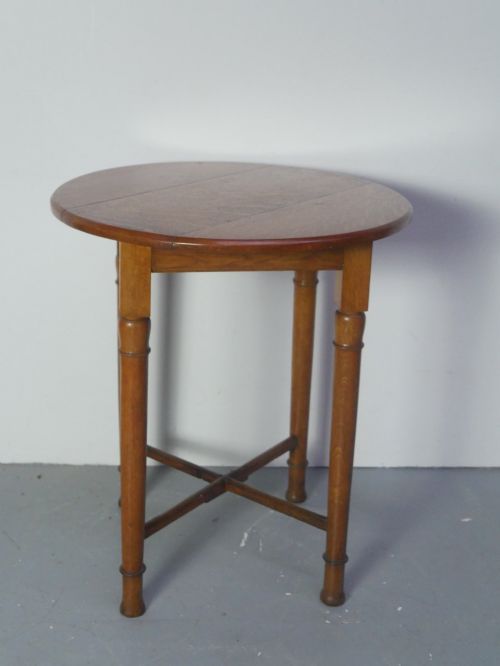

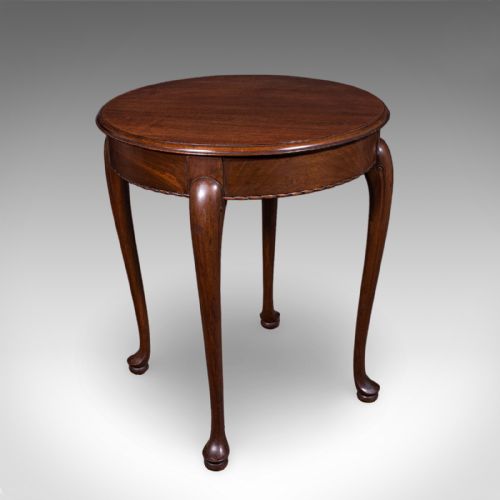

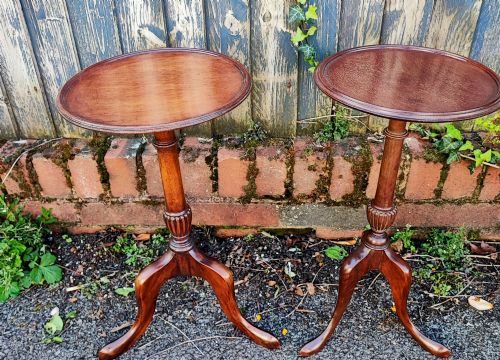
Edwardian Round Occasional Table
An Edwardian round occasional table brings compact versatility to a room, offering a handy surface for lamps or drinks without crowding the floor.
How they were made
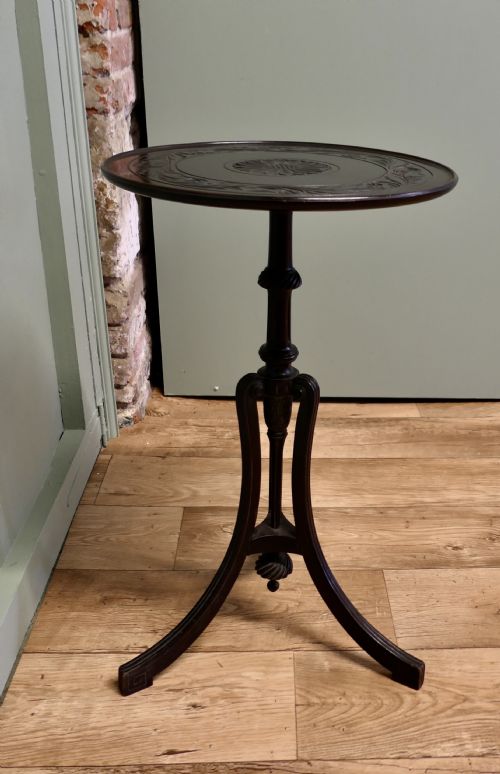
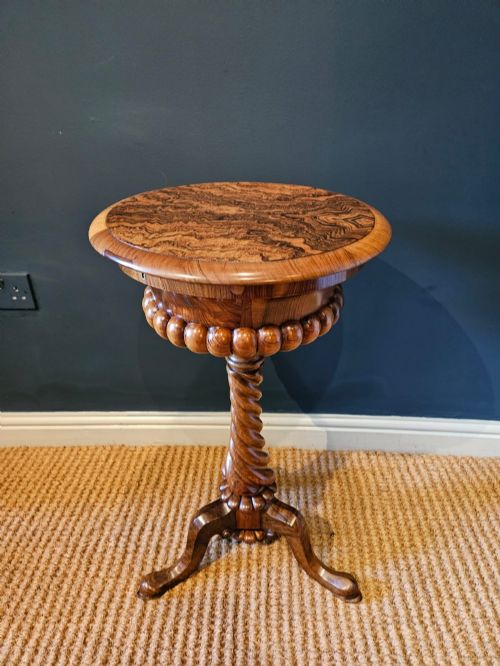
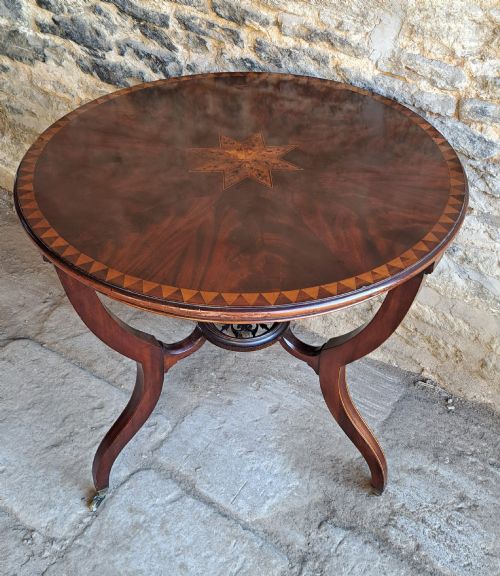
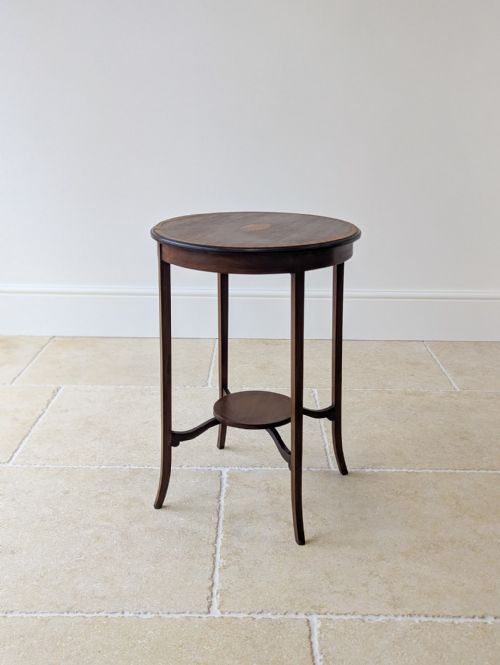
Cabinetmakers utilised solid hardwoods such as mahogany and oak alongside softer woods, often applying decorative veneers like burr walnut or satinwood to the circular tops. Inlays of boxwood or contrasting timbers frequently define the edges and surfaces of the finer examples.
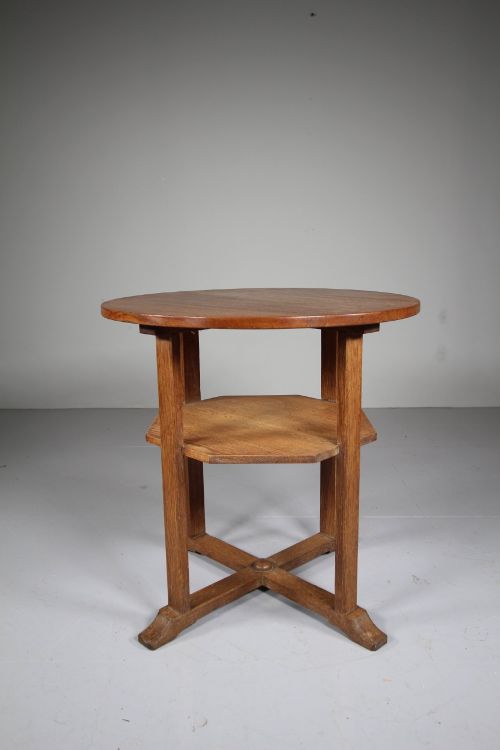
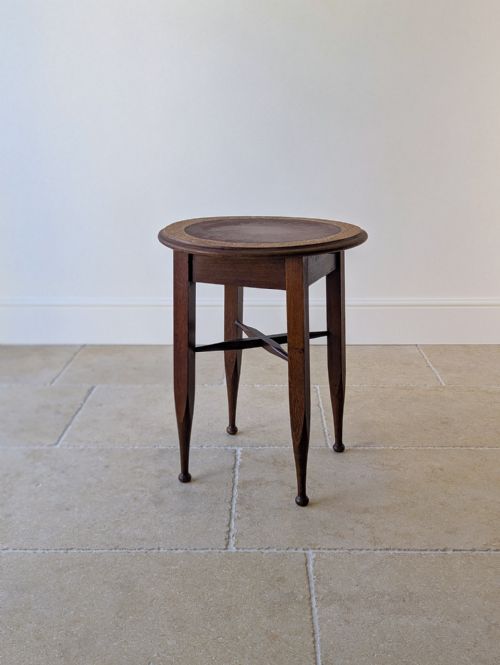
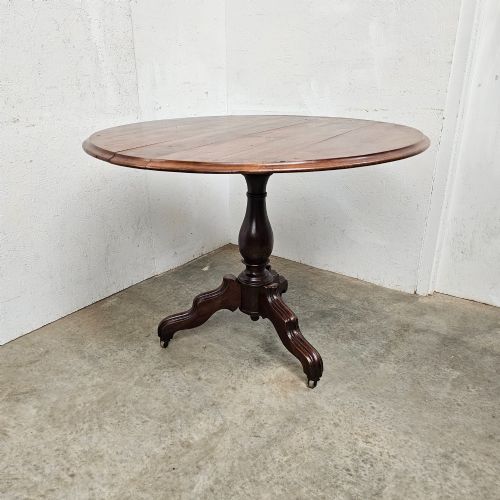
Structural joints rely on traditional carpentry techniques, with tripod legs secured to central pedestals or four-legged frames joined by stretchers. Metal elements such as brass castors, copper tops or ormolu mounts appear on specific stylistic variants.
What varies in quality
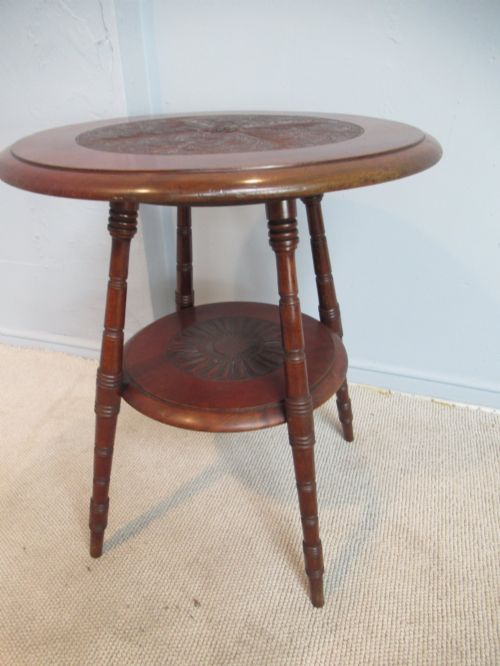
The choice of timber and the precision of the cabinetwork dictate the standing of a piece, with figured veneers and delicate string inlay marking out superior examples. Hand-carved details and painted decorative surfaces also separate standard utility tables from higher-status furnishings.
Proportion and stability determine practical excellence, ensuring the circular top sits level on its pillar or legs without wobble. Original surface patination and intact structural joinery maintain the integrity of the piece over time.
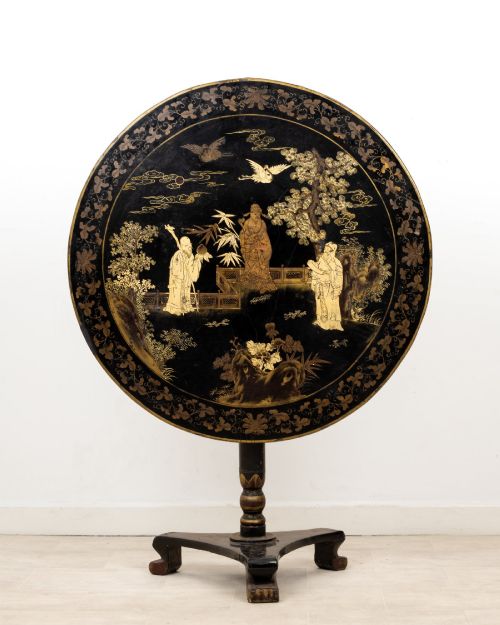
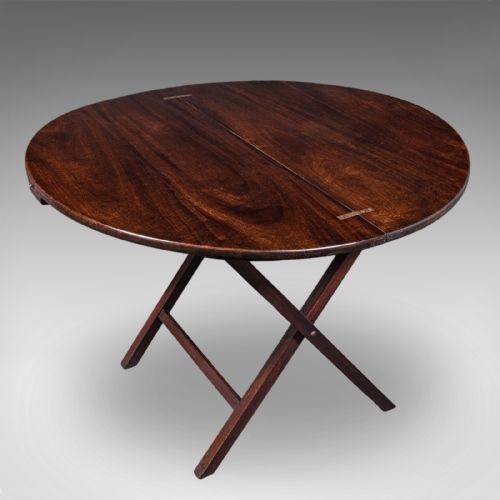
Some folding coaching tables on this page were built to be packed flat for travel before finding a permanent home in country houses.
Liberty and Co·Liberty of London·Waring and Gillow·Gillows·François Linke
The Edwardian Round Occasional Table Glossary
- Occasional table
- A small, portable table designed to be moved around a room as needed for specific tasks.
- Tripod table
- A small circular table supported by a central pillar resting on three spreading feet.
- Inlay
- A decorative technique where pieces of contrasting wood or other materials are inserted into recesses in the primary surface.
- Satinwood
- A durable, lustrous timber with a yellowish colour used extensively for fine cabinetmaking and decorative veneers.
- Drop-leaf table
- A table with hinged flaps on the sides that can be folded down to save space.
Edwardian Round Occasional Table: Frequently Asked Questions
What is an occasional table used for?
An occasional table provides a convenient surface for holding lamps, books or drinks beside seating areas. They are easily moved to different spots in a room depending on daily requirements.
Their compact circular tops make them particularly useful in smaller spaces where a large piece of furniture would dominate the room.
How do I identify an Edwardian table?
Edwardian tables often display lighter timbers, subtle string inlay and Sheraton Revival influences that contrast with heavier Victorian styles. Construction methods from this era typically show machine-sawn timber combined with hand-finished joints.
Examining the underside and interior surfaces helps reveal the age through the type of fixings and timber preparation used.
Can I use a wine table as a lamp table?
Wine tables share similar small circular proportions with lamp tables, making them suitable for holding smaller lighting fixtures. Their sturdy tripod bases keep them stable despite their modest footprint.
Checking the weight and base diameter ensures the table supports the specific lamp securely.
How do I care for a mahogany occasional table?
Regular dusting with a soft cloth keeps the polished hardwood surface free from grit that could cause scratches. Avoiding direct sunlight and placement near heat sources prevents the timber and veneer from drying out.
Occasional application of appropriate wax polish maintains the lustre of the wood without building up a heavy residue.