
Edwardian Rotating Stand
An edwardian rotating stand provides accessible storage for volumes within easy reach, turning smoothly on a central pivot.
Edwardian Rotating Stand
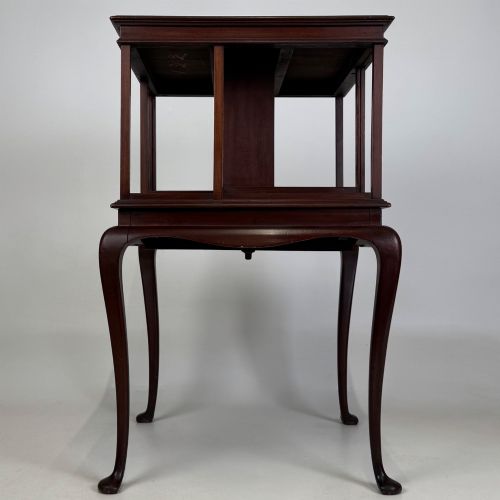
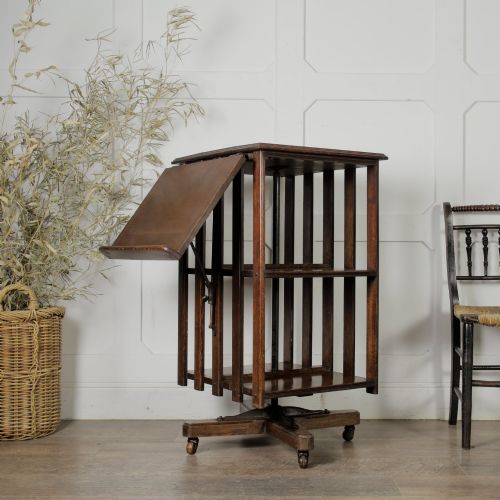
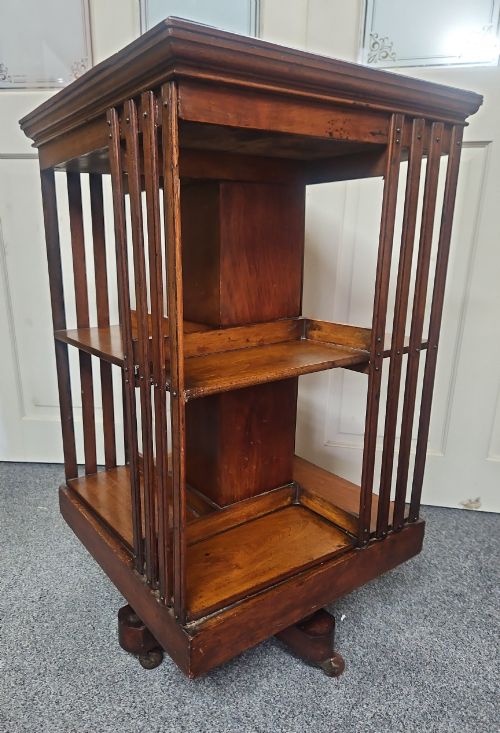
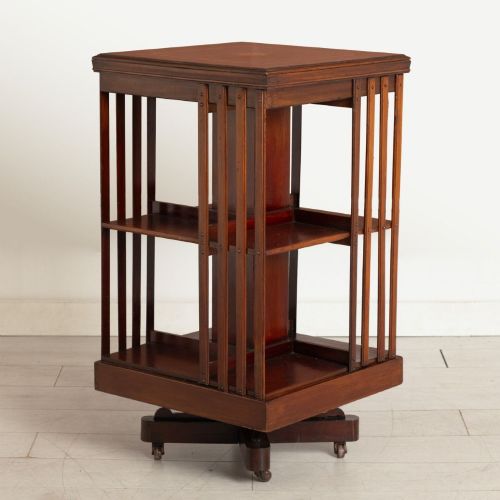
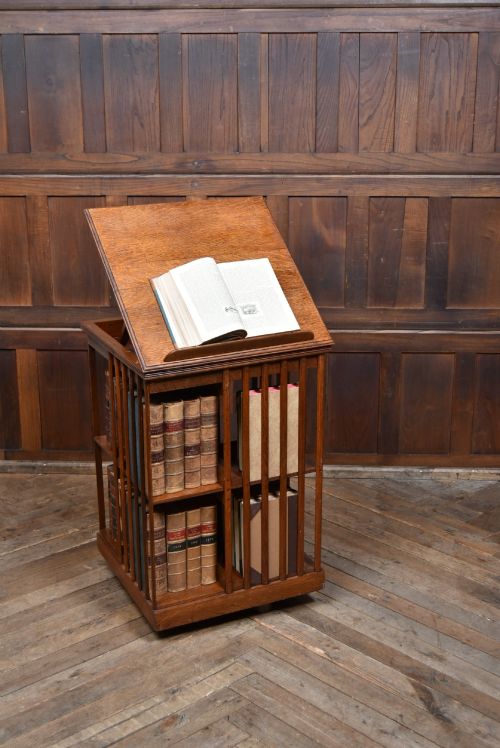
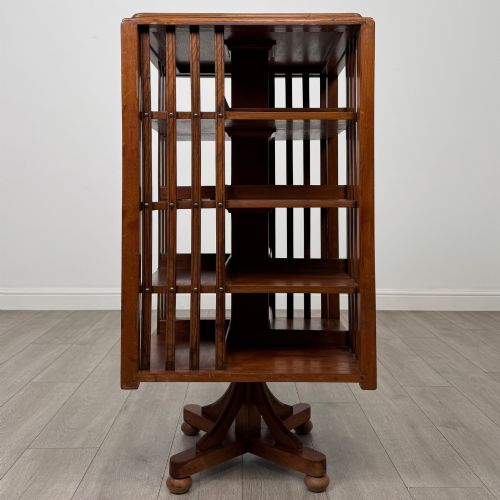
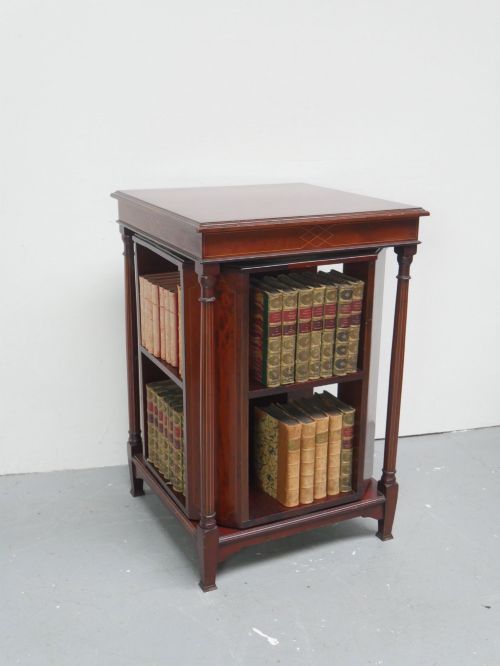
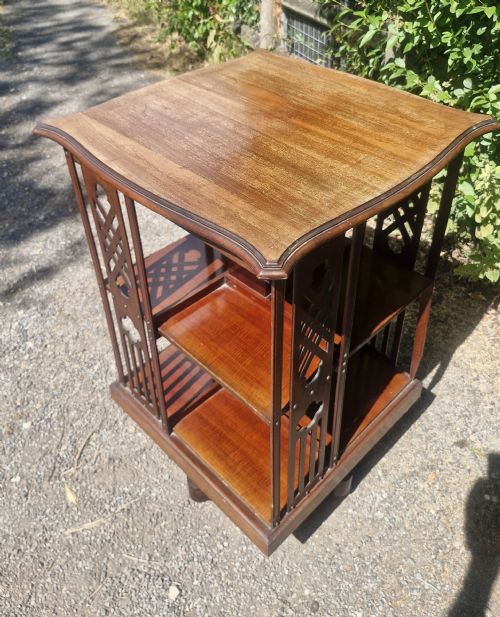
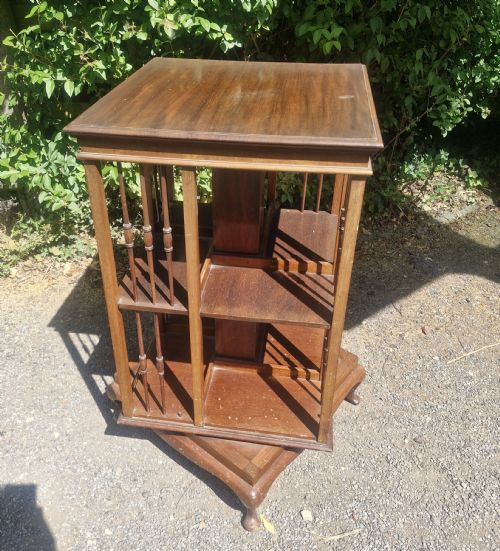
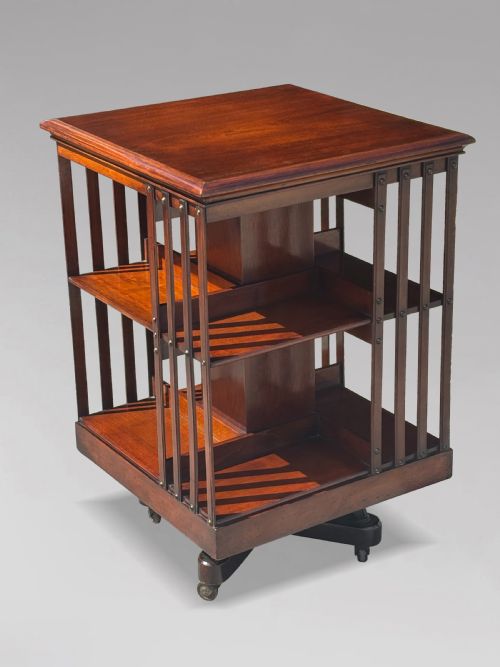
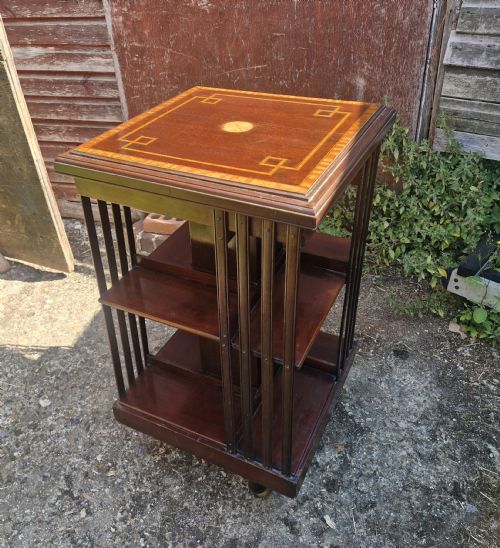
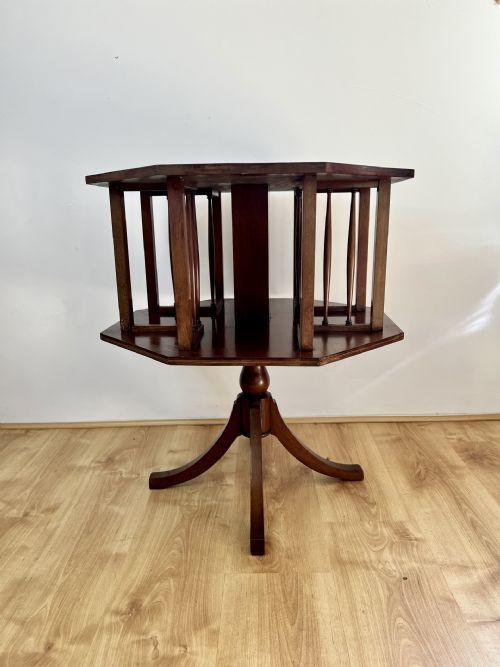
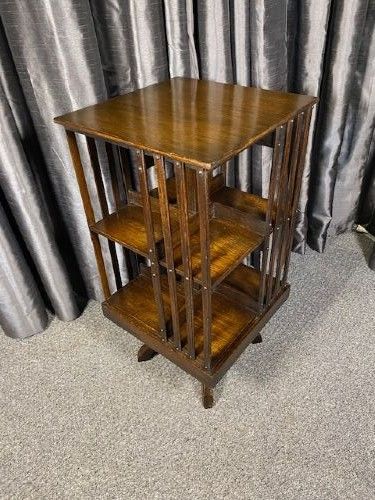
An edwardian rotating stand principally takes the form of a revolving bookcase designed to sit upon a floor or a desk surface. These practical pieces allow a collection of books to turn freely for selection in a study, library or drawing room.
How they were made
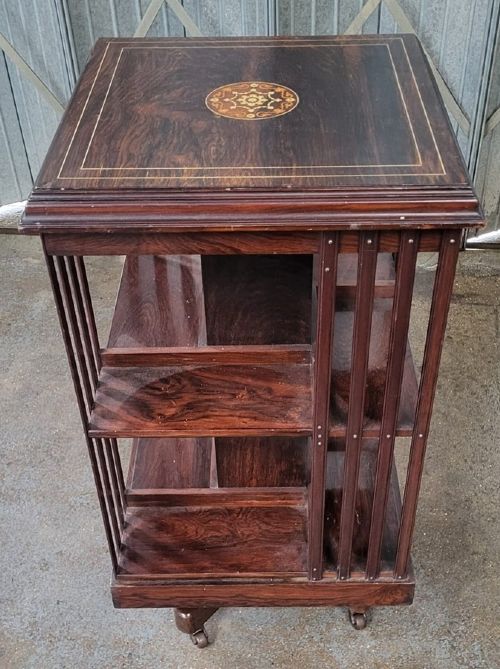
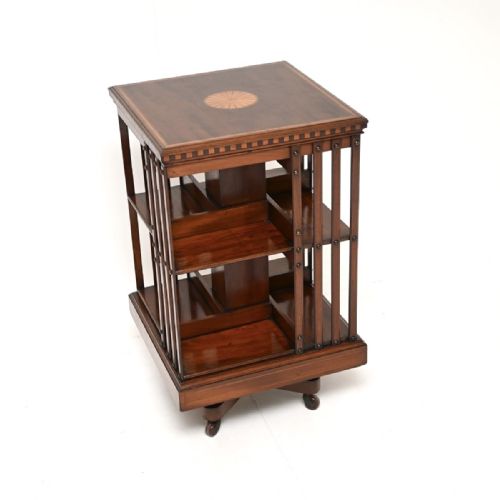
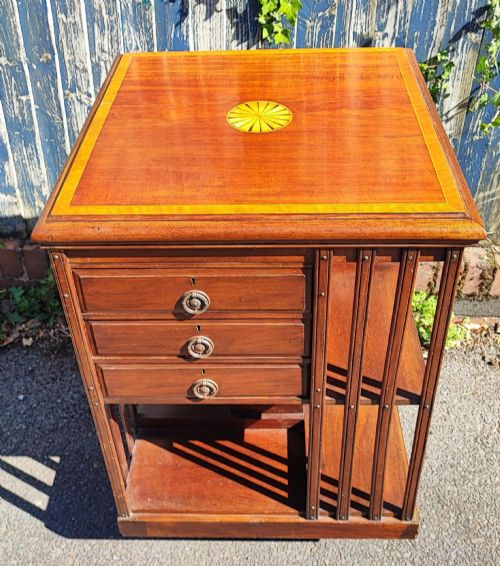
Cabinet makers utilised dense hardwoods such as mahogany and oak, frequently applying satinwood inlay or brass fixtures to enhance the visible surfaces. Flame mahogany veneers provide distinct grain patterns on the exterior slats and top panels.
The internal mechanism relies upon a rotating pivot system, sometimes incorporating cast iron or metal components to support the weight and facilitate smooth rotation. Joinery techniques of the period ensure stability across the revolving compartments.
A lazy Susan makes a brief appearance among the spinning book storage.
What varies in quality
The standard of timber selection and complexity of inlay work largely determine the distinction between basic and superior examples. Pieces featuring intricate satinwood inlay or figured flame mahogany represent a higher level of cabinet work.
Engineering of the pivot mechanism dictates the smoothness of the rotation. A well-constructed stand turns without friction or wobble, maintaining balance even when loaded unevenly with heavy volumes.
The Edwardian Rotating Stand Glossary
- Revolving bookcase
- A freestanding or desk-mounted piece of furniture designed with shelves that rotate around a vertical axis. This allows access to books from multiple sides without moving the unit.
- Satinwood inlay
- A decorative technique where contrasting light-coloured wood is inserted into recesses of a darker primary timber. It creates geometric or floral borders characteristic of the period.
- Flame mahogany
- A distinct wood grain pattern showing a flamelike figure, achieved by cutting through the branch junctions of the tree. Cabinet makers reserved this timber for prominent exterior surfaces.
- Lazy Susan
- A rotating tray or stand placed on a surface to allow items to be shared or accessed easily. Versions in this category serve tabletop organisational needs.
Edwardian Rotating Stand: Frequently Asked Questions
Where should I place a revolving bookcase?
These stands suit placement beside an armchair or a desk where volumes require frequent access throughout the day. Their ability to turn means they fit comfortably in corners or tighter spaces.
Floor-standing models also function well as freestanding room dividers or secondary library units where wall space is limited.
How do I care for mahogany woodwork?
Dust the surfaces regularly with a soft, dry cloth to prevent the accumulation of grit. Avoid placing the wood in direct sunlight or near heat sources to protect the finish.
Occasional application of appropriate wax polish helps maintain the lustre of the timber and protects the grain.
Can these stands hold heavy books?
Standard models accommodate typical octavo and quarto volumes securely within their divided compartments. The internal structure distributes weight evenly across the central pivot.
Very large folios require caution regarding shelf height and overall balance during rotation.
What defines the Edwardian style?
The Edwardian period draws inspiration from earlier Georgian and Sheraton aesthetics while introducing lighter proportions and refined inlay work. Pieces from this era often balance utility with decorative elegance.
Arts and Crafts influences also appear, emphasising honest construction and simpler oak surfaces.