





Edwardian Rosewood Box
When you search for an edwardian rosewood box, you are looking at practical containers shaped by decades of fine cabinet-making.
How they were made
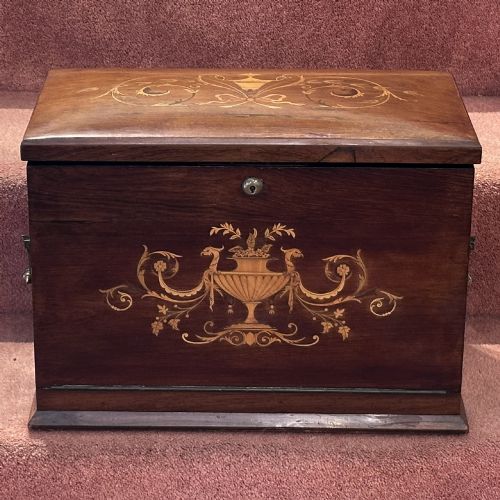
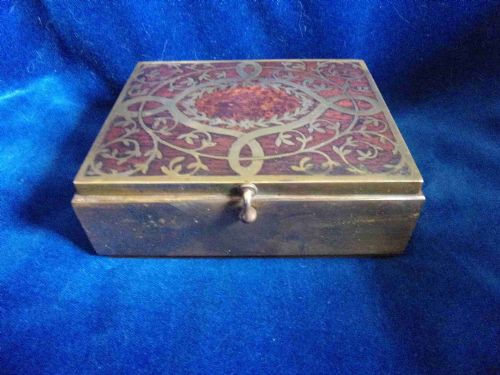
Makers built these pieces using solid rosewood or applied veneers over secondary timbers, often incorporating contrasting boxwood and satinwood for marquetry detailing. Brass hardware, such as hinges, handles, and escutcheons, provides structural reinforcement and visual contrast against the dark wood.
Interiors frequently feature fitted compartments lined in velvet or fabric to protect stationery, jewellery, or letters. Joinery techniques from the period ensured tight joints on stationery boxes and coal cabinets alike, allowing them to withstand daily domestic use.
What varies in quality
The precision of the marquetry inlay separates standard production from superior examples. Crisp, tightly fitted boxwood and satinwood details demonstrate a higher level of cabinet-maker skill than looser, simpler floral motifs.
The choice of internal fittings and secondary materials also marks the division in quality. Complete velvet or fabric linings, solid brass mounts, and robust hinges indicate an item made without compromise.
Edwardian Rosewood Box Retail Price Guide 2026
Typical asking prices for edwardian rosewood box among the pieces listed under this phrase on Sellingantiques today, from the lower quarter to the upper quarter. They describe what is for sale here now, not the wider market.
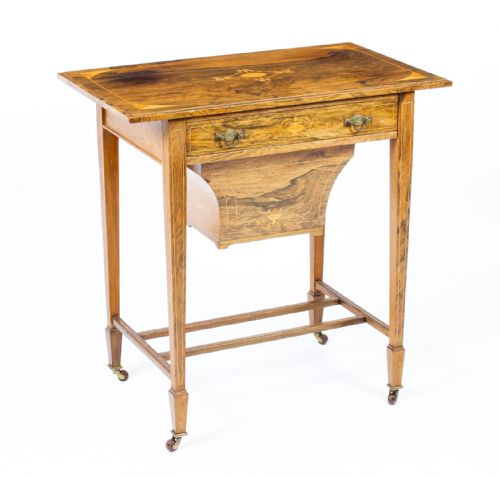
Listings feature rosewood combined with satinwood, boxwood, and brass across stationery boxes, coal boxes, and occasional tables.
Gillows·Erhard and Sohne
The Edwardian Rosewood Box Glossary
- Marquetry
- Decorative patterns formed by the insertion of pieces of wood, veneer, or shell into a solid wood surface. This technique creates complex pictorial or geometric designs on the lids and panels.
- Stationery box
- A desktop container designed for holding paper, envelopes, and writing implements. These often feature slanted lids or tiered internal slots for organisation.
- Coal box
- A large container designed to hold household coal near a fireplace, frequently featuring a sloping front and a metal or ceramic liner. Many include matching interior shovels.
- Satinwood
- A pale, hard timber used extensively for contrasting stringing and inlay work on darker woods like rosewood. Its yellow tone brightens panel borders.
- Boxwood
- A dense, pale wood utilised for fine stringing and delicate inlay details. It provides a sharp contrast against dark rosewood surfaces.
Edwardian Rosewood Box: Frequently Asked Questions
What was an edwardian rosewood box used for?
These boxes served specific domestic functions, primarily holding letters, stationery, or household coal near a fireplace.
They kept functional items neatly stored while adding a decorative element to drawing rooms and studies.
How do I care for rosewood?
Keep wooden surfaces away from direct sunlight and steady heat sources to prevent the rosewood from drying out or splitting.
Dust regularly with a dry cloth and avoid applying modern chemical polishes that can damage the polish.
Are interiors usually original?
Many stationery and games boxes retain their original fabric or velvet linings, though heavy use sometimes necessitated replacement over the decades.
Inspect the internal compartments to see if the paper or textile matches the expected wear of the exterior.
How do I distinguish Edwardian pieces from Victorian ones?
Edwardian boxes often feature lighter, airier inlay patterns and simpler lines compared to heavier, more ornate Victorian equivalents.
Examining the overall proportions and the style of the brass hardware helps establish the likely period of manufacture.