
Edwardian Revolving Book Stand
An Edwardian revolving book stand turns smoothly on a spindle, putting a small library within reach.
Edwardian Revolving Book Stand
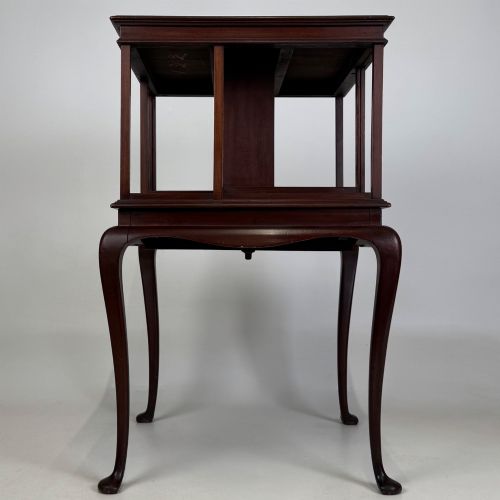
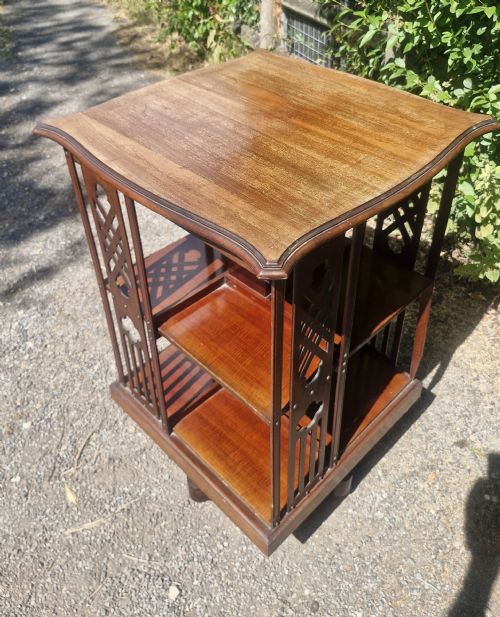
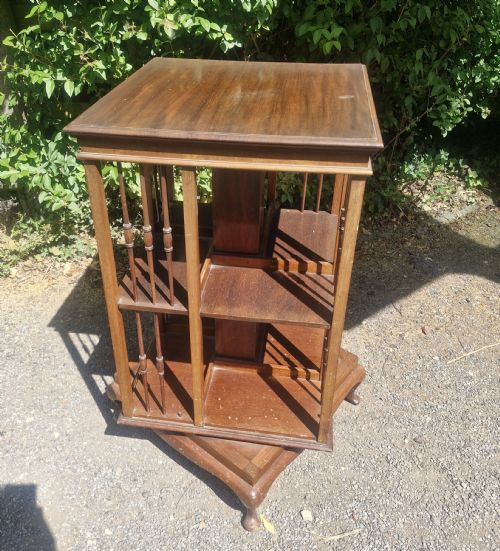
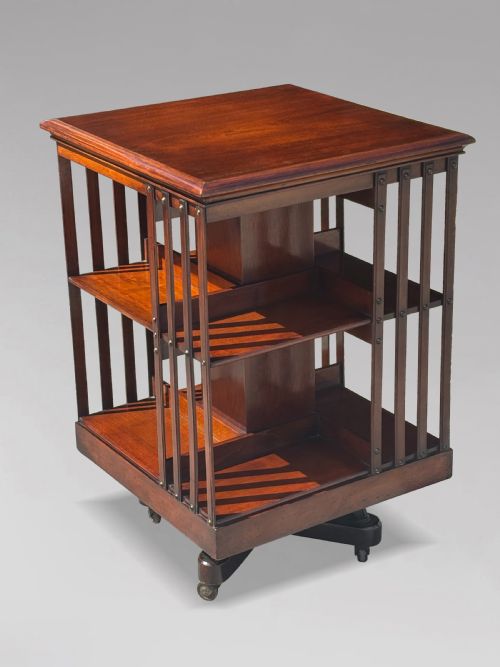
The edwardian revolving book stand is a rotating piece designed to hold volumes upright while allowing easy access from a seating position. Most examples encountered here date from the Edwardian period, though related pieces span from the late nineteenth century into the early twentieth century.
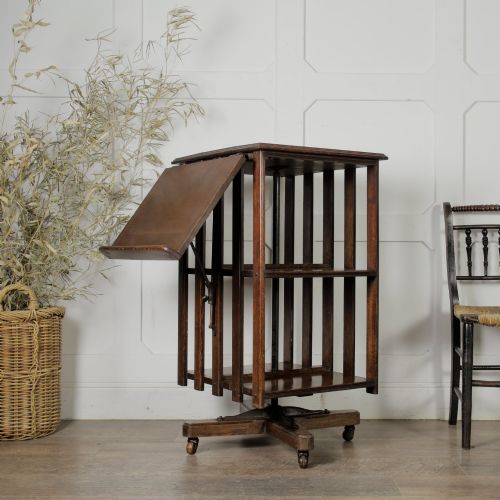
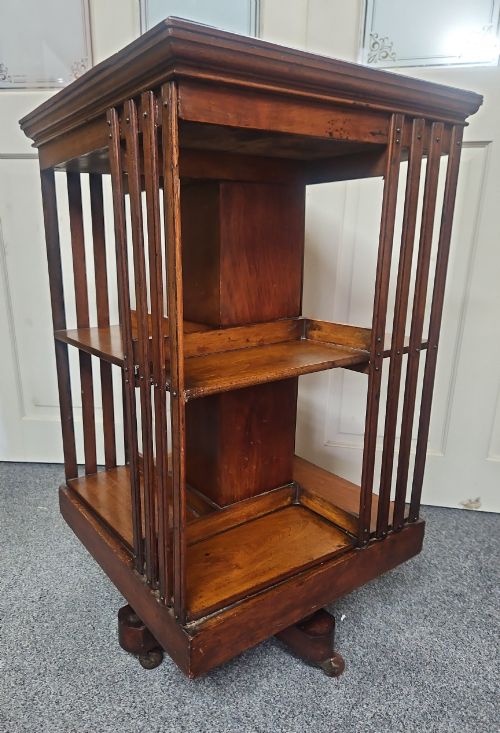
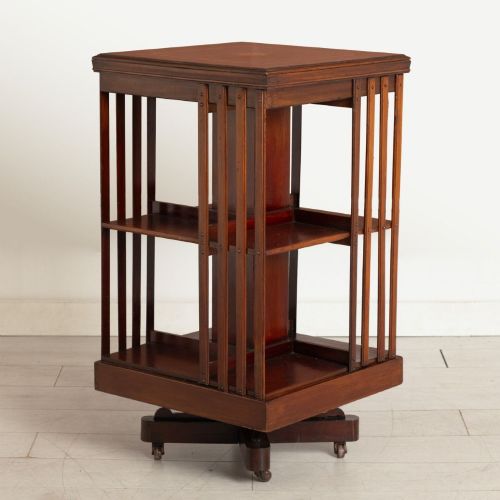
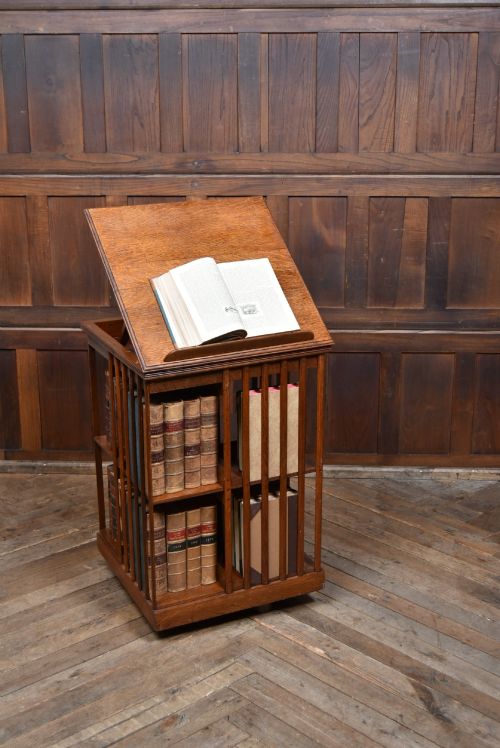
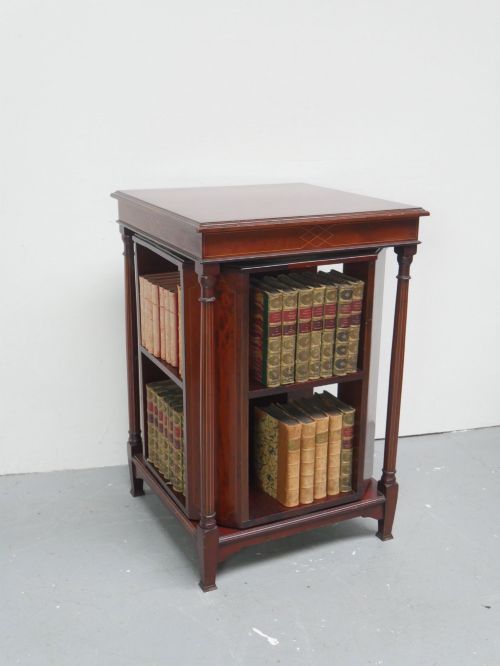
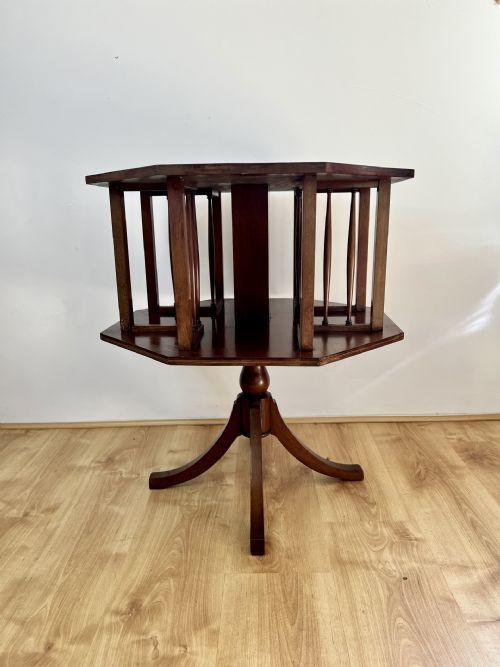
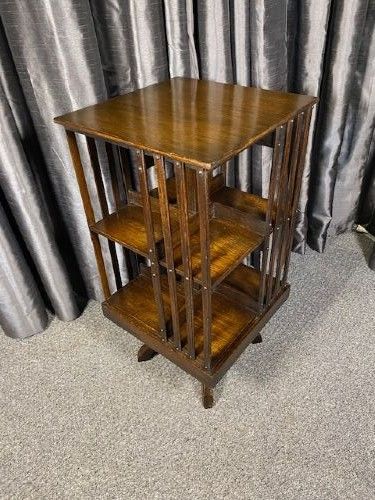
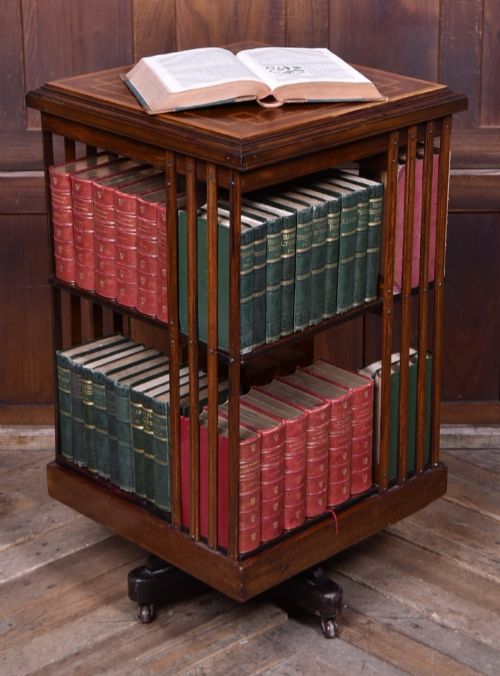
Forms range from compact table top versions intended for desks to large freestanding floor models. These pieces typically present square slatted or panelled sides that spin on a concealed internal mechanism.
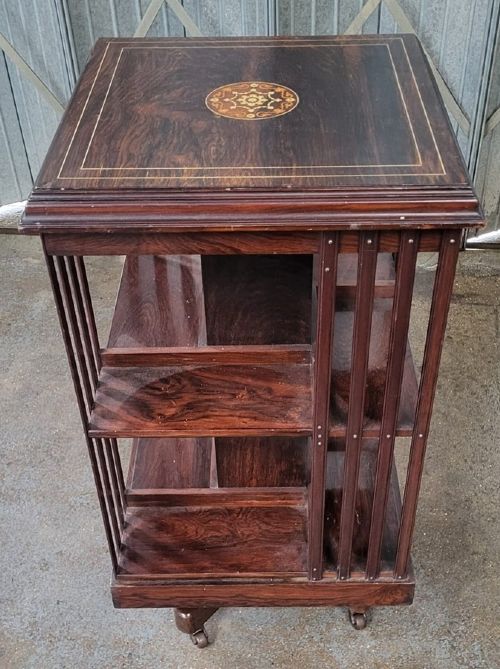
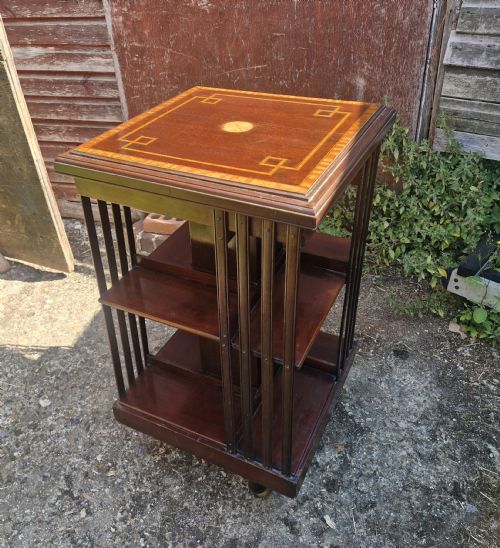
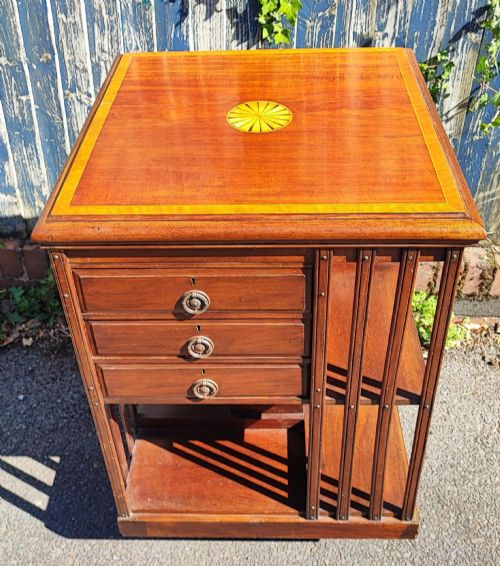
Makers utilised timber such as mahogany and oak, frequently embellished with satinwood inlay or brass fittings. The resulting furniture served both practical study needs and formal drawing room display.
How they were made
Cabinet makers built these stands around a central wooden or iron pivot that supports the weight of the rotating tiers. Mahogany and oak form the primary structural timbers, shaped into upright partitions to divide the book compartments.
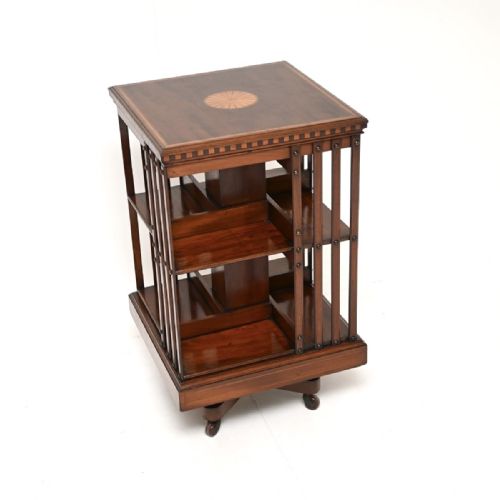
Decorative surfaces often incorporate satinwood inlay, marquetry, and brass detailing. Joinery methods ensure the revolving action remains balanced under the heavy weight of bound books.
Listings for the edwardian revolving book stand frequently feature mahogany and oak construction, with walnut and satinwood inlay appearing alongside brass fittings.
What varies in quality
The sophistication of the timber selection dictates much of the standing of an individual piece, with flame mahogany and figured oak sitting above plain utility boards. Intricate satinwood inlay and complex marquetry demonstrate higher workshop ambition than undecorated surfaces.
The smoothness of the internal rotating mechanism and the stability of the central axis govern the mechanical success of the stand. Solid oak and substantial mahogany structures provide greater longevity than lighter constructed table top variants.
The Edwardian Revolving Book Stand Glossary
- Edwardian
- A period spanning the reign of King Edward VII, noted for lighter furniture designs and revived historical styles. Pieces from this era often combine classic timber frames with delicate inlay.
- Marquetry
- The art of applying pieces of veneer to a structure to form decorative patterns or pictures. This technique appears on the flat panels of finer book stands.
- Satinwood
- A durable exotic timber with a lustrous yellowish sheen, frequently used for contrasting stringing and inlay work. It highlights the borders of mahogany shelves.
- Spindle
- The vertical rod or central axis around which the revolving tiers rotate. A well-fitted spindle ensures steady movement without lateral wobble.
- Sheraton style
- A neoclassical furniture style characterised by straight lines, tapered legs, and classical inlay motifs. Pieces adopting this aesthetic draw on eighteenth-century design principles.
Edwardian Revolving Book Stand: Frequently Asked Questions
Where were revolving book stands used?
These pieces sat beside armchairs in studies, libraries, and drawing rooms where quick access to reference volumes was necessary.
Table top versions rested on large desks or tables to keep dictionaries and journals close at hand.
How do you maintain the rotating mechanism?
The internal pivot benefits from occasional cleaning and light lubrication to keep the rotation smooth and silent.
Checking that the weight of the books remains evenly distributed prevents undue wear on the central axis.
What woods were used for these stands?
Mahogany and oak form the vast majority of the surviving examples, supplemented by walnut and occasional rosewood.
Inlay work frequently incorporates satinwood and lighter fruitwoods to create decorative contrast against the darker body timber.
Are these stands suitable for modern paperbacks?
The compartments accommodate standard octavo volumes, hardbacks, and modern books that fit within the standard shelf height.
Larger floor models hold heavier collections across multiple tiers, while smaller table versions suit lighter reading material.