
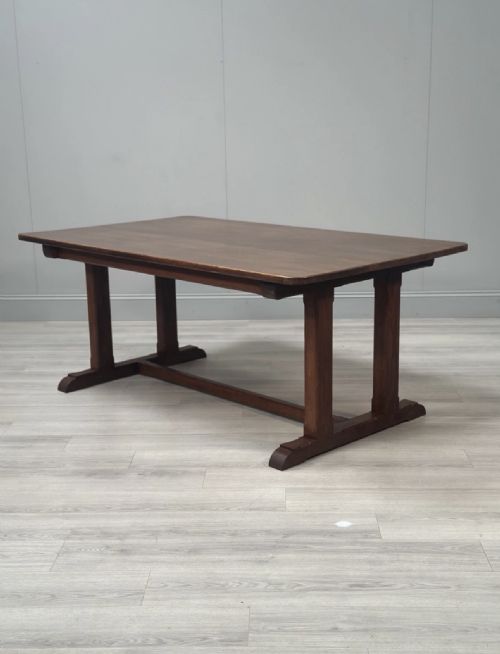
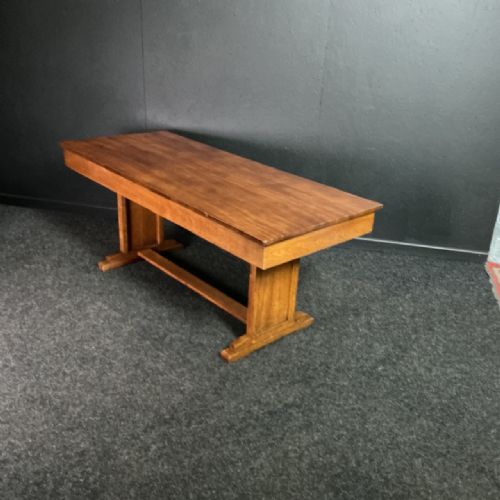
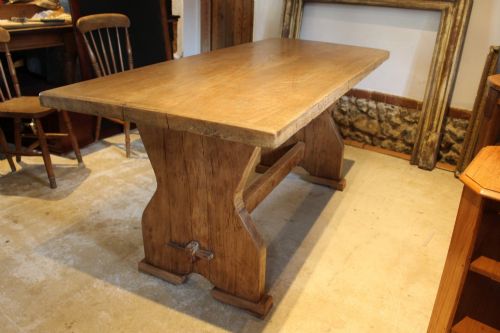
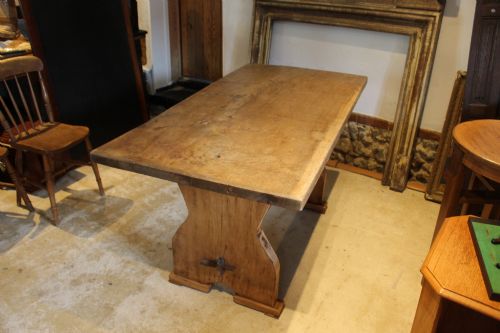
Edwardian Refectory Dining Table
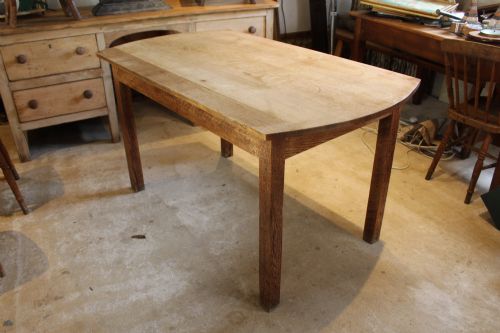
An edwardian refectory dining table brings solid timber construction and linear proportion into a modern interior.
Edwardian Refectory Dining Table
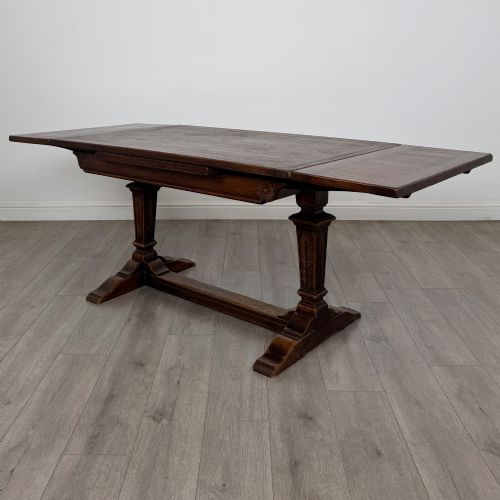
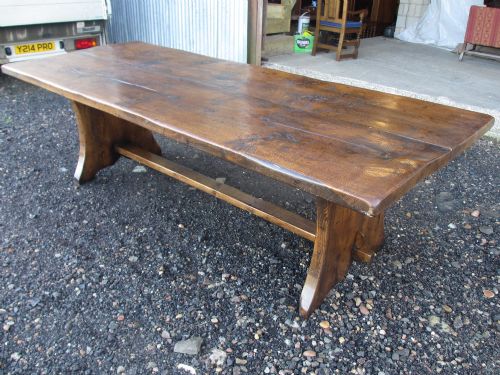
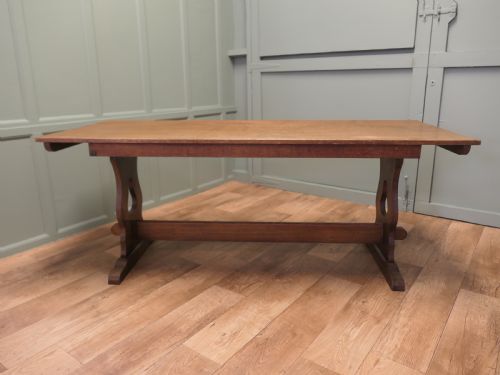
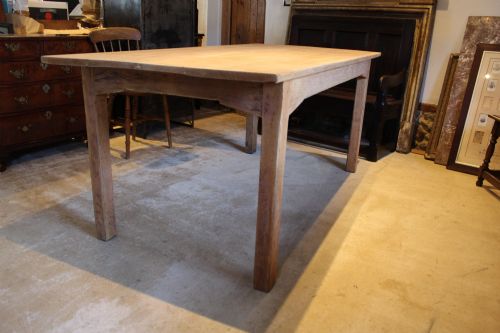
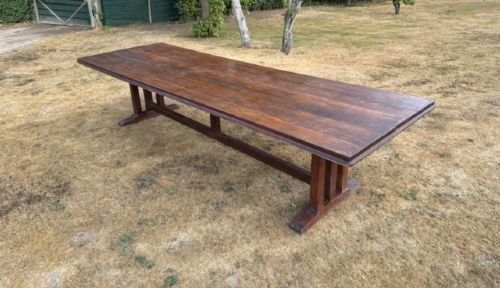
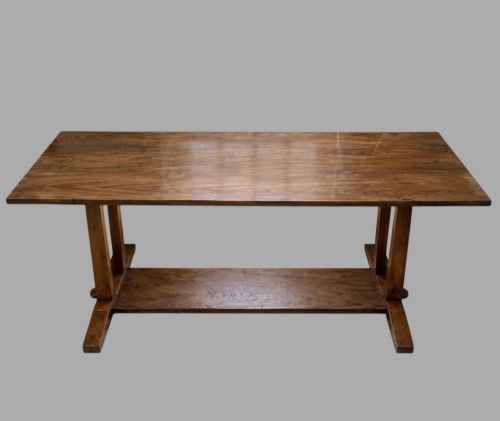
An edwardian refectory dining table combines long, narrow proportions with sturdy trestle or slab ends, designed originally for communal dining halls and large kitchens.
Most examples found here date from the Edwardian period or around nineteen hundred, often showing influences from the Arts and Crafts movement or Jacobean Revival styles.
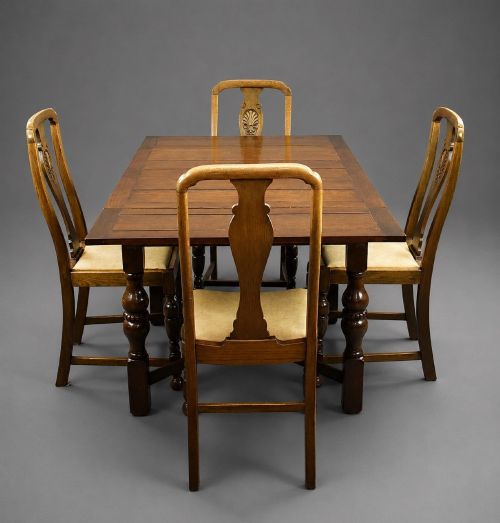
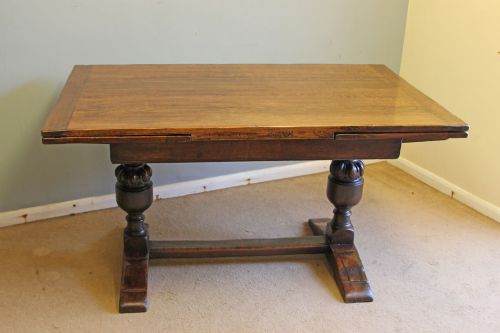
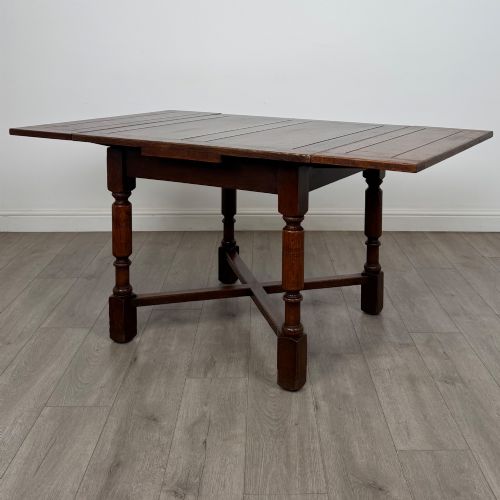
Buyers will encounter both fixed timber tops and extending mechanisms such as draw leaves, accommodating gatherings from six to ten guests.
Materials and Construction
Makers relied heavily on solid oak, quarter-sawn oak, and occasionally pine or walnut, selecting timber for durability and distinct grain patterns.
Construction methods involved pegged joints, solid slab supports, and sometimes cast iron bracing, ensuring the structural stability required for heavy daily use.
Some tables retain ink stains from school libraries and public halls, recording generations of communal dinners.
Assessing the Pieces
The choice of timber grade and the presence of quarter-sawn figuring set individual pieces apart, influencing both the visual depth of the surface and its resilience.
Joinery execution and the integrity of extending mechanisms determine how smoothly a table functions and how well it withstands regular movement.
Heals of London·Maple and Co·Sir Robert Lorimer
The Edwardian Refectory Dining Table Glossary
- Refectory table
- A long, narrow dining table traditionally used in monasteries and large institutions, adapted for domestic spaces by the early twentieth century.
- Draw leaf
- An extending table mechanism featuring two hidden leaves beneath the main top that pull out from each end to increase seating capacity.
- Quarter-sawn oak
- Timber cut radially across the growth rings, producing a characteristic striped or flecked grain pattern prized for stability and appearance.
- Trestle ends
- Vertical slab or framed supports positioned near the ends of a table rather than conventional legs at each corner.
Edwardian Refectory Dining Table: Frequently Asked Questions
How many people do these tables seat?
Most standard examples comfortably seat six to eight guests, while larger formats accommodate ten or more.
Extending variants provide flexibility for daily use alongside larger gatherings.
Where were these tables originally used?
The form originates from large communal dining halls in monasteries, schools, and public institutions.
Domestic versions emerged in English country houses, farmhouses, and town residences during the Edwardian era.
How do I identify an Edwardian piece?
Look for characteristic construction details, timber selections, and design influences such as Arts and Crafts simplicity or Jacobean Revival carving.
Date attribution often relies on recorded stylistic markers and period workshop practices from around nineteen hundred.
Are benches common with these tables?
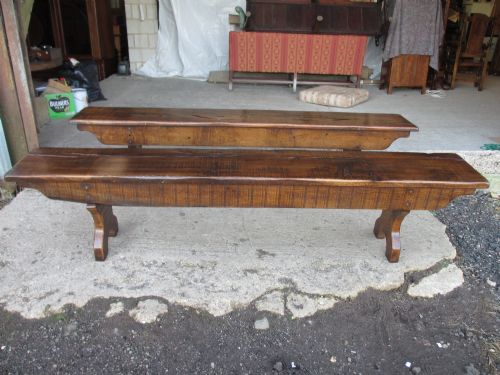
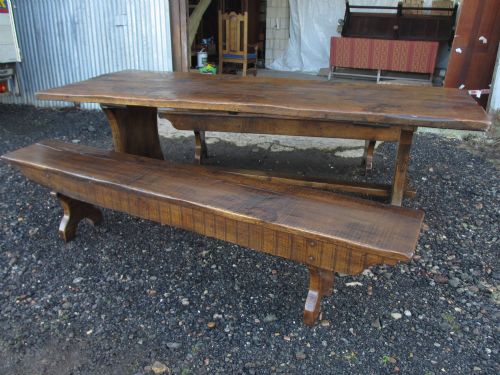
Matching benches with shaped trestle ends frequently accompany the tables, mirroring their construction and timber.
Set configurations often include paired benches alongside standard dining chairs.