







Edwardian Purdonium
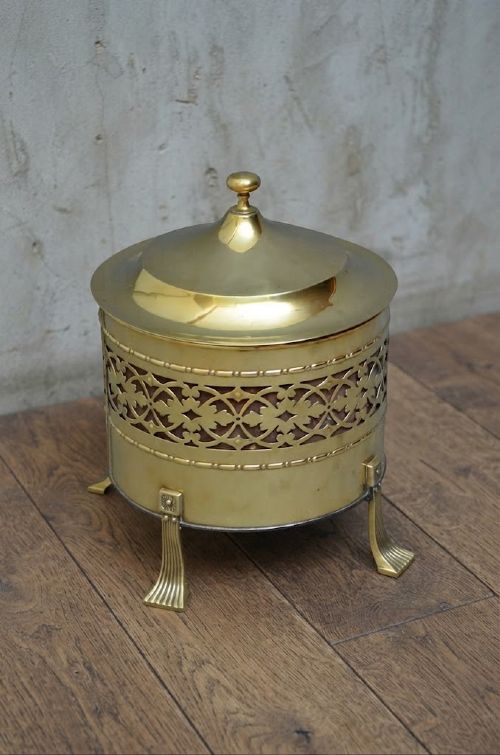
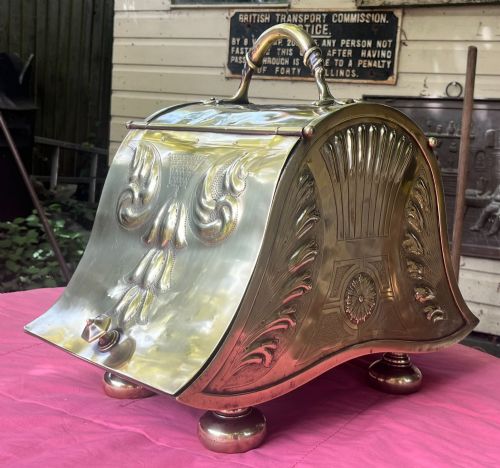
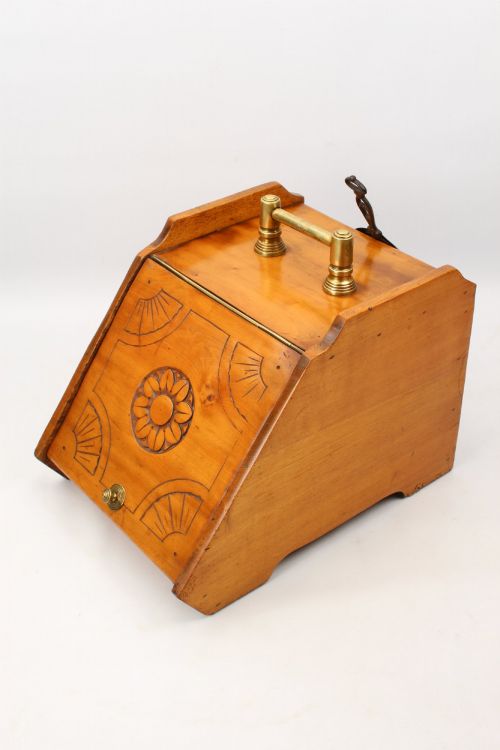
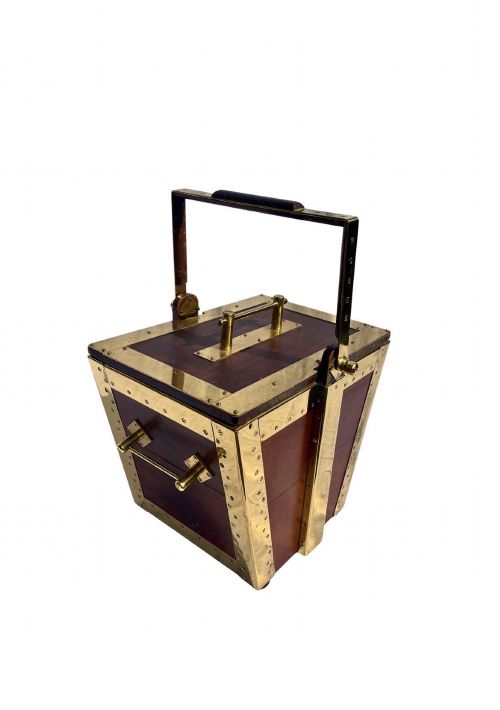
An Edwardian purdonium is a fireside coal container designed to keep solid fuel tidy beside the grate.
Edwardian Purdonium
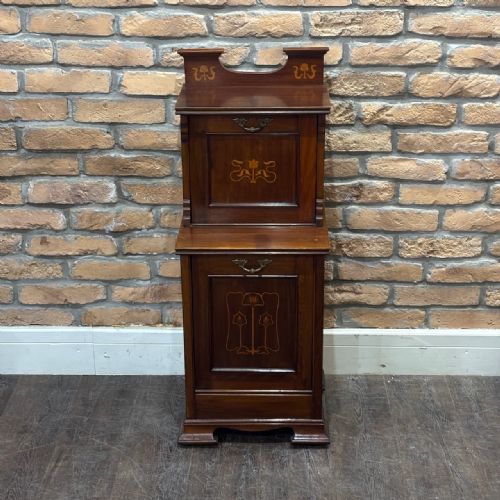
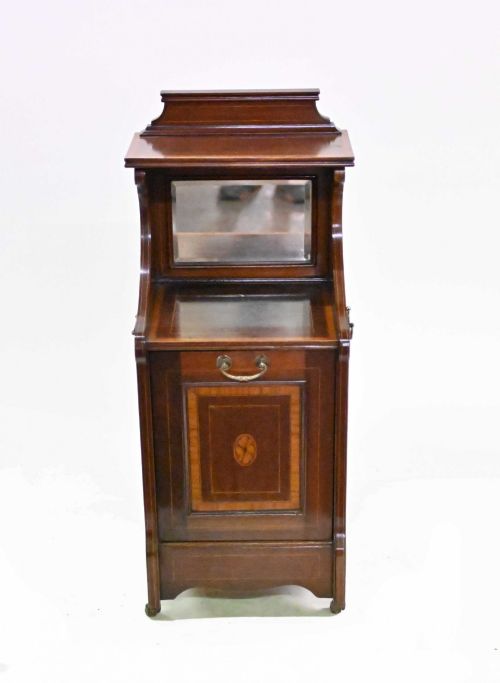
An Edwardian purdonium is an essential fireside accessory designed to store coal and logs neatly by the hearth. The pieces on this page span the Victorian and Edwardian periods, stretching from the late nineteenth century into the early twentieth century.
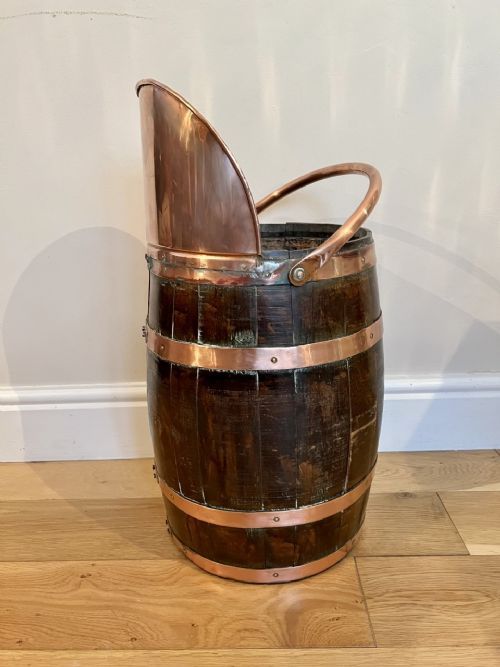
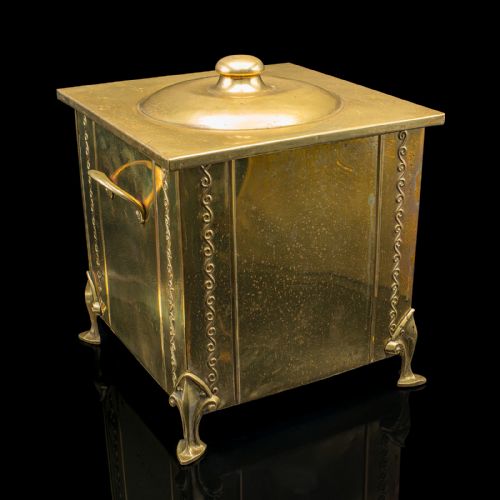
You will encounter a range of forms here, from traditional wooden coal boxes and drop-front purdoniums to open brass buckets and cylindrical bins. Many examples include internal metal liners and dedicated compartments for a coal shovel.
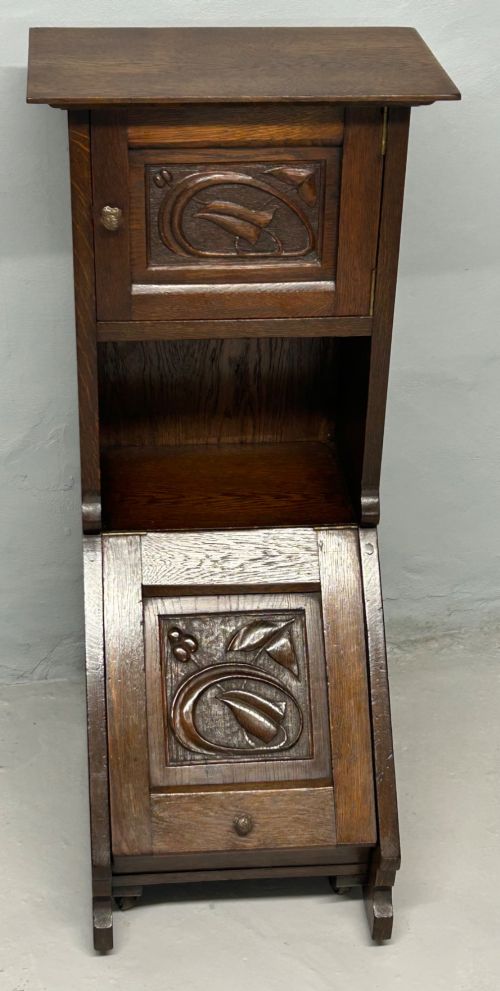
Makers of the period drew upon diverse stylistic influences including Arts and Crafts, Art Nouveau, Neoclassical Revival, and Rococo Revival. These aesthetic movements shaped the decorative vocabulary of everyday domestic items.
Materials and construction
Timbers such as oak, mahogany, walnut, and rosewood form the structural carcass of wooden cabinets and box purdoniums. Artisans frequently embellished these wooden surfaces with marquetry inlay, intricate carvings, and contrasting borders.
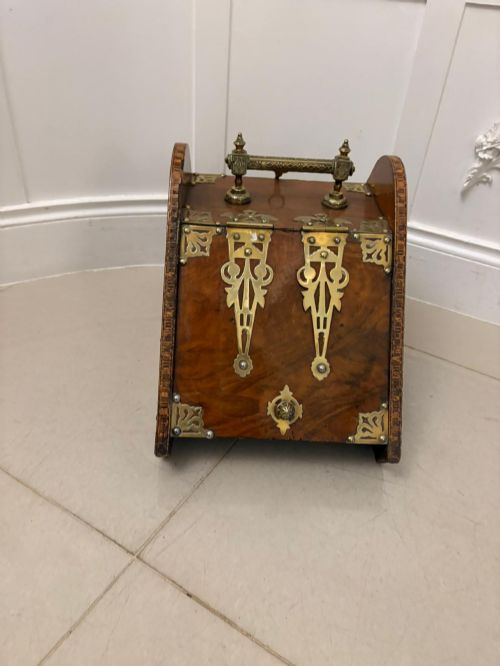
Metalworking played a central role, utilising brass, copper, and iron for bodies, hinges, handles, and mounts. Heavy gauge sheet metal and cast elements provided the durability required for daily handling of heavy coal and logs.
Edwardian Purdonium Retail Price Guide 2026
Typical asking prices for edwardian purdonium among the pieces listed under this phrase on Sellingantiques today, from the lower quarter to the upper quarter. They describe what is for sale here now, not the wider market.
The design styles recorded range from Victorian and Edwardian to Arts and Crafts and Art Nouveau.
Distinctions in craftsmanship
Quality reveals itself in the integrity of the joinery and the weight of the metal components used throughout the construction. Superior boxes exhibit precise cabinetwork and substantial gauge brass or copper that resists denting.
The refinement of decorative details separates standard utilitarian containers from exceptional parlour pieces. Fine examples display crisp marquetry, well-cast ormolu mounts, or characteristic hammered surfaces associated with the Arts and Crafts movement.
The Edwardian Purdonium Glossary
- Marquetry inlay
- The art of applying decorative pieces of wood veneer to a structural surface to create pictorial or geometric patterns. This technique frequently decorated fine Victorian and Edwardian cabinet furniture.
- Fretwork
- Ornamental woodwork perforated with patterns by means of a scroll saw or piercing technique. It appeared on lighter fireside buckets and decorative panels.
- Ormolu
- Gilded bronze or brass applied as decorative mounts on furniture and metalwork. It added a bright metallic accent to dark timber surfaces.
Edwardian Purdonium: Frequently Asked Questions
What is a purdonium?
A purdonium is a dedicated fireside container built to house coal out of sight beside the fireplace. These pieces combine practical fuel storage with refined decorative cabinetry.
Most feature a hinged or drop-down front to allow easy access for a coal shovel. They became particularly popular during the Victorian and Edwardian eras when hearths required constant tending.
How do I use a purdonium today?
Many people continue to use these historic containers beside open fires or wood-burning stoves for storing logs and kindling. They keep fuel organised while adding period character to a room.
Alternatively, larger metal buckets and brass bins frequently serve as planters or umbrella stands. Their waterproof liners make them practical for holding potted foliage in a hallway.
How do I identify an Edwardian purdonium?
Edwardian examples typically date from around the turn of the twentieth century and often utilise lighter timbers such as oak or mahogany. They frequently incorporate inlaid decoration or brass fittings influenced by Arts and Crafts design.
Earlier Victorian pieces tend to be heavier, utilising dense dark woods like rosewood and walnut with elaborate carved or ormolu-mounted details.
Did purdoniums come with accessories?
Many original purdoniums and coal boxes were manufactured with matching interior metal liners to contain coal dust and moisture. Some designs also included dedicated side brackets or internal clips to hold a small shovel.
Retaining the original metal liner and shovel adds to the completeness of the piece. However, many surviving examples have lost these secondary accessories over time.