

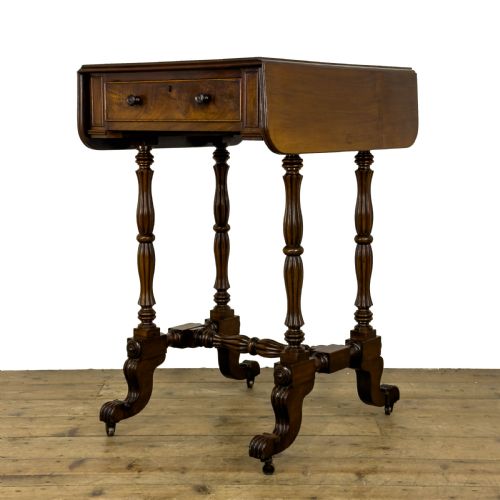

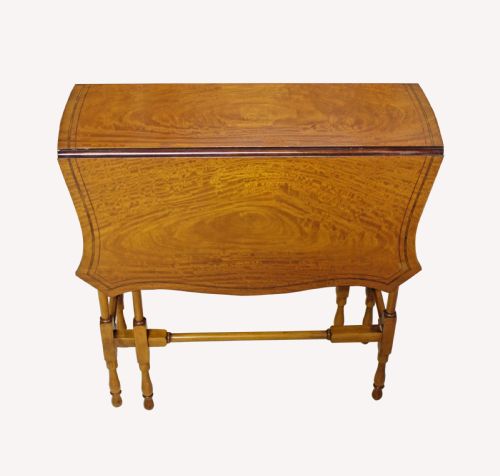


Edwardian Pembroke Desk
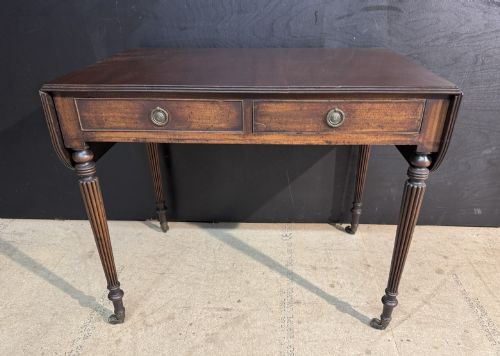
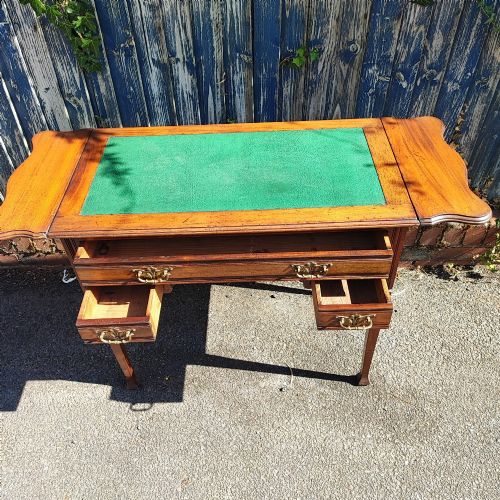
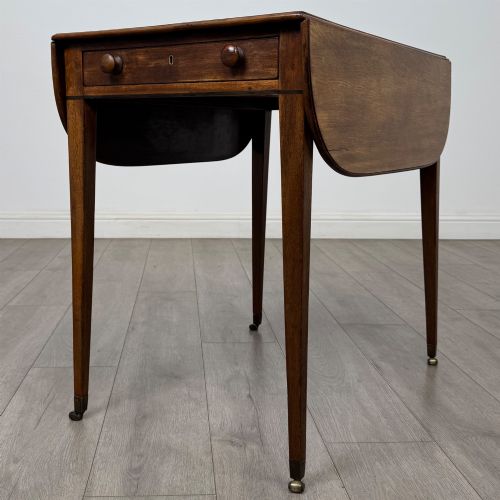
These pieces known as an edwardian pembroke desk are practical drop-leaf writing tables that suit a study or sitting room.
Edwardian Pembroke Desk
An edwardian pembroke desk brings together drop-leaf tables and writing furniture, often appearing as occasional tables, side tables, and sofa tables. These pieces span periods from the Georgian era through the Victorian period and into the Edwardian years.
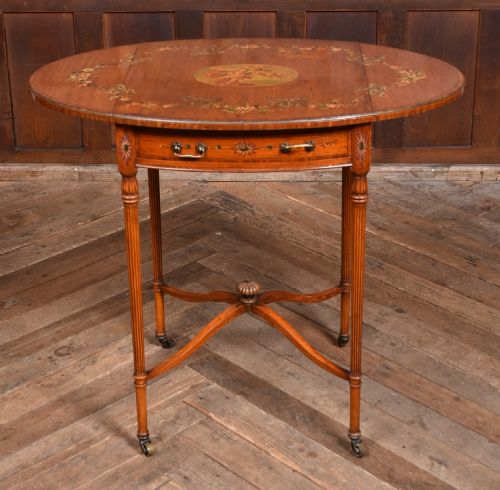
The versions most commonly met on this page include mahogany and satinwood drop-leaf tables that feature boxwood inlay and brass elements. They serve as compact writing tables and occasional surfaces for everyday rooms.
How They Were Made
Makers utilised solid timber and veneers such as mahogany, satinwood, oak, and pine to construct the frames and drop-leaves of these tables. Boxwood inlay adds linear detail to the wood surfaces.
Brass fittings, including castors and handles, are incorporated alongside leather writing surfaces. Iron components appear in structural fastenings while secondary woods like pine form the internal framework.
Edwardian Pembroke Desk Retail Price Guide 2026
Typical asking prices for edwardian pembroke desk among the pieces listed under this phrase on Sellingantiques today, from the lower quarter to the upper quarter. They describe what is for sale here now, not the wider market.
Listings feature mahogany, satinwood, oak, and pine alongside brass and leather components.
What Varies in Quality
The refinement of the timber selection and the precision of the boxwood inlay distinguish finer examples from simpler workshop output. Cabinetmakers who paid closer attention to grain matching and decorative stringing produced superior pieces.
The handling of brass mounts and the integrity of the drop-leaf action dictate the overall standard of construction. Pieces that retain their original brass elements and smooth-moving flaps demonstrate greater care in manufacture.
Andrew Thomson And Sons
The Edwardian Pembroke Desk Glossary
- Pembroke table
- A small drop-leaf table featuring two hinged flaps on opposite sides. This form was originally designed for breakfast or light writing use.
- Satinwood
- A pale, lustrous hardwood often used for high-status veneers and decorative inlay work in furniture. It provides a striking contrast against darker timbers.
- Boxwood inlay
- Narrow strips of pale boxwood set flush into the timber surface to create geometric borders and decorative lines. This technique enhances the visual definition of table tops and drawer fronts.
- Drop-leaf
- A hinged table leaf that can be raised to extend the surface area or lowered when space is restricted. It relies on wooden or metal brackets for support.
Edwardian Pembroke Desk: Frequently Asked Questions
What is an Edwardian Pembroke desk?
An Edwardian Pembroke desk is a small drop-leaf table adapted for writing, combining the folding flaps of a Pembroke table with a writing surface.
These pieces typically date from the early twentieth century and incorporate decorative woods like satinwood and mahogany.
How were these drop-leaf tables used?
They served as versatile occasional furniture for writing, sewing, or light dining in sitting rooms and parlours.
The drop leaves allowed the table to expand when needed and fold down to save space against a wall.
How do I tell Edwardian pieces from earlier styles?
Edwardian versions often feature lighter satinwood veneers and delicate boxwood inlay compared to heavier Georgian and Victorian examples.
Makers of this period also drew heavily on earlier neoclassical motifs while updating the proportions for smaller domestic spaces.
What woods are commonly found on these tables?
Mahogany and satinwood are the primary visible timbers used for the tops and drop leaves of these tables.
Secondary woods like pine and oak appear in the drawer linings and internal framing.