




Edwardian Painted Lamp Stand
These edwardian painted lamp stand pieces bring hand-decorated surfaces and vertical form to a room, offering a distinctive focal point for interior lighting.
Edwardian Painted Lamp Stand
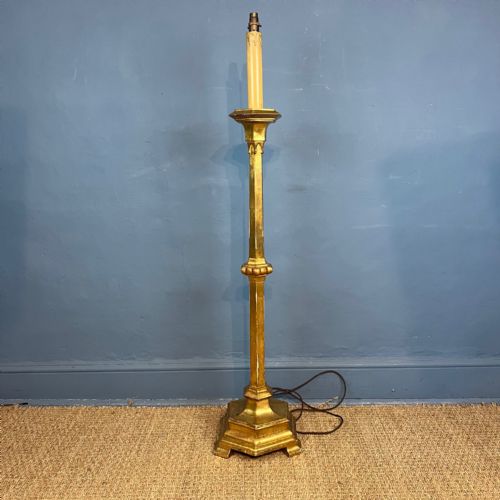
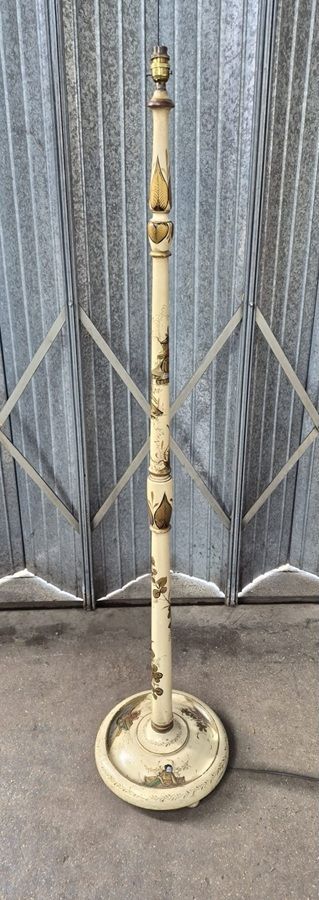
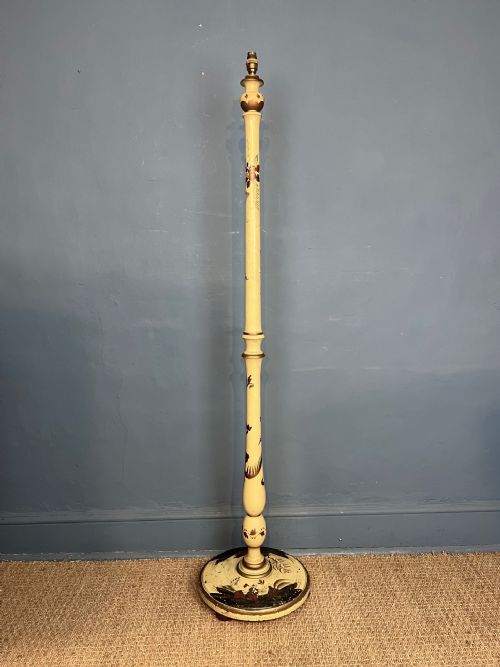
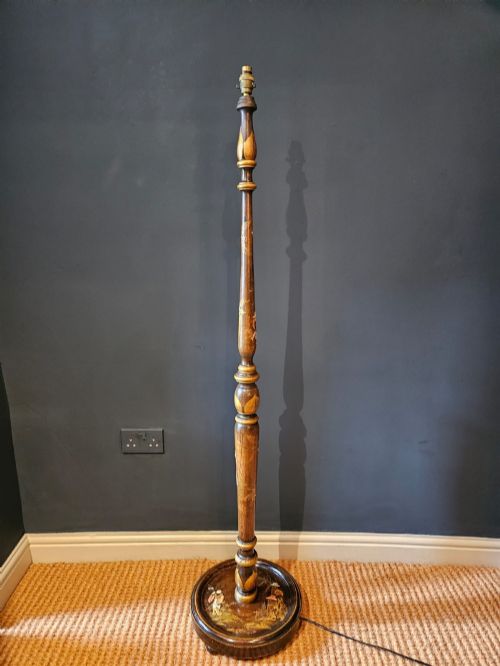
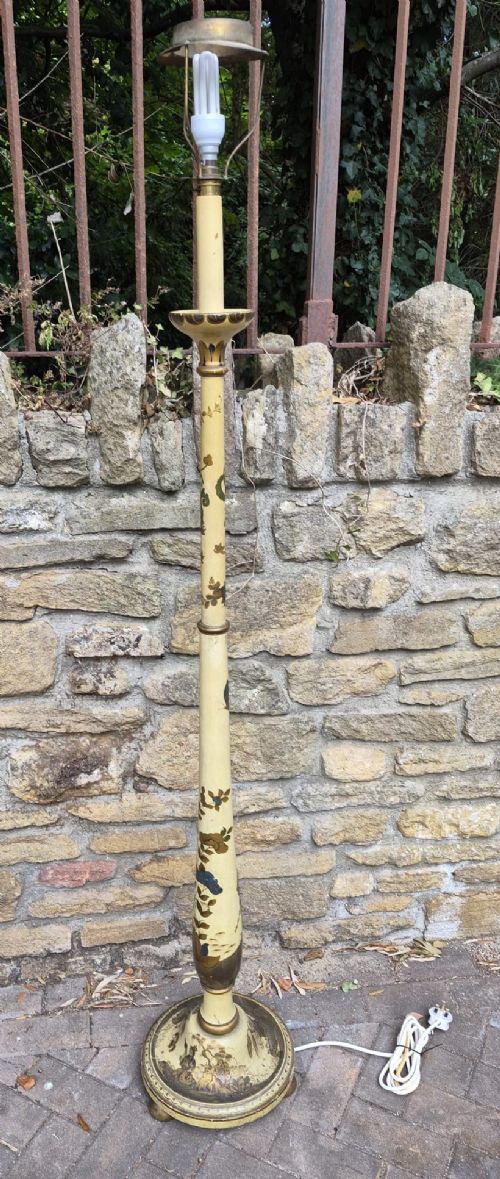
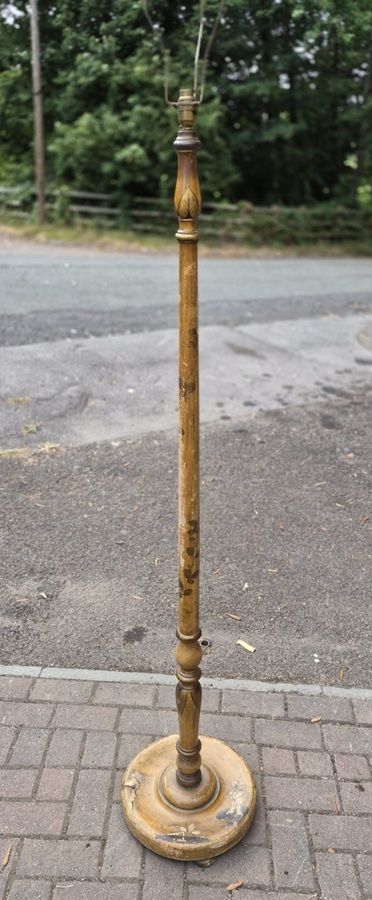
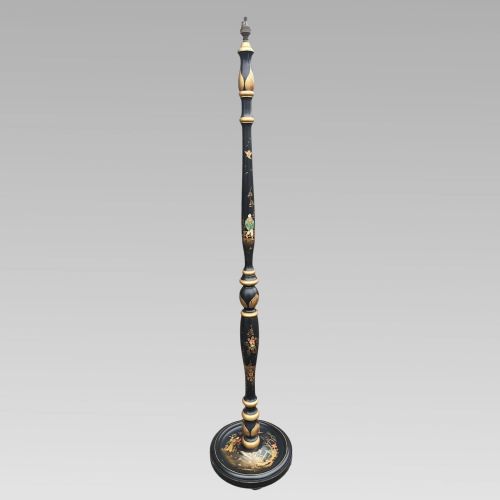
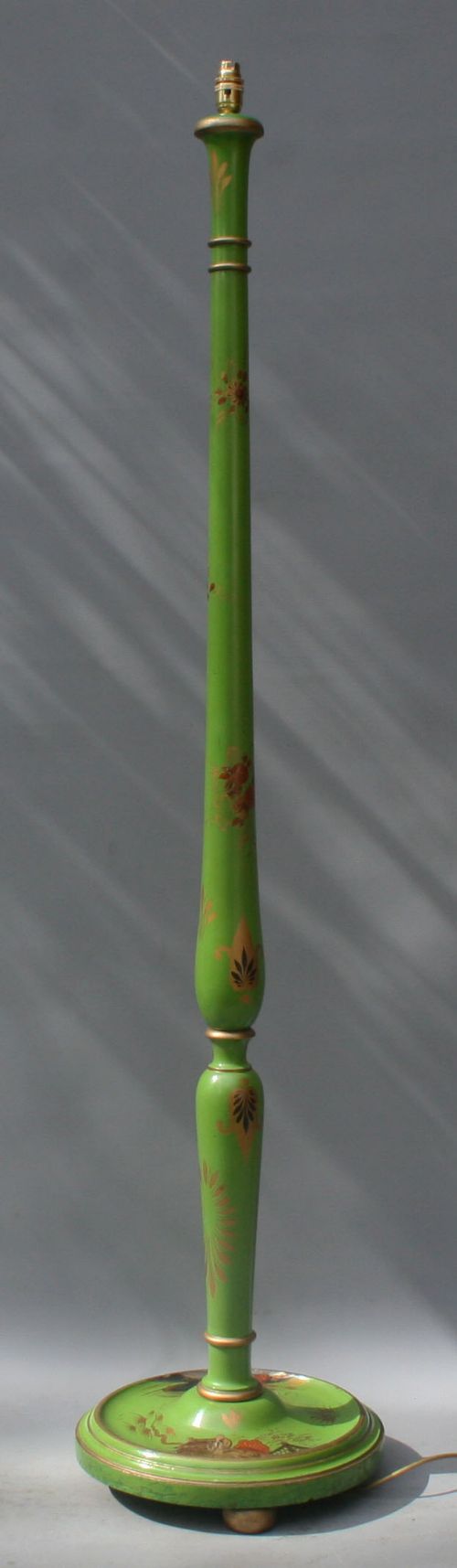
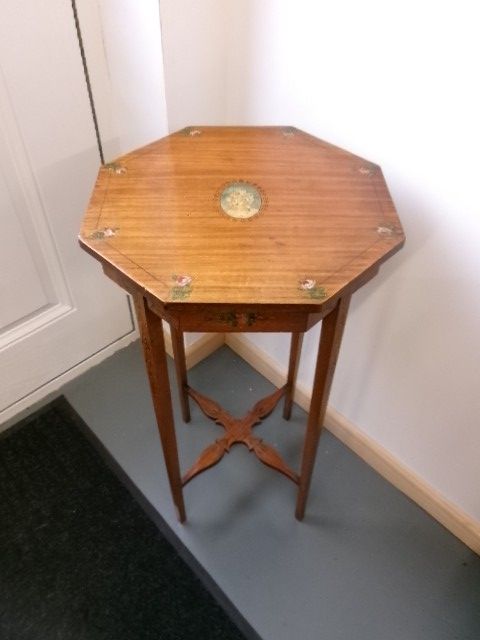
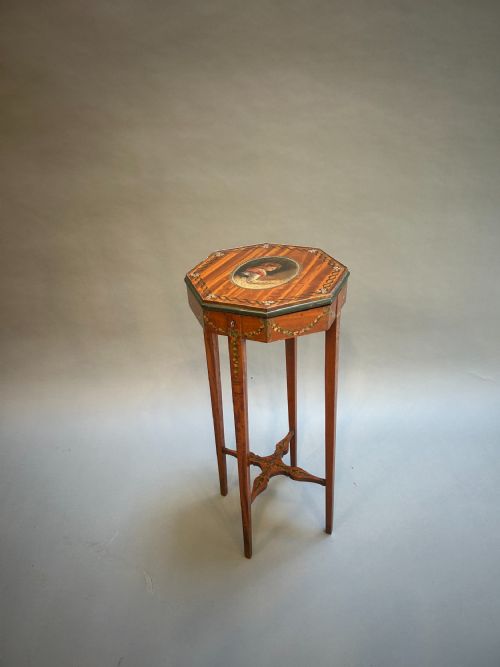
An edwardian painted lamp stand combines functional illumination with decorative woodwork, serving as a prominent vertical feature in a room. These pieces range from dedicated standard lamps to occasional tables adapted for lighting.
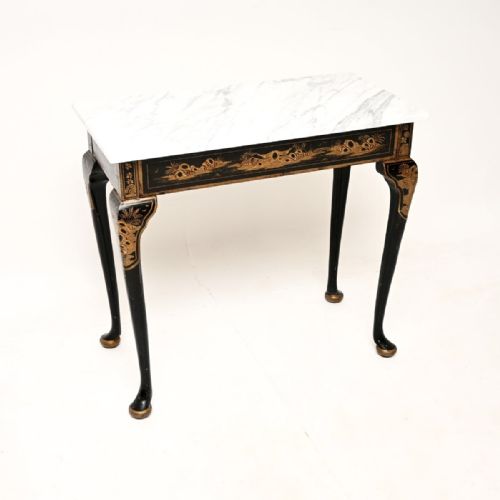
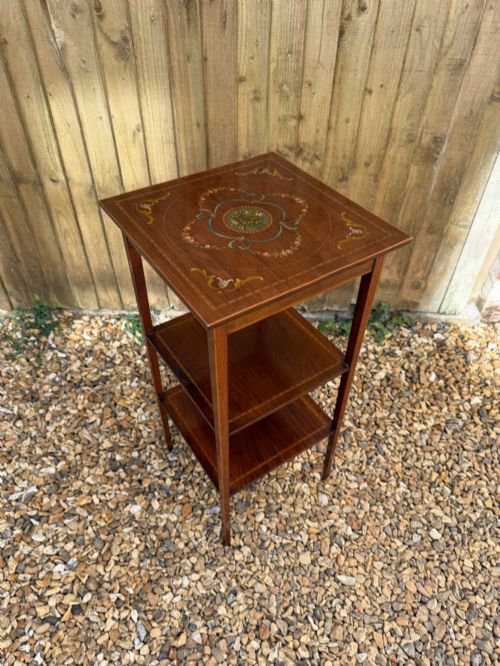
The selection on this page centres on standard lamps and floor lamps alongside side tables and occasional tables. Forms vary from slender turned columns to octagonal table surfaces.
Origins span the Edwardian era alongside Victorian, Sheraton Revival, and later periods up to the 1930s. Makers drew on Chinoiserie, Neoclassical, and classical revival vocabularies to ornament the timber bases.
Materials and construction
Makers utilised wood, painted wood, lacquered wood, and satinwood as the primary structural and visual foundations. Brass elements frequently appear in fittings or bases, while fabric supplies the accompanying shades.
Surface ornamentation relies on paint and lacquer applied to ivory grounds, black lacquer, and mahogany or satinwood bodies. Hand-painted motifs draw heavily on Chinoiserie and Neoclassical design repertoires.
Edwardian Painted Lamp Stand Retail Price Guide 2026
Typical asking prices for edwardian painted lamp stand among the pieces listed under this phrase on Sellingantiques today, from the lower quarter to the upper quarter. They describe what is for sale here now, not the wider market.
Certain lamps wear their painted pagodas with such confidence that the living room practically demands a cup of lapsang souchong.
Gradations in quality
The refinement of the hand-painted decoration separates standard examples from finer pieces. Detailed Chinoiserie scenes and crisp Neoclassical motifs demand greater painterly skill than repetitive floral borders.
The choice of timber substrate dictates the baseline construction standard. Solid satinwood and quality mahogany provide a more substantial carcass than softer painted woods.
The Edwardian Painted Lamp Stand Glossary
- Chinoiserie
- European artistic interpretation of Chinese and East Asian motifs, frequently featuring figures, pagodas, and landscapes rendered in gold and colour upon a dark or ivory lacquer ground.
- Satinwood
- A durable, lustrous hardwood with a natural yellow sheen, frequently utilised in fine cabinetmaking and favored as a smooth canvas for hand-painted decoration.
- Standard lamp
- A tall, free-standing floor lamp designed to hold a light fitting and shade at height, often featuring a weighted base or table tier.
- Sheraton Revival
- A late nineteenth and early twentieth century design movement that reinterpreted the elegant, classical furniture forms of George Sheraton, often incorporating delicate painted finishes.
- Etagere
- A piece of furniture consisting of a set of open shelves for displaying small objects, sometimes integrated into the design of occasional tables.
Edwardian Painted Lamp Stand: Frequently Asked Questions
Where should I place an Edwardian painted lamp stand?
These pieces function effectively in corners or beside seating where vertical height and soft illumination are required. Their decorative surfaces allow them to act as standalone focal points within a room.
Ensure the placement protects the painted or lacquered finish from direct, prolonged sunlight to prevent fading. Adequate clearance prevents accidental knocks to the shade or standard.
How do I identify a Chinoiserie standard lamp?
Chinoiserie standard lamps feature hand-painted oriental motifs such as figures, pavilions, and floral sprays set against a black or ivory lacquer ground. The decoration is applied directly to the timber column or base.
These designs often reflect Victorian and Edwardian interpretations of East Asian art, combining tall vertical proportions with detailed pictorial storytelling.
What is the difference between a lamp stand and a side table?
A lamp stand primarily supports a vertical lighting column and shade, whereas a side table provides a flat surface for holding objects. Some pieces combine both functions by incorporating a small tabletop midway up the standard.
Examination of the top surface reveals whether the piece was built primarily to mount a light fitting or to serve as a functional table.
How do I care for painted wood and lacquer?
Dust the surface regularly with a soft, dry cloth to prevent the accumulation of abrasive particles. Avoid liquid cleaners, silicone polishes, and excessive moisture, which can damage aged paint and lacquer.
Maintaining a stable room temperature and humidity level protects the underlying timber from movement that could otherwise crack the painted finish.