

Edwardian Padlock
These edwardian padlock pieces are secure fastenings and sentimental charms that bring tangible weight to early twentieth-century jewellery.
Edwardian Padlock
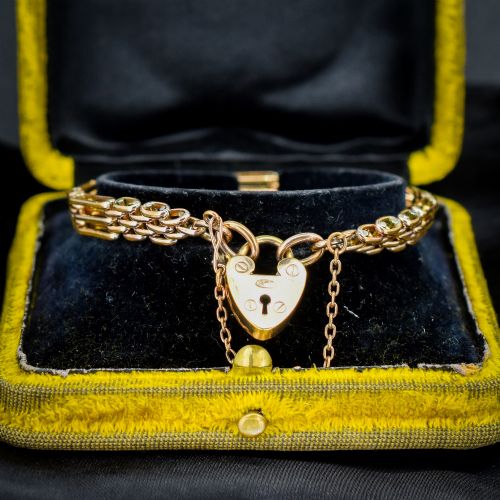
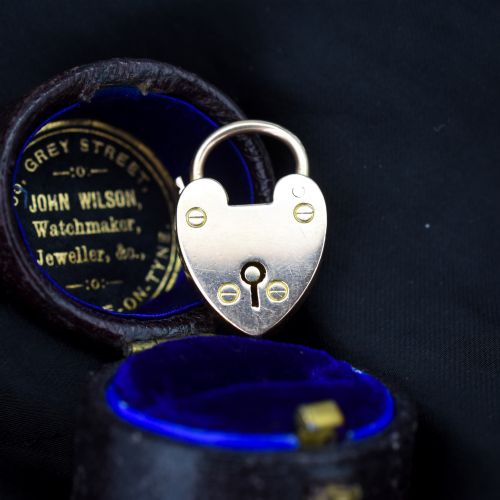
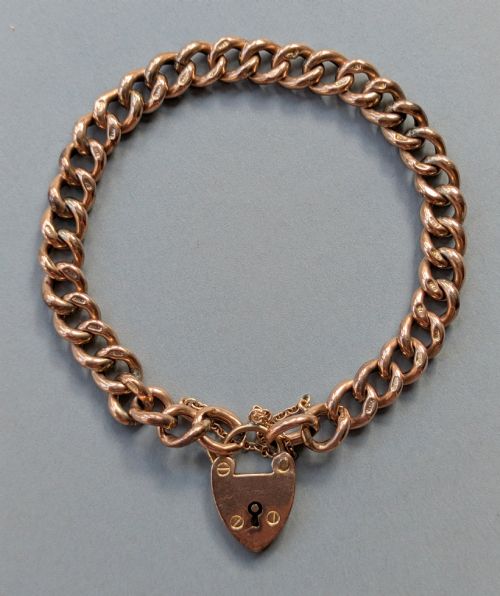
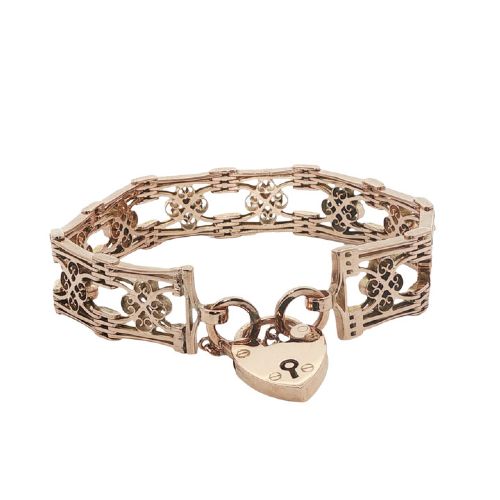
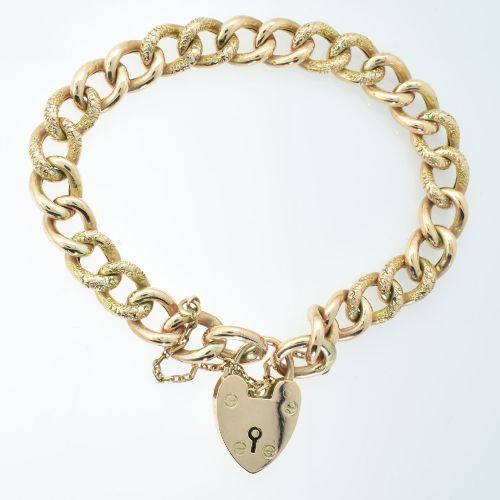
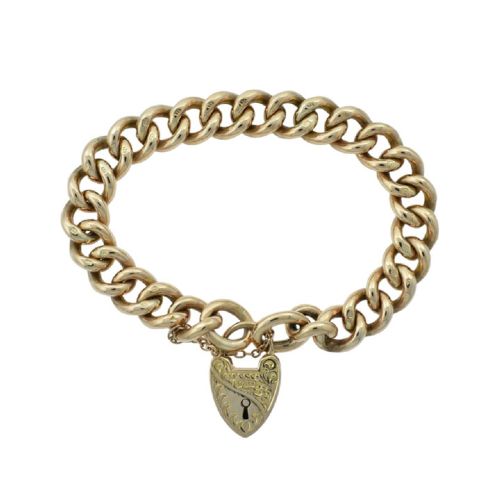
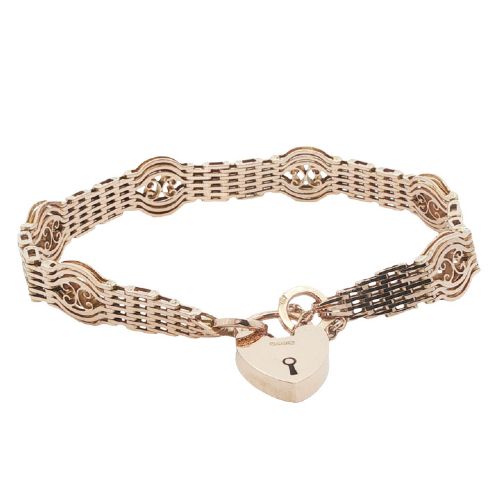
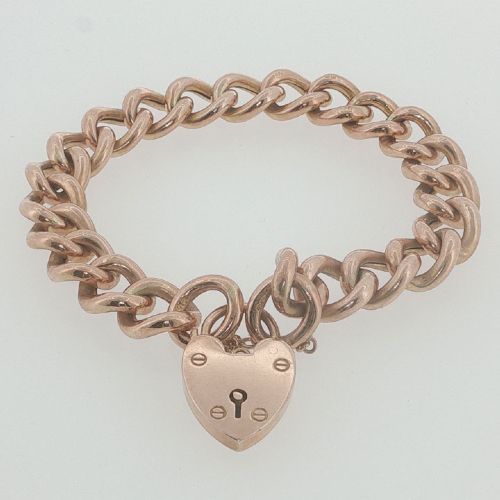
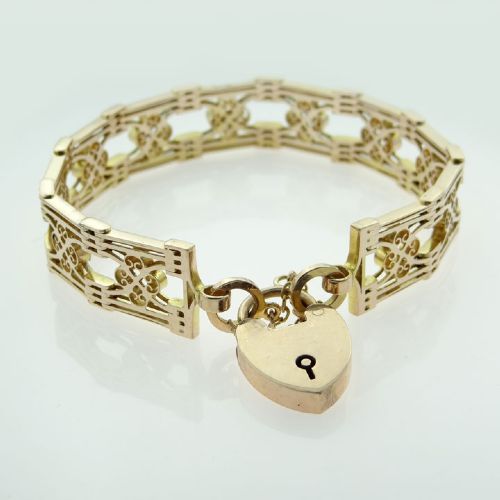
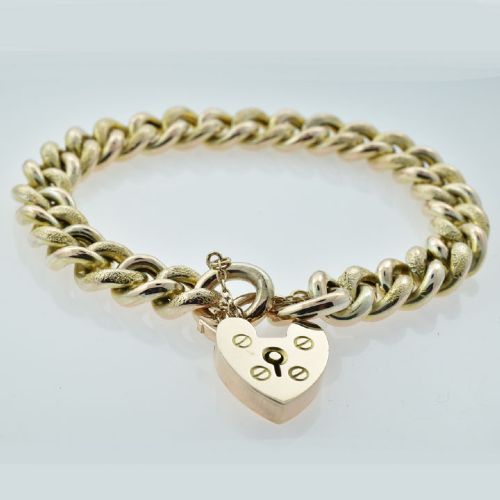
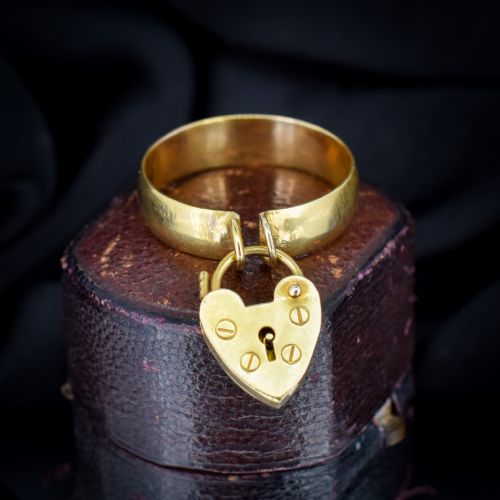
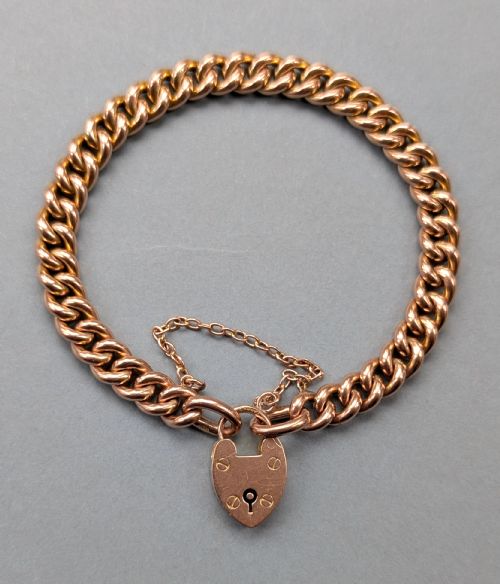
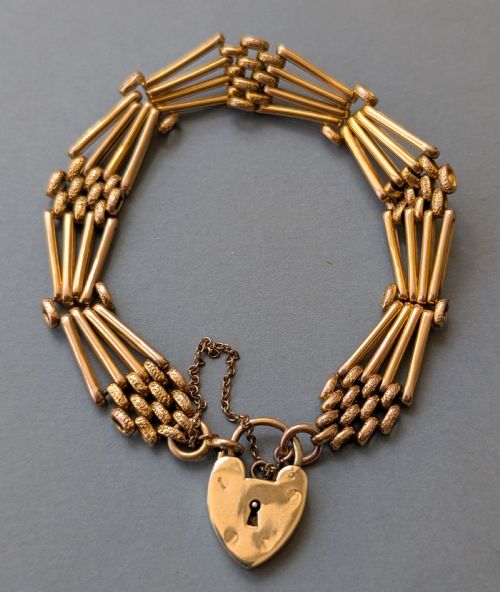
When you search for an edwardian padlock, you encounter small, functional fasteners made into decorative heart shapes or utilitarian objects. The pieces on this page are predominantly gold heart padlocks attached to curb link or gate bracelets from the early 1900s.
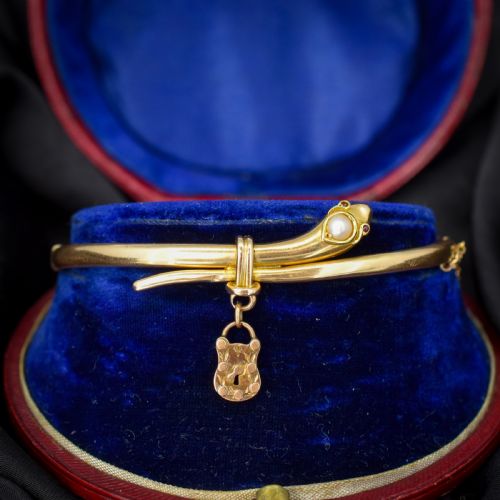
Beyond bracelets, the selections span pendants, charms, and rings that incorporate these distinctive mechanisms. They originate largely from the Edwardian era and the surrounding years of the early twentieth century.
These items served both a practical purpose in securing heavy link bracelets and a deeply romantic function as tokens of affection. Their enduring appeal lies in this dual nature of mechanical utility and sentimental design.
Materials and construction
Makers shaped these items primarily from yellow and rose gold, utilising various purities including 9ct, 15ct, and 18ct rolled gold alongside silver and brass. The rose gold variants display the characteristic warm tone favoured during the period.
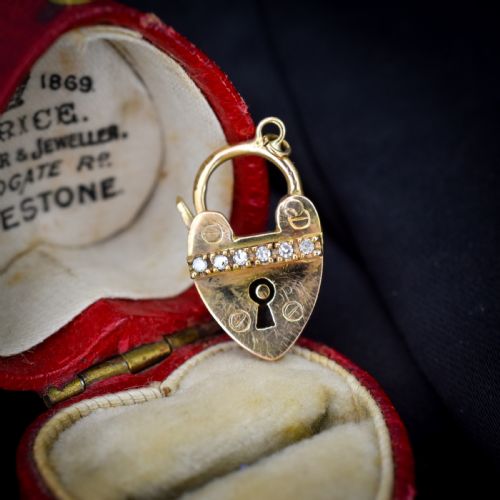
Craftsmen often embellished the gold surfaces with hand engraving, half-engraved patterns, or incorporated decorative stones such as pearls, diamonds, and Scottish agate. Functional hinges and spring-loaded mechanisms allowed the padlocks to open and secure reliably.
Edwardian Padlock Retail Price Guide 2026
Typical asking prices for edwardian padlock among the pieces listed under this phrase on Sellingantiques today, from the lower quarter to the upper quarter. They describe what is for sale here now, not the wider market.
Some padlocks double as tiny opening purses, proving that even a functional clasp can harbour space for a secret memento.
Distinctions in craftsmanship
The standard of an edwardian padlock rests upon the crispness of its hand engraving and the structural integrity of its internal spring mechanism. Superior examples retain a firm snap when closed and show minimal wear to the delicate hinges.
Material weight and purity also set pieces apart, with solid higher-carat gold and intricate multi-link chains representing more substantial manufacture. The presence of clear hallmarks or stamps indicating the assay office and date adds tangible historical record to the object.
The Edwardian Padlock Glossary
- Curb link
- A type of chain formed by interlocking, uniform links that lie flat. This construction provides the strength needed to support a heavy padlock.
- Gate bracelet
- A style featuring parallel bars connected by small links, resembling a garden gate. These frequently host an edwardian padlock as a clasp.
- Rolled gold
- A material made by bonding a thin sheet of gold to a base metal core. It offers the appearance of solid gold with greater durability for daily wear.
- Niello
- A black metallic alloy used to fill incised designs on silver. This technique creates high-contrast geometric or floral patterns.
- Assay mark
- A stamp indicating the purity of the metal and the testing office. These tiny marks help establish the date and origin of jewellery.
Edwardian Padlock: Frequently Asked Questions
What is an edwardian padlock?
An edwardian padlock is a small, decorative clasp, typically heart-shaped, used to secure charm bracelets and chains during the early twentieth century.
These pieces functioned both as practical security devices and as sentimental tokens exchanged between loved ones.
How do you open them?
Most of these padlocks operate via a small internal spring mechanism pushed by a thumbnail or fingernail. Depressing the hinged arm releases the bail so the lock can open from the bracelet.
Original keys were rarely kept because the locks were designed to secure permanently once fastened onto a chain link.
Were they worn daily?
Women wore heavy gold charm bracelets and gate bracelets secured by these padlocks as staple everyday jewellery. The solid metal construction allowed them to withstand constant wear without bending or breaking.
Heavier versions remained securely fastened on the wrist for years, becoming personal signatures of the wearer.
How do I date them?
Dating relies on hallmarks stamped onto the metal, indicating the assay office, metal purity, and year letter. Stylistic markers such as rose gold content and hand-engraved scrollwork also point to the early 1900s.
Comparing the link style of the attached bracelet often confirms whether the padlock and chain are original to one another.