


Edwardian Padded Settee
An edwardian padded settee brings domestic comfort and fine inlay together, offering a compact seat for a salon or bedroom.

Edwardian Padded Settee
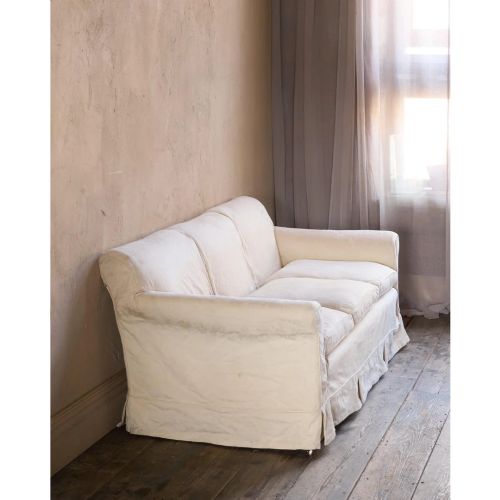
When you search for an edwardian padded settee, you look at seating built around the turn of the twentieth century, alongside related pieces from the late Victorian period. The selection includes salon settees, country house sofas, and twin bedroom seats.
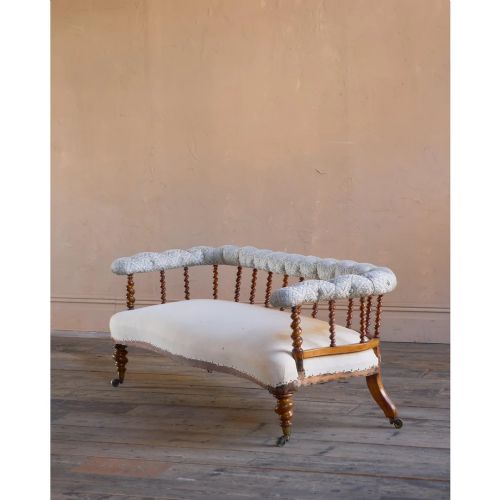
Most examples found here date from nineteen hundred to nineteen ten, or span the wider Edwardian and Victorian eras. Forms range from simple spindle backs to elaborate inlaid designs in mahogany and satinwood.
How they were made
Cabinet makers constructed these frames predominantly from mahogany, often enhancing the timber with delicate satinwood inlay. Turned and carved woodwork gives structural form to the arms and legs.
Upholstery relied on traditional fabric coverings, including velvet, calico, linen, and patterned textiles. Brass elements occasionally appeared in castors or decorative mounts.
Some nineteenth-century makers evidently decided that sitting comfortably required a dedicated end-of-bed sofa for contemplation.
What varies in quality
The refinement of the woodwork dictates much of the value, particularly the crispness of carved details and the precision of satinwood inlay. Simpler salon chairs sit at one end, while elaborate country house pieces occupy the upper tier.
The choice of covering fabrics and the execution of the initial upholstery work also separate standard production from finer commissions. Turn-of-the-century pieces show distinct divergence between utilitarian frames and ornate parlour seating.
C. Hindley & Sons
The Edwardian Padded Settee Glossary
- Mahogany
- A durable tropical hardwood favoured for high-end furniture frames throughout the nineteenth and early twentieth centuries. Its rich reddish-brown tone took a fine polish.
- Satinwood
- A lustrous light-coloured timber used extensively for decorative stringing and contrasting inlay panels on Edwardian furniture. It creates sharp visual distinction against darker woods.
- Calico
- A plain-woven cotton fabric commonly employed as an inner lining or base layer beneath primary upholstery. It provides a stable foundation for top covers.
- Spindle back
- A chair or settee back constructed with a row of slender, turned wooden rods. This style appears frequently on nineteenth-century salon seating.
Edwardian Padded Settee: Frequently Asked Questions
What is an Edwardian padded settee?
An Edwardian padded settee is a upholstered two-seat sofa produced during the early twentieth century, designed for drawing rooms, bedrooms, or parlours.
These pieces combine wooden frames, often in mahogany with satinwood inlay, with traditional fabric upholstery.
How do I date these settees?
Dating relies on stylistic markers such as Edwardian inlay work, Victorian carved turnings, and the transition from nineteenth-century forms to nineteen-ten designs.
Makers often utilised specific wood combinations and upholstery methods characteristic of their decade.
Where were these settees used?
Original placements included country house reception rooms, grand bedrooms, and formal town salon spaces.
They served as comfortable secondary seating rather than heavy primary loungers.
What materials are typical?
Frames are constructed primarily from mahogany, occasionally featuring satinwood inlay and brass details.
Upholstery materials range from velvet and linen to simpler calico foundations.