




Edwardian Oak Study Chairs
Edwardian oak study chairs bring robust practicality and warm timber tones to a home workspace, combining durable frames with comfortable seating.
Edwardian Oak Study Chairs
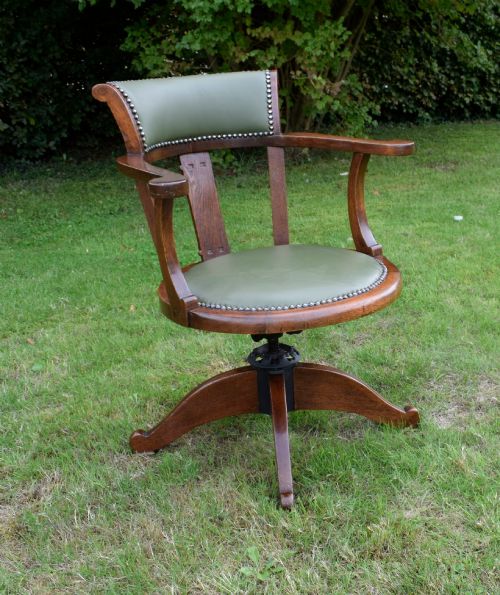
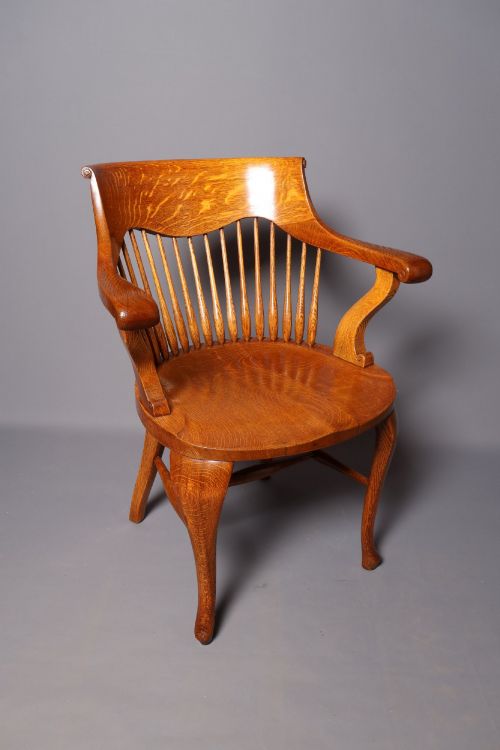
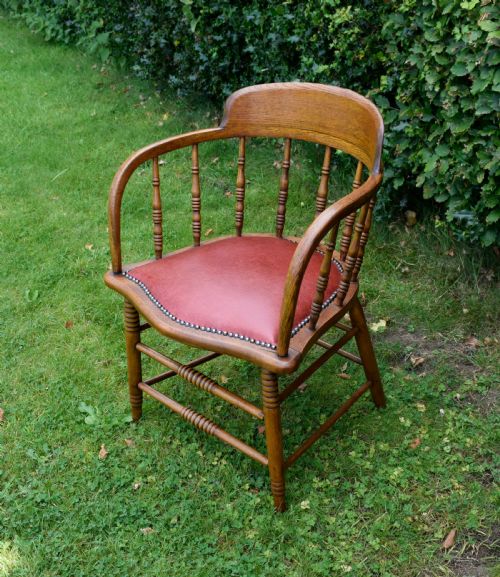
Edwardian oak study chairs are practical seating options designed for desks, offices, and libraries, frequently appearing alongside Victorian and early twentieth-century examples on this page. These pieces combine sturdy timber frames with functional forms such as swivel mechanisms, adjustable heights, and traditional armchairs.
What varies in quality
Quality differences lie in the substance of the timber and the integrity of the original mechanical elements, such as swivel mechanisms and height adjustments. Pieces retaining their original leather upholstery or tan hide display superior preservation compared to later replacements.
Refinement of style also distinguishes the range, separating plain utilitarian office seating from pieces exhibiting distinct Arts and Crafts, Gothic Revival, or Aesthetic Movement design characteristics.
Several swivel chairs still retain the slight lean of a diligent clerk at the end of a long ledger.
Kendrick & Jefferson·Edward William Godwin·A.W.N. Pugin
The Edwardian Oak Study Chairs Glossary
- Bergere
- A type of upholstered armchair with cane or wicker panels set into the wooden frame. This construction method offers a lighter visual appearance while maintaining structural support.
- Smokers Bow
- A sturdy, low-backed wooden armchair with a rounded backrail resting on short spindles. These chairs are commonly found in offices and studies.
- Aesthetic Movement
- A late nineteenth-century design approach prioritising visual beauty over narrative meaning. Pieces in this style often incorporate clean lines and artistic craftsmanship.
Edwardian Oak Study Chairs: Frequently Asked Questions
Are these chairs suitable for daily desk work?
Many examples feature swivel bases and adjustable heights designed specifically for functional office use. Their robust wooden construction handles regular daily sitting.
Buyers should check the seat height and mechanism function to ensure the chair suits modern desk setups and personal comfort preferences.
What is the difference between an office chair and a library chair?
Office and desk chairs often include swivel mechanisms, adjustable heights, and open arms to allow easy movement while working. Library chairs are typically static armchairs designed for reading and stationary comfort.
Library versions frequently feature upholstered leather pads and supportive backs rather than mechanical adjustments.
How do I identify an Edwardian piece from a Victorian one?
Edwardian seating generally displays lighter golden oak tones and simpler, less heavy ornamentation compared to earlier nineteenth-century furniture. Victorian examples often lean towards darker timber and heavier proportions.
Stylistic crossovers are common, as late Victorian workshops continued producing similar forms into the early twentieth century.
Do swivel desk chairs from this period work smoothly?
Most antique swivel mechanisms rely on cast iron and metal screw posts that turn smoothly when properly lubricated. Some variation exists depending on past maintenance and wear.
Testing the mechanism ensures the height adjustment and rotation operate as intended for daily use.