
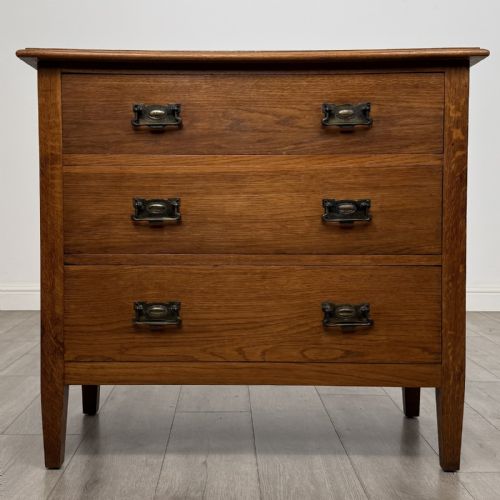
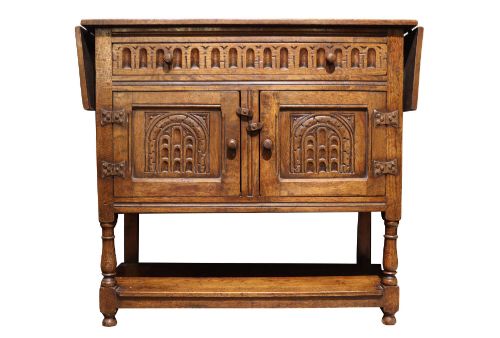
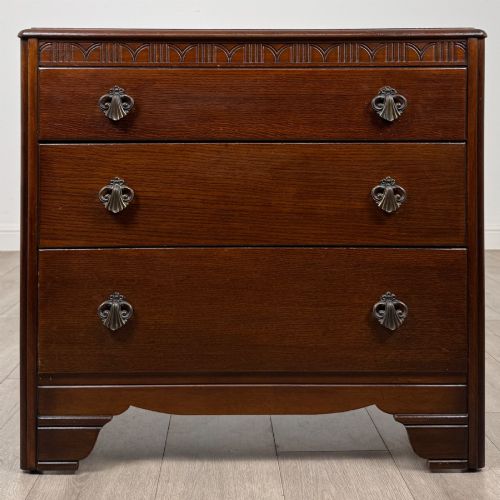
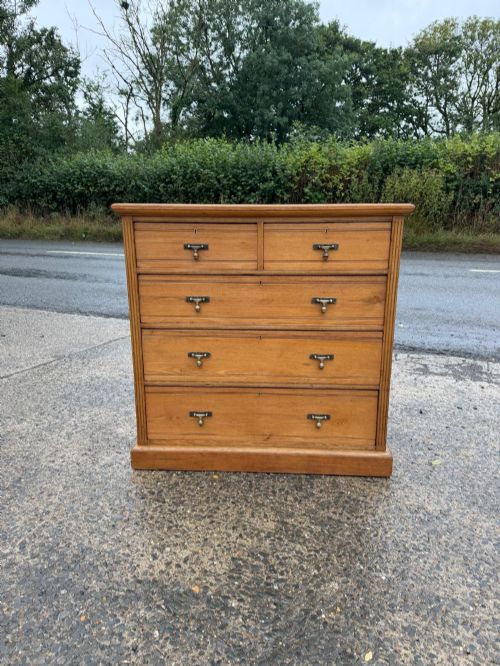

Edwardian Oak Storage Drawers
Edwardian oak storage drawers bring utilitarian organisation into domestic and office interiors through robust construction and practical compartmentalisation.
Edwardian Oak Storage Drawers
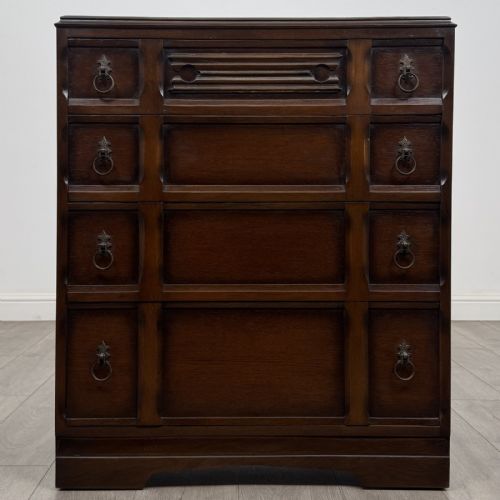
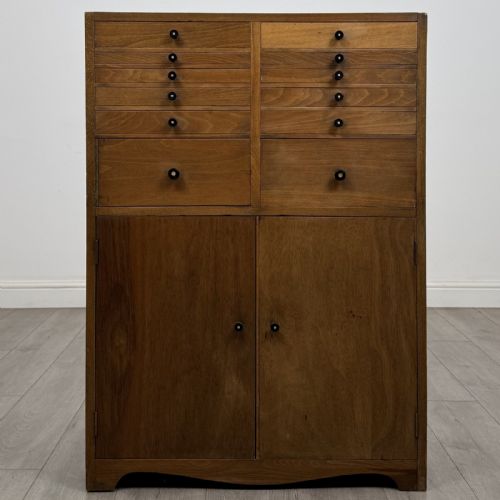
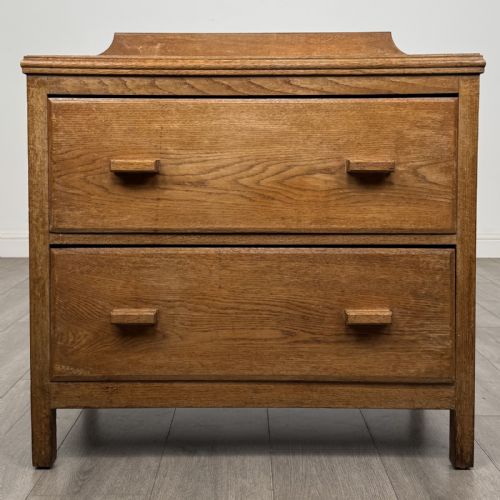
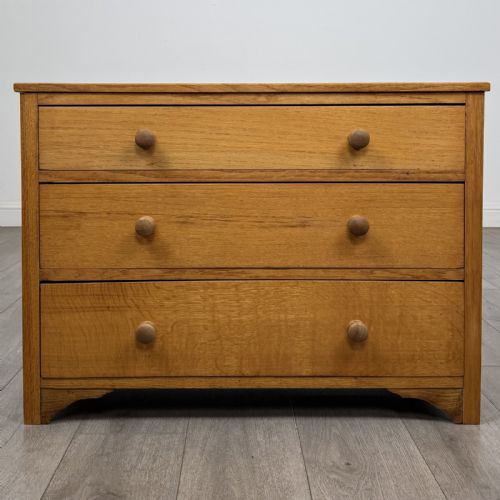
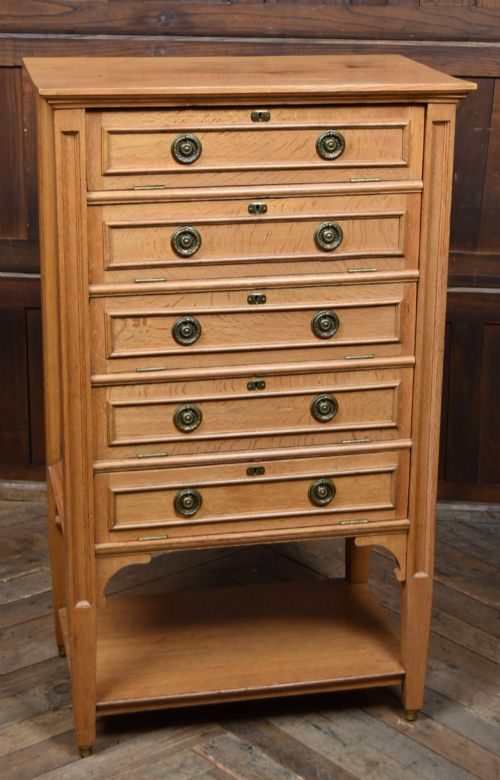
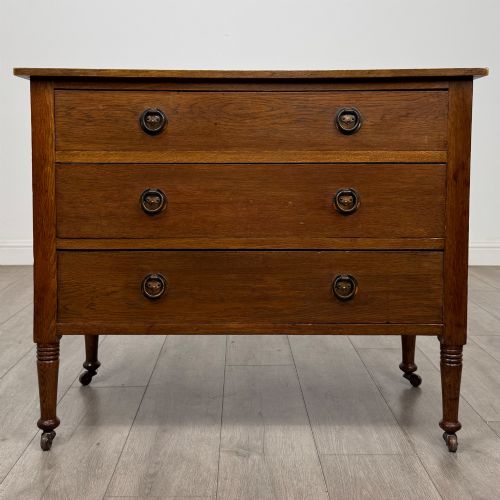
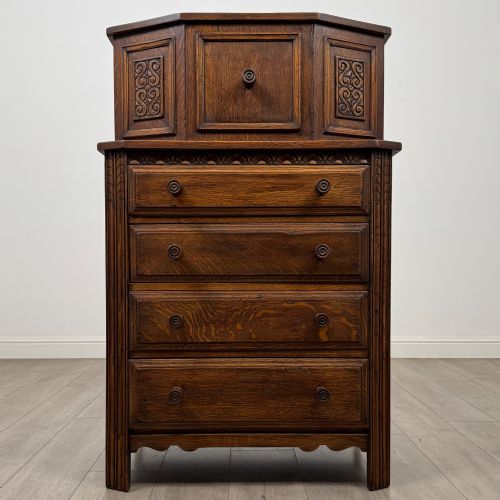
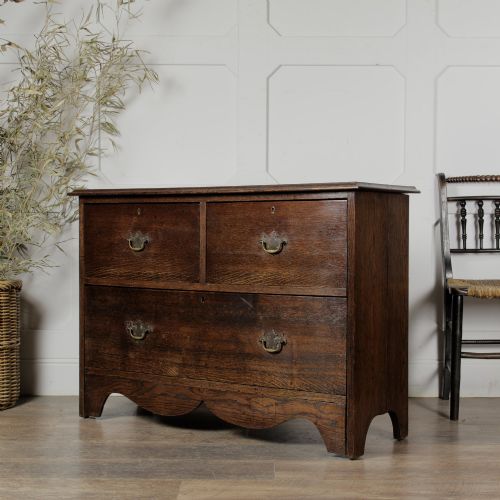
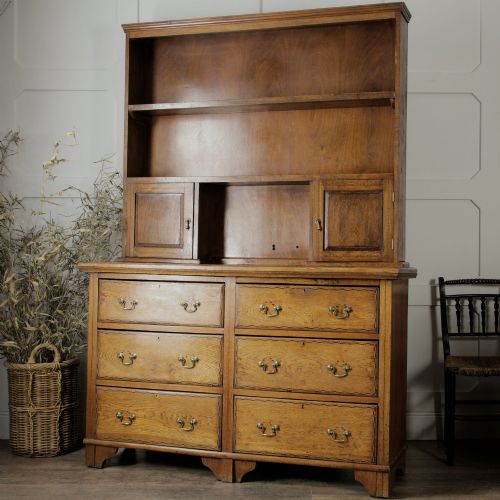
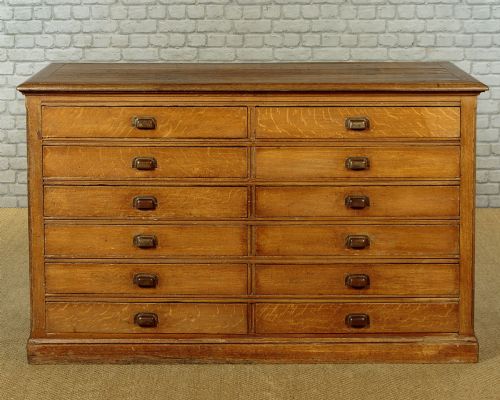
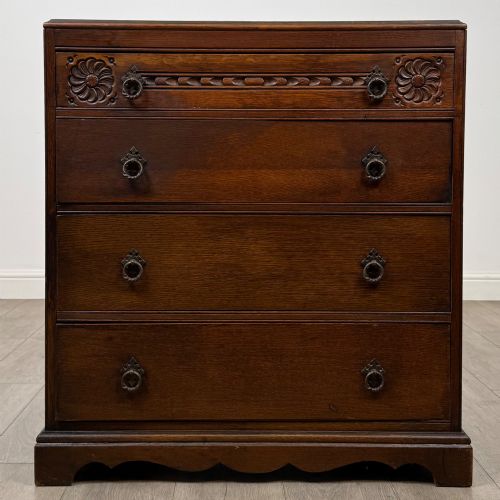
Edwardian oak storage drawers encompass a diverse variety of utilitarian furniture designed for sorting, filing, and domestic organisation. Pieces meeting this description range from multi-drawer office filing cabinets and banks of drawers to bedroom chests and specialist medical or collectors' cabinets.
The material palette centres primarily on solid oak, often described in listings as golden oak, light oak, honey oak, or limed oak. These timbers display the characteristic grain patterns valued during the period for both domestic utility and workspace efficiency.
Forms span vertical filing units with tambour fronts, modular banks of twelve drawers, small medical carrying chests, and bedside cabinets. Such variety reflects the growing administrative needs and domestic storage requirements of the early twentieth century.
Materials and construction methods
Construction relies heavily on solid oak and engineered secondary woods, chosen for structural stability and durability in heavy-use environments like offices and surgeries. Timber surfaces are frequently treated to highlight natural grain variations, resulting in honey, golden, or limed finishes.
Hardware forms an integral part of the manufacturing technique, utilising period brass and metal handles, label holders, and specialised locking mechanisms. Filing cabinets and specialised storage units often incorporate mechanical elements such as tambour shutters or patent letter file systems.
Joinery techniques balance utilitarian strength with aesthetic restraint, particularly within pieces influenced by the Arts and Crafts movement. Drawer construction employs traditional methods designed to withstand frequent daily opening and closing.
Listings feature oak storage pieces spanning the Victorian, Edwardian, and early twentieth-century periods, alongside Arts and Crafts designs.
Assessing quality in storage drawers
Quality in these pieces is determined by the integrity of the timber selection and the retention of original functional hardware. Solid oak construction with clean, unwarped drawer fronts commands greater appreciation than examples showing heavy timber shrinkage or replacement panels.
Heals·Simpson Halifax·Amberg
The Edwardian Oak Storage Drawers Glossary
- Tambour front
- A flexible door constructed from narrow strips of wood glued to a canvas backing, allowing it to slide smoothly around a curved track to conceal interior drawers or shelving. This mechanism was popular in office furniture to save space.
- Haberdashery cabinet
- A multi-drawer storage unit originally utilised in retail drapery shops to organise small sewing goods and accessories. These pieces typically feature numerous shallow drawers, sometimes with glass fronts.
- Golden oak
- A specific warm, honey-toned colour finish applied to oak timber, achieved through staining and polishing techniques prevalent around the turn of the twentieth century. It accentuates the natural medullary rays in quarter-sawn oak.
Edwardian Oak Storage Drawers: Frequently Asked Questions
What rooms suit these storage pieces?
These storage units adapt well to home offices, studies, and kitchens where organised compartmentalisation proves useful. Their utilitarian origins make them practical for sorting paperwork, stationery, or daily household items.
Their compact footprints and sturdy timber construction also allow them to function effectively in hallways or bedrooms as alternative bedside or dressing storage.
How do I identify an Edwardian piece?
Dating relies on observing construction methods, timber tones, and hardware styles consistent with the period between eighteen-eighty and nineteen-thirty. Look for golden oak finishes, straightforward Arts and Crafts influences, and original brass label pulls.
Makers' stamps, patent inscriptions, or specific mechanical systems like tambour fronts also assist in placing a piece accurately within the early twentieth century.
Were these made for offices or homes?
Many items designed during this era served commercial, medical, or administrative functions rather than domestic ones. Filing cabinets, doctor's cabinets, and haberdashery drawers were built for professional environments.
Over time, collectors and homeowners repurposed these functional workspaces pieces for domestic storage due to their durable construction and compartmentalised layouts.
How should I care for oak furniture?
Maintaining solid oak furniture involves keeping pieces away from direct heat sources and sudden humidity changes to prevent timber splitting. Regular dusting with a dry or slightly damp cloth preserves the finish.
Applying a traditional beeswax polish occasionally helps nourish the wood and maintains the natural lustre of golden or limed oak surfaces.