



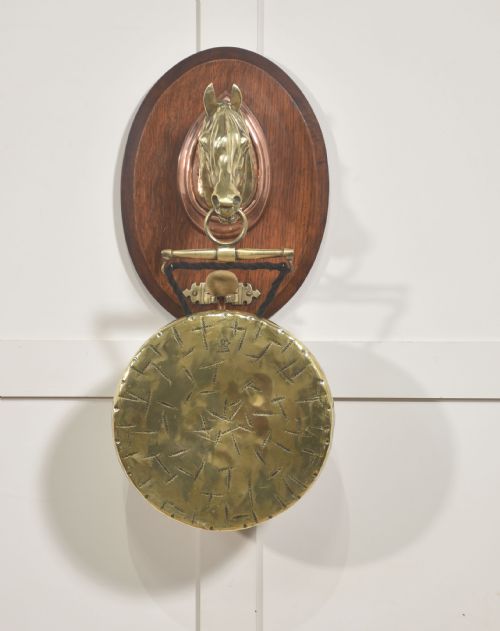


Edwardian Oak Dinner Gong
These edwardian oak dinner gong pieces bring resonant brass strikes and solid timber presence to a hall or dining room.
Edwardian Oak Dinner Gong
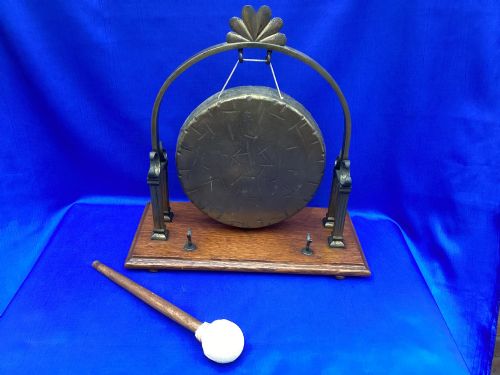
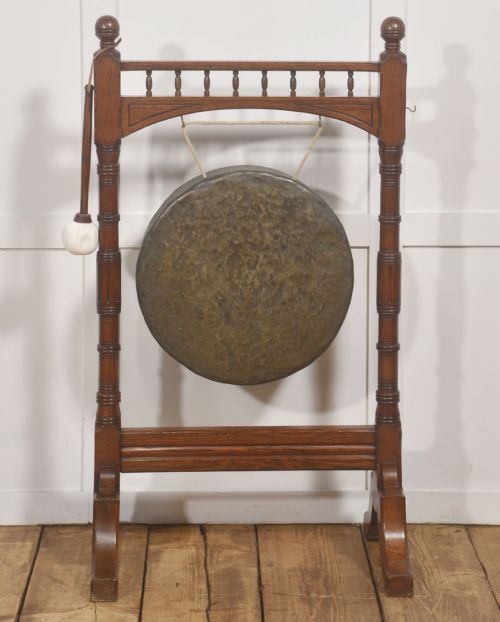
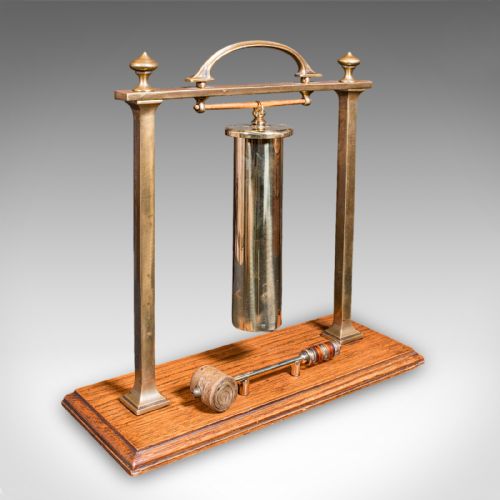
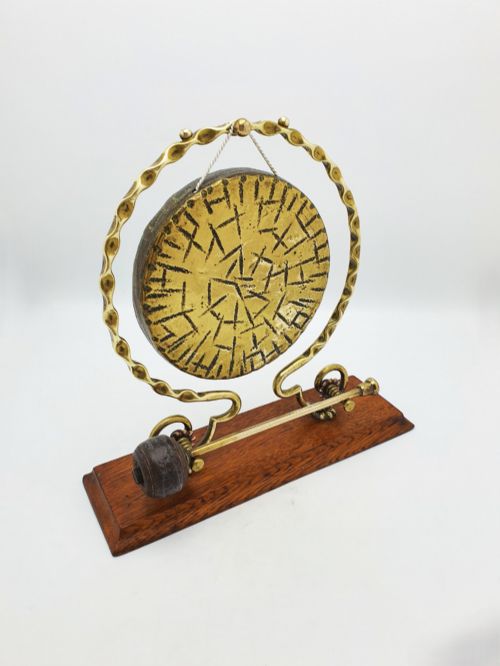
An edwardian oak dinner gong combines a sonorous metal disc or bell with a sturdy wooden support designed to summon household members. These striking pieces range from compact table versions to monumental wall-hanging setups.
The versions most commonly met on this page date from the early twentieth century, utilising solid timber frames paired with heavy brass or silver plate gongs. Many examples retain their original handheld strikers or mallets for daily use.
Makers of the period applied varied aesthetic influences, incorporating gothic revival motifs, equestrian elements, and rustic forms into the basic framing. Pieces frequently double as substantial decorative furnishings for entrance halls.
Materials and construction
Makers utilised seasoned oak for the structural stands and wall plaques, often carving the timber with geometric or gothic details. The wood provides a dense, stable base capable of absorbing the heavy vibrations of a struck metal disc.
Brass forms the primary material for the suspended gongs and bells, supplemented occasionally by silver plate. Leather, cord, and rope serve as the suspension media, hanging the metal securely from the oak framing.
Edwardian Oak Dinner Gong Retail Price Guide 2026
Typical asking prices for edwardian oak dinner gong among the pieces listed under this phrase on Sellingantiques today, from the lower quarter to the upper quarter. They describe what is for sale here now, not the wider market.
Some iterations incorporate genuine cattle horns and horse shoe mounts to announce dinner.
Judging quality
Quality rests upon the proportion and substance of the timber frame relative to the hanging metal. Superior examples feature deeply carved oak and heavy, resonant brass that sustains a clear tone when struck.
Attention to detail in the hanging mechanism and striker distinguishes finer pieces from ordinary utilitarian versions. Original suspension cords and matching mallets elevate the integrity of a complete assembly.
The Edwardian Oak Dinner Gong Glossary
- Dinner Gong
- A resonant metal disc or bowl suspended from a frame and struck with a mallet to announce meals. They became popular household items during the Victorian and Edwardian periods.
- Striker
- A handheld mallet or beater, often featuring a turned wooden handle and a padded or leather-wrapped head. It is used to sound the suspended metal gong.
- Gothic Revival
- An architectural and decorative style that revives medieval forms, visible in pointed arches and carved tracery on wooden gong stands. This aesthetic remained popular through the nineteenth century.
- Silver Plate
- A thin layer of silver applied to a base metal, frequently used on horns and gongs for a brighter finish. It provides the appearance of solid silver without the underlying weight.
Edwardian Oak Dinner Gong: Frequently Asked Questions
How do you clean an oak gong stand?
Wipe the wooden surfaces gently with a soft, dry cloth to remove dust without disturbing the surface grain. Avoid excessive moisture or harsh chemical polishes that might damage aged timber.
Metal parts require a separate approach using appropriate brass cleaner applied sparingly. Care must be taken to keep cleaning substances away from the original cord or leather suspensions.
Are these gongs still used today?
Many buyers continue to use them for their original purpose of gathering people for meals. The resonant chime carries well through large rooms and hallways.
Alternatively, they function as striking decorative accents for entrance halls and living spaces. Their sculptural presence complements traditional and transitional interiors alike.
What is the difference between table and wall gongs?
Table gongs feature compact wooden plinths designed to sit securely on sideboards, tables, or hall furniture. They are easily movable and suited to smaller spaces.
Wall-hanging gongs incorporate brackets or mounting plates to secure directly to room surfaces. These versions often display more monumental carvings and take up no surface space.
How do I identify an Edwardian piece?
Edwardian items typically display lighter oak tones and simpler, more restrained carvings compared to heavily ornate Victorian examples. The construction often reflects transitional styles between the turn of the century and the First World War.
Proportions became somewhat more streamlined while retaining sturdy framing. Hardware and suspension methods from this era also exhibit specific manufacturing traits.