
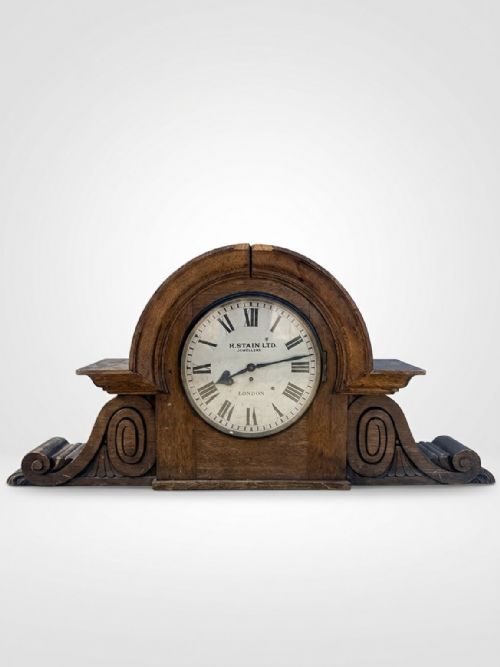


Edwardian Oak Clock Case
These edwardian oak clock case pieces house horological movements in sturdy timber, offering traditional English presence for the home.
Edwardian Oak Clock Case
An edwardian oak clock case encloses mechanisms ranging from mantel timepieces to large longcase and grandmother clocks, constructed predominantly during the early twentieth century. Buyers seeking this specific search phrase will encounter tall floor-standing longcases alongside smaller bracket, drop-dial wall clocks, and desk or mantel variants. The form serves both a practical timekeeping function and a substantial decorative role within domestic interiors.
The selection on offer spans compact wall clocks with light oak timber and glass-fronted longcases featuring barley twist hood columns or carved zodiac details. While the Edwardian period dominates, pieces originating from the Victorian era and Georgian times also appear within this category. Buyers frequently discover specialised items such as weather stations, barographs, and factory electric clocks sharing these timber housings.
Distinctions in craftsmanship and design
The upper tier of these pieces is distinguished by refined proportions, superior timber selection, and intricate decorative carving or specialised movements. Items featuring musical chimes, triple weight systems, or detailed brass elements represent the more complex end of the manufacturing spectrum. Conversely, simpler mantel or wall variants focus on clean joinery and straightforward utility rather than elaborate ornamentation.
The presence of maker signatures or retail inscriptions from established firms elevates the standing of an individual case. Variations also emerge in the quality of the glass fronts, the execution of turned hood columns, and the overall harmony of the timber grain across the door and plinth.
Some Edwardian oak clock cases doubled as weather stations, ensuring owners could check the barometric pressure while waiting for the hour to strike.
Mappin & Webb London
The Edwardian Oak Clock Case Glossary
- Longcase clock
- A tall freestanding timepiece housed in a wooden case with a weighted movement, commonly referred to as a grandfather clock.
- Grandmother clock
- A smaller, more slender version of the longcase clock, typically produced during the early twentieth century.
- Bracket clock
- A portable clock designed to sit on a shelf or bracket, frequently featuring a carrying handle and glazed access doors.
- Fusee
- A conical pulley mechanism used in clock movements to equalize the declining power of the mainspring as it unwinds.
- Drop-dial
- A wall clock design where the circular dial sits above a lower glazed wooden trunk that houses the pendulum.
Edwardian Oak Clock Case: Frequently Asked Questions
How do I wind a longcase clock?
Winding requires using a key or pulling the chains depending on whether the movement is spring-driven or weight-driven.
Take care not to over-wind the mechanism to avoid damaging the internal components.
Where should I place a grandmother clock?
Position the tall case against a stable interior wall away from direct sunlight and temperature fluctuations.
Ensure the floor is level so the pendulum swings evenly and keeps accurate time.
What is a fusee movement?
A fusee is a conical pulley connected to the mainspring by a cord or chain.
This clever device maintains constant torque as the spring loses tension, improving timekeeping precision.
How do I clean an oak clock case?
Dust the timber gently with a soft, dry cloth to preserve the finish without scratching the surface.
Avoid using harsh chemical polishes that can degrade the antique wood over time.