






Edwardian Needlework Wall Art
These pieces of edwardian needlework wall art bring textured warmth to a room, offering finely stitched wool and silk panels mounted in period wooden frames.
Edwardian Needlework Wall Art
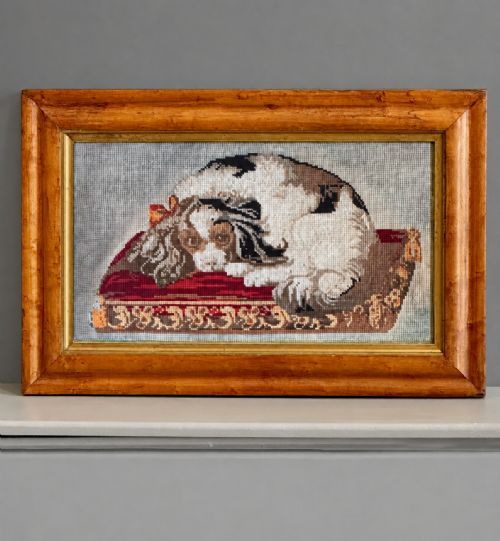
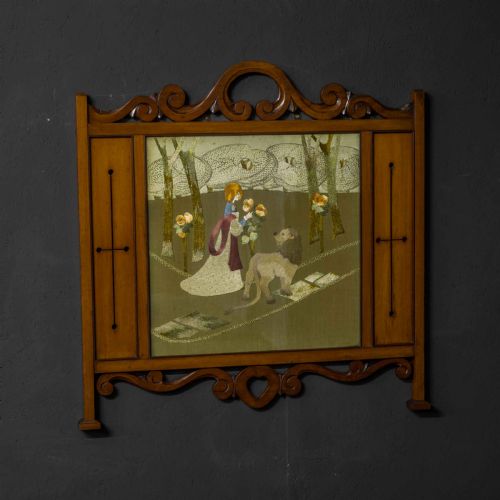
When searching for edwardian needlework wall art, you encounter framed textile pieces originating from the Victorian, Edwardian, and Georgian periods, alongside items from around nineteen hundred. The selection spans figurative woolies depicting sailor girls and spaniels, detailed samplers, and floral needlepoint pictures.
You are most likely to meet framed textile wall art utilising wool, silk, and thread stitched onto canvas backgrounds. Many examples are preserved within their original burr maple, mahogany, or rosewood frames, maintaining the integrity of the display.
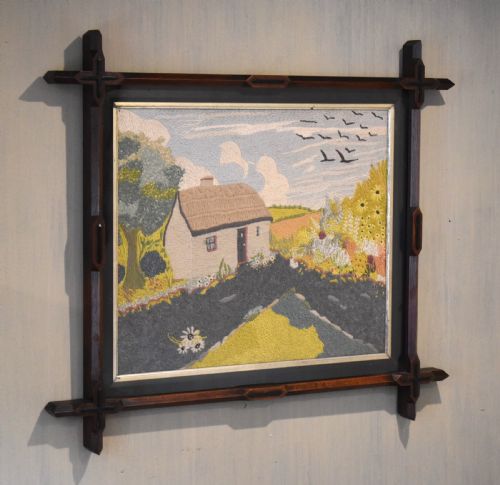
The assortment includes larger tapestry wall hangings and overmantel frames alongside circular floral pictures and technique samplers. These works cross several styles, notably Victorian folk art and Arts and Crafts designs.
How they were made
Maker execution relies heavily on wool, silk, and thread worked across canvas foundations using specific stitching techniques. Gros and petit point methods appear alongside Berlin work, creating varied depth and texture within the pictorial scenes.
Framing forms an integral part of the construction, utilising woods such as mahogany, rosewood, and burr maple to protect the textile. Glass often covers the needlework to shield the threads from environmental wear while preserving the display.
Edwardian Needlework Wall Art Retail Price Guide 2026
Typical asking prices for edwardian needlework wall art among the pieces listed under this phrase on Sellingantiques today, from the lower quarter to the upper quarter. They describe what is for sale here now, not the wider market.
Listings feature works from the Victorian, Georgian, and Edwardian eras, utilising wood, wool, glass, canvas, and mahogany.
What varies in quality
Stitching density and precision separate standard samplers from superior pictorial works. Finer thread work and complex colour blending in woolies and portraits demand greater technical skill from the maker.
The Edwardian Needlework Wall Art Glossary
- Berlin Work
- A type of needlepoint worked in wool on canvas from a hand-coloured charted pattern. This technique gained immense popularity during the nineteenth century for producing pictorial designs.
- Sampler
- A piece of textile art created to demonstrate various embroidery stitches and techniques. Older examples often include alphabets, numbers, and the maker's age.
- Gros Point
- A coarse needlepoint stitch executed on canvas that provides a durable textured surface. It frequently forms the background or main body of large wool work pictures.
- Woolie
- A colloquial term for sailor art or wool embroidery created by nineteenth-century sailors. These pieces typically depict ships or maritime figures using wool yarn.
Edwardian Needlework Wall Art: Frequently Asked Questions
How do I hang these textiles?
Most pieces arrive in original wooden frames equipped with suitable hanging cord or wire on the reverse. Ensure you use appropriate wall fixings that match the weight of the wood and glass.
Keep these framed textiles away from direct sunlight and damp environments to protect the natural wool and silk threads from fading or degradation.
How are periods identified?
Periods are identified through a combination of the framing materials, the style of the stitching, and the subject matter depicted. Victorian examples often feature dark woods and sentimental subjects, while Arts and Crafts pieces show distinct stylistic simplification.
Technique samplers and signed wool work sometimes include dates or maker ages that help pinpoint their exact era of creation.
What is gros and petit point?
Gros point is a larger, heavier needlepoint stitch used for bold areas and backgrounds, while petit point is a very fine stitch over a single canvas thread used for intricate facial details.
Combining both stitches allowed nineteenth-century makers to achieve realistic shading and perspective in framed wall art.
Were these always framed?
Framing protected the delicate wool and silk surfaces from dust and handling once the needlework was completed. Many pieces retain their original rosewood, mahogany, or burr maple frames from the period of creation.
Some larger tapestry wall hangings were designed to hang unsupported or on rods, though framing remains the most common format seen.