


Edwardian Needlework Box
An edwardian needlework box is a functional and decorative receptacle for sewing implements, sought after for its refined cabinetry and fitted interior compartments.
Edwardian Needlework Box
When you search for an edwardian needlework box, you encounter pieces designed primarily for domestic sewing and handcrafts during the early twentieth century. These objects bridge the gap between practical utility and formal parlour furniture, often doubling as small side or lamp tables.
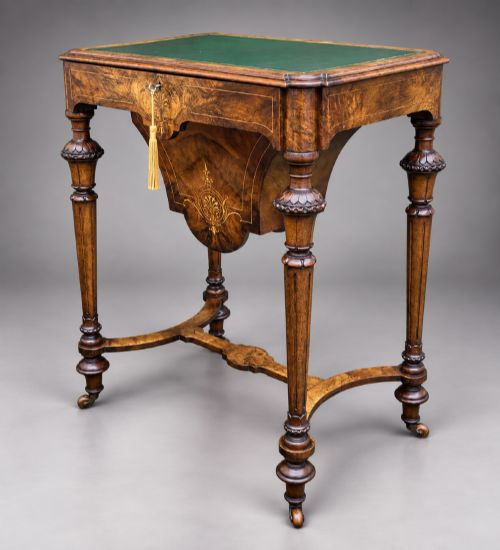
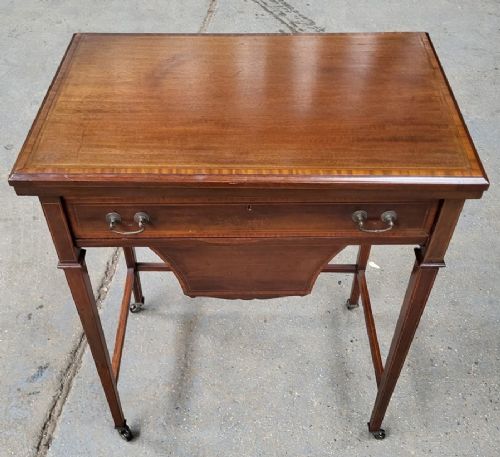
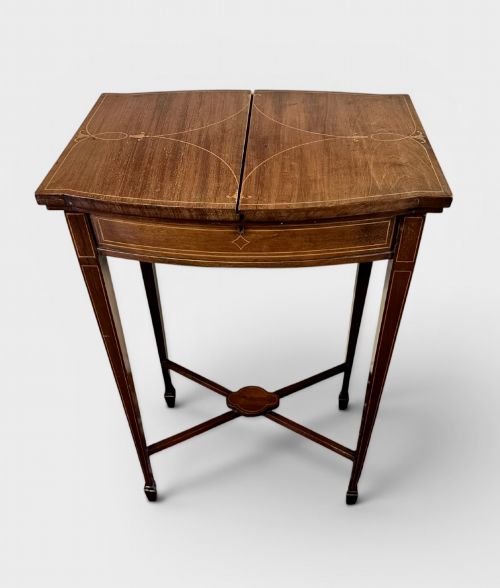
The version you are most likely to meet on this page is a mahogany table featuring inlaid decoration, a hinged lid, and an internal compartment for threads and needles. Alongside pieces explicitly from the Edwardian period, the selection includes related work tables from the nineteenth century and Victorian eras.
Materials and Construction
Cabinetmakers utilised dense hardwoods such as mahogany, walnut, rosewood, and satinwood to construct the carcase and legs of these boxes and tables. Marquetry inlay, cross-banding, and painted details frequently adorn the exterior surfaces.
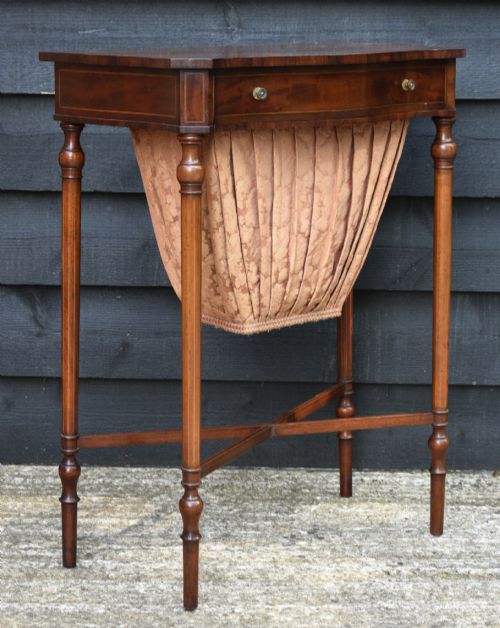
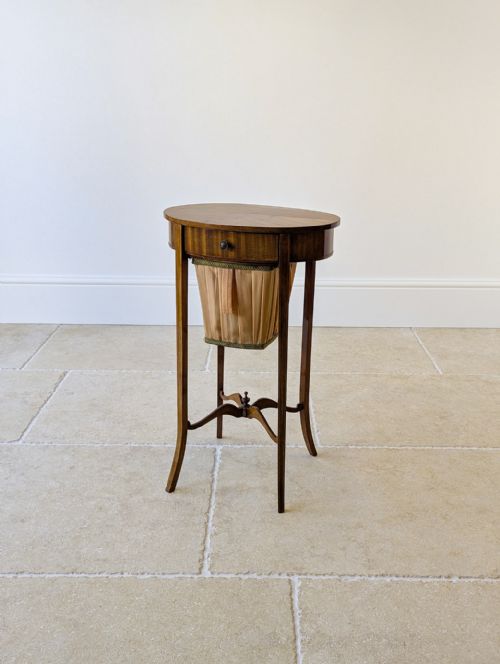
Internal arrangements incorporated fabric linings, silk baskets, and fitted compartments in wood and brass to organise sewing tools. Hinges and locking mechanisms relied on brass hardware embedded directly into the woodwork.
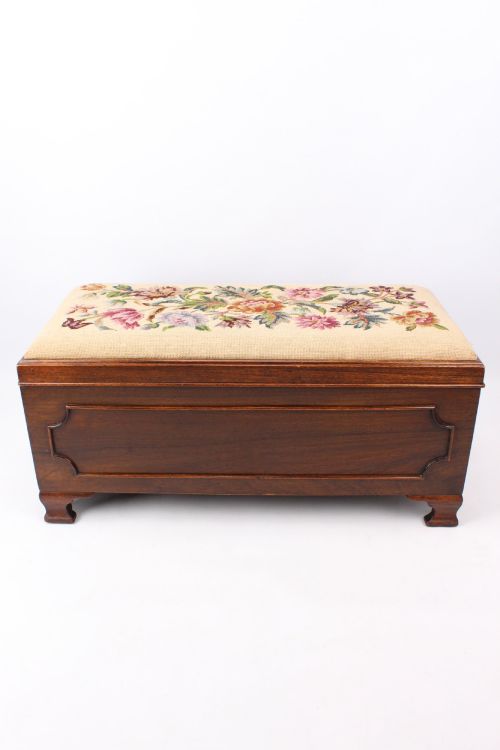
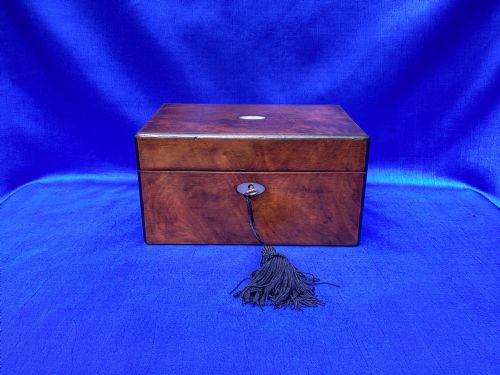
Object forms on this page include ottomans, sewing tables, and lamp tables fitted with internal compartments.
Evaluating Craftsmanship
The refinement of the timber selection distinguishes standard pieces from exceptional ones, particularly when figured veneers like burr walnut or flame mahogany are employed. Superior examples display precise marquetry and deliberate grain matching across the lid and sides.
Interior organisation dictates the standard of execution, with finer pieces retaining complete fitted wooden trays and intact silk baskets. The integration of structural elements, such as lyre ends or serpentine outlines, marks the distinction between basic utility and high cabinetmaking.
Edwards
The Edwardian Needlework Box Glossary
- Marquetry
- A decorative technique where thin slices of wood veneer are fitted together to form pictorial or geometric patterns on the surface. This adorns the lids of many finer sewing tables.
- Cross-banded
- A border of veneer laid around the main panel of a top or drawer front so that the grain runs at right angles to the central wood. It provides a crisp framing effect to table tops.
- Serpentine
- A curved line of furniture shaping that undulates inward and outward in a smooth, flowing motion. Edwardian tables often utilise this profile on their sides and drawer fronts.
- Satinwood
- A durable hardwood noted for its pale, golden yellow colour and lustrous, satin-like sheen. It appears frequently in inlaid decoration and light cabinetwork.
Edwardian Needlework Box: Frequently Asked Questions
What is an edwardian needlework box?
An edwardian needlework box is a specialised piece of furniture or small container built to house sewing equipment, threads, and fabrics during the early twentieth century. They range from tabletop boxes to freestanding occasional tables with internal compartments.
These pieces reflect the domestic habits of the period, where hand sewing was a standard pastime for ladies. Their design combines practical storage with decorative cabinetry suited for display in a parlour or drawing room.
How were these tables used?
These tables served as designated stations for needlework, embroidery, and other textile crafts. The hinged lids opened to reveal compartmentalised trays for bobbins, pins, and scissors, while suspended silk baskets collected scraps and wool.
Outside of crafting hours, their compact dimensions and finished tabletops allowed them to function as side tables, lamp stands, or games tables. This versatility made them central items in Victorian and Edwardian sitting rooms.
How do I identify an Edwardian piece?
Edwardian pieces typically date from the reign of King Edward VII, spanning the early years of the twentieth century up to the First World War. They frequently feature lighter timbers like satin walnut, delicate shell or floral marquetry inlay, and slender tapered legs.
Compared to earlier Victorian designs, Edwardian cabinetwork tends to favour brighter finishes and a less heavy aesthetic. They often incorporate transitional Sheraton Revival styling alongside Edwardian manufacturing methods.
How do I care for wooden sewing tables?
Maintaining these tables requires keeping them away from direct sunlight and sudden temperature shifts to protect the delicate wood veneers and stringing. Regular dusting with a soft, dry cloth preserves the polished surface without damaging the historic finish.
Internal silk baskets and fabric linings should be handled with care, as textiles from the nineteenth and early twentieth centuries are fragile. Natural wax can be applied periodically to nourish hardwood surfaces like mahogany and walnut.