


Edwardian Needlepoint Footstool
An edwardian needlepoint footstool offers a practical low seat or rest, bringing traditional textile work and solid timber frames into a modern room.
Edwardian Needlepoint Footstool
The edwardian needlepoint footstool category encompasses compact low seating designed to support feet or serve as fireside perches, frequently topped with worked textile panels. These pieces combine domestic utility with decorative surface work reflecting period tastes.
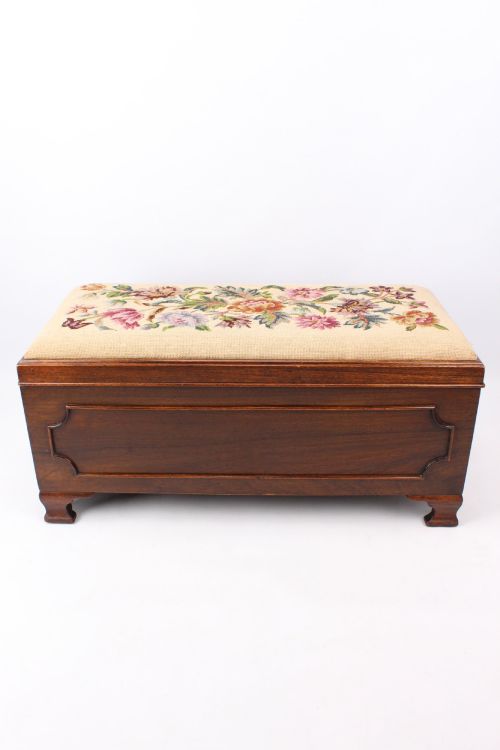
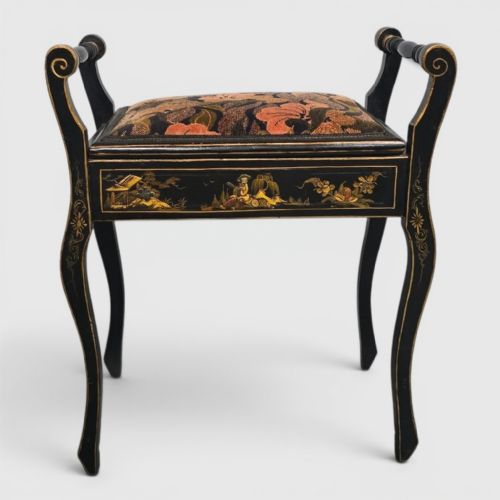
While the search specifies the Edwardian era, surviving examples span a broader timeline from the nineteenth century into the twentieth, encompassing Victorian, Edwardian, and later revivals. Buyers encounter various forms including piano stools, dressing table stools, and traditional footstools.
Materials and construction methods
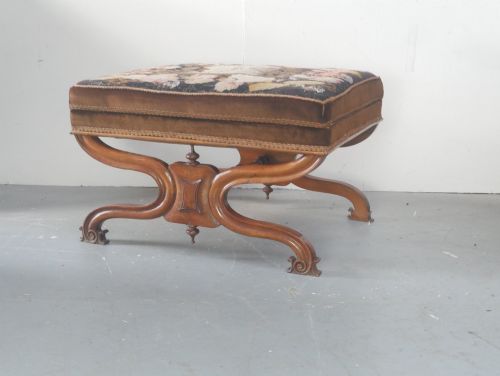
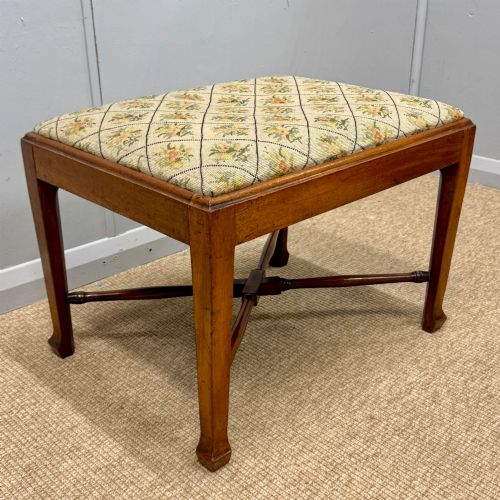
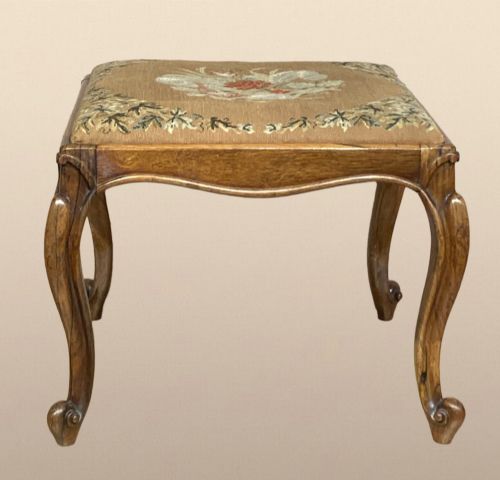
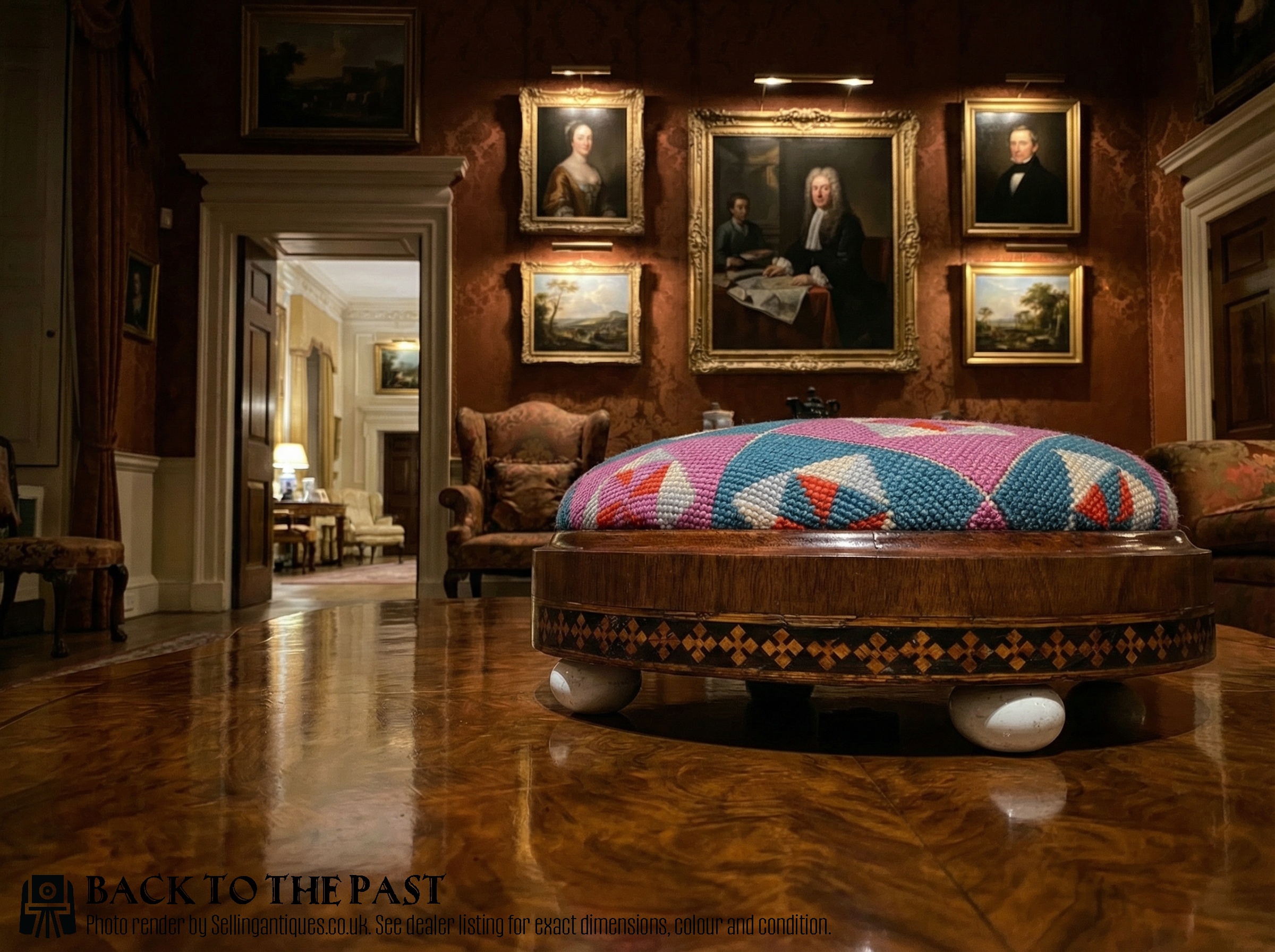
Frames utilise hardwoods such as mahogany, walnut, and pitch pine, shaped with techniques like cabriole legs, cross stretchers, and inlaid Tunbridge Ware decoration. These timbers provide the structural rigidity necessary for daily weight and handling.
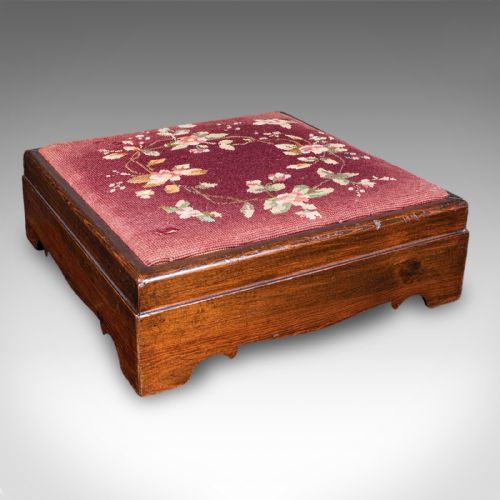
Upholstery relies on wool worked into needlepoint, tapestry, and fabric panels, stretched securely over padded seats. Painted and lacquered finishes appear on specific pieces, particularly those following Chinoiserie or decorative revival styles.
Factors determining quality
Quality separates along the complexity of the timber frame and the precision of the needlework panel. Finer pieces demonstrate careful joinery, such as inlaid decoration or well-turned legs, alongside dense and tightly stitched wool tapestry.
The integrity of the upholstery foundation and the originality of the timber frame distinguish superior examples from heavily altered pieces. Sustained tension in the needlepoint and stability in the underlying wooden structure indicate careful historical upkeep.
Jas Shoolbred·Whytock and Reid
The Edwardian Needlepoint Footstool Glossary
- Needlepoint
- A type of counted thread embroidery stitched onto an open-mesh canvas to create dense pictorial or geometric surfaces. It forms the primary decorative upholstery seen on these footstools.
- Cabriole leg
- A furniture leg that curves outward at the knee and tapers inward toward the foot, drawing inspiration from animal forms. This shape appears frequently on Victorian and Edwardian seating frames.
- Tunbridge Ware
- A form of decorative woodwork characterised by tiny mosaic tiles made from different coloured woods to form geometric patterns. Small geometric footstools often incorporate this intricate inlay technique.
- Cross stretcher
- Wooden rails connecting the legs near the base to provide additional structural support. They add both stability and architectural detail to dressing table and piano stools.
Edwardian Needlepoint Footstool: Frequently Asked Questions
What is an edwardian needlepoint footstool used for?
These low seats function primarily as footrests beside armchairs or as small auxiliary perches in dressing rooms and parlours.
Their compact dimensions allow them to be tucked away easily when not in use.
How do I distinguish an Edwardian stool from a Victorian one?
Edwardian pieces often display lighter timbers and refined neoclassical revival details, whereas Victorian examples tend to feature heavier proportions and darker woods.
Upholstery patterns also shift from elaborate floral tapestries toward geometric or lighter needlepoint designs as the period progresses.
Can I use these footstools for daily seating?
Most pieces are structurally sound for resting feet or brief sitting, provided the timber frame and joints remain stable.
Heavy daily use as a primary seat requires checking the internal webbing and upholstery foundation for wear.
How should I care for needlepoint upholstery?
Gentle vacuuming with a low-suction attachment helps remove dust from the wool fibres without pulling the stitches.
Keeping the textile out of direct sunlight prevents the dyed wool colours from fading over time.