




Edwardian Music Rack Table
An edwardian music rack table brings together practical sheet storage and display surfaces, offering a charming focal point for any sitting room.
Edwardian Music Rack Table
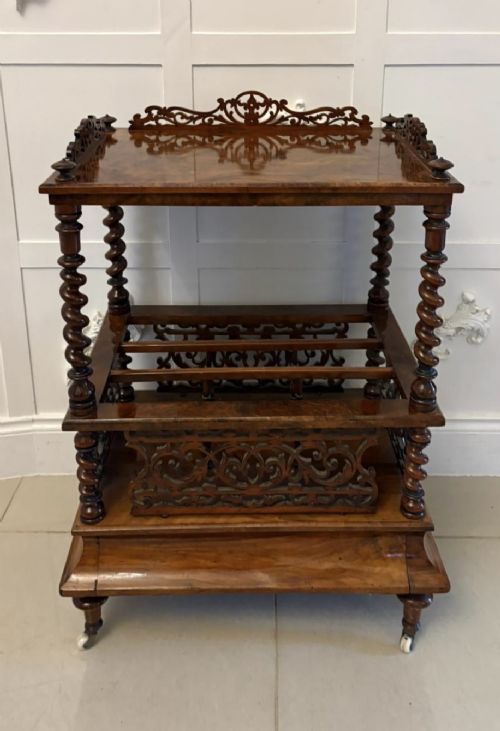
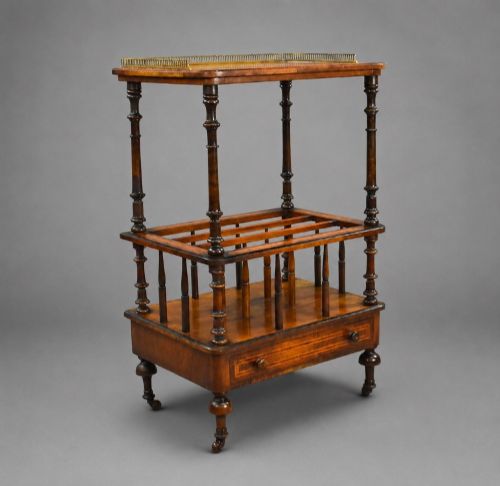
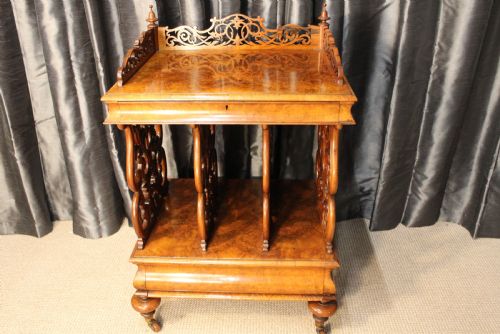
Buyers seeking an edwardian music rack table encounter pieces rooted in the Victorian era, spanning the decades from eighteen hundred through eighteen eighty. These items frequently take the form of canterburys, whatnots, music canterburys, and music stands designed to hold folios and periodicals. The selection on this page shows walnut, burr walnut, and occasional drawers integrated into the lower tier.
How They Were Made
The construction relies heavily on burr walnut and plain walnut timbers, chosen for their rich grain patterns and warm tones. Artisans applied inlay work alongside contrasting ebony details to embellish the surfaces of these items.
Metal fittings in brass appear alongside ceramic or porcelain elements, while leather accents sometimes complement the woodwork. Multi-tiered whatnots and music racks frequently incorporated drawers into the base structure using traditional joinery.
Current listings demonstrate that pieces associated with this search phrase span the Victorian era, running from eighteen hundred through eighteen eighty.
What Varies in Quality
The sophistication of the timber selection dictates the visual impact, with richly figured burr walnut surfaces sitting above plain walnut alternatives. Elaborate inlay work and fine ebony stringing elevate the decorative merit of superior examples.
The integration of functional drawers and multi-tiered whatnot structures requires precise carpentry that separates standard music stands from more ambitious multi-functional furniture. The presence of original brass hardware and intact ceramic castors contributes to the integrity of the piece.
The Edwardian Music Rack Table Glossary
- Canterbury
- A low stand featuring vertical partitions, originally designed to hold sheet music or folios. Later variations often incorporated drawer space and table tops.
- Whatnot
- A piece of freestanding furniture consisting of several open shelves placed one above the other, used for displaying ornaments or holding books.
- Burr Walnut
- A prized veneer obtained from the burl growths of walnut trees, noted for its swirling, highly decorative grain patterns. Cabinet makers utilised this timber for prominent surfaces.
- Inlay
- A decorative technique where contrasting materials are inserted into recessed cavities in the wood base to form patterns. Ebony and lighter woods frequently featured in these designs.
Edwardian Music Rack Table: Frequently Asked Questions
What is an edwardian music rack table used for?
These items were designed to hold music folios and magazines within upright partitions while providing a surface on top for lamps or ornaments.
Today they function effectively as side tables that continue to accommodate books and contemporary periodicals in living spaces.
How do you tell a canterbury from a whatnot?
A canterbury specifically incorporates vertical dividers intended for organising sheets of music or papers upright. Its primary function centres on storage rather than display.
A whatnot consists primarily of stacked open shelves designed for exhibiting decorative objects. Many surviving pieces combine both forms into a single item.
What wood was used for these tables?
Makers relied heavily on walnut and highly figured burr walnut for the primary structure and surface veneers. Ebony was frequently employed for contrasting inlay details.
Additional materials such as brass, ceramic, porcelain, and leather appear as decorative or functional accents across the listed pieces.
Are these tables suitable for modern rooms?
Their compact proportions make them adaptable for placement beside sofas or chairs in contemporary interiors. The flat tops provide convenient surfaces for daily use.
The lower partitions offer practical storage for magazines and tablets while maintaining historical character.