

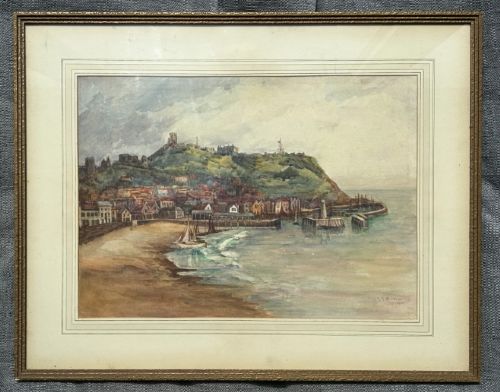


Edwardian Maritime Watercolour
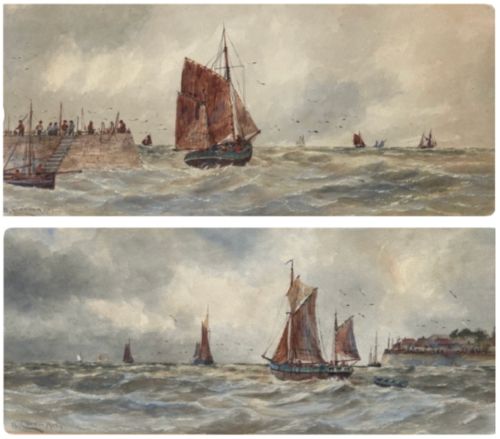
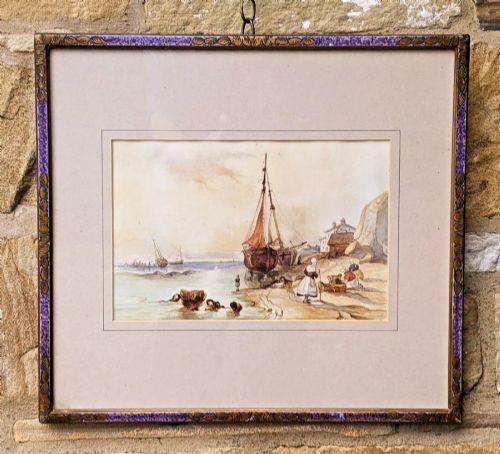
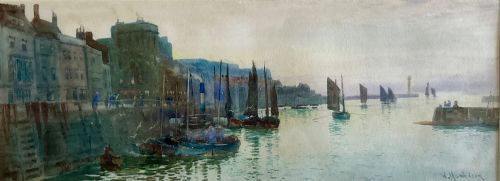
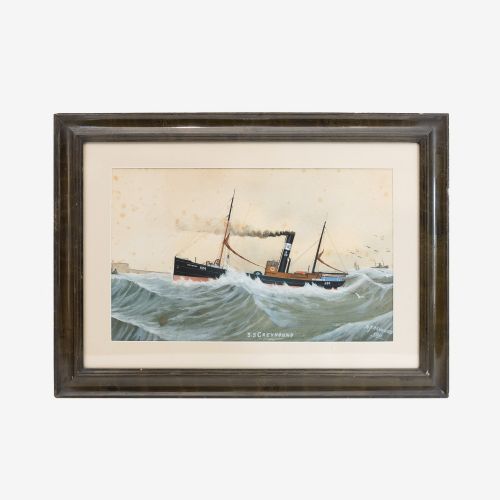
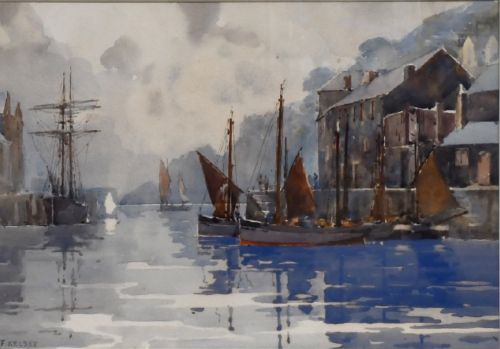
Edwardian maritime watercolour pieces capture coastal harbours, working vessels and naval ships on paper using pigment and gouache.
Edwardian Maritime Watercolour
When you search for an edwardian maritime watercolour, you encounter original British paintings depicting coastal landscapes, fishing fleets, and harbour scenes. The works most commonly met on this page date from the turn of the twentieth century, encompassing periods from the late nineteenth century through the nineteen-twenties.
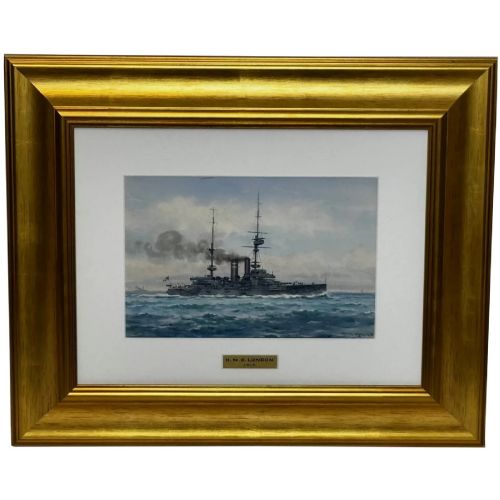
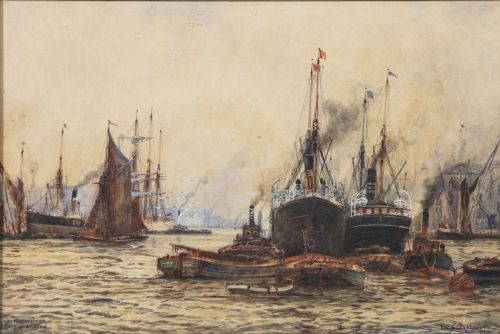
Subjects range from bustling Yorkshire ports and West Country trawling luggers to specific naval warships and Thames river views. Artists often captured the shifting light on water around Whitby, St Ives, and London, recording maritime life with direct observation.
Materials and Technique
Painters applied watercolour pigment and bodycolour on paper, frequently supported by glass and wood frames. Many works incorporate gouache alongside transparent washes to build opaque highlights on sails, white-crested waves, and vessel structures.
The technique relies on the absorbent quality of paper to retain luminosity beneath thin layers of wash. Artists built atmospheric depth in seascapes by balancing fluid brushwork with precise delineation of rigging and architecture.
A French naval ironclad battleship appears here as a sailor's sentimental tribute to his ship and shipmates.
Evaluating Quality
Quality rests upon the artist's command of light, atmosphere, and maritime architecture, distinguishing casual topographical records from masterly coastal impressions. Skilled handling of pigment creates convincing movement in water and convincing atmosphere in coastal mists.
The strength of composition and the precision with which figures, vessels, and rigging are drawn dictate the standing of a painting. Works demonstrating acute observation of weather and sea conditions elevate the standard across the genre.
William Cannon·Frank Watson Wood·Thomas William Morley·Frank William Scargour·Hector Caffieri·William Matthison·Alexander Harwood·Frank Kelsey·F A Roylance·George F Pennington·Alfred George Morgan·Richard Harry Carter·Tom Clough·Fred Waugh·James Watson·George Hamilton Constantine·James Thomas Watts·Leslie Rackham·H E Tidmarsh·Ernest F Hill·Percy Brooke·Walter Duncan·Ralph Todd·William Kay Blacklock·Rowland Henry Hill
The Edwardian Maritime Watercolour Glossary
- Watercolour
- A painting method in which the paints are made of pigments suspended in a water-based solution. Applied to paper surfaces in washes, it creates luminous effects.
- Gouache
- An opaque water-based paint consisting of pigment and other inert materials designed to be used in an opaque painting method. It adds solid highlights to transparent watercolour.
- Seascape
- A type of fine art that depicts the sea, coastal views, ships, or maritime scenes. These works focus centrally on marine environments and watercraft.
- Lugger
- A small sailing vessel with one or more masts carrying lug sails. They appear frequently in British coastal art depicting regional fishing fleets.
Edwardian Maritime Watercolour: Frequently Asked Questions
What subjects appear in these paintings?
The works depict fishing boats, coastal harbours, naval warships, and river scenes across British shores. Common settings include northern fishing ports, West Country harbours, and London river views.
Artists recorded daily maritime life, vessels at dock, and coastal landscapes under various weather conditions and times of day.
How should these watercolours be displayed?
Display the framed artworks away from direct sunlight to prevent the watercolour pigments from fading over time. Maintaining stable indoor humidity protects both the antique paper and the wooden frames.
Keep the pieces behind protective glass with suitable mounts that prevent the paper surface from touching the glazing directly.
How are the different periods identified?
Dates often appear within signatures, handwritten inscriptions on the reverse, or archival records linked to the artist's active years. Stylistic traits such as framing choices and paper types also assist in determining the era.
Works span the late Victorian period, the Edwardian era, and through to the nineteen-thirties, reflecting changing artistic movements like British Impressionism and the Newlyn School.
Were these works created outdoors?
Many painters worked both on location at coastal sites and finished their larger compositions within studio spaces. Preliminary watercolours captured direct observations of light and weather on the spot.
Studio work then allowed artists to refine details of rigging, harbour architecture, and atmospheric effects using their initial studies.