
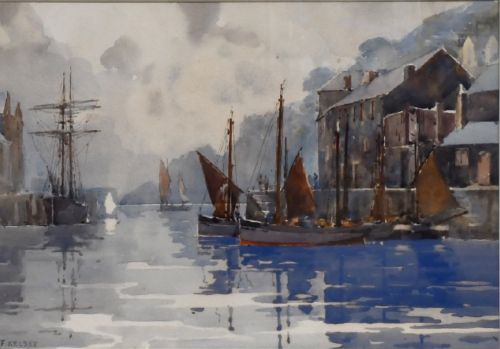


Edwardian Maritime Watercolour Painting
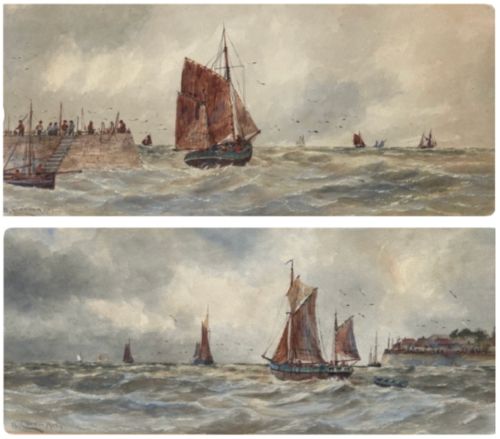
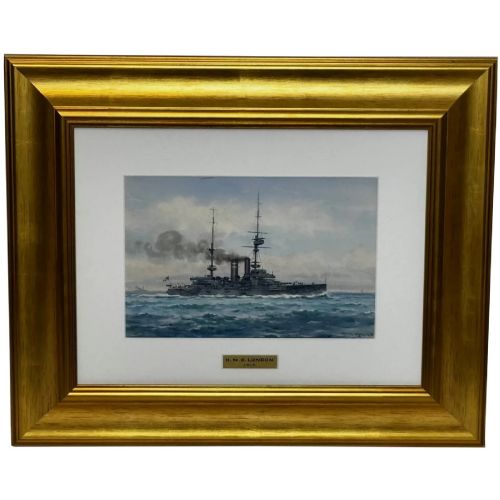
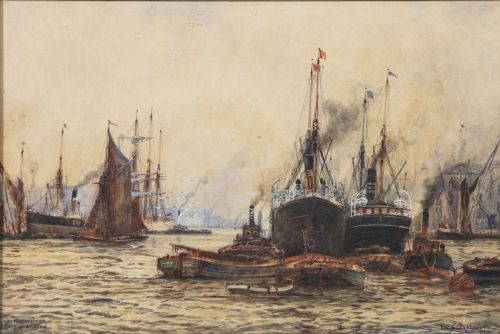
These works capture coastal harbours and naval vessels on paper, offering a direct view into early twentieth-century maritime life.
Edwardian Maritime Watercolour Painting
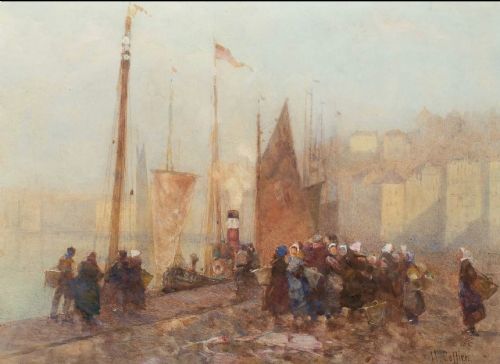
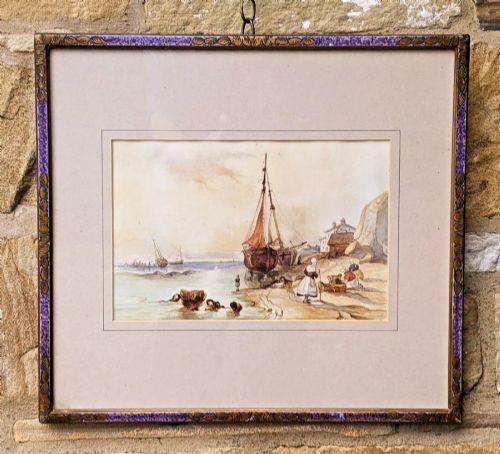
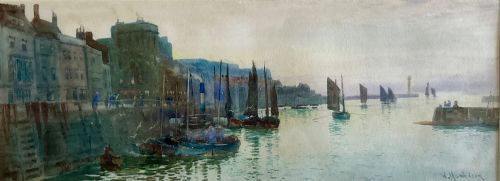
An edwardian maritime watercolour painting depicts ships, fishing fleets, and coastal towns using water-soluble pigments on paper. The works most commonly met here originate from the early twentieth century, spanning periods from the 1890s through to the 1930s with strong representation from the Edwardian decade.
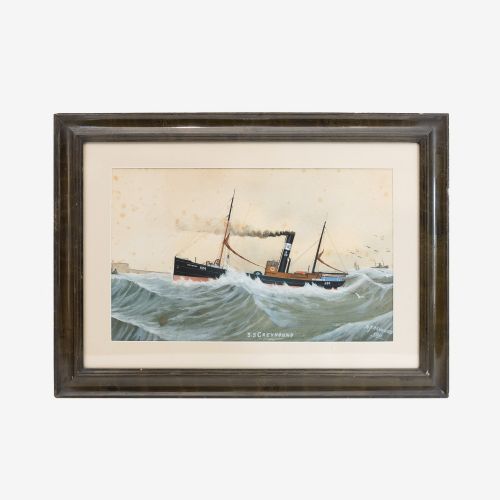
The subjects focus heavily on British ports, harbours, and seascapes, with specific regional views around Yorkshire fishing stations and London river scenes. Artists frequently documented working vessels such as trawling luggers, ironclad warships, and coastal sailing boats in daily harbour activity.
Materials and technique
Artists painted primarily on paper supports using watercolour paint and watercolour pigment, occasionally combining gouache to add opaque highlights to water and sky details. Framed presentation typically involved protective glass and timber wood mouldings.
Watercolour washes created translucent effects for the sea and atmospheric skies, while finer brushwork defined rigging, architecture, and distant hulls.
Sailors occasionally painted their own floating homes, leaving behind sentimental tributes to ironclad battleships on paper.
Variations in quality
Quality rests upon the handling of light and atmospheric conditions, distinguishing fluid, confident washes from stiff or laboured execution. The ability to convey movement in water and the correct proportions of maritime architecture determine the success of a composition.
The preservation of the paper support and the retention of pigment vibrancy without fading or heavy discolouration also mark the distinction between standard student output and professional gallery execution.
William Cannon·Frank Watson Wood·Thomas William Morley·Frank William Scarbrough·Hector Caffieri·William Matthison·Alexander Harwood·Frank Kelsey·F A Roylance·George F Pennington·Alfred George Morgan·Richard Harry Carter·Tom Clough·Fred Waugh·James Watson·George Hamilton Constantine·James Thomas Watts·Leslie Rackham·H E Tidmarsh·Ernest F Hill·Percy Brooke·Walter Duncan·Ralph Todd·William Kay Blacklock·Rowland Henry Hill
The Edwardian Maritime Watercolour Painting Glossary
- Watercolour
- A painting method in which the paints are made of pigments suspended in a water-based solution. It produces transparent colour washes.
- Gouache
- An opaque water-based paint that includes a white pigment filler, useful for adding solid highlights to water and clouds.
- Lugger
- A small fishing vessel carrying lug sails on one or more masts. These boats appear frequently in coastal harbour scenes.
- Ironclad
- A steam-propelled warship protected by iron or steel armour plates. These ships represent the naval power documented in period military art.
Edwardian Maritime Watercolour Painting: Frequently Asked Questions
What subjects appear in these paintings?
The works depict British coastal scenes, working fishing harbours, and naval shipping from the early twentieth century. Common views include Yorkshire ports, London river traffic, and coastal vessels at rest or under sail.
Artists recorded specific harbours, local fishing craft, and named steamships or ironclad battleships. The focus remains squarely on maritime life, coastal topography, and harbour infrastructure.
How should these waterworks be framed?
Framing requires protective glass and acid-free mounts to prevent paper degradation and pigment fading from exposure to light. Traditional wood mouldings suit the Edwardian period of the works.
Direct sunlight damages watercolour pigments permanently over time, so placement away from intense natural light is essential for long-term preservation.
Are these works signed by the artists?
Many examples carry signatures or initials from the artists who painted them, often placed directly within the lower corners of the composition. Signatures help attribute works to known regional painters and specific artistic circles.
Unsigned pieces still offer stylistic clues through brushwork techniques, subject matter, and dated inscriptions written on the reverse of the paper or frame.
How do I identify an Edwardian piece?
Edwardian works date from the reign of King Edward VII between 1901 and 1910, though the broader stylistic era often encompasses late Victorian and post-World War One output up to the 1930s. Maritime subjects from this window reflect specific naval vessels and Edwardian coastal dress.
Paper stock, framing materials, and artist biographies provide further chronological markers to separate these early twentieth-century creations from later works.