

Edwardian Mahogany Bookshelf
An edwardian mahogany bookshelf brings structural warmth and practical storage to a room through rich timber and clean proportions.
Edwardian Mahogany Bookshelf
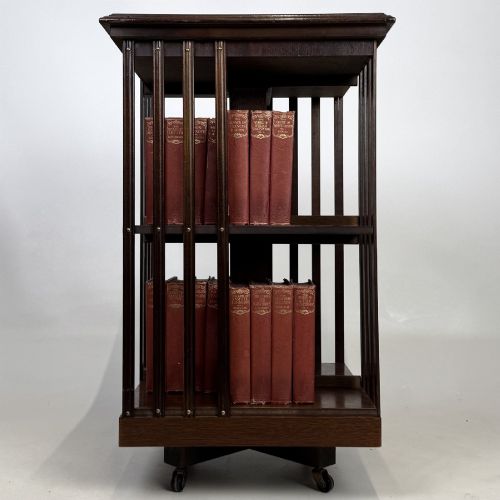
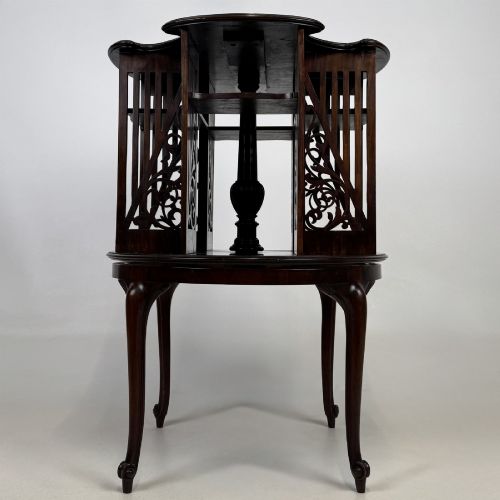
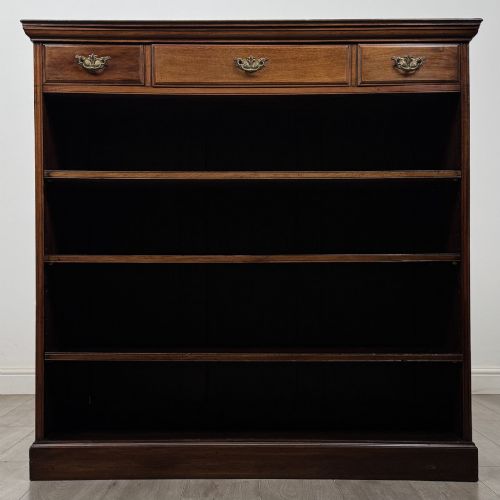
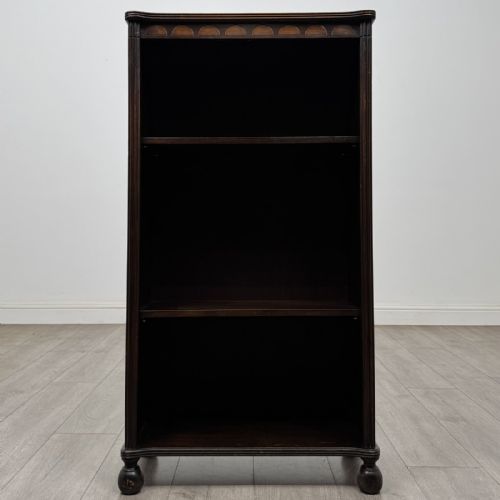
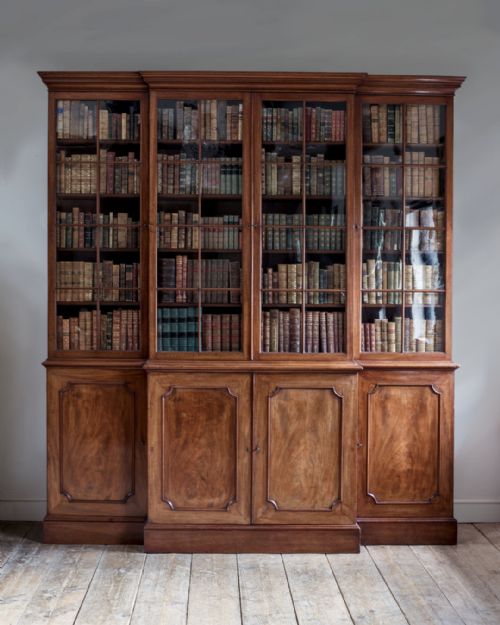
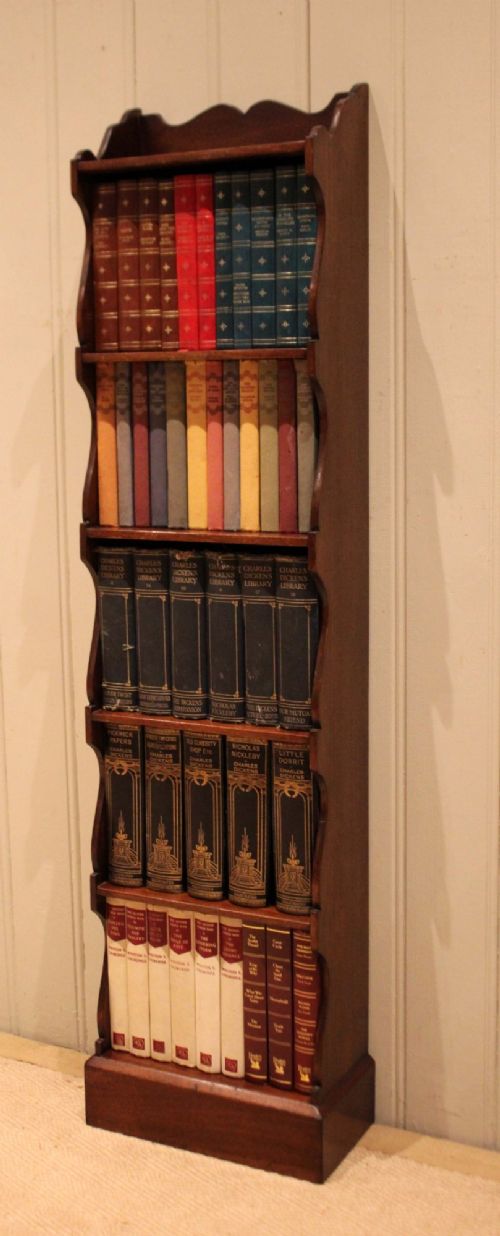
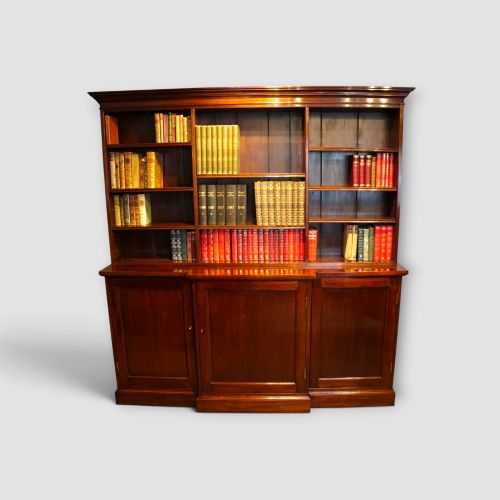
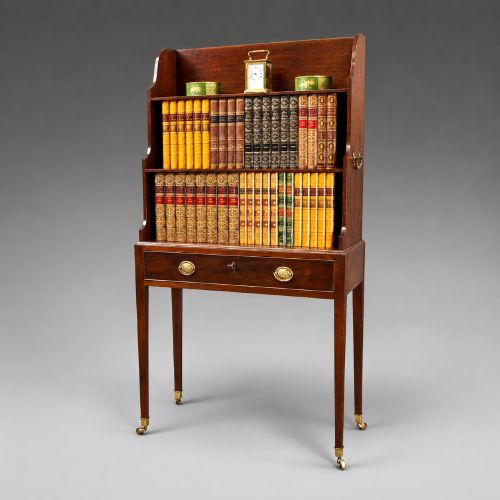
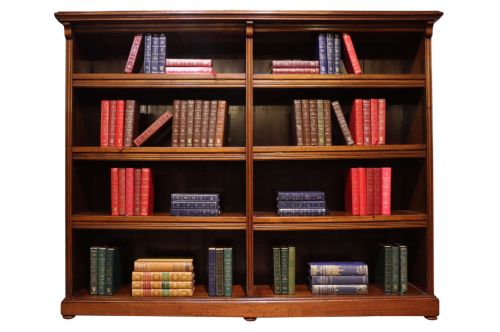
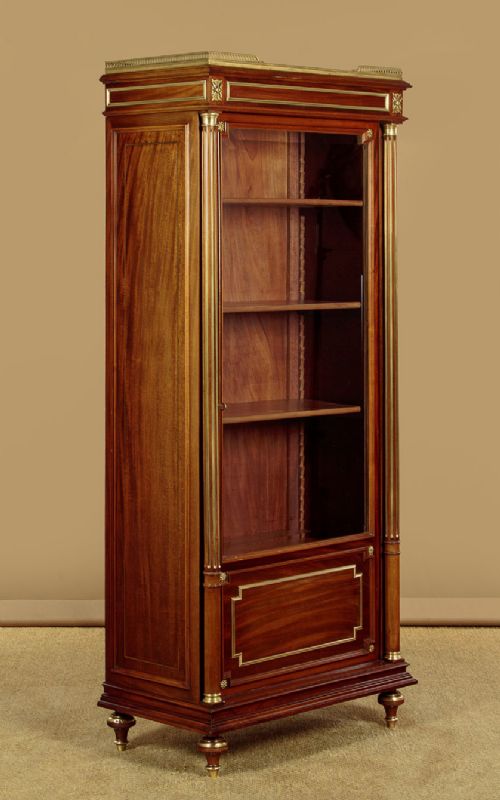
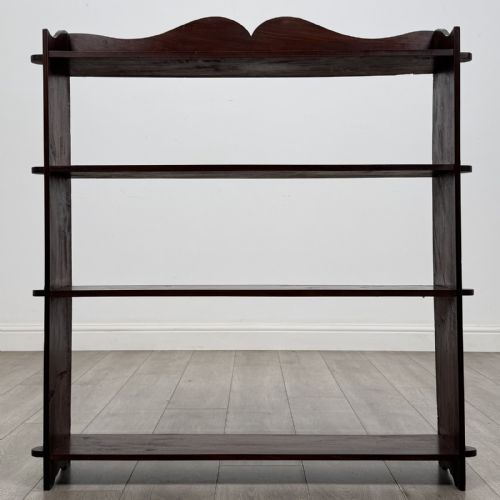
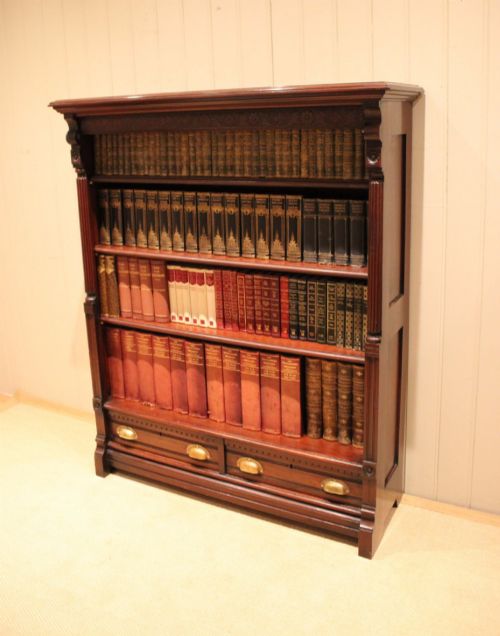
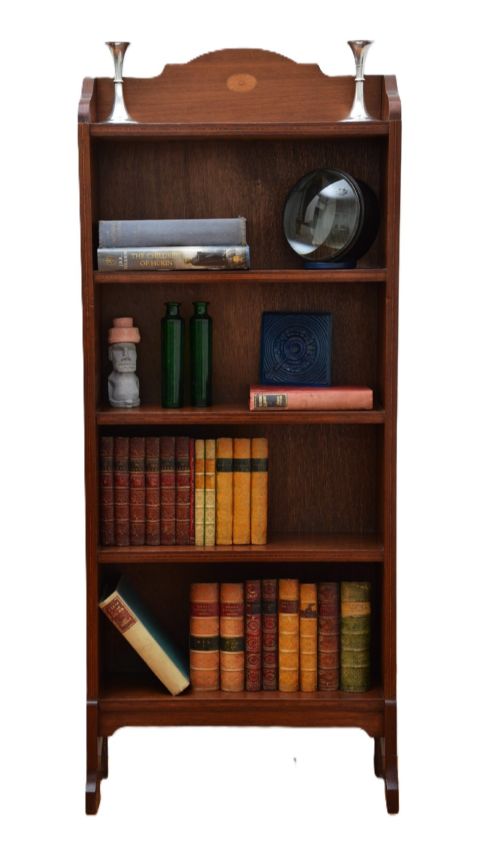
When searching for an edwardian mahogany bookshelf, buyers encounter a variety of practical forms designed for domestic libraries and sitting rooms. The selection ranges from open wall shelves and tall upright bookcases to compact revolving models and versatile whatnots. Pieces originating from the late nineteenth century and the early twentieth century dominate the selection.
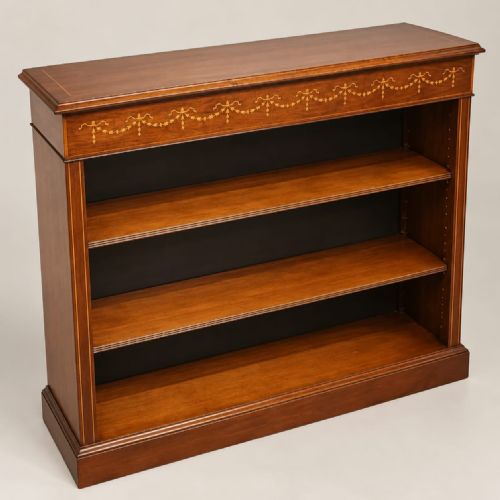
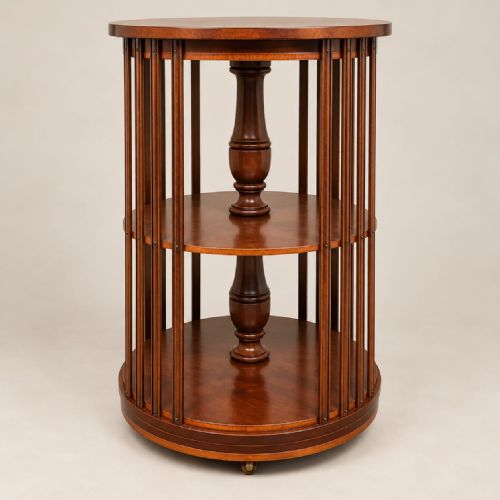
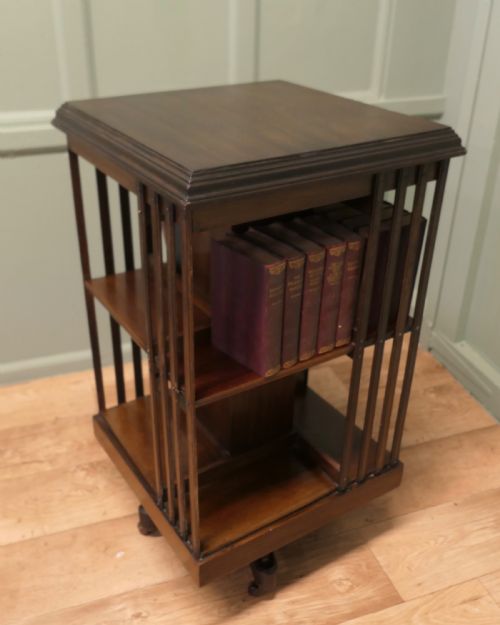
Open bookcases with adjustable shelving provide straightforward storage for everyday volumes, while revolving designs offer functional access within smaller spaces. Many examples incorporate satinwood inlay or Sheraton Revival influences, adding decorative detail to the underlying timber grain. Wall-mounted waterfall bookshelves and combination pieces with drawers or magazine racks also appear across the inventory.
Materials and Construction
Makers utilised solid mahogany and flame mahogany veneers over secondary timbers, often embellishing surfaces with contrasting satinwood inlay. Brass castors support mobile revolving bookcases, while iron hardware and glass elements appear in specific display variants.
Traditional joinery techniques ensure structural stability across open shelves and revolving mechanisms. Timber surfaces receive polish to highlight the natural grain patterns characteristic of the period.
Edwardian Mahogany Bookshelf Retail Price Guide 2026
Typical asking prices for edwardian mahogany bookshelf among the pieces listed under this phrase on Sellingantiques today, from the lower quarter to the upper quarter. They describe what is for sale here now, not the wider market.
Listings feature mahogany, satinwood, and brass, spanning the Victorian and Edwardian periods with forms including revolving designs, open shelves, and whatnots.
Craftsmanship and Proportion
The degree of refinement in the timber selection and inlay work distinguishes standard utility pieces from more elaborate examples. Flame mahogany veneers with balanced grain matching sit at the upper end of the scale.
The smoothness of the revolving mechanism and the precision of the brass castors indicate the original standard of manufacture. Well-proportioned cornices and crisp inlay details reflect greater attention to design during construction.
Waring and Gillows
The Edwardian Mahogany Bookshelf Glossary
- Flame mahogany
- A wood veneer cut from the fork of the mahogany tree to produce a distinctive, flickering flame-like pattern. This decorative figuring appears on cabinet doors and tabletops.
- Satinwood
- A pale, durable hardwood utilised for contrasting stringing and marquetry inlay on darker timbers. It brings a bright golden sheen to Edwardian furniture.
- Revolving bookcase
- A low, freestanding tier of shelves mounted on a spindle base that turns smoothly in either direction. This design allows access to volumes from a seated position.
- Waterfall bookcase
- A set of open shelves diminishing in depth from bottom to top, often featuring shaped sides. The tiered arrangement resembles the drop of a waterfall.
- Whatnot
- A piece of freestanding open shelving with multiple tiers supported by slender uprights. It was traditionally used for displaying ornaments and small books.
Edwardian Mahogany Bookshelf: Frequently Asked Questions
How do I care for a mahogany bookcase?
Keep the timber away from direct heat sources and strong sunlight to prevent the wood from drying out or fading. Apply a traditional wax polish occasionally to nourish the grain and maintain the surface sheen.
Dust the shelves regularly with a soft, dry cloth rather than using silicone-based sprays. Check any moving parts, such as revolving bases, to ensure they remain clear of dust build-up.
Are the shelves adjustable on these bookcases?
Many open bookcases from this period feature adjustable shelving supported by wooden rack strips or metal pins. This allows you to alter the shelf heights to accommodate volumes of various sizes.
Fixed shelves do appear in smaller revolving models and specific cabinet variants. Inspect the interior walls of the bookcase to identify the presence of adjustment tracks.
How do I distinguish Edwardian from Victorian pieces?
Edwardian furniture generally exhibits lighter proportions, simpler lines, and brighter satinwood inlay compared to earlier Victorian examples. Victorian pieces often lean towards heavier timber sections and darker finishes.
Stylistic revivals such as Sheraton Revival overlap between the late nineteenth century and the Edwardian era, sharing refined neoclassical detailing.
Where should I place a revolving bookcase?
Revolving bookcases suit corners, spaces beside armchairs, or open floor areas where 360-degree access is practical. Their compact footprint makes them useful in rooms with limited wall space for traditional shelving.
Ensure there is enough clearance around the circumference for the tiers to spin freely without touching adjacent furniture.