
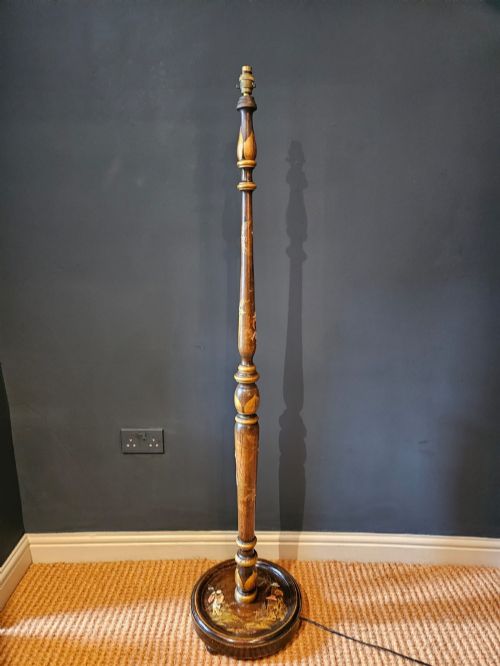
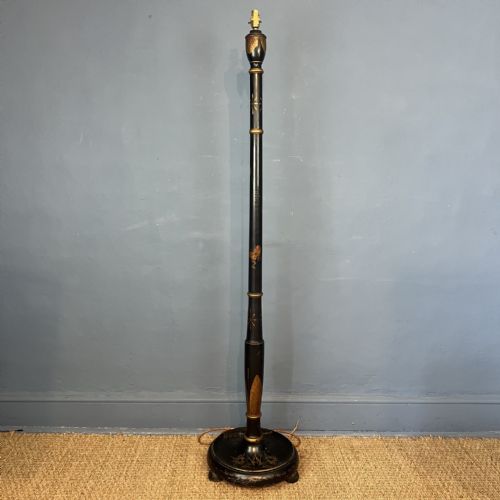
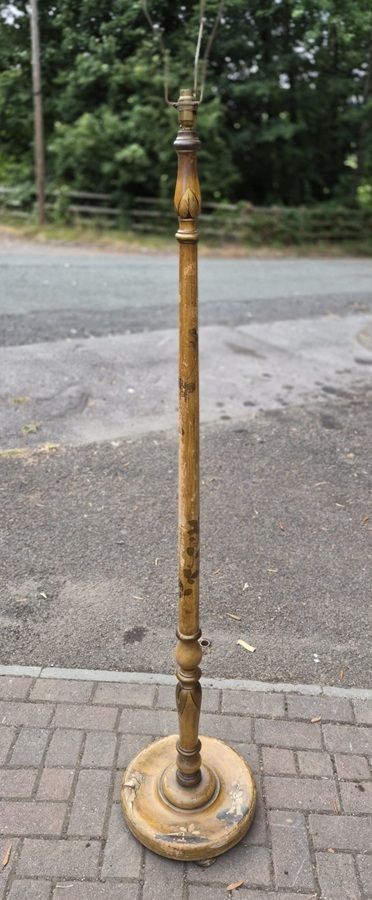
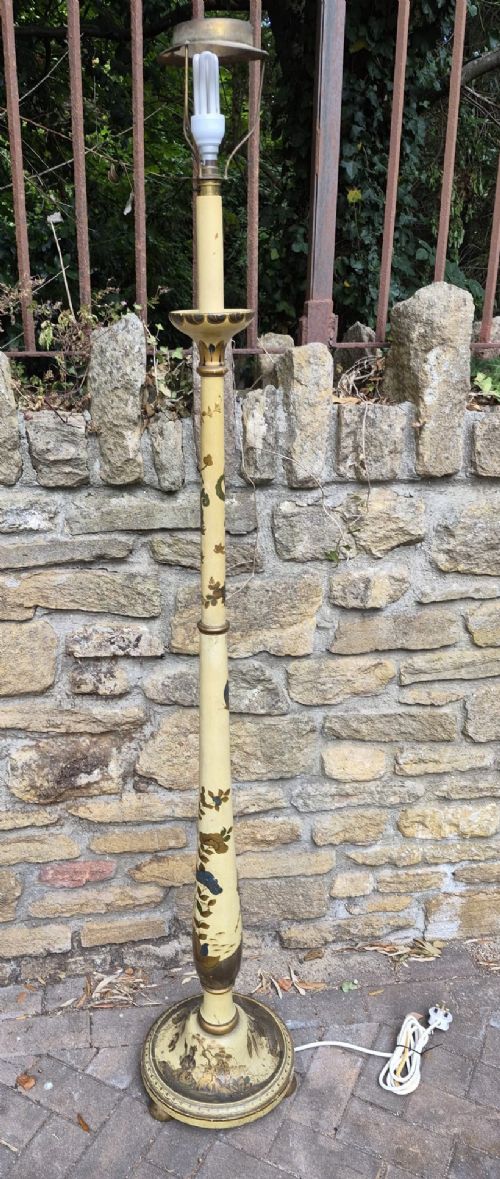
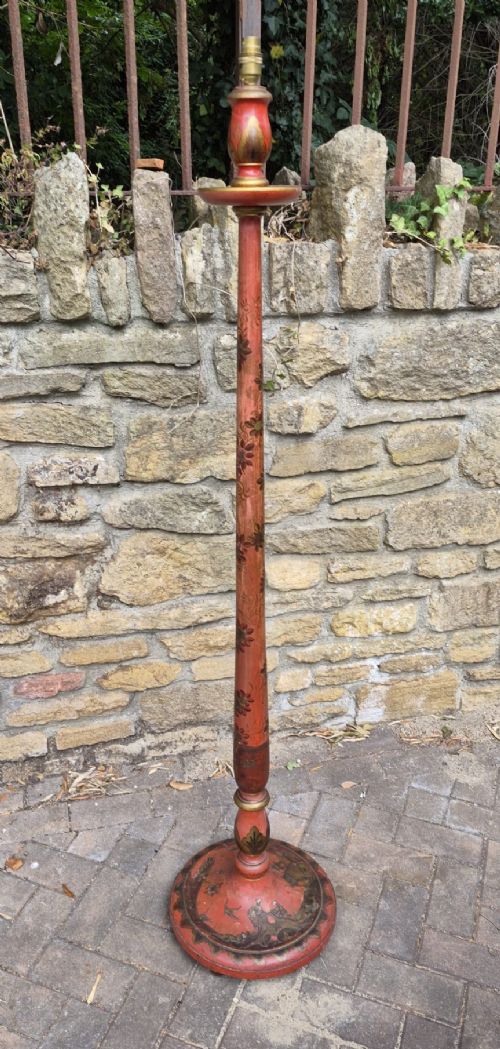
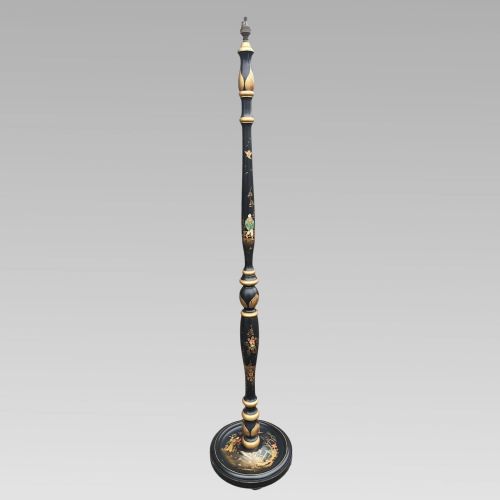
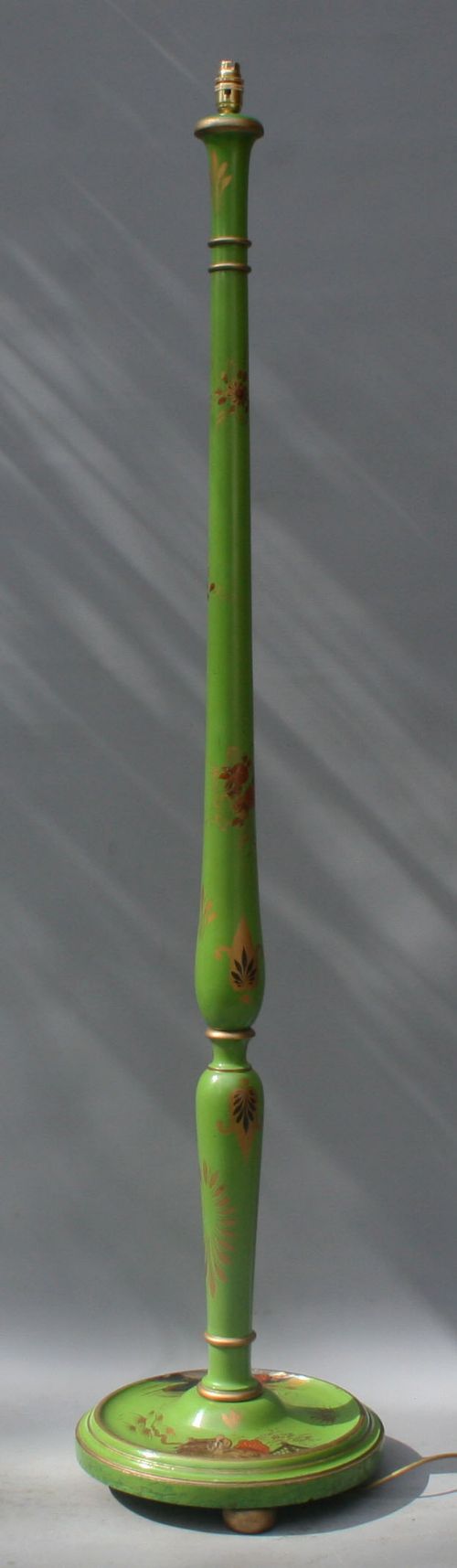


Edwardian Lacquered Floor Lamp
These edwardian lacquered floor lamp designs bring Chinoiserie decoration and height to a room, offering tall painted timber columns for ambient lighting.
Edwardian Lacquered Floor Lamp
An edwardian lacquered floor lamp stands as a tall vertical lighting fixture designed to illuminate a corner or seating area. These pieces frequently appear in Chinoiserie styles, featuring painted and lacquered decoration on wood.
The selection here encompasses standard lamps spanning the Edwardian era alongside pieces from the 1920s and 1930s, with occasional earlier Victorian examples. Forms include standard lamps and floor standing lamps, often finished in black or crimson lacquer.
Buyers seeking an edwardian lacquered floor lamp will find tall wooden standards decorated with Oriental motifs. Many examples integrate fabric shades, while others present the bare lacquered column ready for a shade of choice.
How they were made
Construction relies primarily on wood turned into tall columns, which are then coated in lacquer and painted. Craftspeople applied layers of paint and lacquer to achieve smooth surfaces suited to Chinoiserie ornamentation.
Brass fittings and hardware commonly secure the electrical components and shade mounts to the wooden body. Gilding accents often highlight the painted scenes and decorative motifs across the lacquered finish.
Listings span multiple decades from the Victorian era through the 1930s, uniting wood, brass, and fabric under Chinoiserie styles.
What varies in quality
The finesse of the painted decoration dictates much of the visual character across these floor lamps. Hand-drawn Chinoiserie motifs with detailed figures and landscapes demonstrate greater artisanal skill than simpler, repetitive patterns.
The condition and depth of the lacquer finish distinguish individual examples. Richly preserved black or crimson lacquer with intact gilding represents a higher standard of preservation than surfaces showing heavy wear or modern repainting.
The Edwardian Lacquered Floor Lamp Glossary
- Chinoiserie
- European interpretation and imitation of Chinese and East Asian artistic traditions, widely applied to furniture and decorative objects during the nineteenth and early twentieth centuries. This style employs motifs of figures, pavilions, and landscapes.
- Standard lamp
- A British term for a floor lamp, consisting of a tall vertical wooden or metal shaft supported by a heavy base. It positions a light source at height above furniture.
- Lacquer
- A durable resin or varnish applied in multiple layers to wood and polished to a smooth finish. It forms a hard protective surface often pigmented in black or crimson.
- Gilding
- The application of gold leaf or gold powder to surfaces to provide metallic highlights. It frequently outlines painted details on decorated furniture.
Edwardian Lacquered Floor Lamp: Frequently Asked Questions
How tall are these standard lamps?
These tall lighting fixtures are designed to stand directly on the floor, generally reaching heights suitable for illuminating a room from beside a sofa or armchair.
Exact heights vary by individual piece, depending on the proportions of the turned wooden column and the base construction.
Do these lamps come with shades?
Some individual listings include a fabric shade paired with the standard lamp, while others offer the wooden column alone.
Buyers should check each specific listing description to determine whether a shade is included with the lamp standard.
What colours do the lacquered finishes come in?
The surface finishes on these pieces most commonly feature black or crimson lacquer. These dark and rich tones provide a contrasting background for painted Chinoiserie decoration and gilding.
Over decades, the lacquer develops a characteristic sheen that distinguishes older surfaces from modern reproductions.
How do I date an Edwardian standard lamp?
Dating relies on stylistic markers within the Chinoiserie painted decoration, the turning of the wooden shaft, and the materials used in the electrical fittings. Edwardian examples date from the early twentieth century around 1910, while related pieces extend into the 1920s and 1930s.
Construction details such as timber selection and wiring access points help confirm the period of manufacture.