


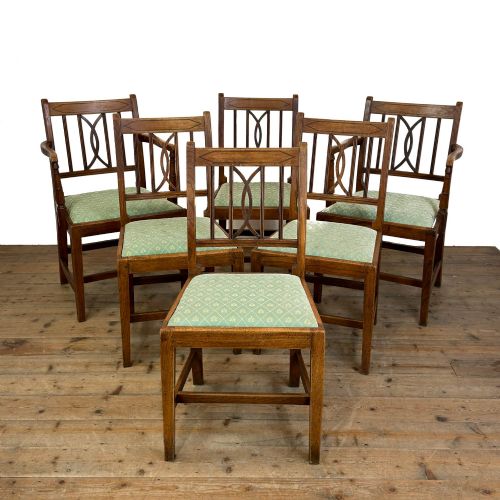
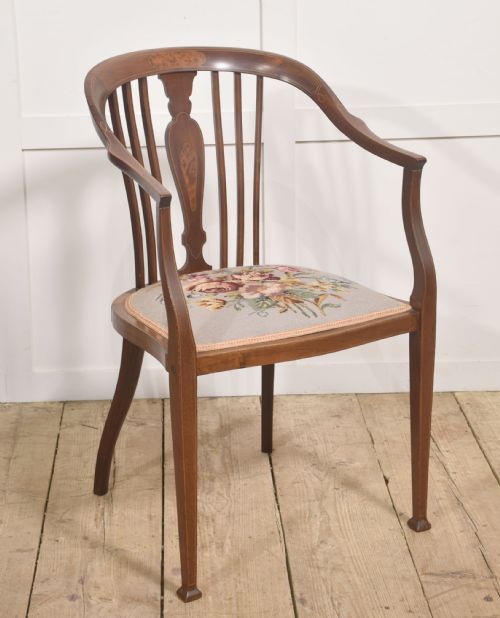


Edwardian Inlay Armchairs
Edwardian inlay armchairs combine comfortable seating with delicate woodwork, offering buyers a refined addition to a period drawing room or study.
Edwardian Inlay Armchairs
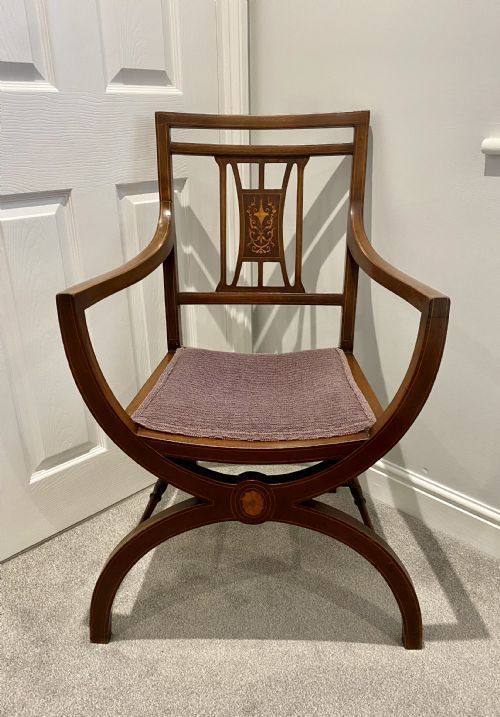
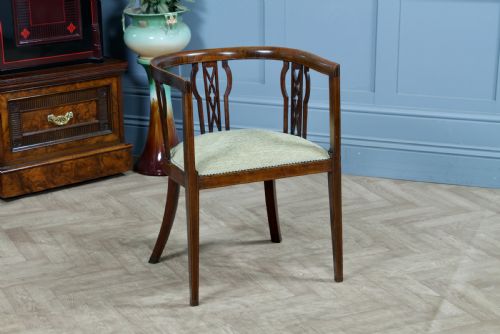
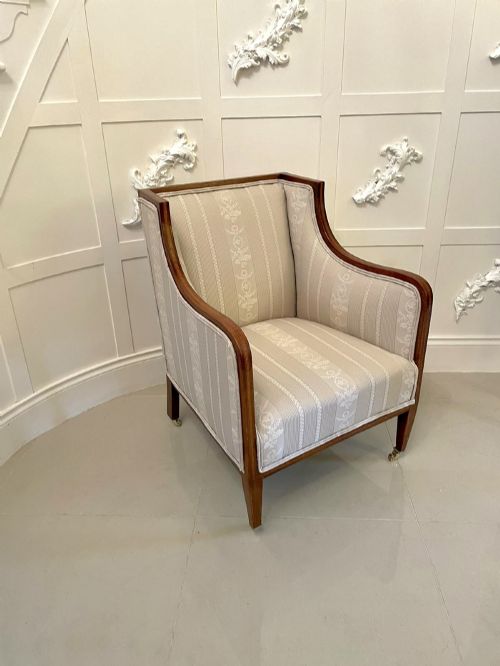
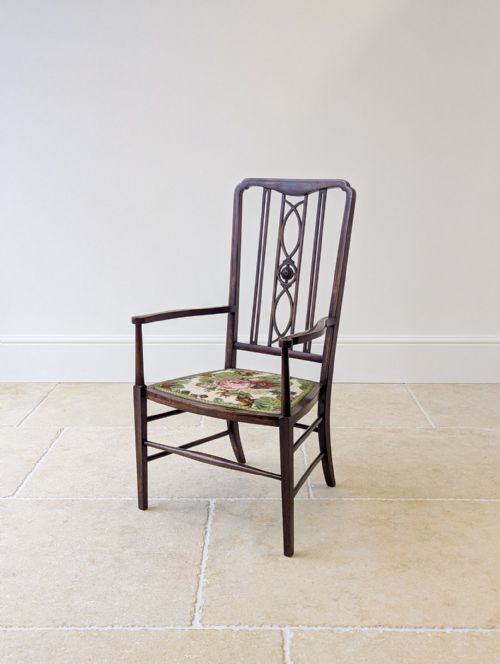
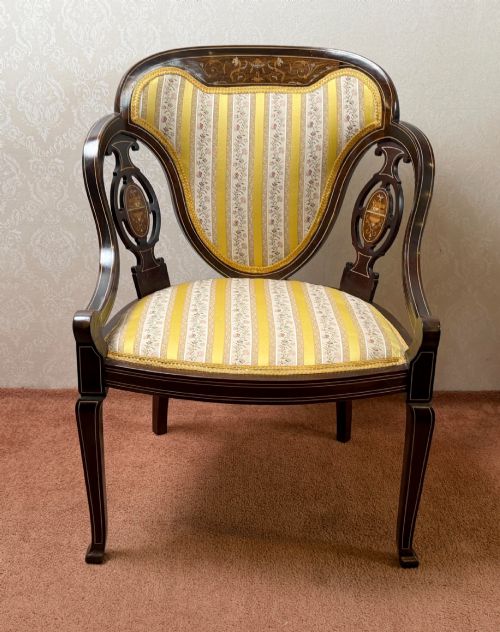
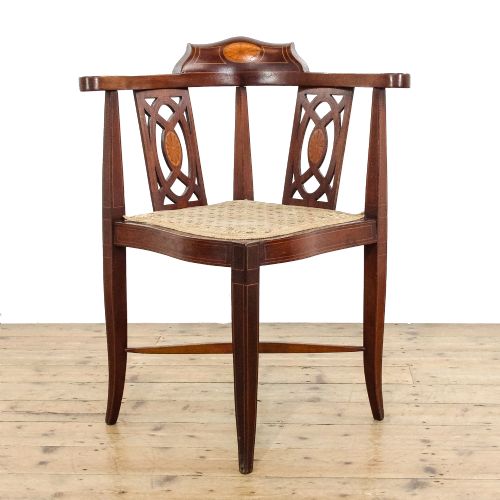
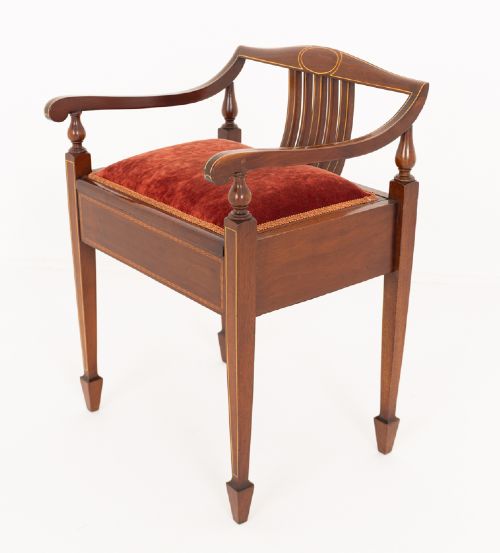
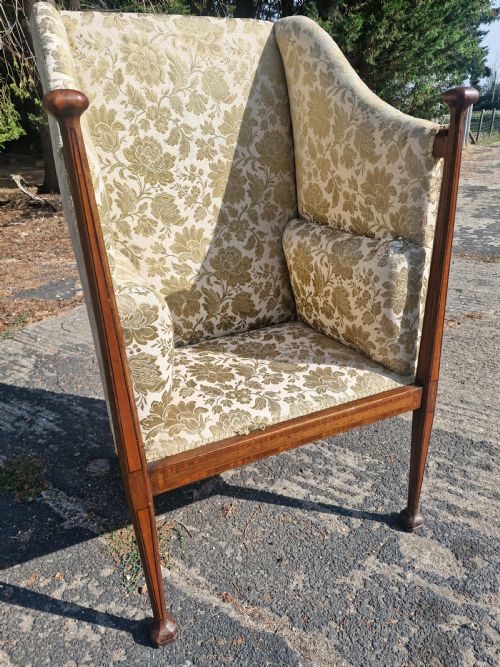
Edwardian inlay armchairs encompass seating designed primarily around the turn of the twentieth century, drawing heavily on earlier Sheraton Revival and Arts and Crafts design principles. When searching for Edwardian inlay armchairs, buyers frequently encounter mahogany frames accented with contrasting lighter woods, alongside occasional walnut and rosewood variants. These pieces serve various domestic functions, appearing as library chairs, elbow chairs, corner chairs, and tub styles designed for salons and parlours.
The selection ranges from simple occasional chairs with modest string inlay to elaborate library and desk chairs featuring detailed marquetry. Forms extend beyond standard armchairs to include bergere chairs with cane panels, rocking chairs, and upholstered salon suites. Most surviving examples date from the Edwardian period itself, with occasional pieces bridging the late Victorian era and the 1920s.
How they were made
Frames are constructed predominantly from solid mahogany, walnut, or rosewood, providing a sturdy structural base for subsequent ornamentation. Artisans applied thin veneers and intricate inlays using satinwood, boxwood, and bone to create geometric patterns, floral motifs, and classical urns.
Upholstery techniques varied from traditional horsehair stuffing secured with brass tacks to spring-loaded seats covered in contemporary fabric or leather. Component parts such as X-frames, tub backs, and pierced splats were joined using traditional woodworking joints before polishing to a smooth finish.
Edwardian Inlay Armchairs Retail Price Guide 2026
Typical asking prices for edwardian inlay armchairs among the pieces listed under this phrase on Sellingantiques today, from the lower quarter to the upper quarter. They describe what is for sale here now, not the wider market.
Certain corner chairs include hidden pivoting seats designed to accommodate voluminous Edwardian skirts without crushing the upholstery.
What varies in quality
The distinction between standard production and superior craftsmanship rests in the precision of the woodwork and the depth of the materials used. Finer pieces display crisp, tightly fitted inlays of satinwood and boxwood rather than superficial painted imitations, alongside hand-carved details on the mahogany frame.
Structural integrity also separates workshop output, seen in the rigidity of corner joints and the choice of primary timbers. Chairs retaining their original upholstery substructure and high-grade secondary woods generally reflect a higher standard of original manufacture.
Shoolbred
The Edwardian Inlay Armchairs Glossary
- Sheraton Revival
- A late nineteenth and early twentieth century design movement that reinterpreted the neoclassical furniture forms popularized by Thomas Sheraton. It relies on symmetrical geometry, light mahogany timbers, and delicate contrasting inlays.
- Marquetry
- The art of applying pieces of veneer to a structure to form decorative patterns and pictures. Unlike simple inlay set into solid wood, marquetry creates a complete pictorial surface.
- Bergere
- An enclosed upholstered armchair with a wooden frame and woven cane sides or back panels. This French-derived form gained popularity in refined English parlours.
- Boxwood
- A dense, pale yellow wood utilised extensively for fine stringing and inlay work. Its uniform texture allows for sharp, precise cutting against darker woods like mahogany.
- String Inlay
- A narrow band of contrasting wood inserted into a shallow channel on a furniture surface. This technique creates delicate linear borders around panels and legs.
Edwardian Inlay Armchairs: Frequently Asked Questions
How do I identify an Edwardian inlay armchair?
Look for light wood stringing, such as boxwood or satinwood, set into a mahogany or rosewood frame. These chairs typically exhibit slender proportions and decorative motifs influenced by Sheraton Revival styles.
Examine the construction of the joints and the integration of the inlay into the solid timber rather than relying solely on surface decoration, which can sometimes indicate later embellishment.
Were these chairs meant for everyday use?
Edwardian armchairs served specific domestic roles in drawing rooms, bedrooms, and libraries rather than heavy daily lounging. Library and desk chairs were built for utility, while salon and occasional chairs prioritized decorative presence.
When living with these pieces today, consider placing them in low-traffic areas or utilising them as occasional seating to preserve their historic frames and delicate inlay work.
What is the difference between Victorian and Edwardian armchairs?
Victorian armchairs generally favour heavier proportions, darker woods, and more robust, enclosed upholstery. By contrast, Edwardian pieces trend towards lighter frames, tapered legs, and brighter timber contrasts inspired by eighteenth-century revivals.
While late Victorian examples often bridge this gap, Edwardian seating maintains a distinct air of verticality and restraint in its ornamentation.
Can I reupholster an antique armchair safely?
Reupholstering an Edwardian armchair is common practice, provided the underlying frame and webbing are assessed by a professional conservator. Preserving original inner stuffing materials adds historical value, but modern fire-retardant regulations often necessitate new internal layers.
Select fabrics that complement the period of the piece, such as subtle damasks, plain velvets, or traditional wools that respect the mahogany and satinwood tones.