
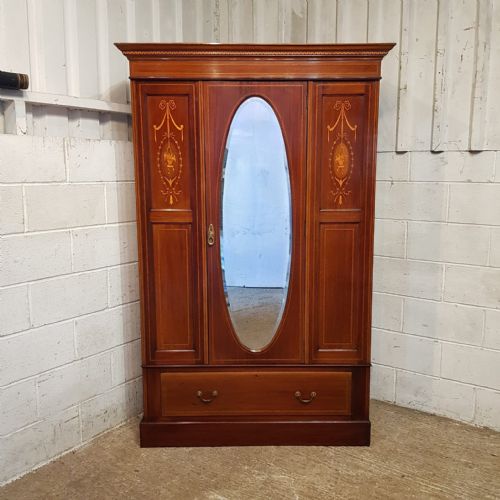
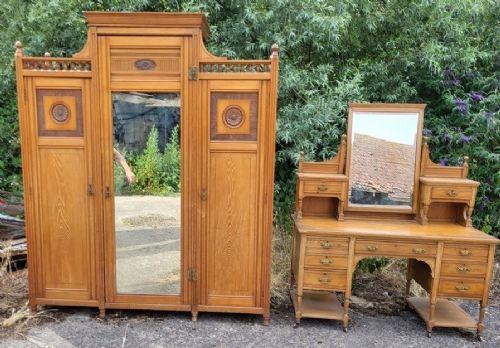
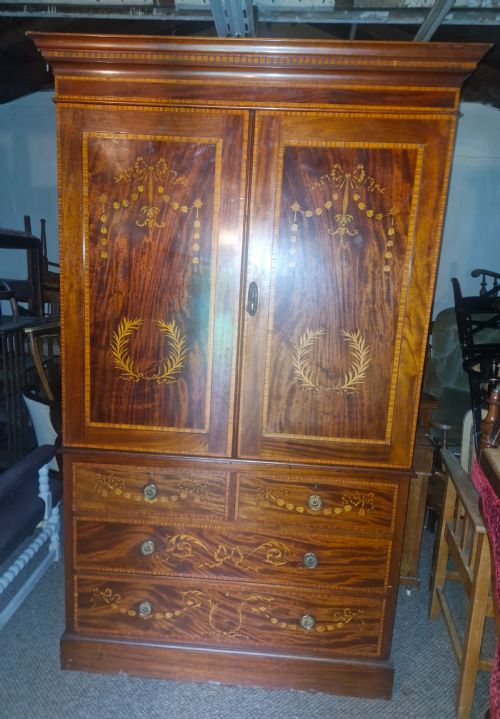
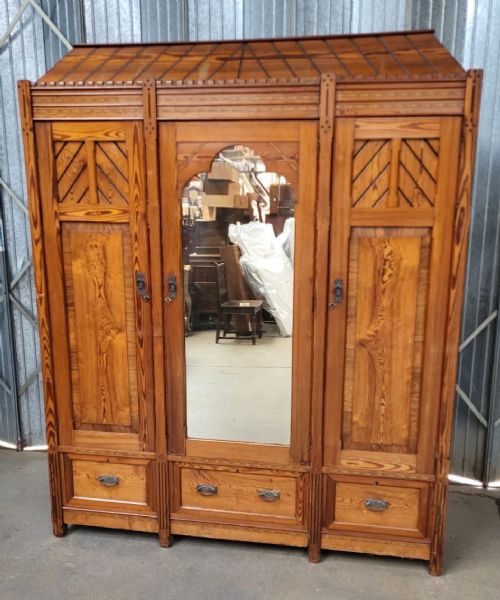
Edwardian Inlaid Wardrobe
These large storage pieces combine practical hanging space with fine decorative detailing.
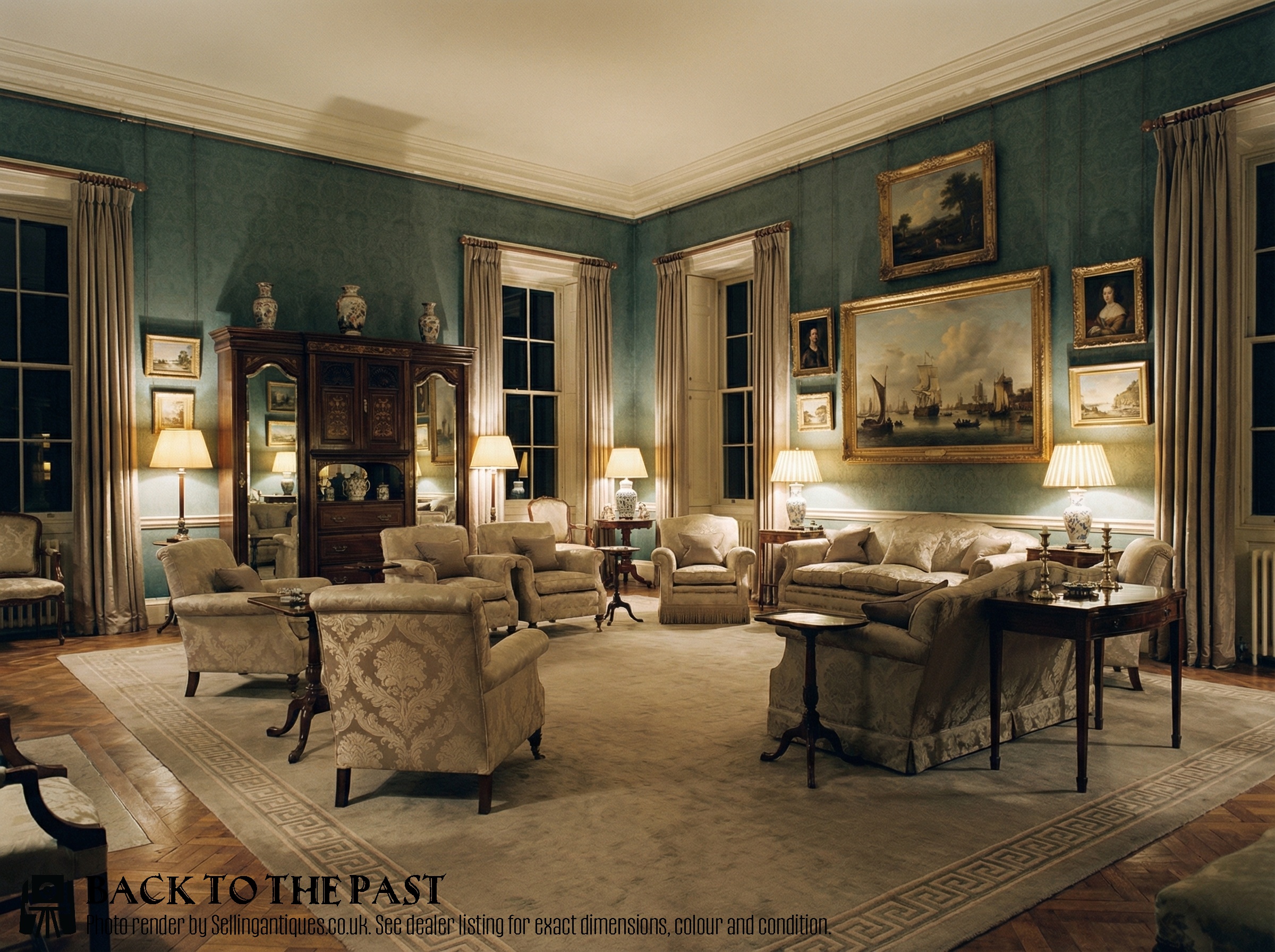
Edwardian inlaid wardrobe forms and periods
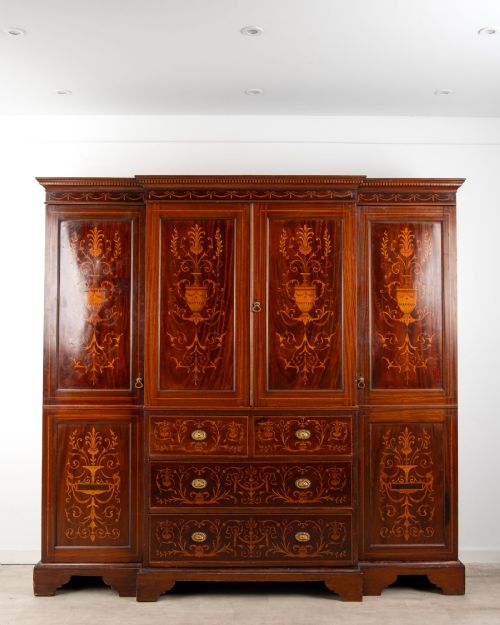
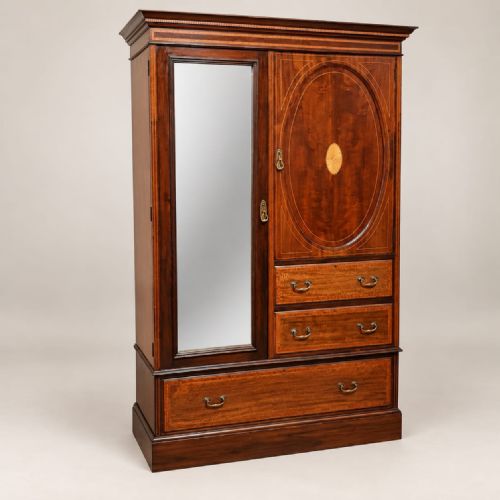
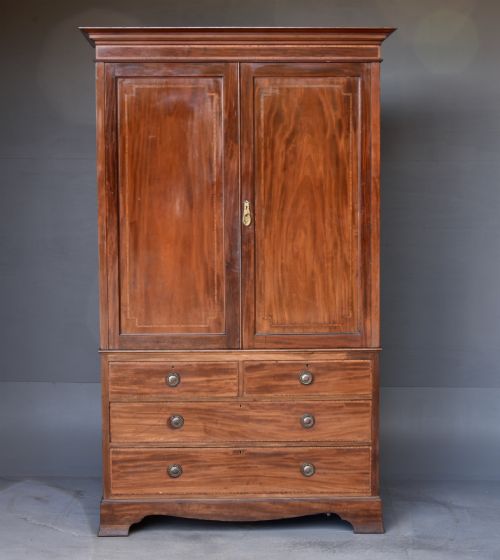
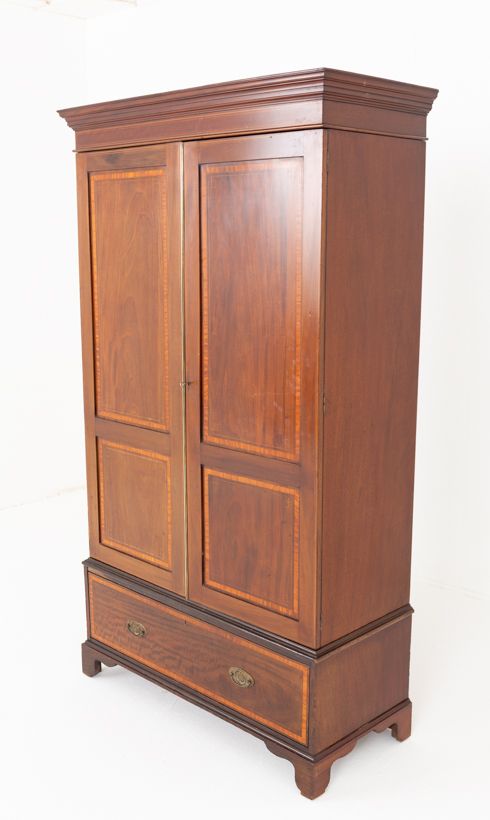
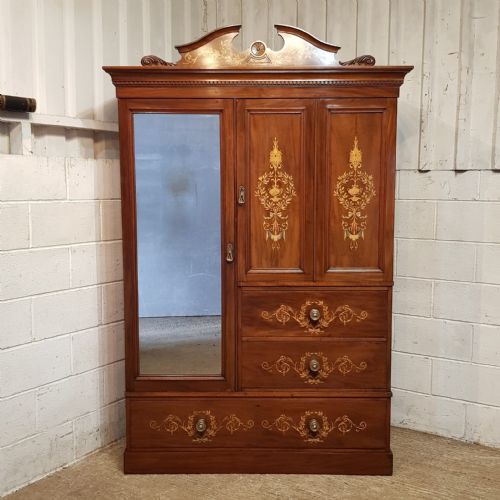
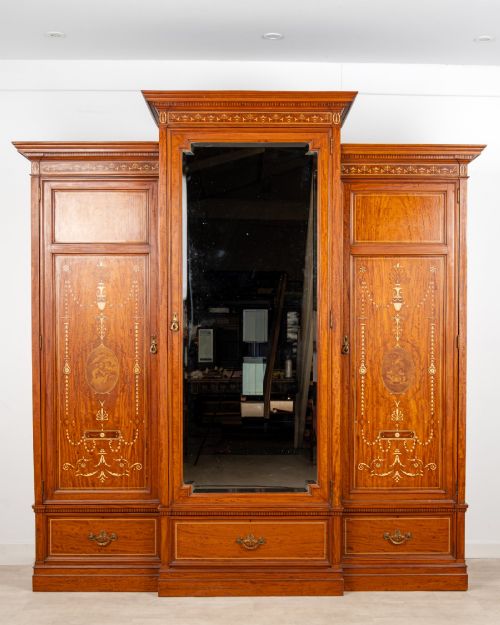
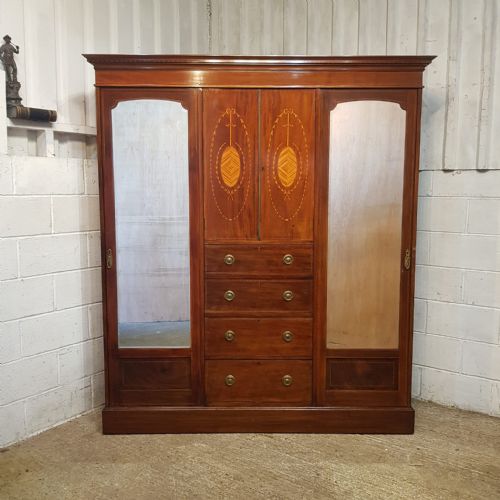
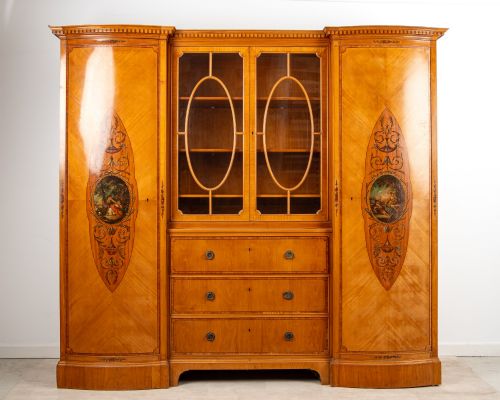
An edwardian inlaid wardrobe brings substantial timber construction and delicate decorative marquetry together, most commonly found originating from the Edwardian and Victorian periods around nineteen hundred. These pieces range from single door cupboards and double door designs to expansive triple wardrobes, breakfront configurations, and compactums.
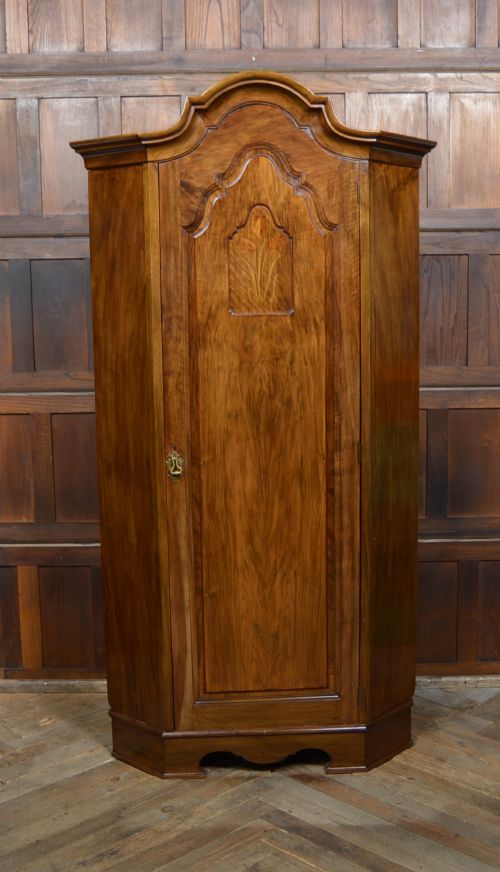
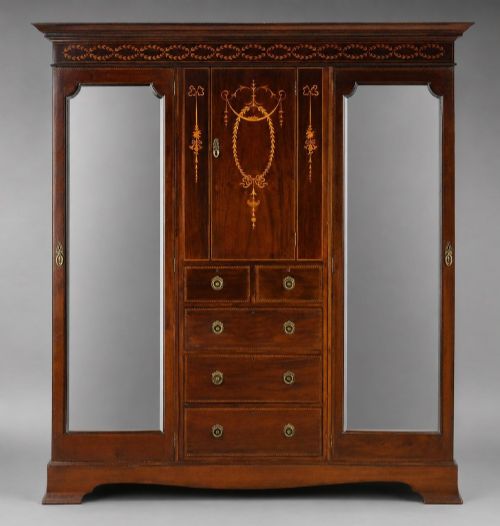
The archive shows considerable variety in scale, including large breakfront examples, combination pieces fitted with drawers, and single sentry box formats. Workshops utilised mahogany as the primary timber body, supplemented by rosewood and oak.
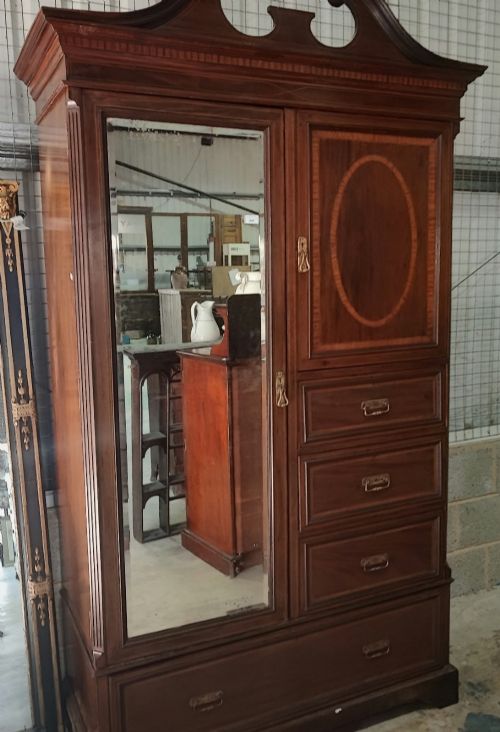
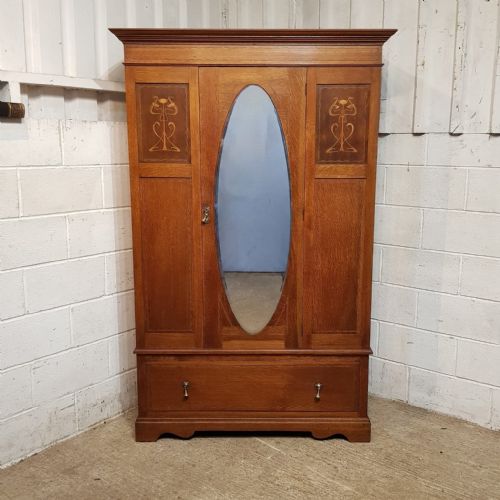
Makers often drew upon Sheraton Revival and Edwardian Neo-Classical styles, incorporating mirror glass doors alongside carved elements.
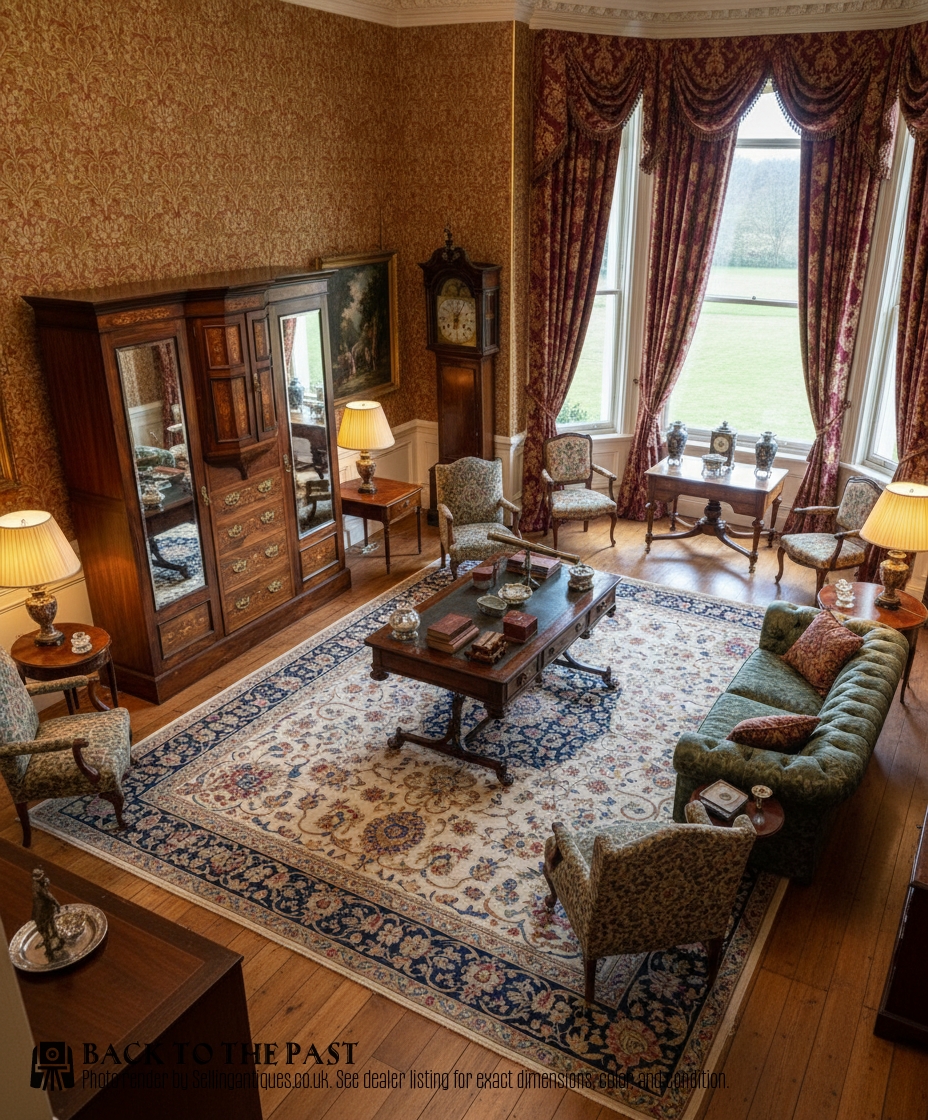
Materials and construction techniques
Cabinet makers built these wardrobes using solid timbers and veneers of mahogany, rosewood, oak, and satinwood. Structural integrity relied on traditional joinery techniques combined with large glass mirror panels fitted into door frames.
Surface decoration involved intricate marquetry and inlay work utilising contrasting woods such as boxwood and satinwood. Brass hardware completed the internal and external fittings.
Retail Price Guide 2026
Typical UK retail prices for edwardian inlaid wardrobe, calculated from the Sellingantiques database of over a million retail prices indexed since 2003. This retail price guide relies exclusively on Sellingantiques data; no external sources or auction records are used, so the figures do not describe the wider market.
Listings feature wardrobes spanning the Victorian and Edwardian periods, constructed primarily in mahogany with satinwood, boxwood, and brass elements.
Standards of craftsmanship
The calibre of a piece rests upon the precision of the marquetry and the choice of timber figures within the mahogany or satinwood veneers. Elaborate multi-door compositions, such as breakfronts and compactums with integrated drawer sections, demand greater joinery skill than standard single door variants.
Intricate floral inlay work and balanced proportions distinguish finer examples from simpler utilitarian models.
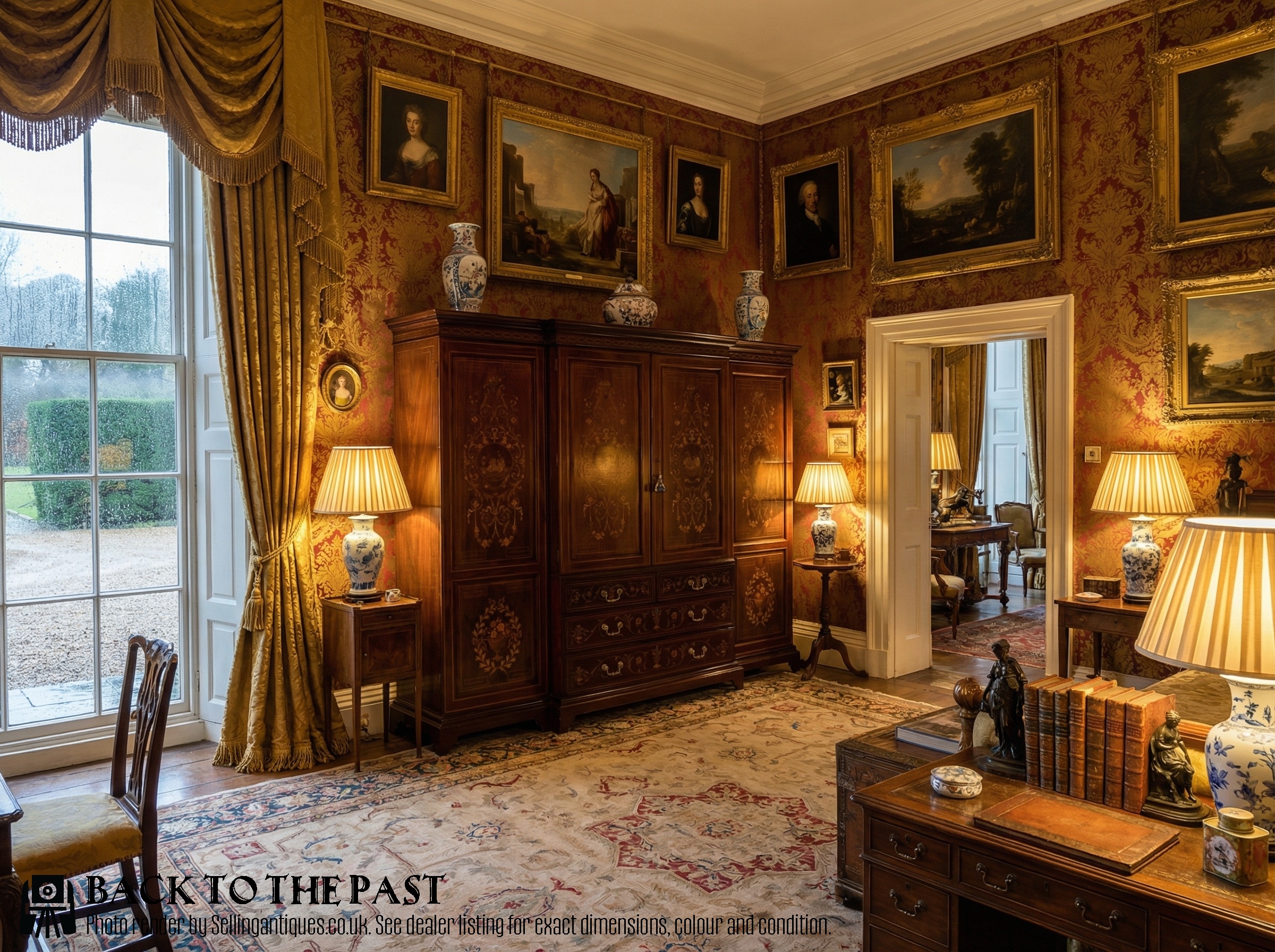
Edwards and Roberts·Heals Ltd London·Maples and Co
The Edwardian Inlaid Wardrobe Glossary
- Compactum
- A large wardrobe that incorporates internal drawers, shelves, and hanging space within a single multi-door unit. This design maximises bedroom storage efficiency.
- Marquetry
- Decorative woodwork where pieces of various tinted woods are fitted into a veneer to form geometric or floral patterns. It adds surface ornamentation to door panels.
- Breakfront
- A cabinet design where the central section projects forward from the flanking wings. This architectural form creates depth across large triple wardrobes.
- Satinwood
- A pale, lustrous timber utilised for contrasting inlay work and entire bedroom suites. Its reflective grain catches light effectively.
- Sheraton Revival
- A late nineteenth and early twentieth century style drawing inspiration from eighteenth century neoclassical furniture designs. It relies on restrained classical motifs and symmetrical inlays.
Frequently Asked Questions
How do I fit a large wardrobe?
Many Edwardian wardrobes were constructed to be dismantled for transport and reassembly in the bedroom. Check the internal configuration of hanging space and drawers before positioning.
Ensure floor levels are even to allow large mirror doors to open and close smoothly without catching.
What is a compactum wardrobe?
A compactum combines hanging compartments with internal banks of drawers and shelves. This multi-functional layout provided complete bedroom storage in a single piece of furniture.
These units typically feature three or more doors and generous proportions.
How do I identify a Sheraton Revival piece?
Sheraton Revival pieces incorporate neoclassical motifs, symmetrical stringing lines, and floral marquetry. The style references eighteenth-century aesthetics adapted for Edwardian homes.
Mahogany remains the standard base timber for these designs.
Are mirror doors original?
Many Edwardian wardrobes feature bevelled mirror glass door panels framed in timber. These mirrors frequently show subtle ageing or foxing that confirms their period origin.
Single and double wardrobe designs both utilised mirrors to increase light in bedrooms.