




Edwardian Inlaid Sewing Box
These edwardian inlaid sewing box pieces are sophisticated containers for needlework and small treasures, crafted to combine practical storage with elegant domestic display.
Edwardian Inlaid Sewing Box
When you search for an edwardian inlaid sewing box, you encounter a range of compact wooden containers and tables designed for domestic needlework. The selection spans the Edwardian era and the Victorian period, encompassing forms from small portable workboxes to fitted occasional tables.
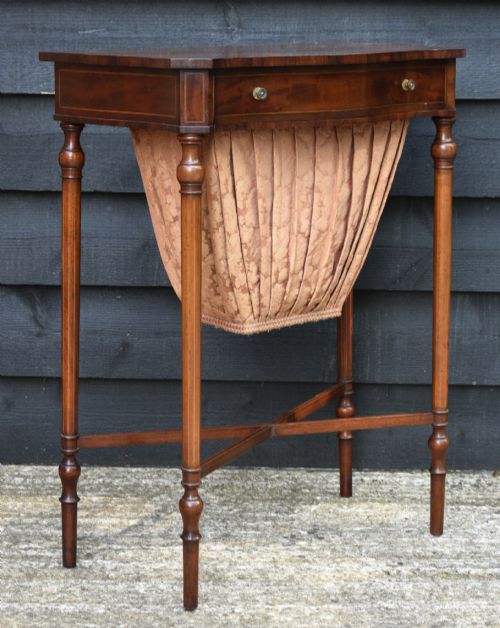
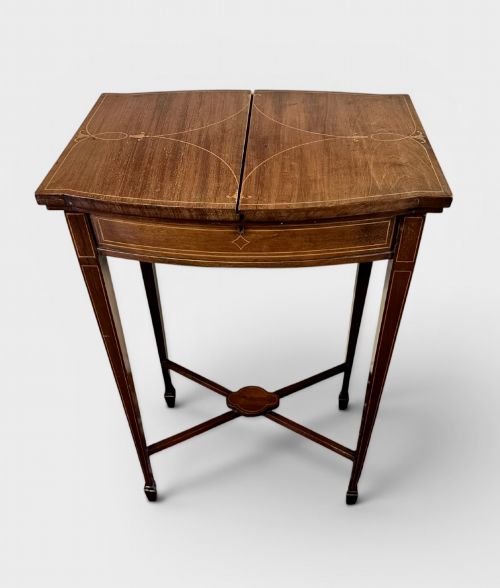
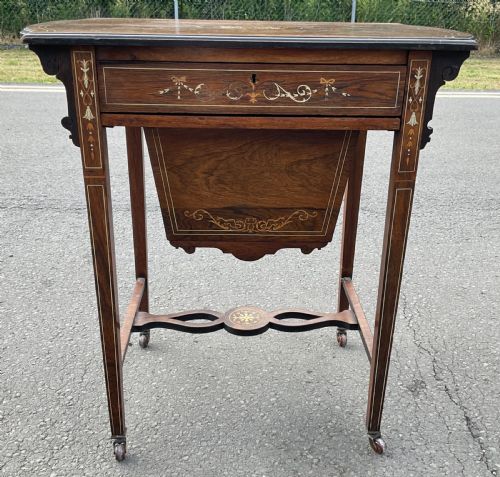
You are most likely to meet mahogany and rosewood examples on this page, often detailed with satinwood, boxwood inlay, or shell motifs. These pieces frequently feature fitted interiors or silk baskets beneath the main surface to hold threads, needles, and tools.
The objects range from octagonal work tables and serpentine sewing tables to sarcophagus-shaped boxes and trumpet work tables. Alongside dedicated sewing furniture, you will find occasional tables and side tables adapted for similar needlework purposes.
Distinctions in quality
The standard of an edwardian inlaid sewing box is defined by the precision of its timber selection and the crispness of its inlay work. Finer examples display carefully matched grain patterns and meticulously cut boxwood or satinwood detailing rather than simplified decoration.
Construction details such as the integration of fitted interior compartments, the movement of folding tops, and the condition of original fabric or silk baskets separate standard utility pieces from more ambitious cabinetmaking.
Listings feature mahogany, satinwood, rosewood, walnut, and boxwood inlay across Edwardian and Victorian periods.
The Edwardian Inlaid Sewing Box Glossary
- Inlay
- A decorative technique where pieces of contrasting timber, shell, or other materials are embedded into recesses in the primary wood surface to create a flush, patterned design.
- Marquetry
- An elaborate form of inlay assembling various wood veneers into pictorial or geometric designs across the surface of a table or box.
- Trumpet Table
- A type of work table featuring an octagonal or flared body resembling a trumpet shape, standing on a pillar and tripod base.
- Sarcophagus
- A box form with a sloping lid and shaped profile reminiscent of classical stone chests, popular for larger nineteenth-century sewing boxes.
- Serpentine
- A furniture outline characterised by a curved line that is convex in the centre and concave at the sides.
Edwardian Inlaid Sewing Box: Frequently Asked Questions
What is inside an edwardian inlaid sewing box?
These pieces typically contain compartmentalised trays, silk storage bags, or fitted sections designed to hold spools of thread, needles, pins, and small tools.
Many retain their original fabric linings or compartments, providing a glimpse into how needlework implements were organised during the period.
How do I distinguish Edwardian from Victorian work tables?
Edwardian examples tend to display lighter timbers such as satinwood and restrained inlay patterns, reflecting the neoclassical revival styles popular after nineteen hundred.
Victorian pieces frequently utilise darker woods like rosewood and walnut, often featuring heavier proportions, bold marquetry, or sarcophagus silhouettes.
Were these tables used only for sewing?
While specifically designed for needlework and related crafts, many of these versatile pieces functioned equally well as occasional tables or side tables.
The inclusion of folding tops and lower baskets allowed owners to transition the furniture between utility and display in a drawing room.
How should I care for the inlaid wood surfaces?
Maintain the timber by keeping the piece away from direct sunlight and sudden temperature changes, which can cause wood to dry or veneers to lift.
Apply a gentle application of appropriate furniture wax occasionally to preserve the sheen of the mahogany, rosewood, or walnut.