

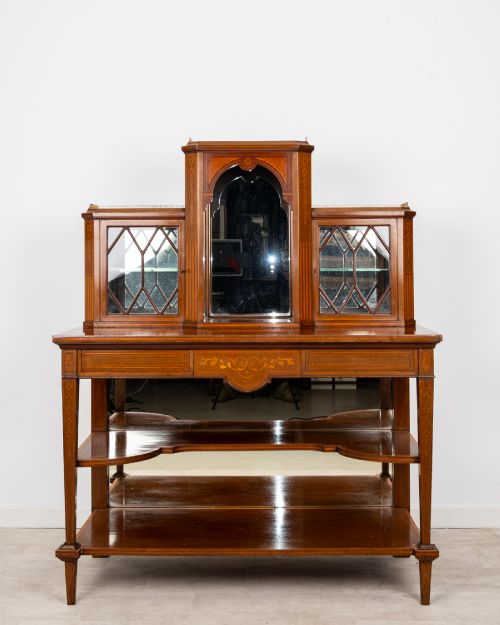
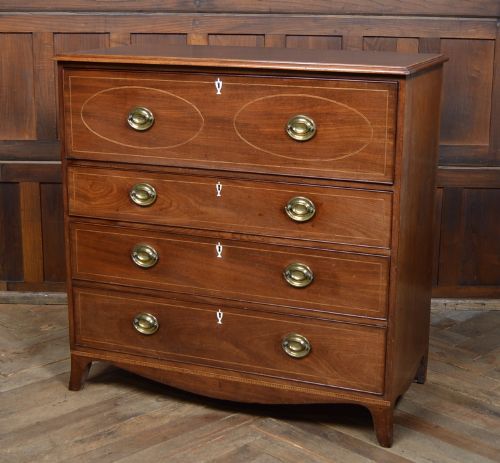
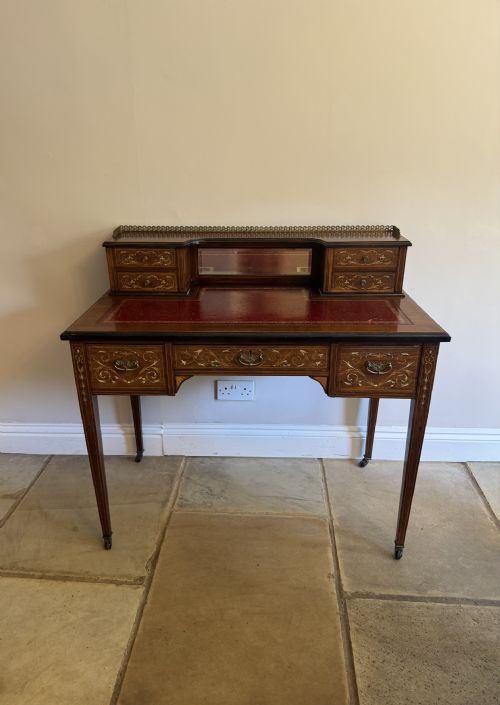
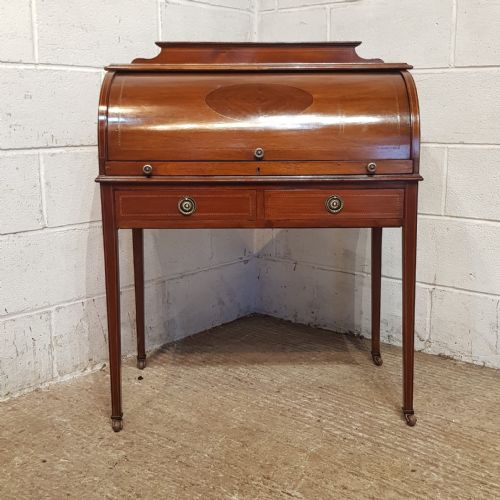


Edwardian Inlaid Secretary
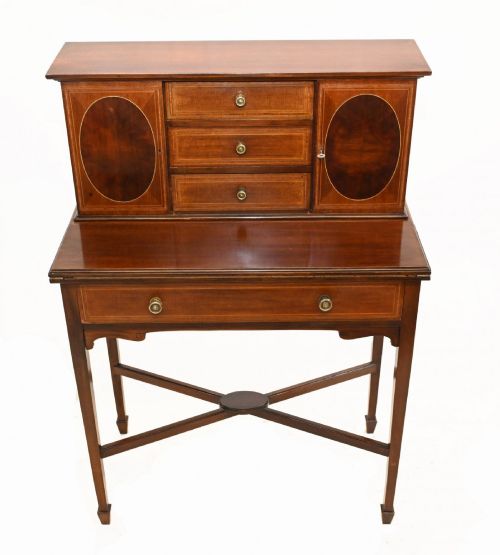
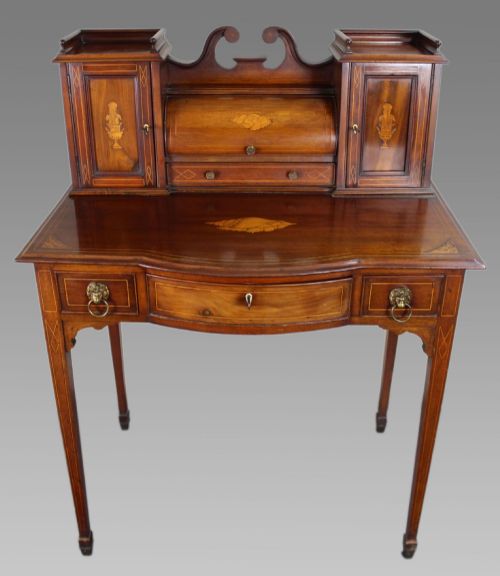
These edwardian inlaid secretary pieces combine fitted writing compartments with elegant marquetry, bringing sophisticated utility to any study.
Edwardian Inlaid Secretary
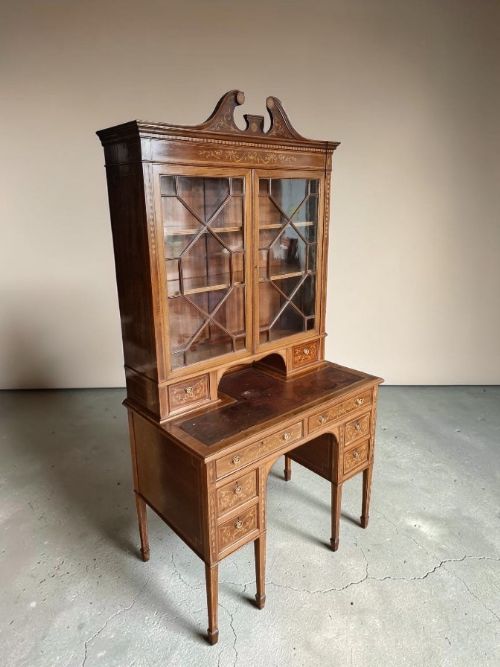
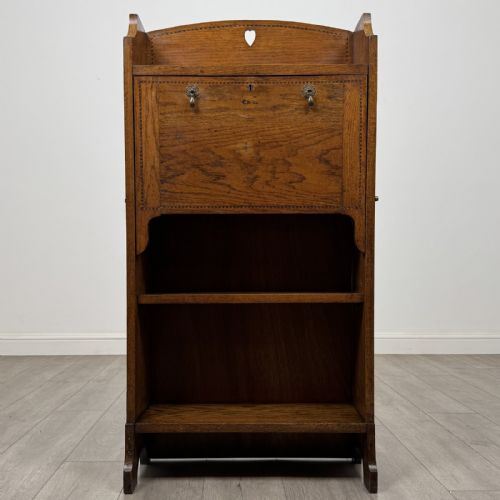
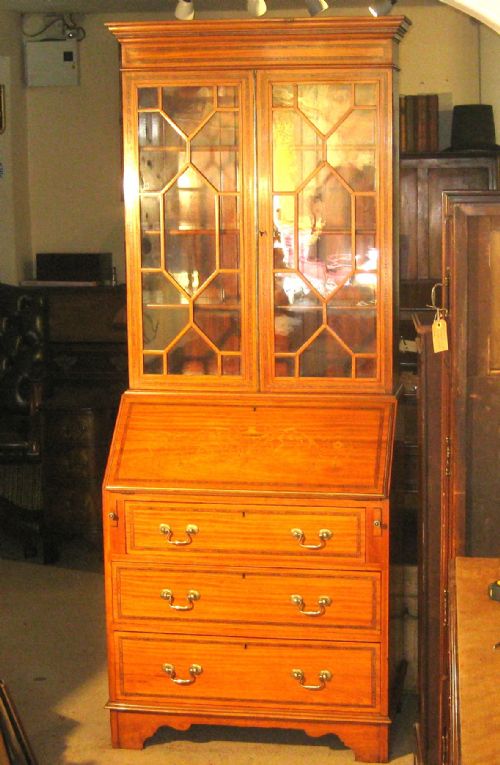
An edwardian inlaid secretary provides a dedicated writing space featuring drop-down writing flaps or cylinder fronts paired with upper bookcase cabinets. The pieces on this page appear most frequently from the Edwardian period, alongside Victorian, Georgian, and 18th century examples.
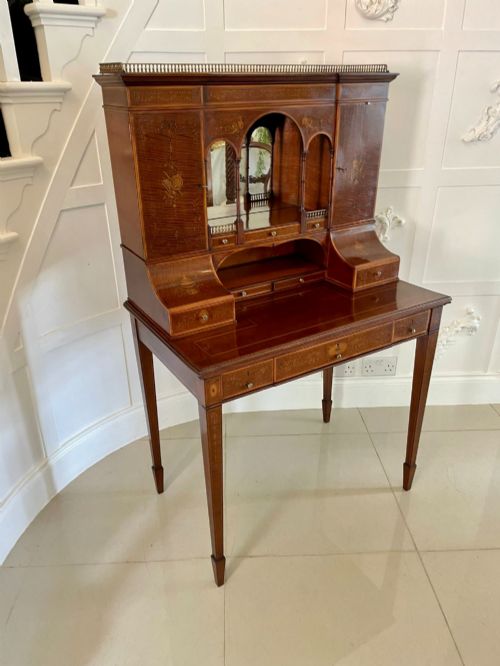
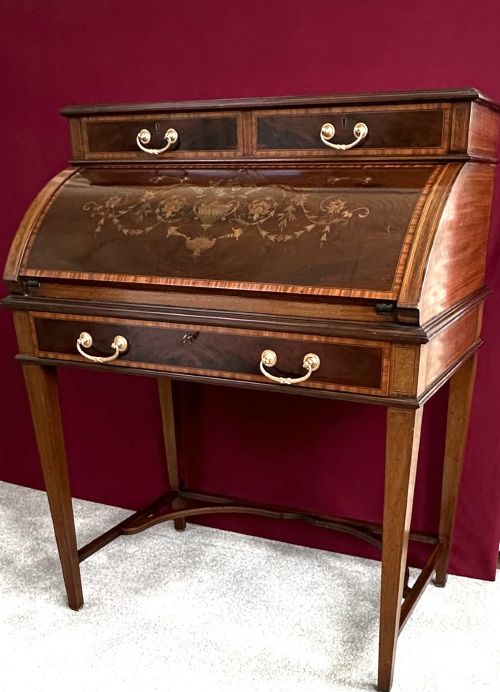
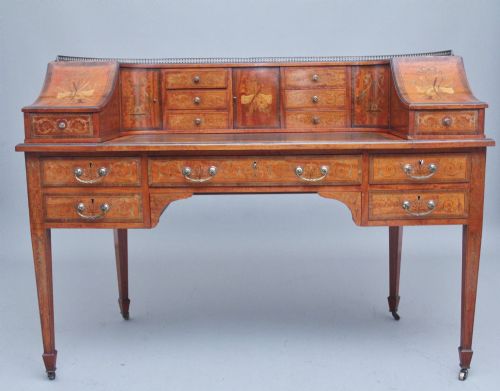
Makers utilised various forms ranging from bureau bookcases and cylinder desks to bonheur du jour writing cabinets. Mahogany, satinwood, and rosewood form the primary structural timbers, enhanced by delicate inlay and brass hardware.
Sheraton Revival styling dominates the aesthetic vocabulary of these items, reflecting an enduring interest in classical 18th century motifs. Buyers encounter both compact ladies writing desks and larger architectural bureau bookcases designed for formal libraries.
Materials and Construction
Cabinetmakers constructed these pieces primarily using solid mahogany, walnut, and rosewood, applying figured veneers to large flat surfaces like fall-fronts and cabinet doors. Satinwood and lighter timber inlays created contrasting floral, ribbon, and urn motifs across the primary wood ground.
Internal components typically feature secondary timbers such as oak for drawer linings, alongside brass handles, hinges, and occasional glass panel doors. Marquetry and crossbanding required precise hand-cutting to fit intricate decorative elements flush into the surrounding veneer.
Edwardian Inlaid Secretary Retail Price Guide 2026
Typical asking prices for edwardian inlaid secretary among the pieces listed under this phrase on Sellingantiques today, from the lower quarter to the upper quarter. They describe what is for sale here now, not the wider market.
Listings feature mahogany, satinwood, rosewood, and walnut across bureau bookcases, cylinder desks, and bonheur du jour cabinets.
Evaluating Quality
Quality reveals itself in the crispness of the marquetry and the precision with which contrasting timber inlays integrate into the primary wood. Superior examples demonstrate thoughtful grain selection, seamless veneer matching, and retained original hardware like brass handles and working locks.
Internal execution distinguishes standard production from exhibition pieces, particularly in the complexity of pigeonholes, secret compartments, and small drawers inside cylinder desks and bureau bookcases. The integrity of the structural joinery and the survival of clean, original polished finishes further elevate a piece.
Edwards and Roberts·Lamb and Co
The Edwardian Inlaid Secretary Glossary
- Secretary
- A desk featuring a writing flap or cylinder front that conceals a fitted interior of small drawers and pigeonholes. These pieces often combine storage capabilities with a fold-down writing surface.
- Marquetry
- Decorative veneer work forming pictures or patterns using various woods, shells, or ivory. Craftsmen apply these thin pieces onto a structural carcase to create elaborate floral or architectural scenes.
- Bonheur du jour
- A light lady writing desk featuring a small cabinet or set of drawers on top of the writing surface. This form gained popularity during the 19th century for informal correspondence.
- Cylinder bureau
- A desk with a rolling curved shutter that encloses the writing desk and internal compartments. Pulling the writing slide forward automatically retracts the cylinder into the body.
- Crossbanding
- A border strip of veneer laid around the edges of a panel with the grain running perpendicular to the centre. This technique frames the primary timber surface to create a defined visual edge.
- Sheraton Revival
- A late 19th and early 20th century design movement replicating the neoclassical furniture styles of Thomas Sheraton. Pieces from this revival feature delicate painted or inlaid decoration, tapered legs, and classical symmetry.
Edwardian Inlaid Secretary: Frequently Asked Questions
What is an edwardian inlaid secretary used for?
These pieces function as compact writing desks and display cabinets for correspondence, books, and writing instruments. The drop-down flap or cylinder front opens to reveal pigeonholes and small drawers intended for stationery.
Historically, they served in reception rooms or private chambers for letter writing and estate management. Today, they provide practical desktop space while concealing clutter behind panelled doors and fitted compartments.
How do I date an edwardian inlaid secretary?
Dating relies on examining secondary timbers, construction methods, and stylistic cues such as Sheraton Revival motifs. Edwardian pieces from around 1900 often show machine-assisted precision alongside traditional hand-craftsmanship.
Earlier Georgian and 18th century examples display hand-cut dovetails and solid timber carcases without the mass-produced veneers common later. Secondary woods like oak or pine inside drawers also offer clues regarding the manufacturing era.
How do I care for satinwood and mahogany surfaces?
Maintain these polished timber surfaces by dusting regularly with a soft, dry cloth and avoiding direct sunlight. Excessive UV exposure causes satinwood and mahogany to fade or alter tone over time.
Apply high-quality beeswax periodically to nourish the wood and protect the polish without building up greasy residue. Keep these cabinets away from direct heat sources to prevent timber shrinkage and veneer lifting.
What distinguishes a cylinder desk from a bureau?
A bureau utilises a flat hinged fall-front that rests at an angle when opened to create the writing surface. This hinged flap covers the internal pigeonholes directly.
A cylinder desk employs a quarter-circle rolling shutter that slides back into the body of the desk when opened. This mechanism often operates in tandem with an extendable pull-out writing slide.