



Inlaid Drop Front Bureau
An inlaid drop front bureau offers a concealed writing surface behind a hinged panel, combining hidden fitted compartments with elegant domestic storage.
Inlaid Drop Front Bureau
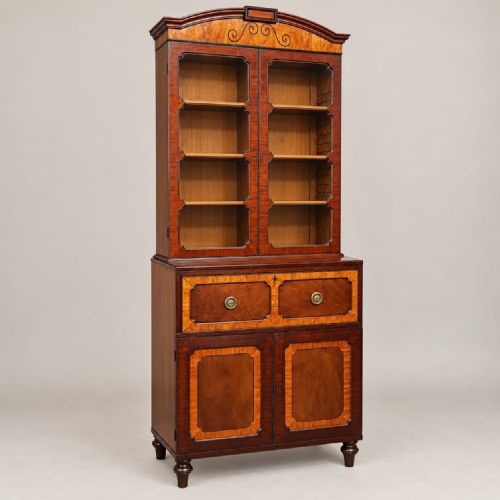
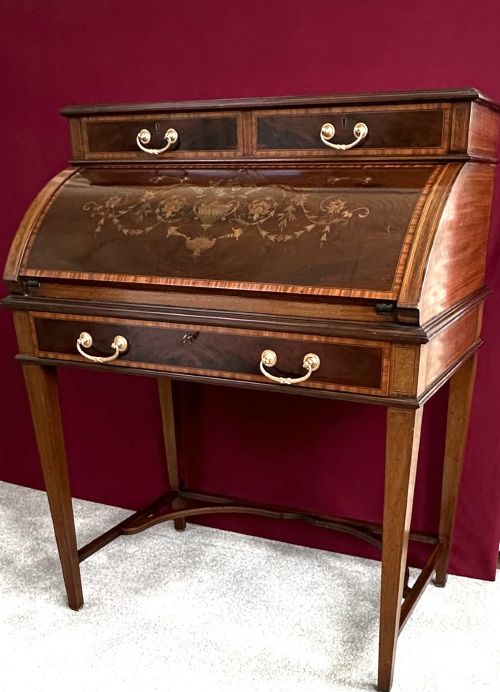
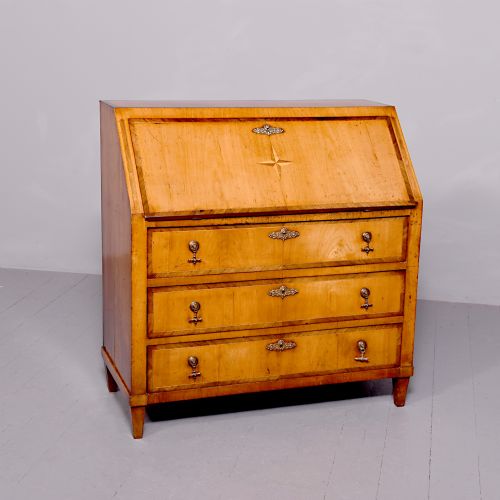
An inlaid drop front bureau is a writing cabinet featuring a fall front that opens to reveal internal drawers and pigeonholes. These pieces span periods from the seventeenth century through to the Edwardian era, encompassing diverse regional tastes.
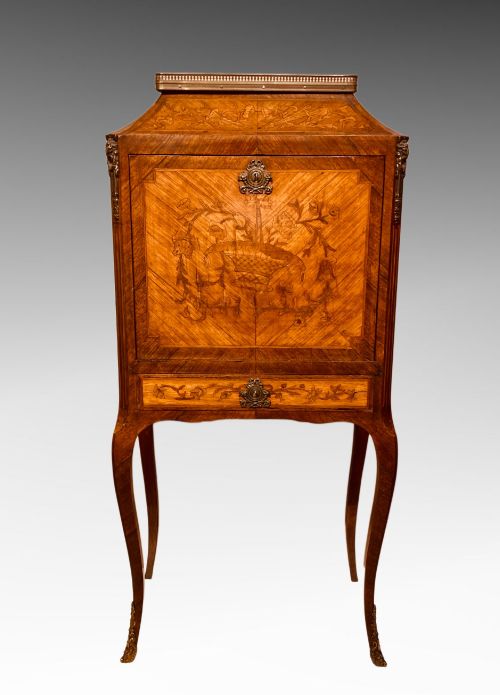
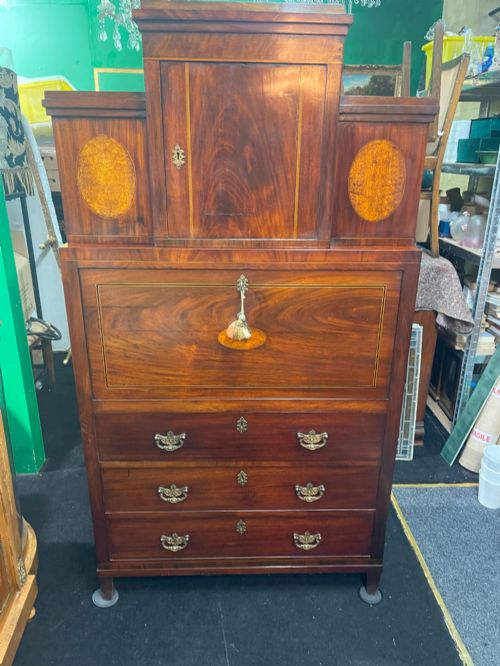
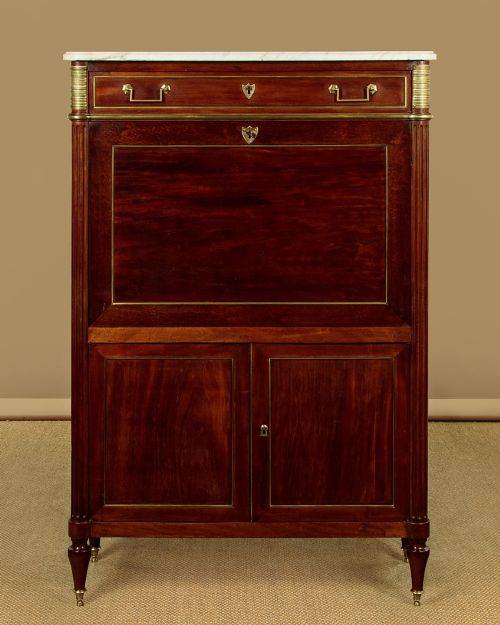
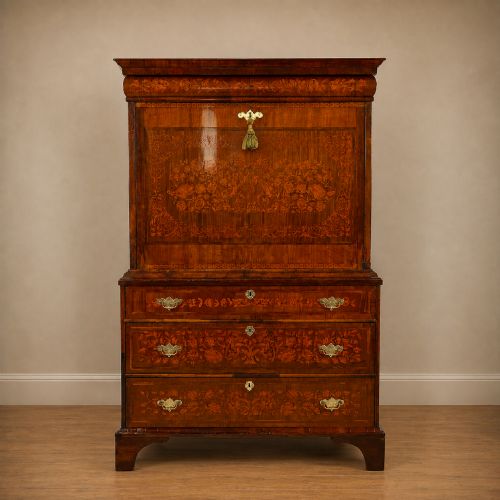
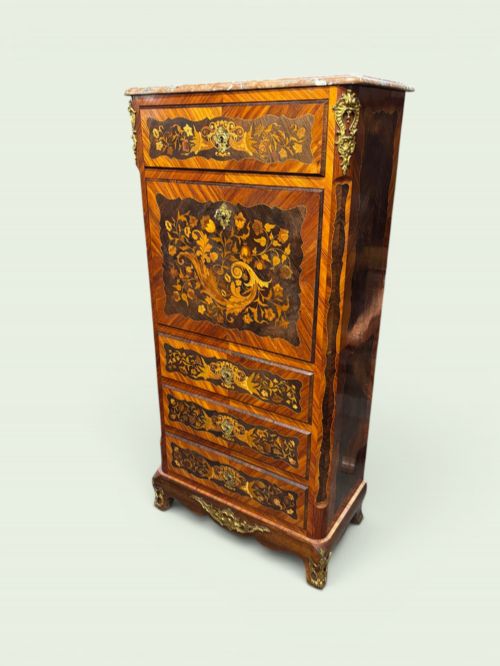
The selection here includes Georgian mahogany examples, walnut marquetry pieces from the eighteenth century, and rosewood or kingwood cabinets from the nineteenth century. Buyers frequently encounter Edwardian mahogany writing bureaux alongside French secretaire cabinets mounted with ormolu.
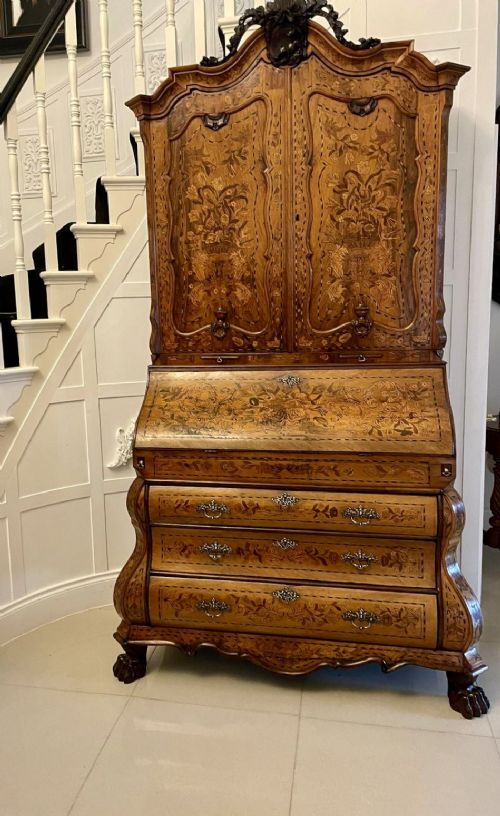
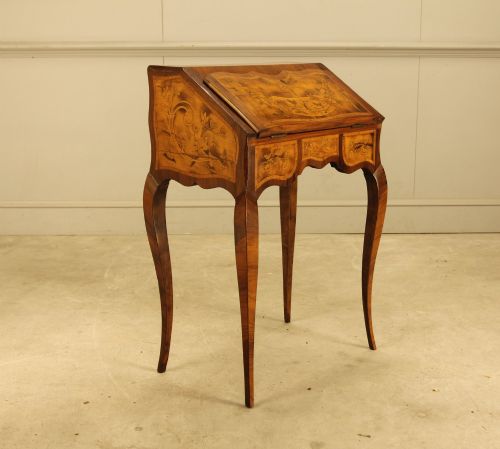
Forms range from compact ladies writing desks to tall bureau bookcases and large two-part cabinets. Walnut, mahogany and rosewood serve as the primary woods, often enhanced by intricate floral marquetry or contrasting stringing.
Materials and Construction
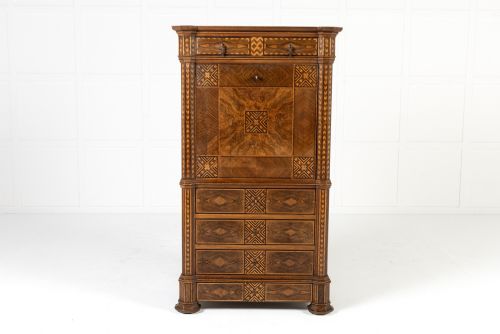
Cabinetmakers constructed these writing pieces using solid and veneered timbers such as mahogany, walnut, kingwood and rosewood over robust oak or pine carcases. Marquetry designs employ contrasting woods and tinted veneers to create elaborate floral patterns across the fall front and drawer faces.
Metal components add both structural support and decorative contrast, utilising cast brass handles, escutcheons and gilded ormolu mounts. Interior fittings often incorporate small secret compartments, fitted pigeonholes and leather-lined writing surfaces.
Glass frequently appears in the upper doors of bureau bookcases, while marble tops finish certain French secretaire abattant cabinets. Herringbone banding and delicate stringing define the surface enrichment across various styles.
Inlaid Drop Front Bureau Retail Price Guide 2026
Typical asking prices for inlaid drop front bureau among the pieces listed under this phrase on Sellingantiques today, from the lower quarter to the upper quarter. They describe what is for sale here now, not the wider market.
Listings feature eighteenth-century Dutch marquetry bureaux alongside nineteenth-century French secretaire cabinets and Edwardian mahogany writing desks.
Assessing Quality
Quality rests in the precision of the marquetry work and the choice of timber figure, where tightly grained burr walnut or richly flamed mahogany elevate a piece. The crispness of cast ormolu mounts and the subtlety of brass inlay indicate skilled workshop production.
Structural integrity shows in the smooth operation of the drop front mechanism and the snug fit of internal drawers. Secondary woods used for drawer linings, such as oak, reflect the original standard of craftsmanship.
The Inlaid Drop Front Bureau Glossary
- Bureau
- A desk featuring a sloping lid or fall front that drops down to provide a writing surface. It typically encloses a set of small drawers and pigeonholes.
- Secrétaire à abattant
- A tall upright cabinet with a vertical drop front panel that conceals a writing compartment. This form originates from French cabinetmaking traditions.
- Marquetry
- Decorative veneer work forming pictorial or floral patterns using various coloured woods. Craftsmen assemble these thin pieces into geometric or organic designs before applying them to the carcase.
- Ormolu
- Gilded bronze used for decorative mounts and furnishings on nineteenth-century cabinets. The technique involves applying a gold amalgam to cast brass or bronze.
- Escritoire
- A writing cabinet or desk used for correspondence. The term often describes tall fall-front furniture from the seventeenth and eighteenth centuries.
Inlaid Drop Front Bureau: Frequently Asked Questions
What is a drop front bureau?
A drop front bureau is a writing desk with a hinged panel that folds down horizontally to create a flat writing surface. When closed, the panel conceals internal compartments and small drawers.
These pieces combine functional workspace with enclosed storage, making them suitable for domestic studies and living spaces.
How do I identify a Georgian bureau?
Georgian bureaux typically feature solid mahogany or walnut construction with simple bracket feet and brass swan-neck handles. The interior arrangement often includes stepped pigeonholes and secret sliding compartments.
Proportions remain classic and restrained, relying on the quality of the timber rather than heavy surface ornamentation.
What is the difference between a bureau and an escritoire?
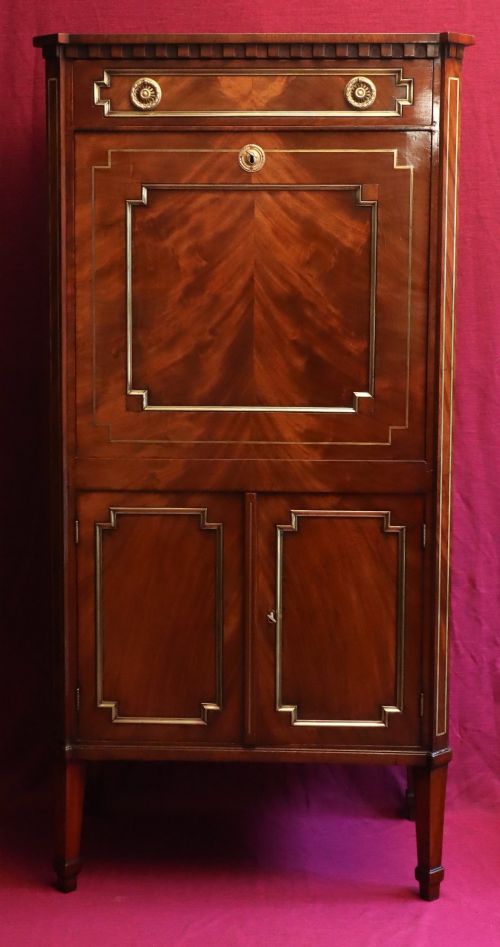
An escritoire generally refers to a taller upright writing cabinet with a vertical drop front, whereas a traditional bureau often has a sloped lid. Both serve the primary purpose of housing writing materials and correspondence.
French examples frequently use the term secretaire abattant for these vertical writing cabinets.
Where were marquetry bureaux made?
Marquetry bureaux were produced in several European centres, including England, the Netherlands and France. Dutch pieces frequently display elaborate floral and bird marquetry in contrasting woods.
English makers favoured restrained geometric stringing, while French workshops incorporated ormolu mounts and exotic kingwood veneers.