



Edwardian Inlaid Rosewood Desk
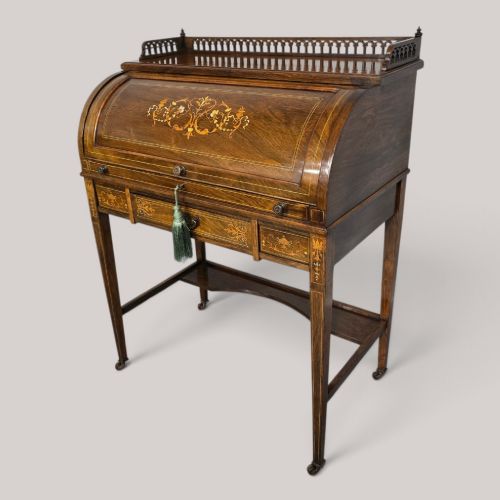
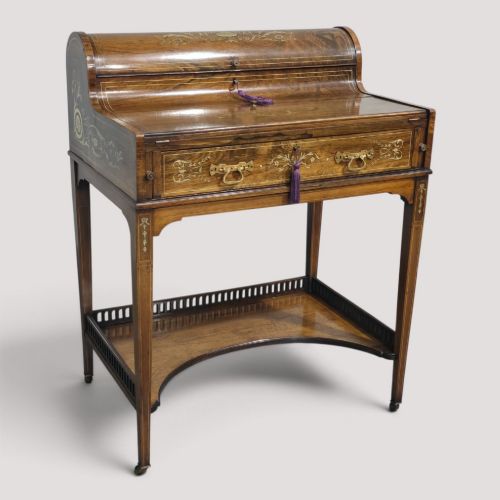
These pieces of edwardian inlaid rosewood desk bring refined marquetry and compact elegance into a modern study.
Edwardian Inlaid Rosewood Desk
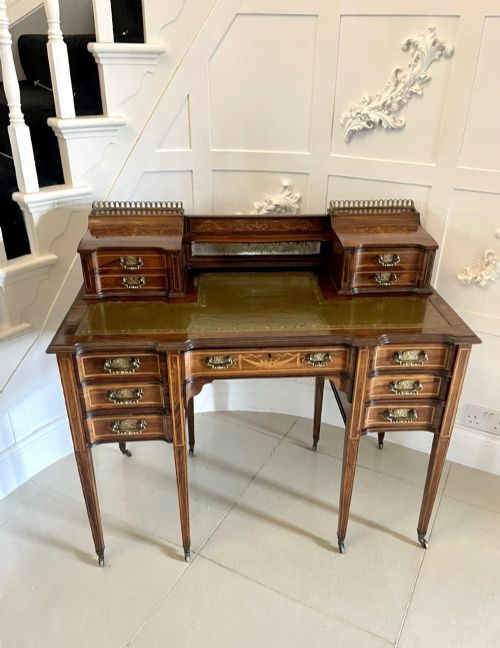
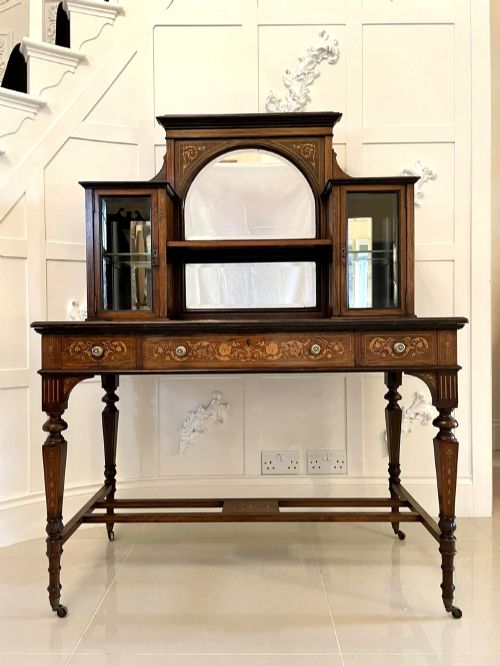
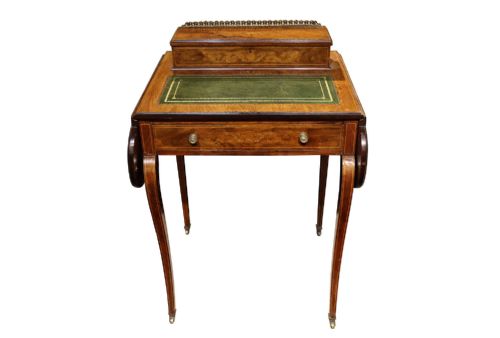
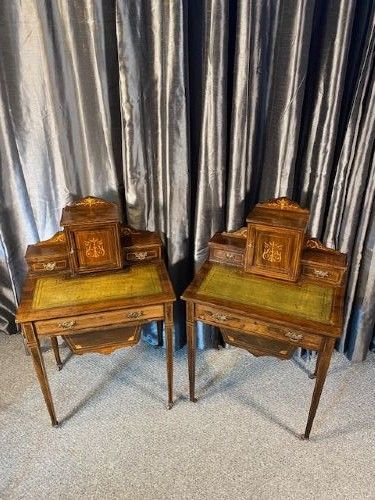
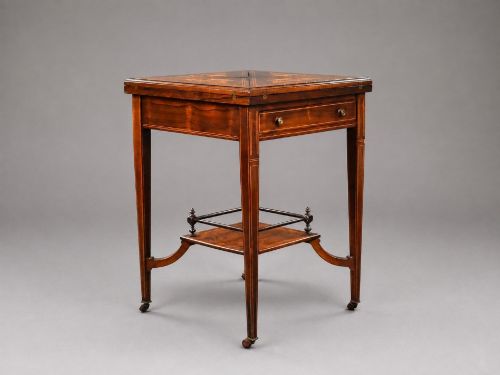
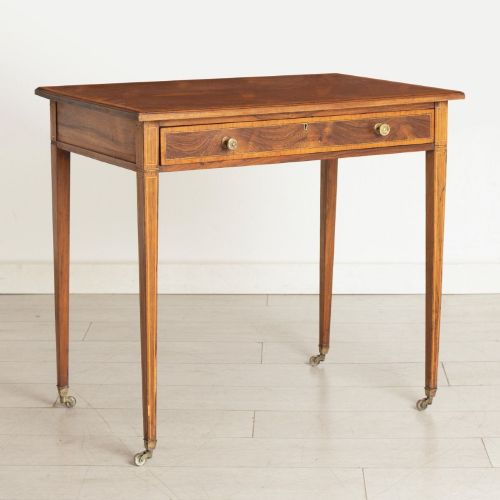
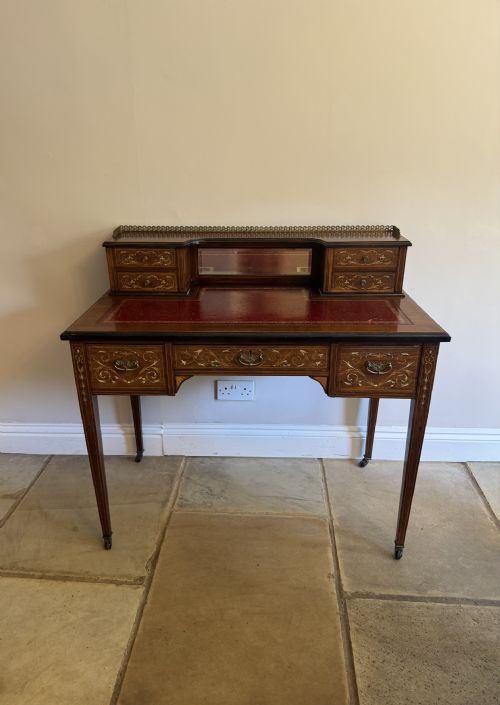
When you search for an edwardian inlaid rosewood desk, you encounter refined writing furniture produced primarily around the turn of the twentieth century, alongside related Victorian and nineteenth-century examples. These pieces range from ladies writing tables and compact bonheur du jour cabinets to kidney-shaped writing desks designed for domestic interiors.
Materials and Technique
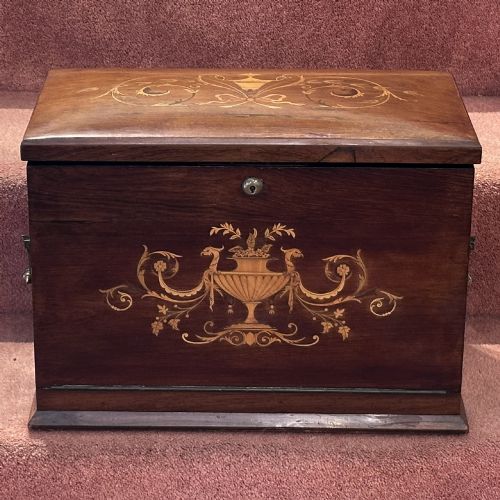
Construction relies heavily on rosewood timbers chosen for their rich grain, paired with lighter contrasting woods such as satinwood and boxwood for detailed marquetry and stringing. Inlaid motifs often incorporate scrolling foliage and classical urns set directly into the primary surface.
Many examples integrate brass hardware, leather writing inserts, and fitted compartments with small drawers. Cabinetmakers utilised delicate edging and fine joinery to maintain structural integrity despite the slender proportions characteristic of the style.
Edwardian Inlaid Rosewood Desk Retail Price Guide 2026
Typical asking prices for edwardian inlaid rosewood desk among the pieces listed under this phrase on Sellingantiques today, from the lower quarter to the upper quarter. They describe what is for sale here now, not the wider market.
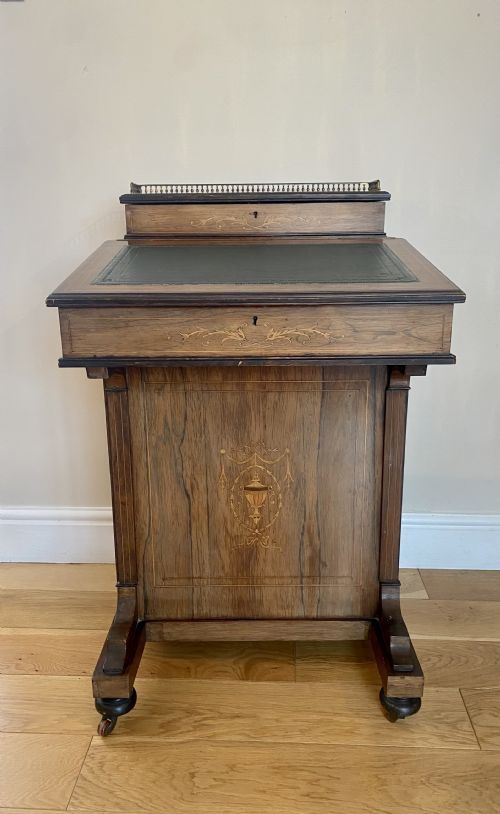
Object forms on this page range from standard writing tables and Davenport desks to specialised bonheur du jour cabinets.
Markers of Distinction
The distinction between standard domestic pieces and the finest examples rests on the crispness of the boxwood inlay and the selection of the rosewood veneers. Superior items display intricate marquetry with tightly fitted joints and well-figured timber across all visible surfaces.
Interior fittings also define the upper tier, where fitted stationery compartments, lockable cabinet sections, and original leather writing surfaces remain intact. The sophistication of the overall design, such as serpentine fronts or kidney-shaped tops, separates simpler tables from masterwork desks.
Maple & Co.·Jas Shoolbred
The Edwardian Inlaid Rosewood Desk Glossary
- Bonheur du jour
- A light lady's writing desk featuring a small cabinet or set of drawers superstructure on top of the writing surface. This form gained popularity during the nineteenth and early twentieth centuries for correspondence and light reading.
- Marquetry
- Decorative patterns formed by inserting thin pieces of wood, ivory, or metal into a veneered surface. Craftsmen used contrasting timbers like satinwood and boxwood to achieve pictorial depth.
- Davenport desk
- A compact writing desk featuring a sloping, leather-lined lid above a bank of side drawers. Early versions often incorporate concealed compartments and stationery storage.
- Stringing
- Thin lines of contrasting wood inlay used to outline drawers, borders, and panels on fine furniture. This technique frames the primary timber and accentuates geometric forms.
- Sheraton Revival
- A late nineteenth-century design style inspired by the late eighteenth-century work of Thomas Sheraton. It prioritises classical symmetry, delicate tapering legs, and elaborate floral inlay.
Edwardian Inlaid Rosewood Desk: Frequently Asked Questions
What is an edwardian inlaid rosewood desk used for?
These desks were originally designed for light correspondence, reading, and organising personal stationery in a parlour or bedroom. Their compact proportions made them ideal for writing letters rather than managing heavy administrative work.
Today, they function well as decorative writing tables or laptop stations in modern interiors where space is at a premium.
How do I distinguish Edwardian desks from Victorian ones?
Edwardian examples generally exhibit lighter proportions, finer boxwood stringing, and a distinct Sheraton Revival influence that brightens the overall aesthetic. Victorian pieces tend to be slightly heavier in construction and feature deeper rosewood tones.
Examining the complexity of the marquetry and the framing timbers helps clarify the period of manufacture.
Are these desks suitable for daily use?
While structurally sound, antique rosewood writing surfaces benefit from careful treatment to preserve the delicate boxwood inlay and polished finish. Using a blotter protects the timber and any original leather insert from daily wear.
Regular dusting with a dry cloth keeps the rosewood grain nourished without risking moisture damage to the marquetry.
What features indicate a superior writing table?
The finest examples combine highly figured rosewood veneers with precise, multi-wood marquetry depicting floral or classical motifs. Fitted interiors with original stationery compartments and working locks add significantly to the piece's integrity.
Unusual forms, such as kidney-shaped tops or serpentine fronts, also denote higher craftsmanship.