

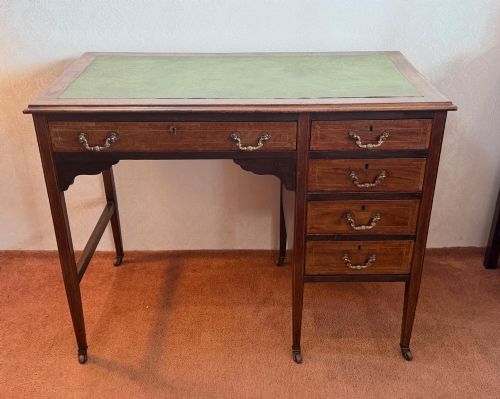
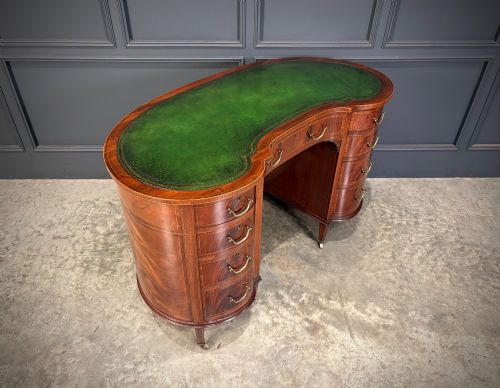
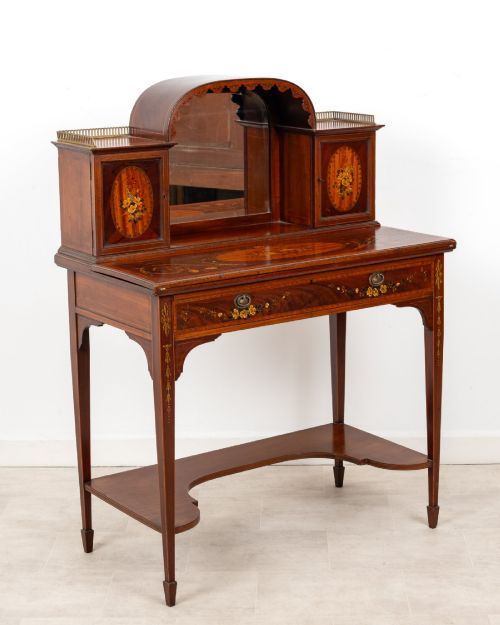
Edwardian Inlaid Mahogany Bureau
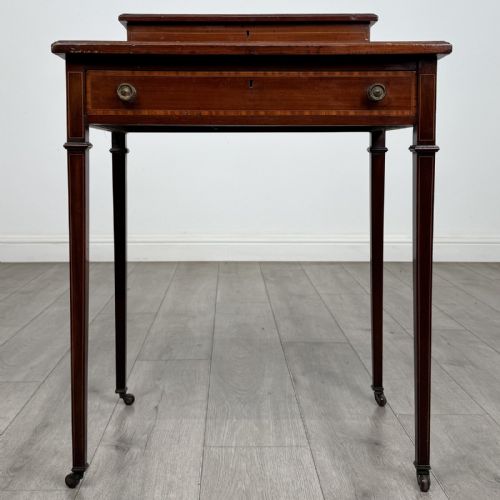
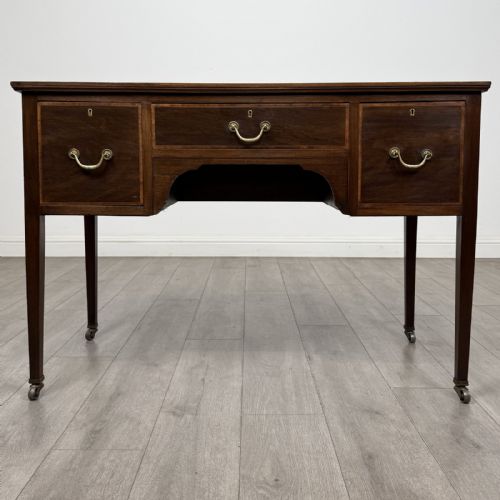
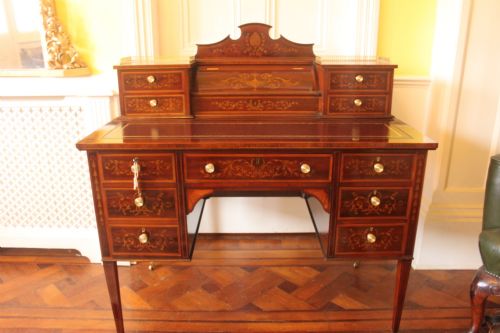
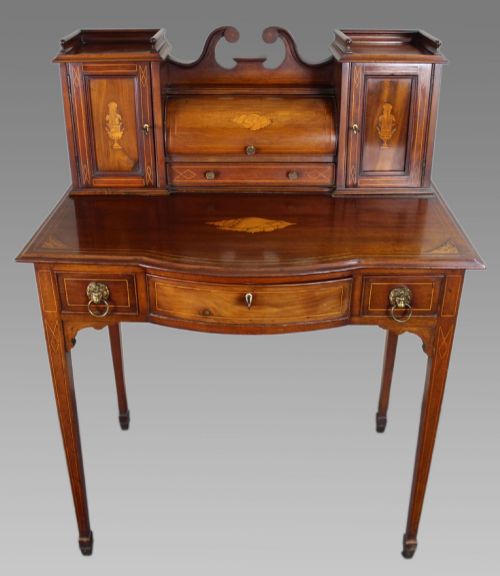
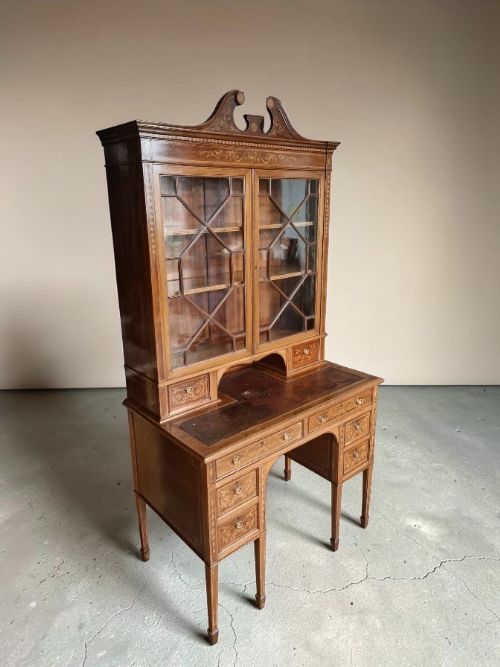
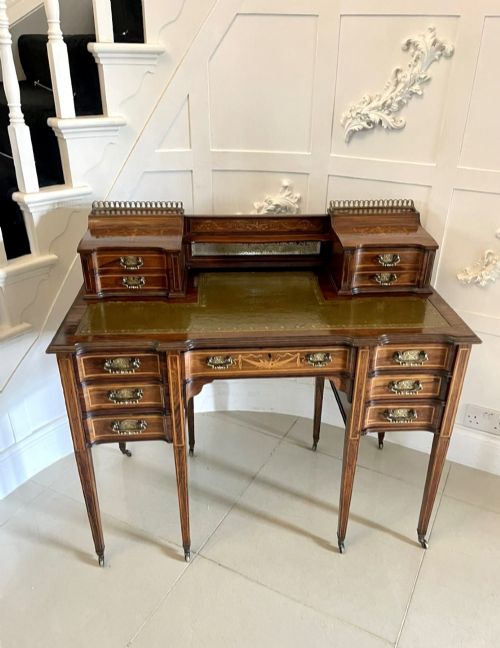
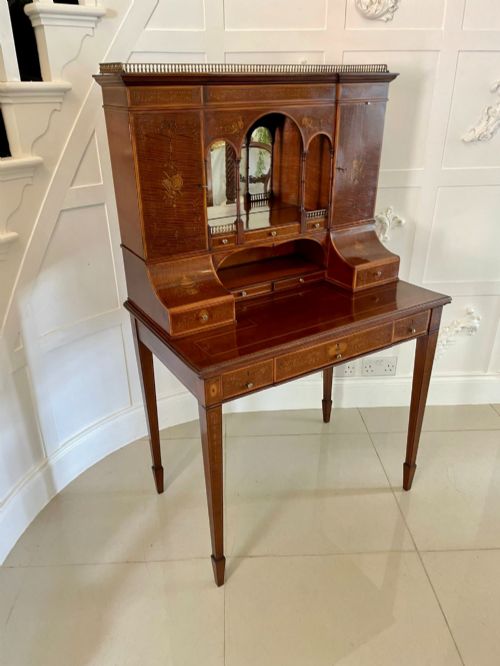
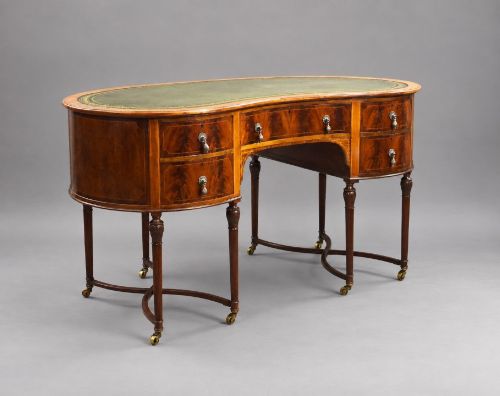
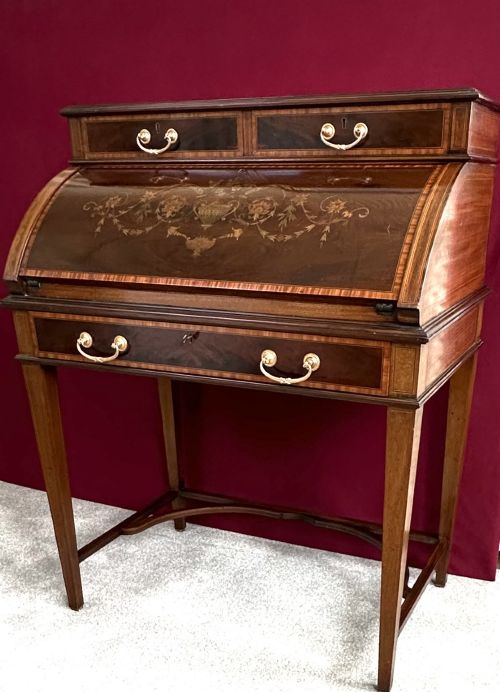
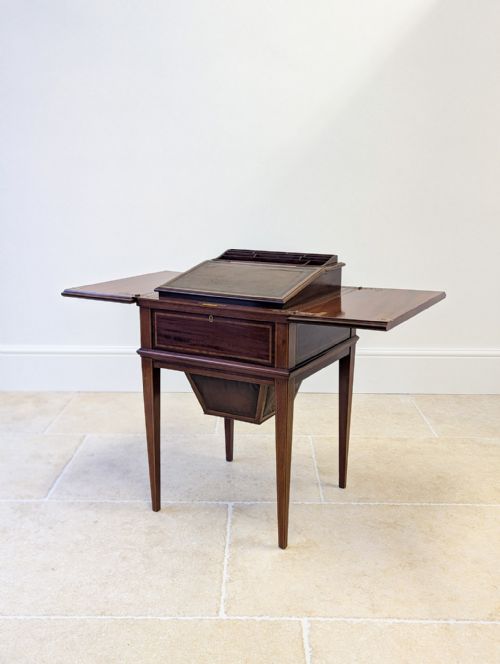
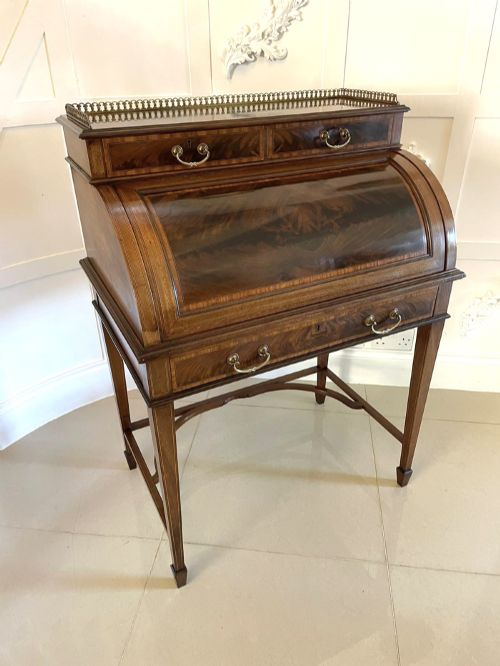
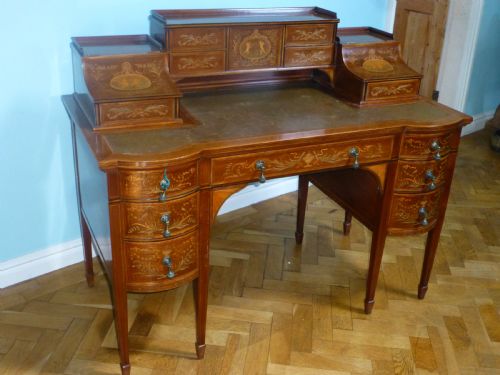
An edwardian inlaid mahogany bureau brings refined writing storage into a room, combining rich timber with delicate contrasting detail.
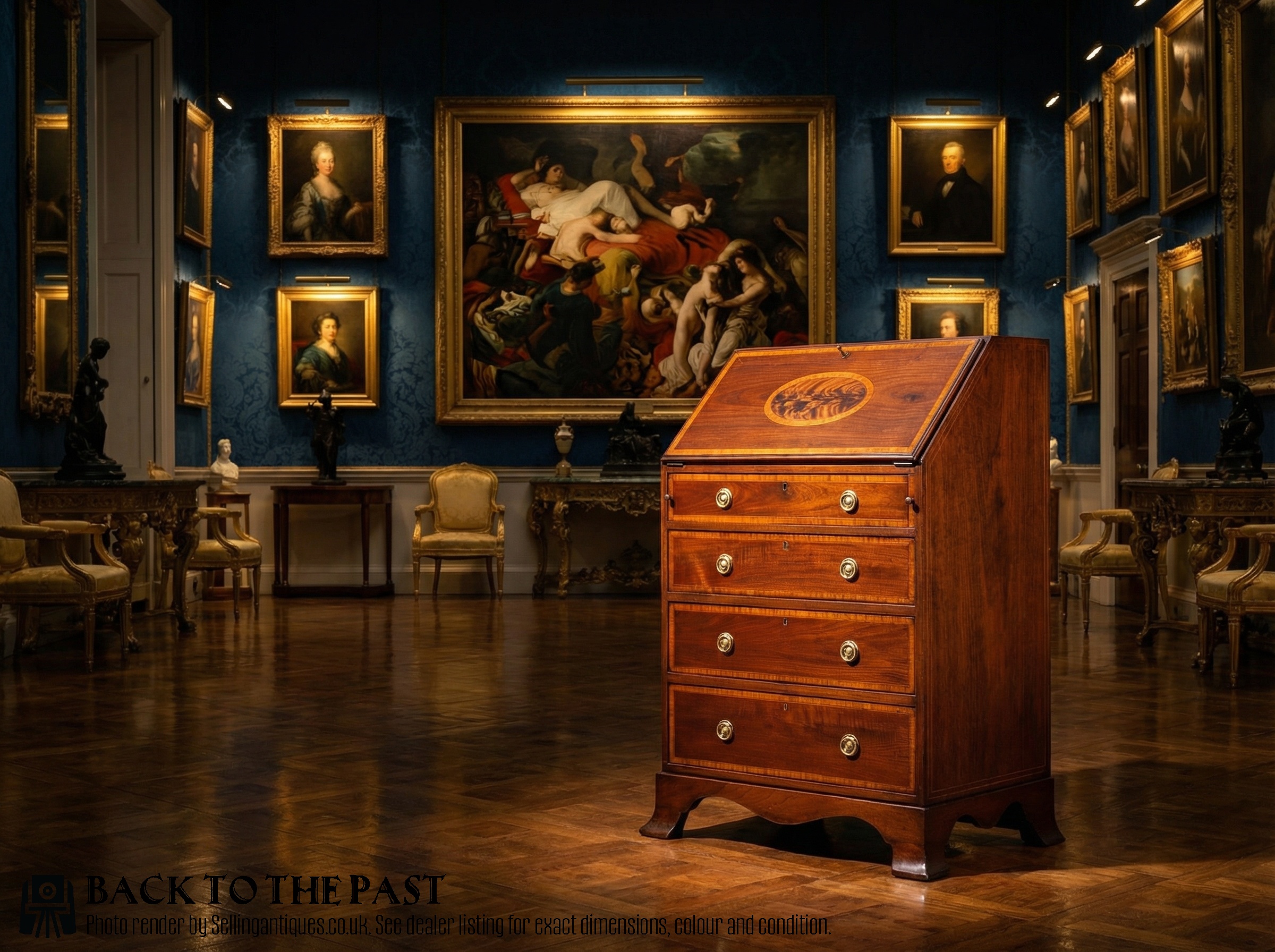
Edwardian Inlaid Mahogany Bureau
When searching for an edwardian inlaid mahogany bureau, collectors encounter pieces primarily spanning the Edwardian period, along with related Victorian and Sheraton Revival examples. These items typically feature a fall-front flap that opens to reveal internal writing compartments, often accompanied by matching bureau bookcases or drawer configurations.
Makers and workshops constructed these desks in various formats, ranging from compact four-drawer writing bureaux to elaborate cylinder tops and tall glazed bookcase combinations. The surviving archive demonstrates a strong preference for practical domestic writing furniture scaled for comfortable home use.
Assessing Quality and Execution
Quality separates through the precision of the cabinetwork and the intricacy of the timber inlay rather than the sheer scale of the piece. Finer examples display tightly fitted internal pigeonholes, secret compartments, and carefully matched mahogany veneers across every visible surface.
The sophistication of the marquetry work and the crispness of the boxwood or satinwood stringing indicate the skill level of the original workshop. Superior pieces maintain structural integrity in the fall-front hinges and drawer runners after a century of daily use.
Listings demonstrate that edwardian inlaid mahogany bureau forms frequently incorporate satinwood stringing, boxwood banding, and fitted writing interiors.
Maple and Co·Edwards and Roberts·James Shoolbred
The Edwardian Inlaid Mahogany Bureau Glossary
- Bureau
- A writing desk featuring a sloping fall-front flap that drops down to create a writing surface while concealing inner drawers and pigeonholes.
- Inlay
- A decorative technique where pieces of contrasting wood or other materials are inserted into recessed cavities flush with the surrounding timber surface.
- Fall-front
- The hinged writing flap of a bureau that swings down into a horizontal position for writing and lifts back up to secure the interior.
- Marquetry
- Elaborate veneer patterns applied to furniture surfaces, forming pictorial or decorative designs using various tinted woods.
- Sheraton Revival
- A late nineteenth and early twentieth century design movement that reinterpreted the lighter neoclassical furniture forms of the eighteenth century.
Edwardian Inlaid Mahogany Bureau: Frequently Asked Questions
How do I care for the mahogany finish?
Dust the timber regularly with a soft, dry cloth to prevent particulate accumulation on the polished surface.
Apply a traditional beeswax polish sparingly every few months to nourish the mahogany and maintain its natural lustre.
Can I use the desk for daily writing?
The fold-down writing surface provides adequate space for modern correspondence or laptop use.
Users should protect older leather or wood writing surfaces with a blotter to prevent accidental scratches from pens.
How do I distinguish Edwardian from Victorian pieces?
Edwardian examples tend to exhibit lighter proportions and brighter satinwood stringing compared to heavier Victorian counterparts.
Stylistic crossover remains common, as many late nineteenth century workshops continued producing traditional revival designs into the twentieth century.
What fits inside the bureau interior?
Internal layouts generally consist of small wooden pigeonholes, miniature drawers, and central lockable compartments for stationery.
These compartments reflect period writing habits designed for inkwells, feather quills, and folded letters rather than modern electronics.