

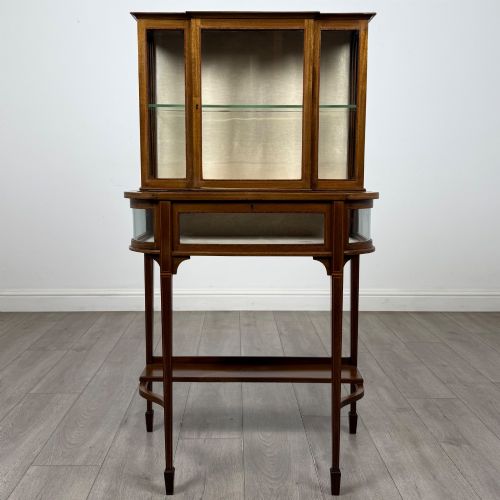
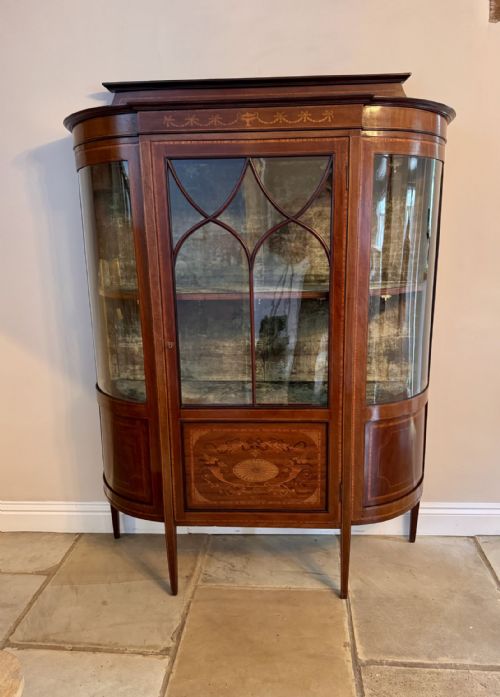
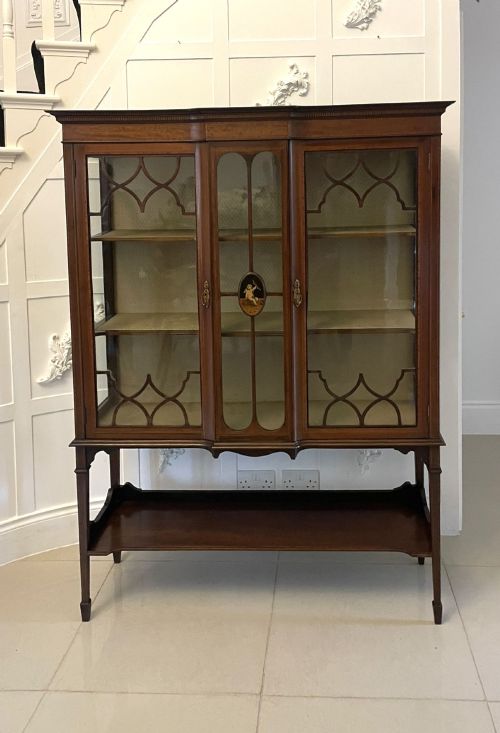
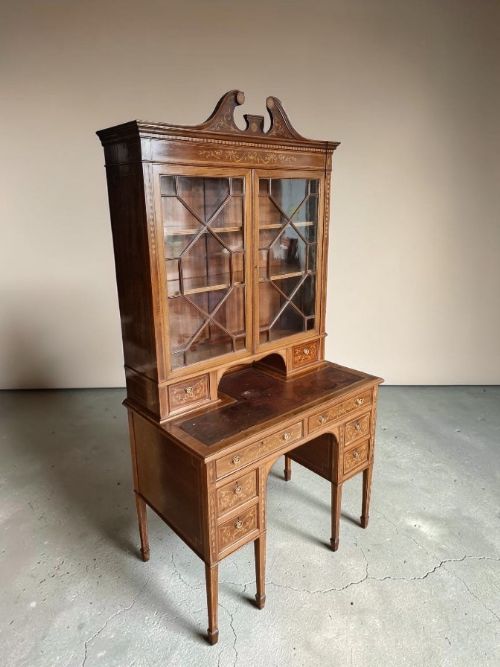
Edwardian Inlaid Mahogany Bookcase
An edwardian inlaid mahogany bookcase brings together warm timbers and delicate stringing to organise volumes in domestic spaces.
Edwardian Inlaid Mahogany Bookcase
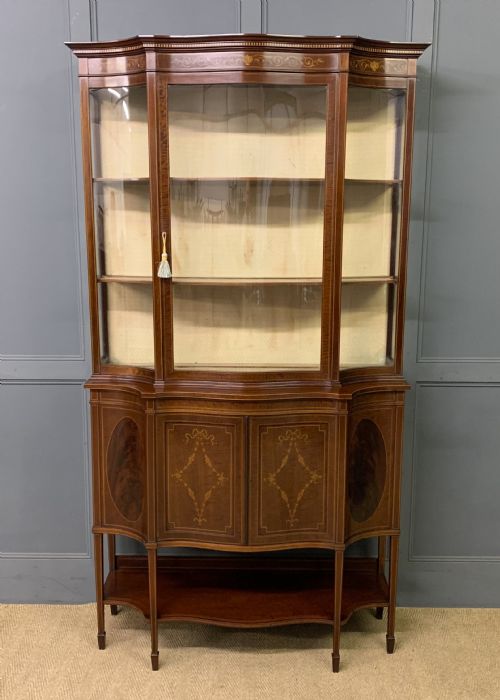
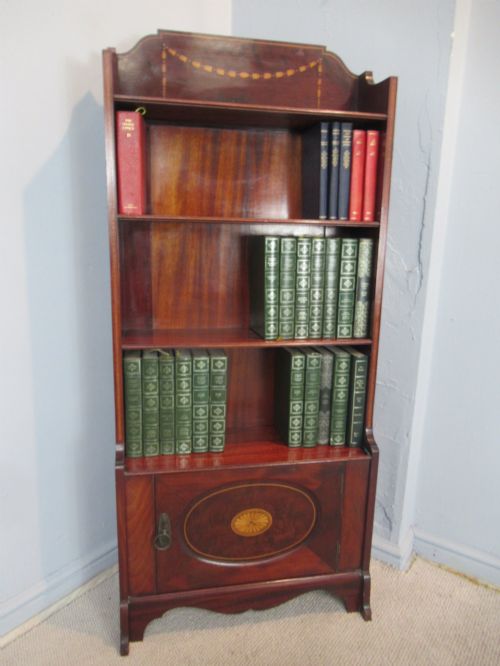
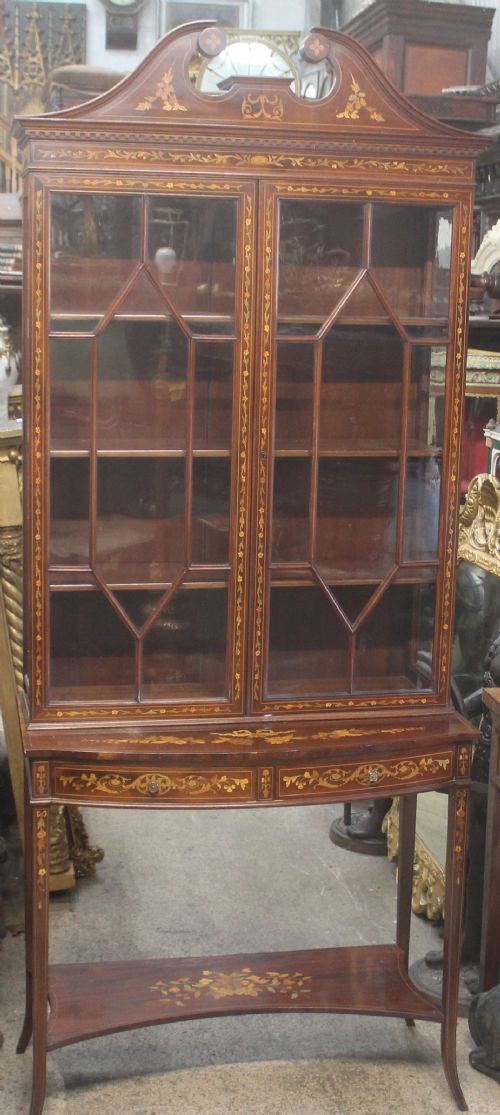
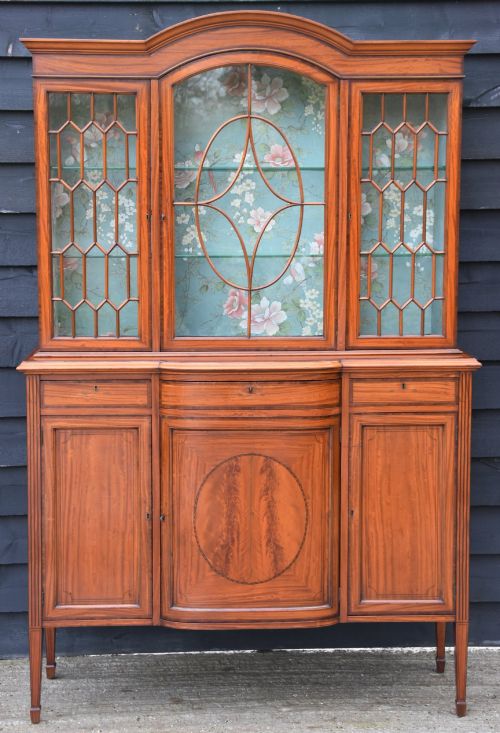
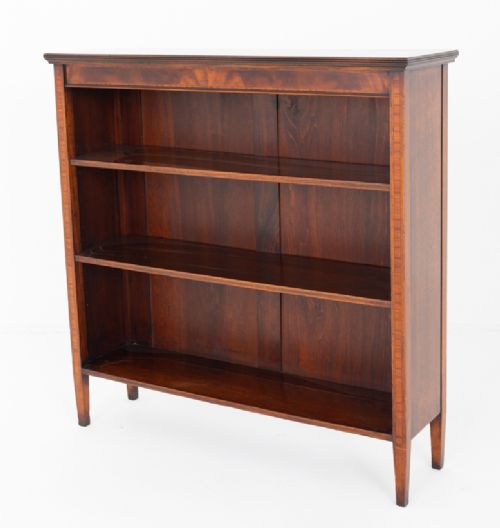
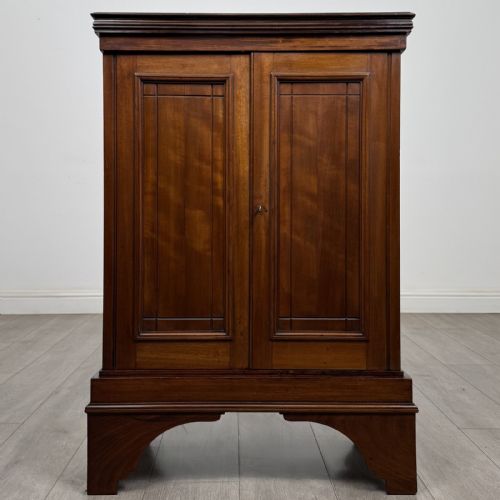
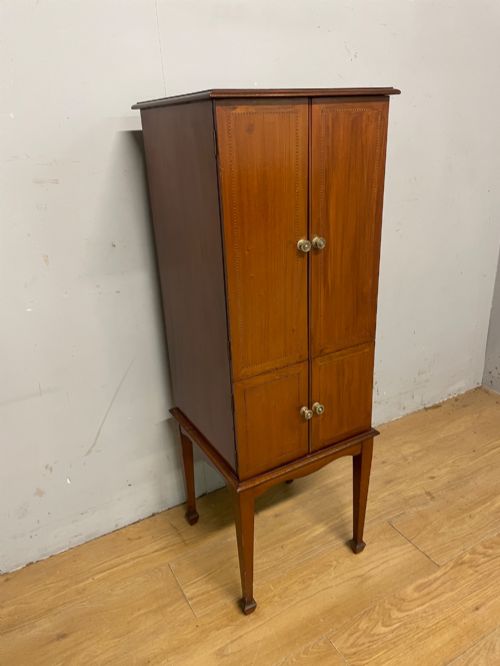
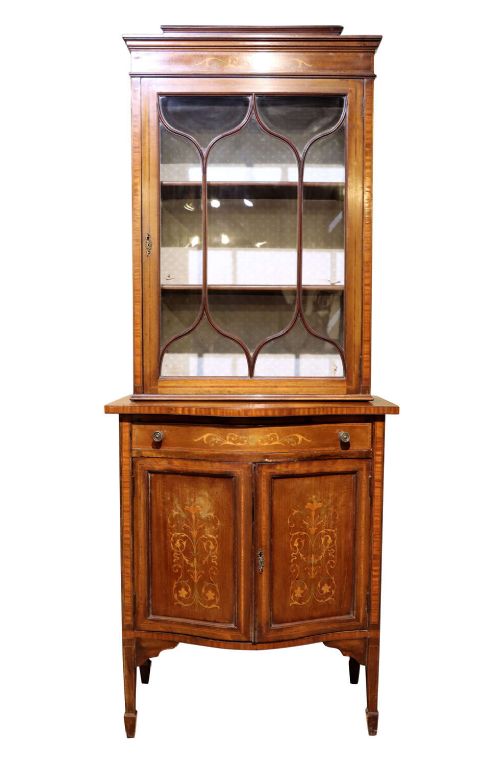
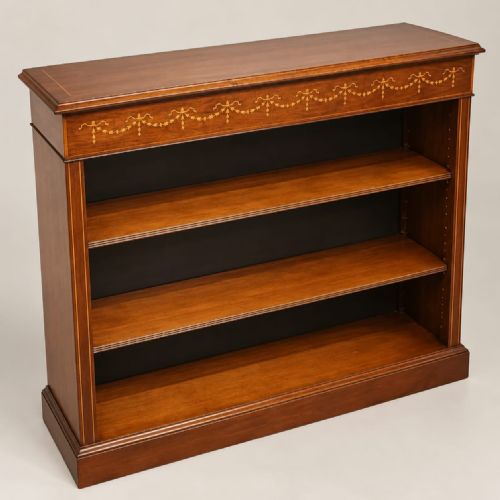
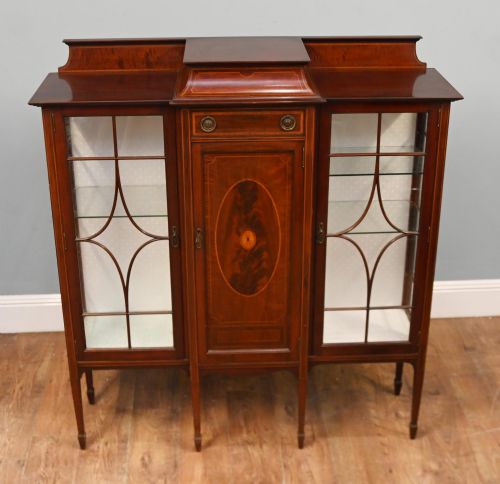
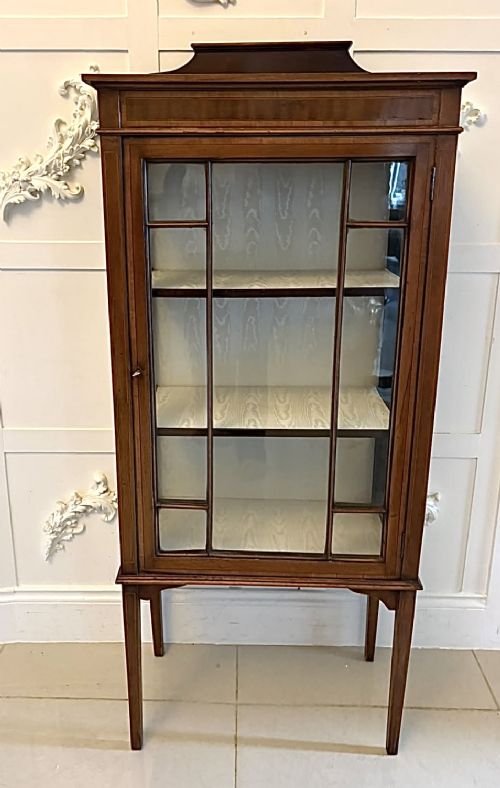
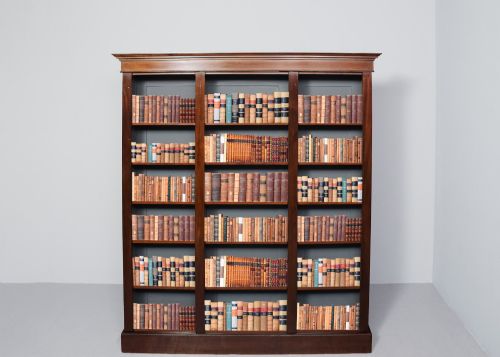
An edwardian inlaid mahogany bookcase spans upright glazed cabinets, open shelving units, and revolving desk pieces originating primarily from the Edwardian era, Late Victorian period, and around nineteen hundred. Makers adopted Sheraton Revival and neoclassical motifs, applying delicate marquetry and contrasting banding to structural timber frames.
The version most commonly encountered on this page is the upright display cabinet or glazed cupboard featuring satinwood inlay and spade or bracket feet. Open bookcases with adjustable shelves and compact revolving designs also appear frequently among the listings.
Materials and construction
Craftsmen built these pieces using solid mahogany and flame mahogany veneers, enhanced by intricate satinwood inlay, contrasting wood stringing, and marquetry details. Brass castors, mirrored panel backs, and glass door panels frequently complete the construction.
Joinery methods relied on sturdy internal framing, dovetail joints for drawers, and adjustable wooden shelving supports to bear the weight of heavy volumes and display items.
Edwardian Inlaid Mahogany Bookcase Retail Price Guide 2026
Typical asking prices for edwardian inlaid mahogany bookcase among the pieces listed under this phrase on Sellingantiques today, from the lower quarter to the upper quarter. They describe what is for sale here now, not the wider market.
Revolving bookcases spin so smoothly that generations of readers have treated them as spinning desks for browsing encyclopaedias.
Standards of craftsmanship
The distinction between standard output and the finest workshop pieces rests on the crispness of the marquetry, the symmetry of the satinwood banding, and the selection of figured mahogany timber. Master firms achieved seamless veneer matching and delicate, precise inlay work that cheaper commercial furniture lacked.
Hardware choice and structural refinement also separate the categories, evident in substantial brass castors, finely glazed door frames, and well-balanced revolving mechanisms that turn smoothly without wobble.
Waring and Gillow·Maple and Co·Edwards and Roberts
The Edwardian Inlaid Mahogany Bookcase Glossary
- Inlay
- A decorative technique where contrasting woods like satinwood are inserted into recesses cut into the mahogany ground to form patterns.
- Sheraton Revival
- A late nineteenth and early twentieth century design movement that reinterpreted the lighter neoclassical furniture styles of George Sheraton.
- Marquetry
- Elaborate veneer patterns assembled to create pictorial or geometric designs across cabinet doors and drawer fronts.
- Waterfall bookcase
- A tiered shelving unit where each successive shelf steps back from the one below it, creating a cascading profile.
- Revolving bookcase
- A compact, rotating book stand designed to sit on a floor or tabletop for easy access to volumes from any angle.
Edwardian Inlaid Mahogany Bookcase: Frequently Asked Questions
What is a revolving bookcase?
A revolving bookcase is a compact piece designed to sit on the floor or a tabletop, allowing volumes to be stored vertically around a central rotating pivot.
This mechanism lets users access books from any seating angle without moving the entire unit.
How do I identify Sheraton Revival style?
Sheraton Revival pieces display light proportions, straight tapered legs, and symmetrical stringing inspired by eighteenth-century neoclassical designs.
They rely on contrasting satinwood inlays against dark mahogany grounds rather than heavy carving.
Were these cabinets used only for books?
Many glazed variants functioned as display cabinets for ceramics, glassware, and decorative ornaments rather than storage for reading material.
Open sections and adjustable shelves were specifically configured for housing bound volumes.
How do I care for inlaid mahogany wood?
Protect the polished mahogany surfaces and delicate satinwood inlay by keeping them away from direct sunlight and maintaining stable room humidity.
Apply a traditional beeswax polish occasionally to nourish the grain without building up heavy chemical layers.