
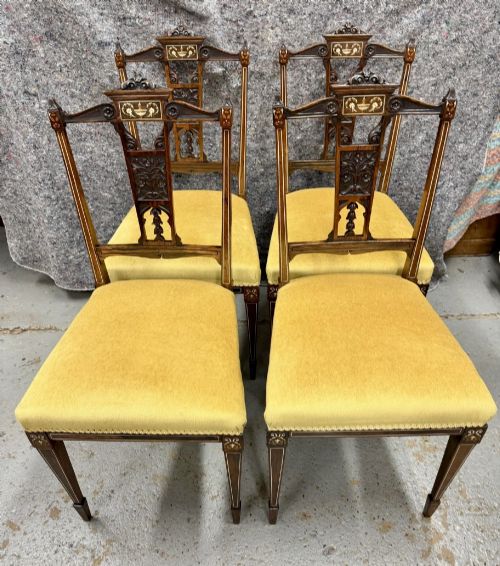
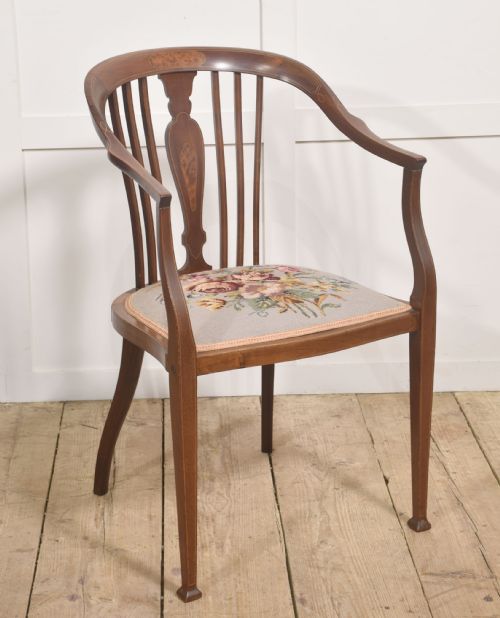


Edwardian Inlaid Desk Chair
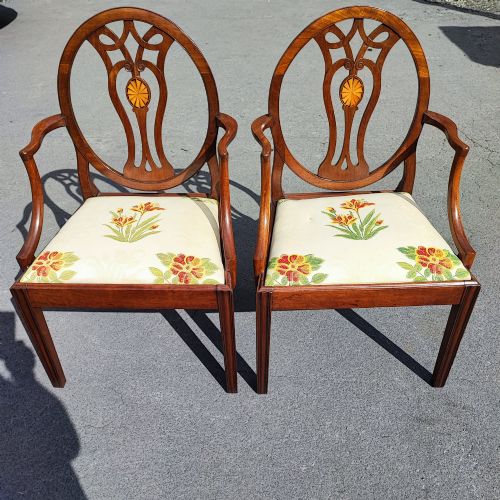
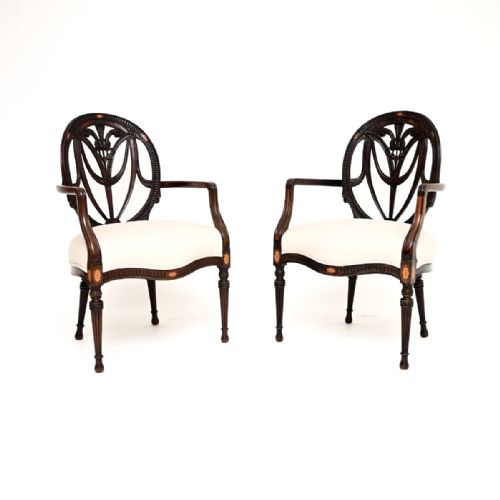
An edwardian inlaid desk chair brings refined mahogany and delicate marquetry to a home workspace with period proportion.
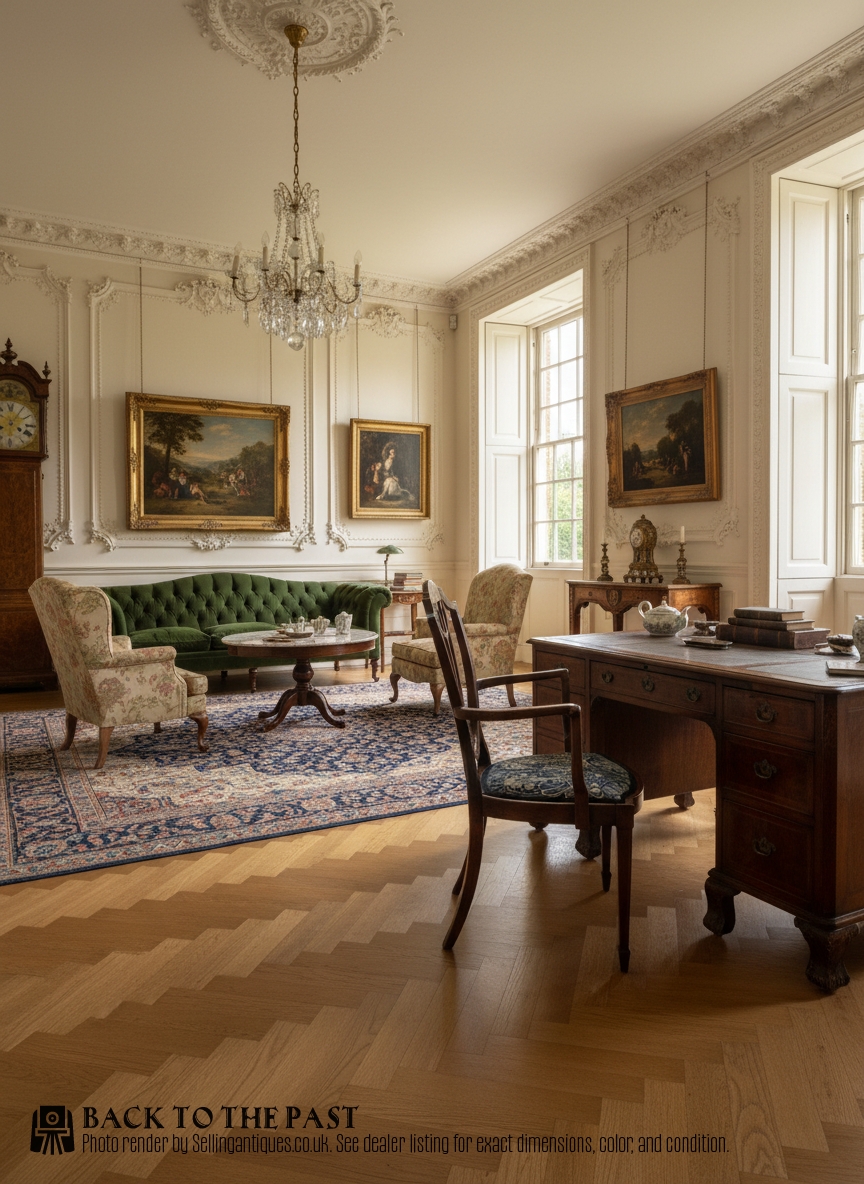
Edwardian Inlaid Desk Chair
An edwardian inlaid desk chair typically combines a mahogany frame with contrasting wood details produced around the turn of the twentieth century. These pieces appear frequently in swivel and revolving formats alongside traditional library armchairs.
Makers of the period drew heavily on Sheraton Revival and neoclassical motifs, incorporating satinwood, boxwood, and brass elements into open armchair and tub configurations.
Buyers encounter single examples as well as matched pairs designed to sit comfortably beside partners desks and writing tables in studies.
How they were made
Craftsmen built the primary structures from solid mahogany or rosewood, sometimes utilising oak and walnut for internal framing and support. Timber selection prioritised rich grain depth and uniform density to withstand daily seating use.
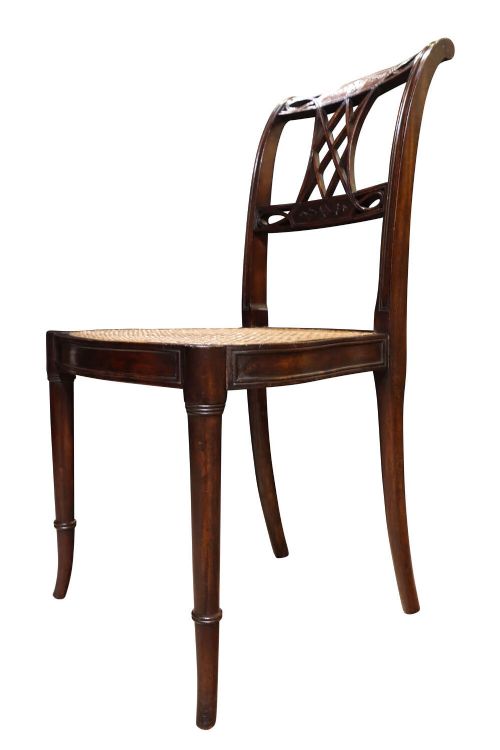
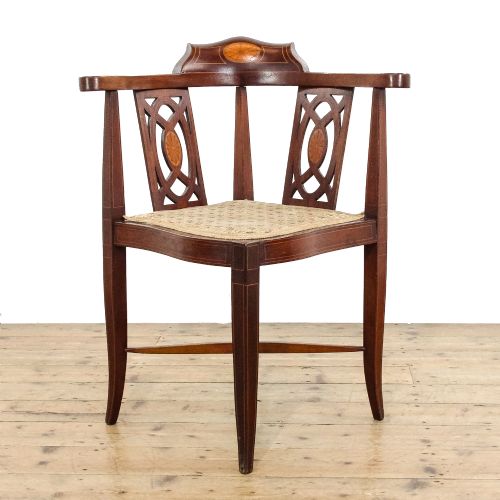
Detailed decoration relied on precision wood inlay and marquetry, setting lighter veneers like satinwood and boxwood into contrasting dark fields. Artisans secured upholstery using traditional fabric, leather, and occasional cane inserts.
Some industrious Edwardian typists evidently demanded swivel action, turning library armchairs into spinning command centres.
What varies in quality
The precision of the wood inlay distinguishes finer workshop output from simpler commercial production, showing tight mitres and clean contrast without excessive filler. Crisp carving along the arms and splats indicates superior hand execution.
Structural integrity depends on the original joinery within the revolving mechanisms and corner joints. Subtlety in the marquetry design and heavier gauge timber framing separate standard salon seating from executive library pieces.
Shoolbred·Jenks and Wood
The Edwardian Inlaid Desk Chair Glossary
- Marquetry
- Decorative veneer work assembled in pictorial patterns. Artisans arrange different tinted woods to form classical urns, floral motifs, or symmetrical banding.
- Satinwood
- A lustrous yellow timber imported from tropical regions. Cabinetmakers utilise this wood for contrasting stringing and bright panel highlights.
- Boxwood
- A dense, pale yellowish wood used extensively for fine stringing. Its tight grain allows precise cutting for narrow border lines.
- Tub Chair
- An upholstered armchair with a rounded continuous back and arm rail. This form wraps around the sitter for enclosed support.
- Sheraton Revival
- A late nineteenth century design movement replicating eighteenth century neoclassical furniture. Pieces display slender tapered legs and delicate inlay.
Edwardian Inlaid Desk Chair: Frequently Asked Questions
How do I identify an edwardian inlaid desk chair?
Look for characteristic Edwardian proportions combined with contrasting mahogany and satinwood stringing. These seats often feature open arms or swivel mechanisms suited for writing furniture.
Examine the secondary timbers and the style of the marquetry motifs. Pieces from this era frequently reference Sheraton Revival designs through tapered legs and classical urn inlays.
Were these chairs meant for office work?
Original owners utilised these seats in domestic libraries, studies, and boudoirs rather than commercial offices. The sturdy mahogany frames supported daily reading and correspondence at partner desks.
Revolving and swivel variations offered convenience for reaching across large writing surfaces. Many examples double as comfortable library armchairs.
How should I care for the leather and wood?
Maintain the mahogany surfaces with traditional beeswax to nourish the polished grain and protect the delicate inlay work. Avoid placing the chair near direct heat sources that cause timber to split.
Condition leather inserts periodically using specialist balms to prevent cracking. Keep fabric or cane seating clean with gentle brushing.
Can I use an antique desk chair daily?
Solid mahogany construction provides the structural durability needed for regular seating at a modern desk. Check that the joints remain firm and stable before committing to constant use.
Swivel mechanisms on period examples require careful operation to preserve original components. Occasional maintenance ensures these chairs remain functional components of a study.