





Edwardian Inlaid Corner Cupboard
An edwardian inlaid corner cupboard is a compact display or storage unit designed to fit neatly into a room angle, combining practical utility with refined period decoration.
What they are
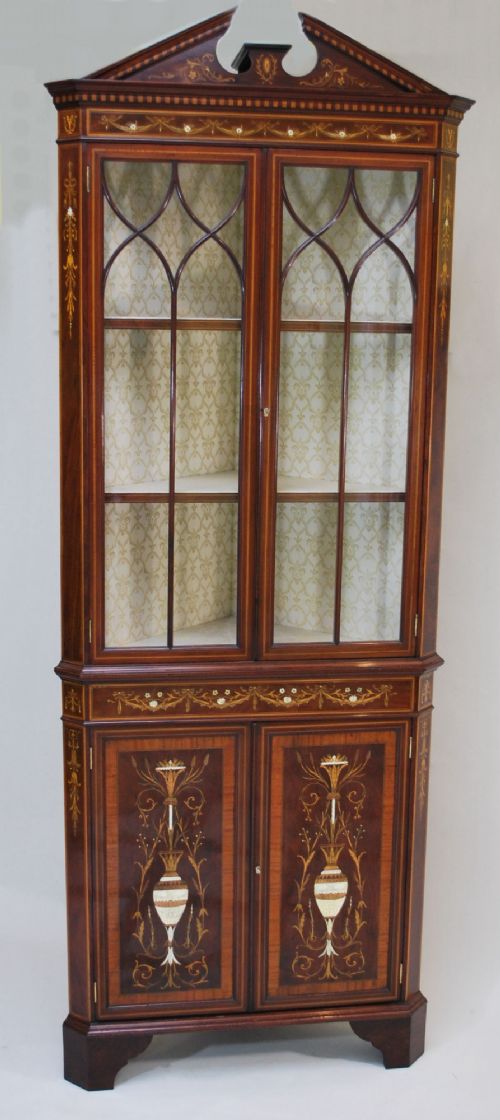
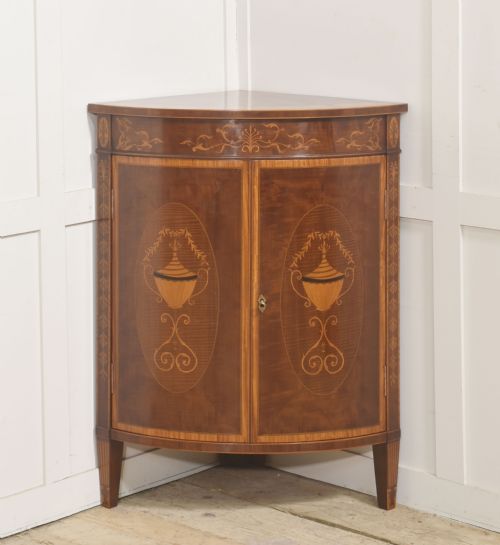
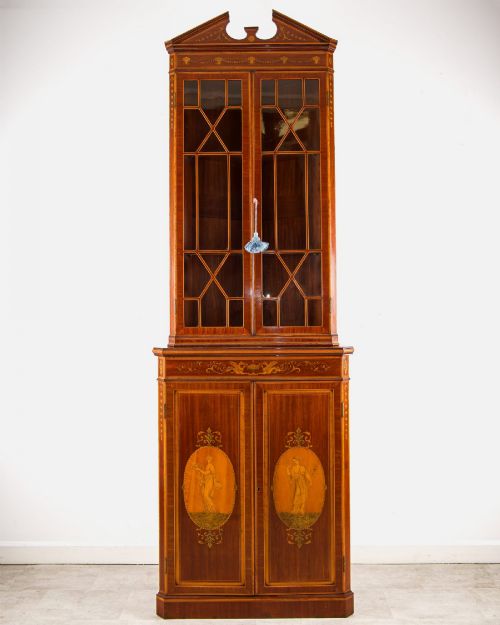
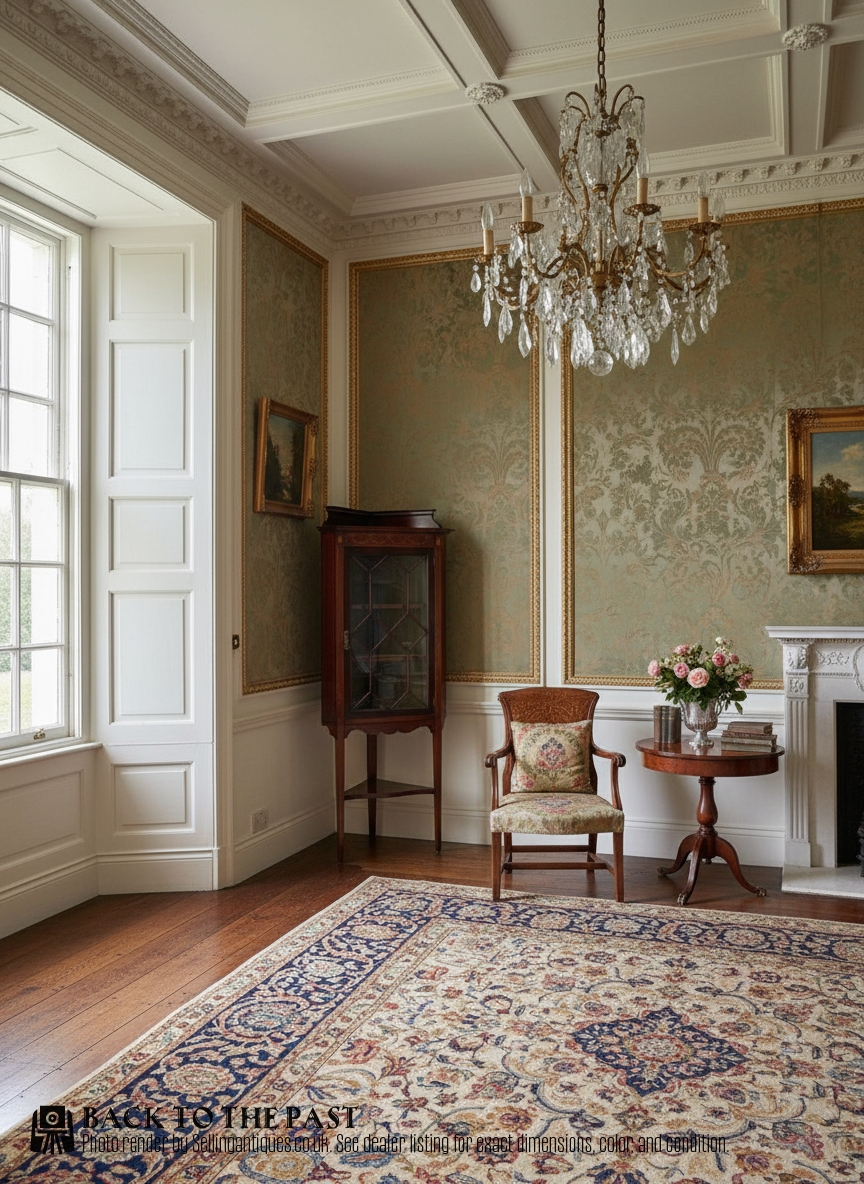
An edwardian inlaid corner cupboard appears primarily in forms constructed from mahogany, walnut, and rosewood, often styled with Sheraton Revival influences. These pieces emerge in both hanging wall models and substantial floor standing double height glazed display cabinets.
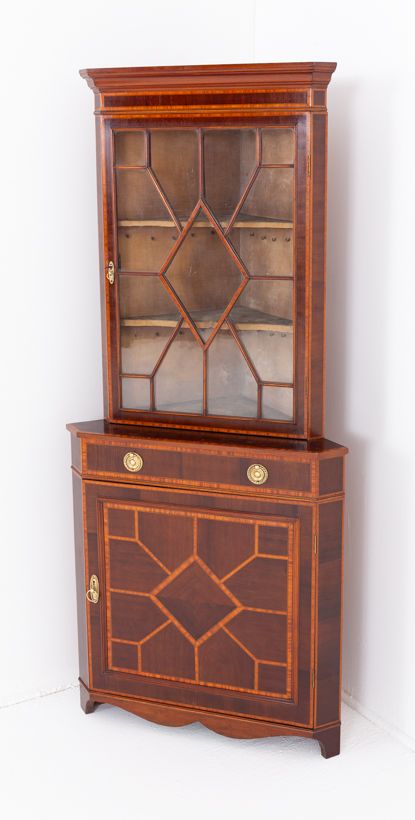
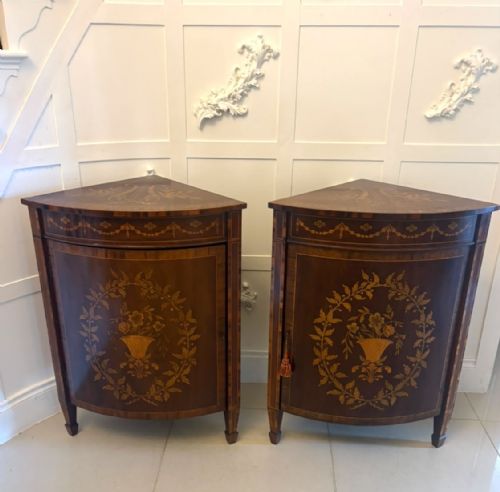
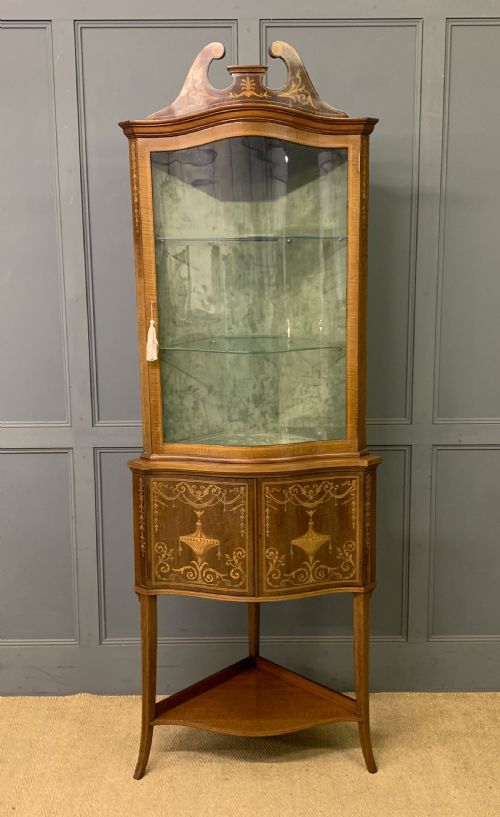
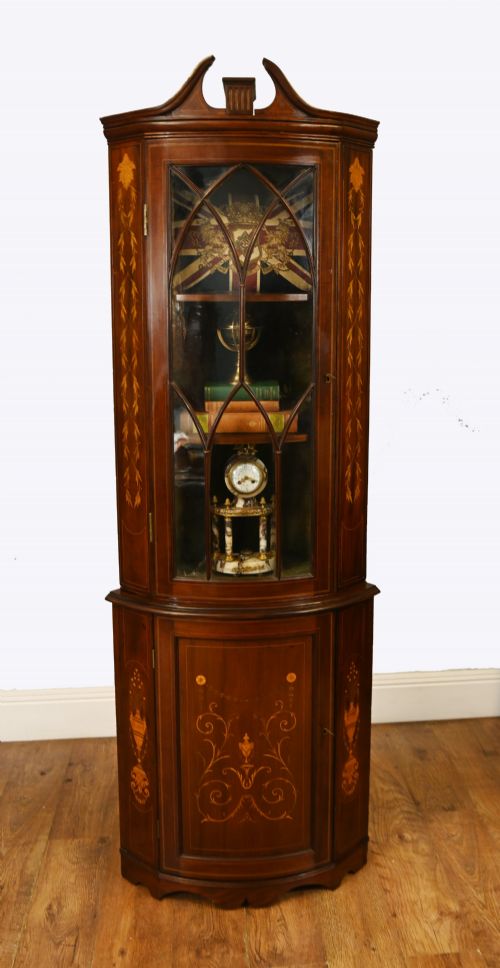
Makers of the period frequently configured these cabinets with bow front doors, glazed upper sections, and dedicated cupboard base stands. The integration of satinwood and boxwood inlay provides the characteristic visual contrast associated with the style.
Most examples date to around nineteen hundred and reflect the Edwardian preference for lighter timbers and classical geometric or floral ornamentation. Buyers encounter both single section hanging cupboards and two piece standing arrangements designed to utilise neglected interior angles.
How they were made
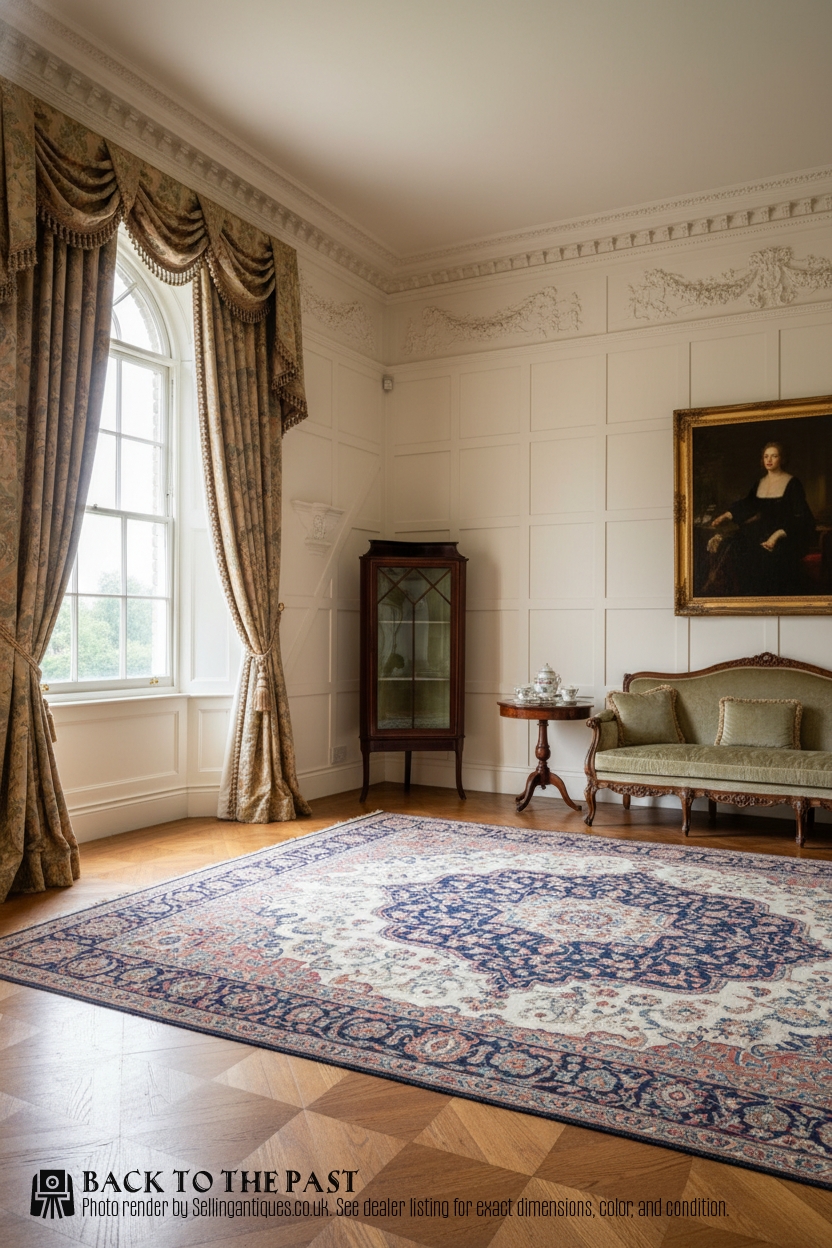
Cabinet makers utilised solid timbers alongside wood veneer surfaces, applying intricate boxwood and satinwood inlay into contrasting mahogany or rosewood bodies. Glazed doors incorporate timber framework to secure glass panels while maintaining structural rigidity.
Standing variants employ separate base stands or integrated plinths to support the weight of tall display sections. Brass hardware such as hinges and escutcheons completes the construction of the doors and interior compartments.
Retail Price Guide 2026
Typical UK retail prices for edwardian inlaid corner cupboard, calculated from the Sellingantiques database of over a million retail prices indexed since 2003. This retail price guide relies exclusively on Sellingantiques data; no external sources or auction records are used, so the figures do not describe the wider market.
These clever corner pieces prove that Edwardian cabinet makers possessed a particular hostility toward empty 90 degree room angles.
What varies in quality
The sophistication of the marquetry and the precision of the boxwood and satinwood inlay dictate the visual standard of the piece. Fine examples demonstrate crisp contrast in the timber selection and meticulous alignment of the decorative motifs.
Proportion and scale also separate standard hanging versions from large floor standing double height display cabinets. The inclusion of figured mahogany or specialised bow front profiles elevates the architectural presence of the cabinet.

The Edwardian Inlaid Corner Cupboard Glossary
- Marquetry
- Decorative veneer work arranged in intricate patterns or pictures using various coloured woods. This technique adorns the door panels and cornices of many Edwardian pieces.
- Bow front
- A convex curved front profile that softens the angular geometry of the cabinet. This shape appears frequently on standing and wall mounted Edwardian examples.
- Satinwood
- A durable, lustrous timber with a yellow sheen utilised extensively for contrasting inlay and stringing lines. Cabinet makers prized it for creating bright decorative highlights.
- Sheraton Revival
- A late nineteenth and early twentieth century design movement drawing inspiration from eighteenth century neoclassical furniture forms. It emphasises symmetrical geometry and delicate inlay.
- Glazed display cabinet
- A storage unit featuring glass panelled doors intended for the exhibition of ceramics or glassware. These range from single hanging cupboards to tall standing floor units.
Frequently Asked Questions
Are these cupboards meant to hang on walls?
Many examples are manufactured as hanging corner cupboards intended for wall mounting to save floor space. Other versions are built as heavy standing or floor standing units with their own base stands.
Buyers should examine the structural backboards and fixing points to determine whether a particular cabinet requires wall support or rests independently on the floor.
What is the difference between a corner cabinet and a display cabinet?
The terminology often overlaps in Edwardian listings, as many corner cupboards incorporate glazed doors specifically for displaying items. A dedicated display cabinet typically emphasises glass viewing areas across the upper section.
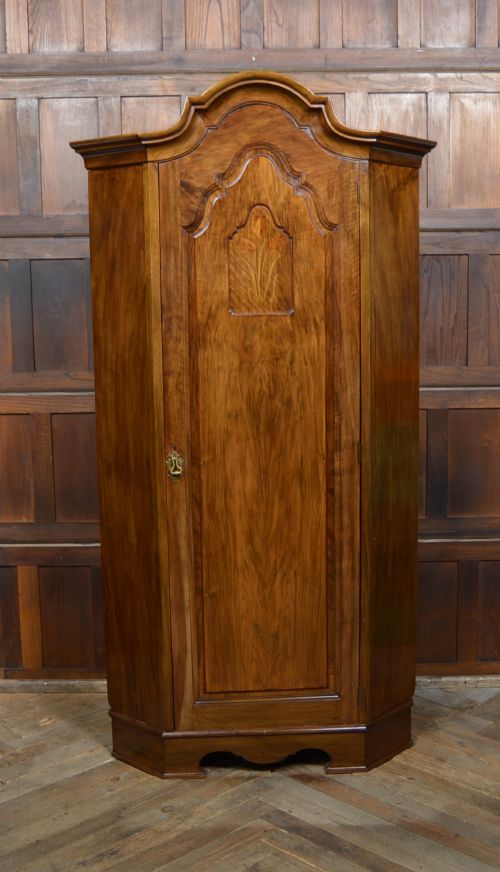
Solid timber doors distinguish enclosed storage cupboards from glazed display variants designed to showcase interior contents.
How do I identify Edwardian inlay?
Edwardian inlay frequently utilises contrasting light woods such as satinwood and boxwood set into dark mahogany or rosewood surfaces. The designs often follow Sheraton Revival neoclassical motifs including swags, urns, and geometric stringing.
Close inspection reveals whether the contrasting wood is embedded directly into the timber surface as veneer or merely painted on.
Do these cabinets come in multiple sections?
Some larger examples are constructed as two piece standing double height units featuring a separate cupboard base stand and an upper display cabinet. This modular design assists with transport and placement within a room.
Smaller hanging versions and single body floor standing cupboards are built as one integrated piece.