




Edwardian Inlaid Bijouterie Table
These pieces bring the refined display of small treasures indoors, offering glass-topped elegance designed specifically for collectors.
Edwardian Inlaid Bijouterie Table
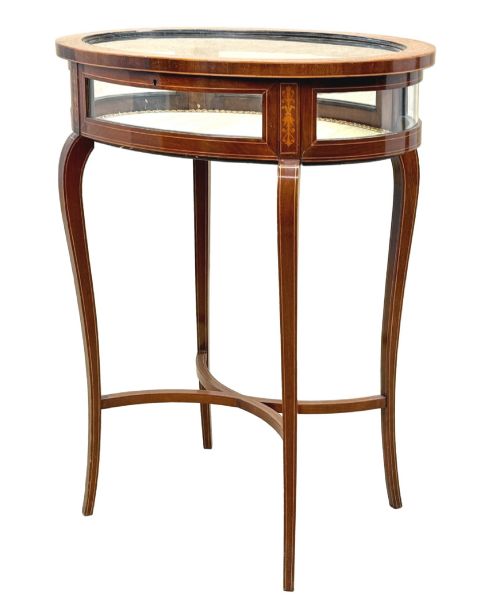
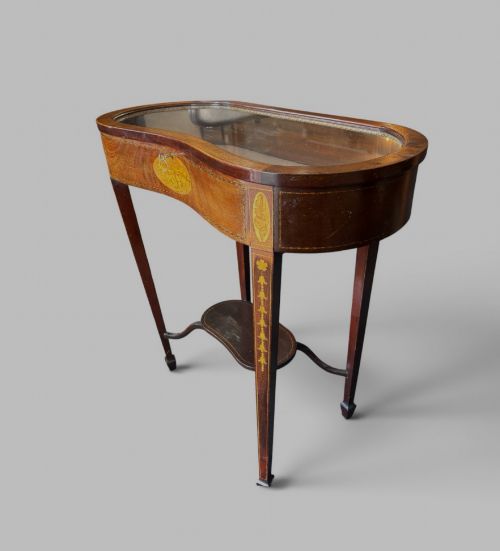
An edwardian inlaid bijouterie table serves primarily as a glazed vitrine for showcasing small valuables, medals, and jewellery within domestic spaces.
Most examples found here date from the Edwardian period or the late nineteenth century, taking the form of display tables, cabinets, and vitrines.
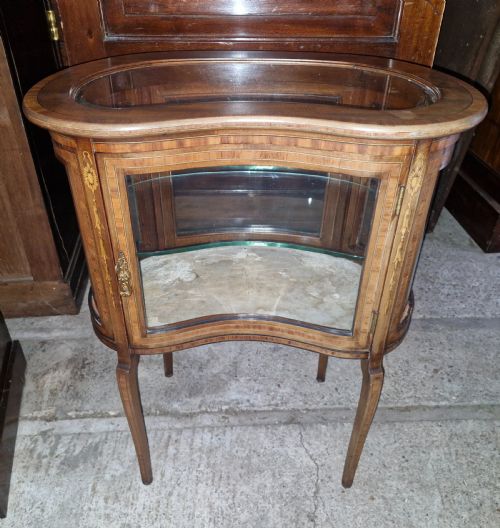
Common silhouettes range from simple ovals and oblongs to kidney shapes, octagonal frames, and heart-shaped designs.
How they were made
Carpenters constructed these display pieces using timbers such as mahogany, satinwood, rosewood, and fiddleback mahogany, accented with boxwood stringing and marquetry.
Glazing forms the upper viewing panel, while interiors typically feature lined surfaces of velvet or fabric to cushion displayed items.
Structural highlights frequently incorporate brass mounts and hinges to support opening glazed lids or cabinet doors.
Some tables double as writing surfaces, letting owners pen notes directly above their treasured trinkets.
What varies in quality
Differentiation across the range depends on the intricacy of the woodwork, particularly the precision of satinwood and boxwood inlay work.
The choice of timber grain, such as fiddleback or feather mahogany, alongside balanced proportions in kidney or oval shapes, distinguishes finer workshop outputs.
The Edwardian Inlaid Bijouterie Table Glossary
- Bijouterie table
- A glazed display table designed for holding small ornaments, curios, and jewellery. These pieces lift open from the top or feature front-facing cabinet doors.
- Vitrine
- A glass-fronted or glass-topped display cabinet used for protecting and exhibiting delicate objects. They often stand on slender legs.
- Marquetry
- Decorative woodwork where pieces of veneer are fitted into a ground material to form intricate patterns. This technique frequently frames the borders of tabletops.
- Satinwood
- A durable, lustrous hardwood with a yellowish sheen utilised extensively for fine cabinetmaking and contrasting inlay. It provides a bright visual accent against darker timbers.
- Stringing
- Thin strips of contrasting wood inlaid into narrow channels along furniture edges. Boxwood is commonly employed for this linear detailing.
Edwardian Inlaid Bijouterie Table: Frequently Asked Questions
What is an edwardian inlaid bijouterie table used for?
These tables were originally created for the domestic display of personal collections, including small trinkets, pocket watches, and precious ornaments.
The glazed top allows visitors to view items from above while keeping dust and handling to a minimum.
How do I identify an Edwardian piece?
Edwardian items typically display lighter timbers, refined marquetry, and slender legs influenced by Sheraton Revival designs.
They bridge the transition from late Victorian heaviness to more delicate, airy proportions.
What materials are inside the display area?
The interior base beneath the glass top is usually lined with fabric or velvet.
This soft backing protects delicate pieces from scratching against the wooden frame.
Are these tables sturdy enough for daily use?
While structurally sound for holding collections, their slender legs and glazed compartments require gentle handling.
They function best as static display furniture in calm household areas.