



Edwardian Inlaid Bed Frame
These edwardian inlaid bed frame examples bring refined woodwork and subtle stringing to the bedroom, offering period character alongside practical sleeping proportions.
Edwardian Inlaid Bed Frame
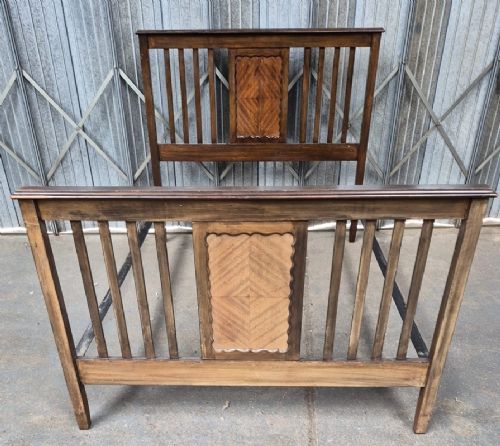
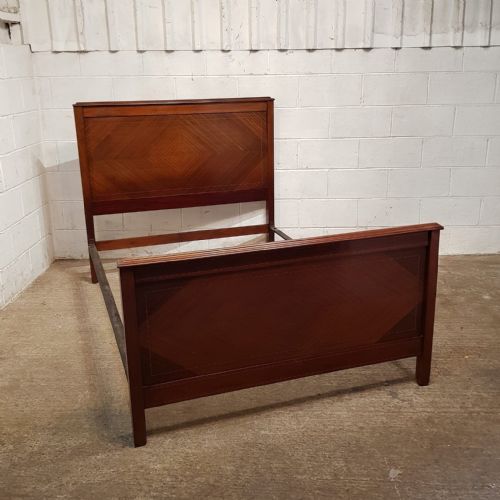
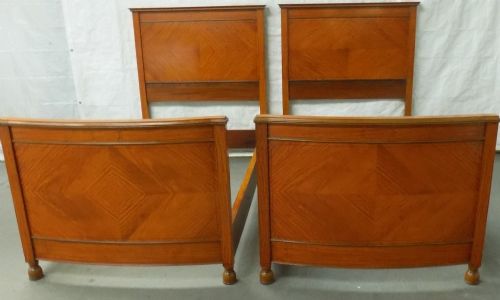
An edwardian inlaid bed frame takes the form of a double or single bedstead, often constructed with a panelled headboard and footboard. Buyers frequently encounter double size versions alongside matching pairs of single beds.
Makers of the period occasionally applied marquetry or boxwood stringing to soften the rectilinear proportions of the timber. Examples span from simple rail and panel designs to bow-ended satinwood configurations.
How they were made
Cabinet makers utilised solid mahogany and satinwood timber, applying wood veneer over secondary woods to create smooth panel surfaces. Boxwood inlay and detailed marquetry were meticulously set into the primary wood grain.
Metal components such as iron internal frames and brass detail hardware provided structural support and visual contrast. Slatted bases were integrated to hold mattresses securely within the wooden framework.
Edwardian Inlaid Bed Frame Retail Price Guide 2026
Typical asking prices for edwardian inlaid bed frame among the pieces listed under this phrase on Sellingantiques today, from the lower quarter to the upper quarter. They describe what is for sale here now, not the wider market.
Current listings demonstrate a prevalence of mahogany construction combined with boxwood inlay and marquetry detailing across Edwardian sleeping furniture.
What varies in quality
The refinement of the marquetry and boxwood inlay sets superior examples apart from simpler utilitarian pieces. Crisp detailing in the timber panels and thoughtful integration of brass fittings indicate higher workshop standards.
Proportion and scale dictate the visual balance of the bedstead, particularly where bow-ended rails or specialised woods like satinwood are employed. Maker attribution, such as work originating from Heal's, elevates the standing of a piece.
Heal's
The Edwardian Inlaid Bed Frame Glossary
- Bedstead
- The framework of a bed, comprising the headboard, footboard, and side rails. It supports the mattress platform independently of modern divan bases.
- Marquetry inlay
- Decorative patterns formed by fitting small pieces of veneer into prepared recesses in the wood. This technique creates pictorial or geometric designs across panels.
- Boxwood inlay
- Narrow lines of pale boxwood set flush into darker timbers to create contrasting borders. It defines edges and panels with subtle linear precision.
- Satinwood
- A durable hardwood with a natural golden lustre and fine grain. It was favoured for high-status Edwardian bedroom furniture.
Edwardian Inlaid Bed Frame: Frequently Asked Questions
What mattress size fits these beds?
Standard modern mattresses often require careful measurement against historic dimensions, as Edwardian sizing conventions differ slightly from current standards. Custom or bespoke mattresses can be ordered to fit older wooden frames comfortably.
Interior rail lengths and widths should be checked prior to purchase to ensure standard modern slats and bases sit correctly within the antique timber structure.
How do I care for inlaid wood?
Maintaining satinwood and mahogany requires a stable indoor environment away from direct heat sources and strong sunlight. Regular dusting with a soft, dry cloth preserves the polished finish without building up residue.
Applying a traditional beeswax polish occasionally nourishes the timber and protects the delicate boxwood and marquetry inlay from drying out.
Are single beds sold as pairs?
Many surviving Edwardian single beds originate as matched pairs made for twin guest rooms or larger chambers. These sets retain uniform timber grain, inlay patterns, and proportions.
Buyers searching for matching beds will find that pairs offer a cohesive look for guest suites while retaining individual mobility.
How do I assemble the frame?
Most bedsteads utilise traditional metal bolt-and-socket connections at the four corners to secure the side rails to the headboard and footboard. A simple spanner usually suffices to tighten these joints securely.
Care should be taken during assembly to protect wooden floor surfaces and ensure the side rails sit square before placing internal slats or mattresses.