
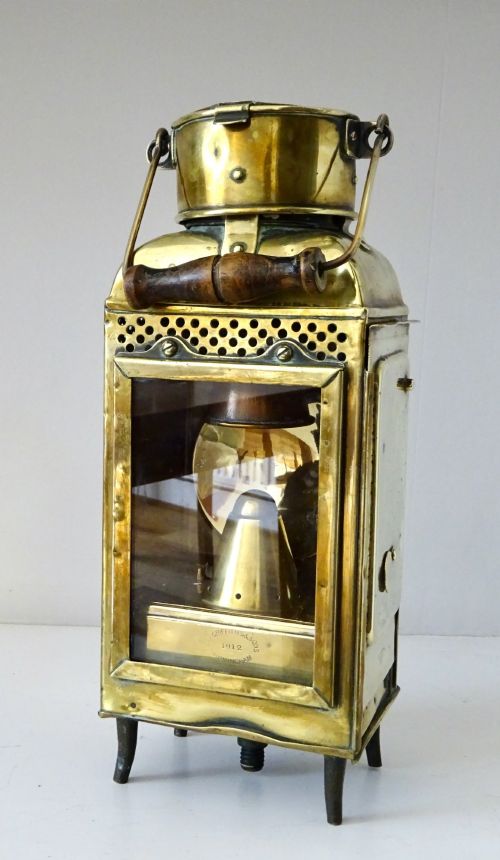
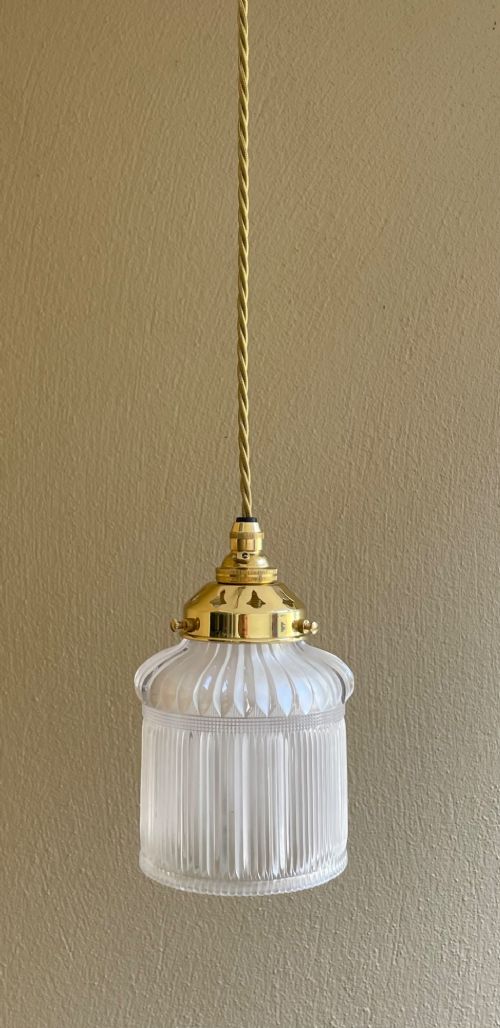


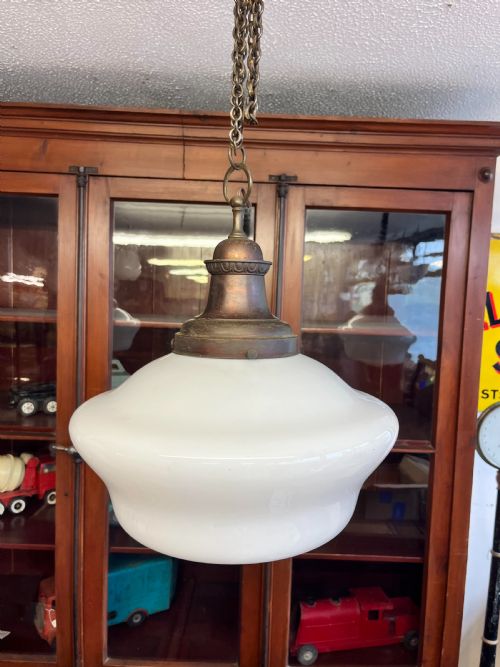


Edwardian Industrial Lighting
Edwardian industrial lighting brings sturdy utility into domestic spaces, pairing robust cast iron and brass with prismatic glass for serious workspace illumination.
Edwardian Industrial Lighting
When buyers search for Edwardian industrial lighting, they encounter robust utilitarian fixtures designed for factories, offices, and transport rather than domestic drawing rooms. The selection on this page centres on pendant lights, desk lamps, and wall lanterns originating from the early twentieth century.
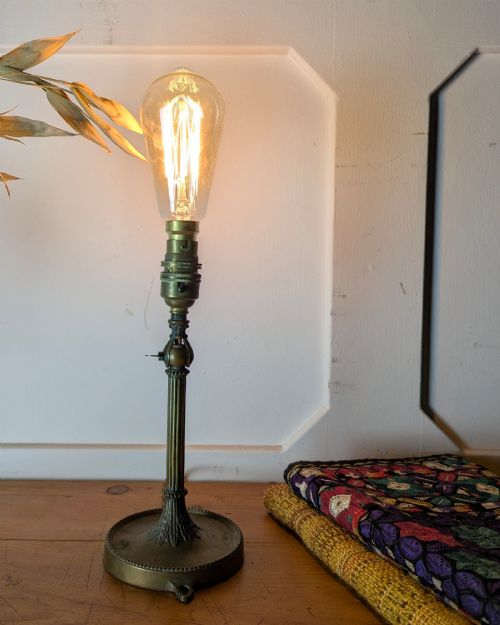
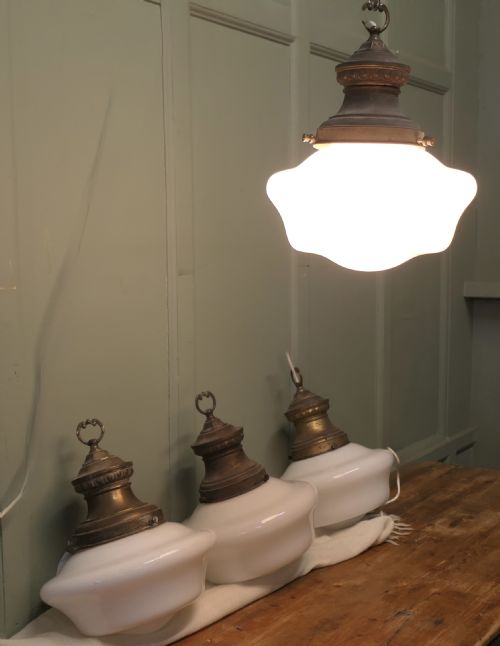
The most common forms include prismatic glass pendants and adjustable brass or cast iron task lamps. These functional objects reflect the heavy engineering and administrative expansion of the era, retaining their original utilitarian character.
Pieces span the Edwardian period into the 1920s and 1930s, incorporating styles from early industrial design to Art Deco. Each item demonstrates the practical engineering priorities of its working environment.
Materials and construction
Makers utilised heavy-duty materials such as cast iron, brass, steel, and wrought iron to withstand demanding industrial environments. These metals were frequently combined with durable opaline or prismatic glass shades designed to diffuse harsh light effectively across large workspaces.
Manufacturing focused on functional longevity, employing robust casting, pressing, and joining techniques. Components like adjustable joints on desk lamps and heavy mounting brackets on wall lanterns were engineered for constant mechanical use.
Listings feature robust materials including brass, glass, cast iron, opaline glass, steel, oak, and wrought iron.
Assessing quality in utility fixtures
Quality in these pieces rests upon the integrity of the original industrial components and the purity of the glass elements. Heavy brass fittings, crisp casting marks in iron, and undamaged prismatic or opaline shades distinguish superior workshop items.
The presence of maker-specific engineering details, such as identifiable manufacturer stampings or specialised adjustment mechanisms, elevates a fixture from standard utility stock to a notable example of early twentieth-century design.
Eli Griffiths and Sons·Holophane·REVO
The Edwardian Industrial Lighting Glossary
- Prismatic glass
- Glass moulded with geometric ribs or prisms designed to refract and diffuse light evenly while reducing glare. This material was widely adopted in industrial factories and offices for task illumination.
- Opaline glass
- A milky, translucent white glass that softens light output while providing a bright, even glow. It appears frequently on period pendant and chapel lights.
- Pendant light
- A hanging light fixture suspended from the ceiling by a cord, chain, or metal rod. These units provided direct illumination over workstations and machinery.
- Spelter
- An alloy of zinc and lead used as a cheaper substitute for bronze or brass in decorative metalwork. It takes patination well but requires careful handling due to its relative softness.
- Wall lantern
- A directional light fixture secured directly to a vertical surface with a mounting bracket. Such fixtures illuminated exterior passages, large interiors, and transport vehicles.
Edwardian Industrial Lighting: Frequently Asked Questions
What is Edwardian industrial lighting?
These pieces comprise heavy-duty utilitarian lamps, pendants, and lanterns utilised in factories, offices, and transport during the early twentieth century. They were built strictly for function using robust metals and specialised glass.
Today, they serve as characterful overhead or task lighting in contemporary interiors, bridging historic engineering and modern design.
How do I identify a Holophane shade?
Holophane shades feature distinctive mathematical prismatic ribbing moulded into the glass to control and direct light efficiently. This patented design reduces glare while maximising illumination across a workspace.
Examining the interior or rim often reveals maker stamps or characteristic light refraction patterns unique to this manufacturer.
Can I use these lights with modern wiring?
Most period industrial fixtures require professional rewiring to meet current electrical safety standards before domestic installation. Qualified electricians can update internal components while preserving the exterior metal and glass.
Standard modern bulbs and LED alternatives usually fit standard vintage brass holders once the wiring is updated.
Where were wall lanterns used?
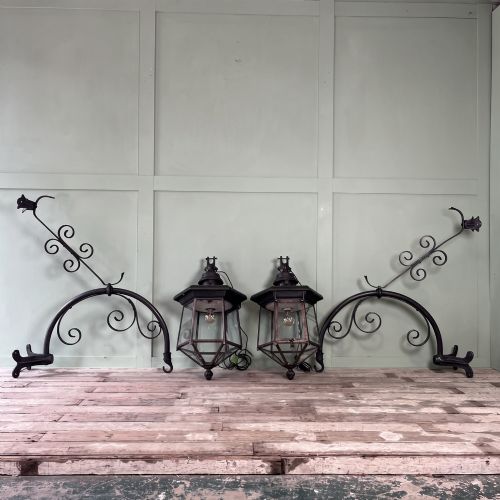
Wall lanterns and heavy brackets illuminated exterior factory gates, transit vehicles, and large interior halls requiring robust illumination. Their sealed or semi-enclosed designs protected flames or early bulbs from weather and dust.
In modern settings, they function effectively as porch lights or feature wall illumination in hallways.