
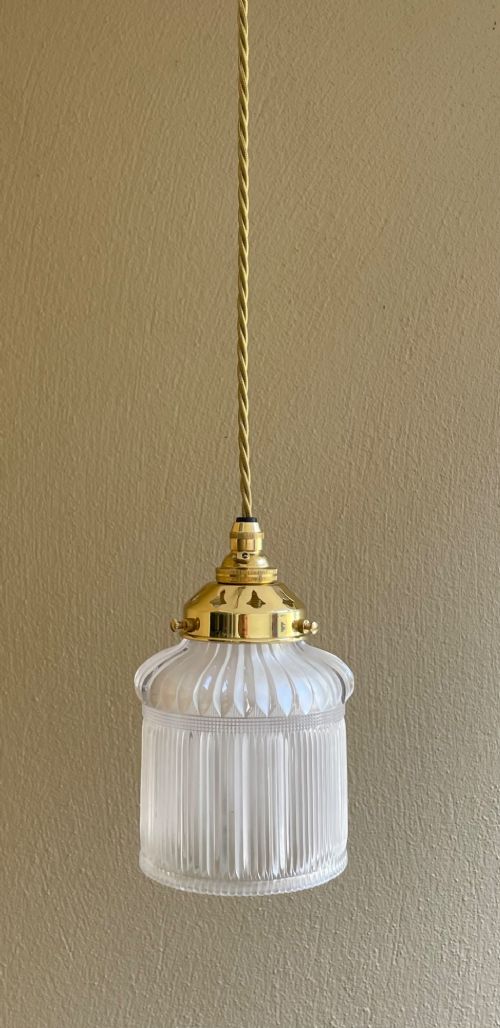


Holophane Ceiling Light
These holophane ceiling light pieces combine scientific glass prisms with sturdy metal fittings to brighten task spaces.
Holophane Ceiling Light
A holophane ceiling light is a pendant fitting built around distinctive glass shades designed to diffuse illumination evenly. When you search for a holophane ceiling light, you encounter single pendant lights suspended from wired fixtures.
The inventory on this page spans from the nineteenth century through the Edwardian era into the nineteen-twenties, nineteen-thirties, and nineteen-forties. Pendant lights dominate the selection, appearing as bell shapes, acorn forms, and multi-part prism shades.
Many examples arrive paired or matched, alongside single fixtures fitted with original glass shades. Origins stretch across British workshops and French makers, offering industrial utility for domestic or commercial spaces.
Materials and Construction
Prismatic glass forms the core of every holophane ceiling light, moulded with precise ribs and flutes to refract light without glare. This specialised glass pairs with metal components including brass, chrome, cast iron, and bronzed metal.
Galleries and fitter rings secure the glass shades to suspension wiring, often incorporating rise and fall mechanisms or brass hardware. Many pieces retain their original stamped glass shades alongside period fixings.
Some nineteenth-century shades bear patent dates so precise they declare the exact year the lightbulb got put in its place.
Quality and Distinction
The standard of a holophane ceiling light rests on the clarity of the moulded glass and the integrity of the original shade markings. Crisp prismatic ribs and heavy metal galleries indicate superior manufacture.
Completeness sets pieces apart, particularly the presence of matching original shades and authentic period metalwork. Rise and fall brass chandeliers and stamped nineteen-hundreds examples represent the upper tier of the range.
The Holophane Ceiling Light Glossary
- Holophane
- A brand and type of scientific prismatic glass engineered to direct and diffuse light efficiently. The name derives from Greek roots meaning whole light.
- Gallery
- The metal collar or ring that grips the upper rim of a glass shade to connect it to the suspension wiring. Brass and chrome versions appear frequently.
- Prism
- A geometric glass element moulded into the shade to bend and scatter light rays. These ribs define the industrial aesthetic.
- Pendant
- A light fixture suspended from the ceiling by a cord, chain, or metal rod. Most examples in this category take this hanging form.
- Rise and fall
- A mechanical pulley system allowing the pendant light to be adjusted in height. These fittings often feature brass counterweights.
Holophane Ceiling Light: Frequently Asked Questions
What is a holophane ceiling light?
A holophane ceiling light is an industrial pendant featuring scientifically moulded prismatic glass designed to control glare and distribute illumination evenly across a room.
These fixtures date from the late nineteenth century through the mid twentieth century and combine functional glass shades with brass, chrome, or cast iron hardware.
Where were they used?
These lights originally illuminated factories, warehouses, offices, and Edwardian public buildings where clear task lighting was essential for work.
Today, their robust industrial character suits contemporary kitchens, hallways, and dining spaces seeking authentic period utility.
How do I date a holophane light?
Dating relies on patent stamps, metal types, and shade shapes such as the acorn or bell pendant.
Early pieces often feature nineteen-hundreds patent markings and brass rise and fall mechanisms, while later examples incorporate chrome or 1940s industrial styling.
Are original shades important?
Original holophane glass shades carry period manufacturing stamps and precise prismatic moulding that define the authenticity of the piece.
Retaining the matching original shade and gallery ensures the lighting maintains its historical integrity and correct optical properties.