


Vintage Industrial Pendants
These vintage industrial pendants bring robust utility and authentic task lighting into modern rooms through sturdy metal shades and heavy galleries.
Vintage Industrial Pendants
Vintage industrial pendants are utilitarian ceiling fixtures designed for factories, workshops, railways, and ships, transformed into characterful additions for domestic spaces. When you search for vintage industrial pendants, you encounter functional lighting from the nineteenth century through the mid-twentieth century.
The selection on this page centres heavily on early twentieth century pieces, particularly from the 1920s and 1930s. You will find single fixtures alongside sets of matching lights, offering flexible options for hanging over kitchen islands or dining tables.
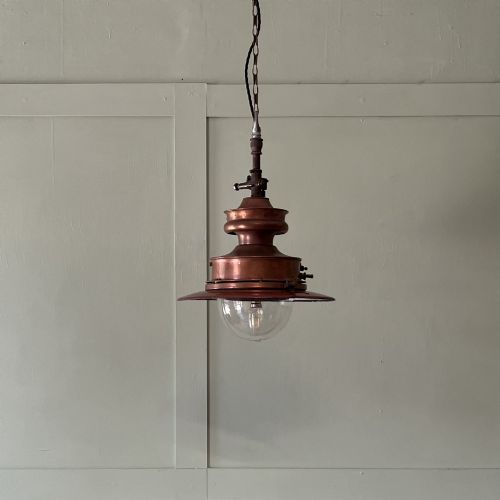
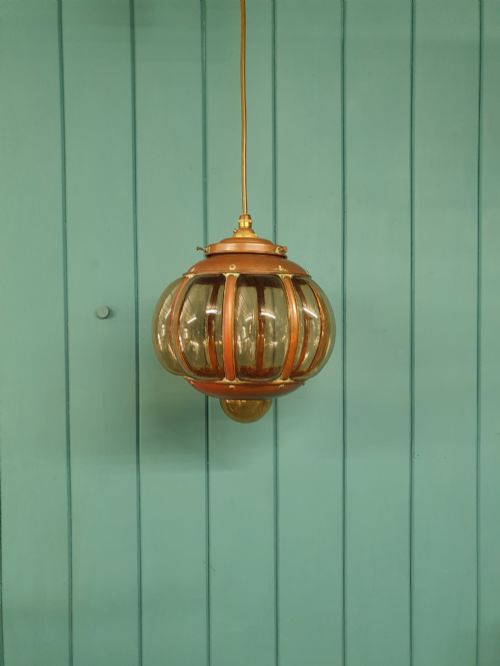
Forms range from simple factory shades and chapel lights to railway lanterns and nautical fixtures. Materials vary from straightforward steel and cast iron to decorative copper and brass.
How they were made
Makers utilised robust metals like steel, cast iron, copper, and brass to form structural galleries and ceiling canopies capable of enduring heavy workshop use. Iron and steel components often received enamel coatings in green or other colours to protect against factory grime and corrosion.
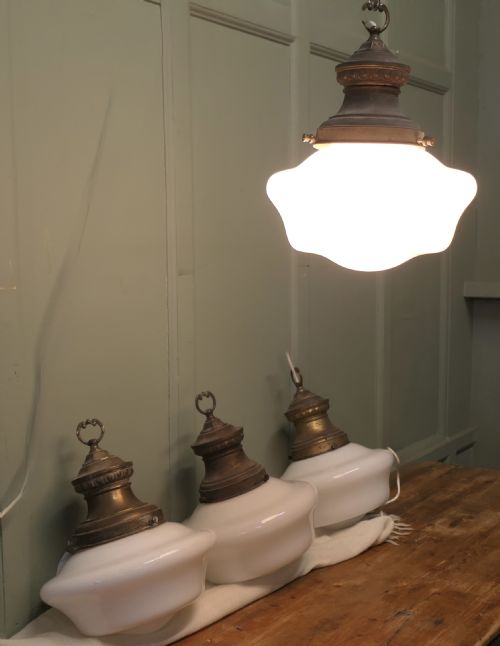
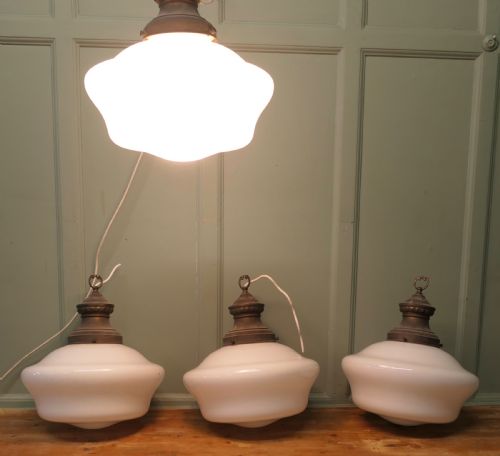
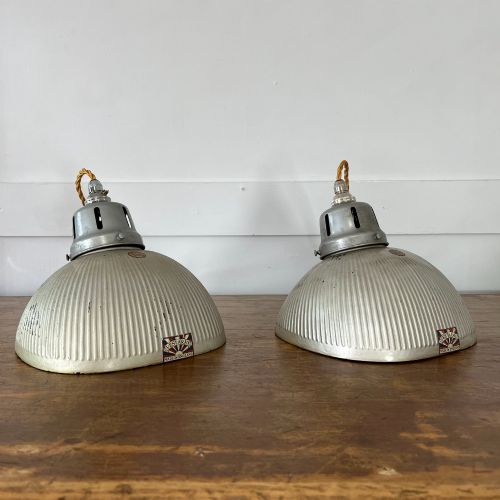
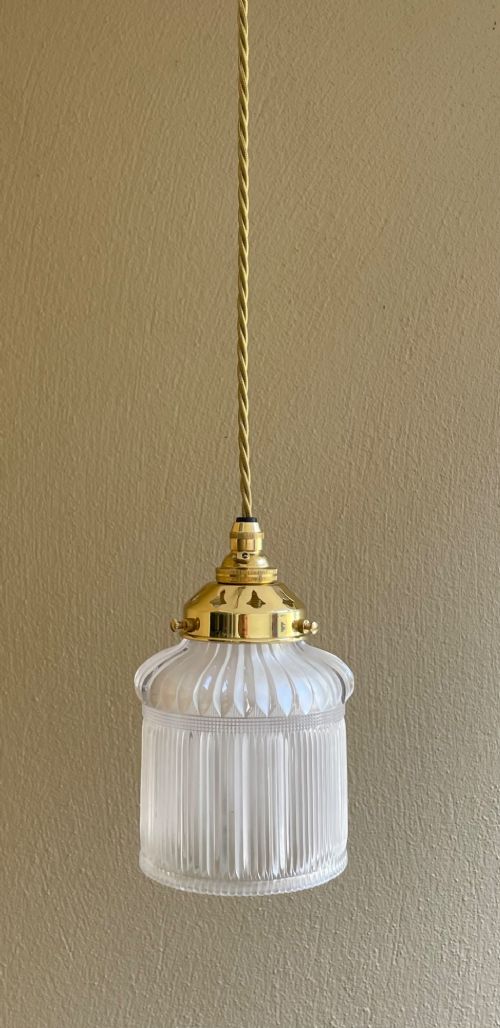
Shades were formed from specialised glass types including opaline, smoked glass, mirrored mercury glass, and prismatic or Holophane glass designed to diffuse harsh industrial illumination. Wrought iron and brass elements added both structural rigidity and decorative detail to hanging lanterns and chandeliers.
Prismatic and opaline glass shades dominate the early twentieth-century selections here.
What varies in quality
Quality in these pendants lies in the integrity of the original materials and the presence of specialised optical glass rather than generic replacements. Cast iron galleries with crisp makers' details and heavy spun metal shades represent superior manufacturing compared to lighter utilitarian alternatives.
The sophistication of the glasswork dictates much of the distinction, with complex moulded prismatic patterns or deep opaline milk glass standing apart from standard clear panes. Original surface patination on copper, brass, and enamel finishes adds depth that modern reproductions cannot replicate.
VESTARAY·Holophane
The Vintage Industrial Pendants Glossary
- Holophane
- A brand of scientific glass shade featuring complex prismatic ribs designed to direct and diffuse light efficiently. These shades are prized for their distinctive sparkle and optical performance.
- Opaline glass
- A milky, translucent white glass that softens light and creates a warm, even glow. It was frequently utilised in chapel and factory lighting during the early twentieth century.
- Gallery
- The metal collar or fitter at the top of a pendant shade that holds the bulb holder and suspension rod or chain. Galleries are often cast from brass, chrome, or iron.
- Prismatic glass
- Glass moulded with geometric ridges on the surface to refract light and reduce glare. This technique was essential for nineteenth and twentieth-century workspace illumination.
Vintage Industrial Pendants: Frequently Asked Questions
How do I hang heavy industrial pendants?
Heavy fixtures require secure anchoring into ceiling joists or the use of appropriate toggle bolts to support the combined weight of metal shades and glass components. Professional installation by a qualified electrician ensures the wiring and suspension chains meet safety standards.
Many pendants utilise original steel or brass chains that can be adjusted to your preferred drop height over tables or worktops.
Can I use modern LED bulbs in these?
Modern LED screw or bayonet bulbs fit most vintage lamp holders, provided you check the maximum wattage limits of the original wiring. Choosing warm white LED filaments replicates the amber glow of historic carbon-filament lighting.
Ensure your electrician checks the interior bulb holder during installation to confirm it accommodates contemporary bulb sizes safely.
How do I clean enamel and glass shades?
Enamel shades respond well to gentle washing with warm soapy water and a soft cloth to remove accumulated grease and dust without scratching the finish. Glass components, particularly mirrored or prismatic types, require careful handling and non-abrasive cleaners to preserve their reflective surfaces.
Avoid submerging vintage metal galleries or electrical components in water during the cleaning process.
Are these lights safety tested?
Many vintage fixtures retain their original wiring, which typically requires rewiring to comply with current electrical regulations before domestic use. An electrician can easily install new cable and safety earthing while retaining the historic exterior components.
Checking the fixture upon arrival ensures all mechanical joints and galleries remain secure for hanging.