


Antique Industrial Lighting
These antique industrial lighting pieces bring utility and heavy metal character into modern spaces through surviving factory pendants, railway lanterns and workshop lamps.
Antique Industrial Lighting
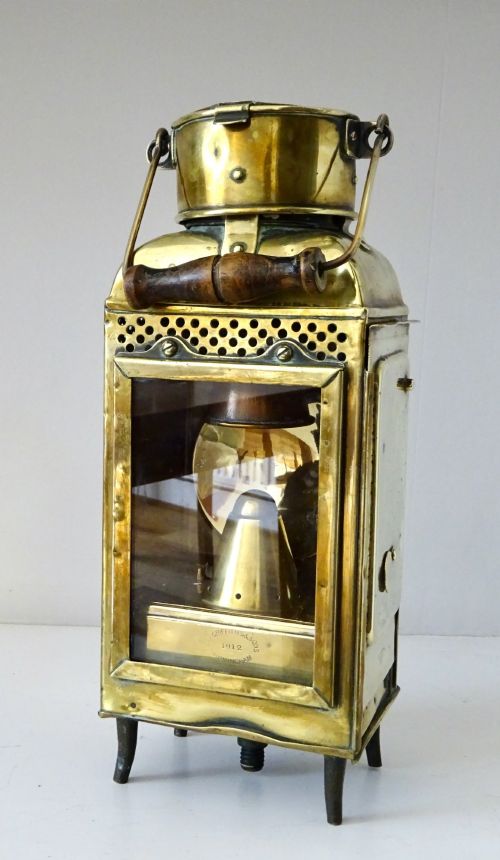
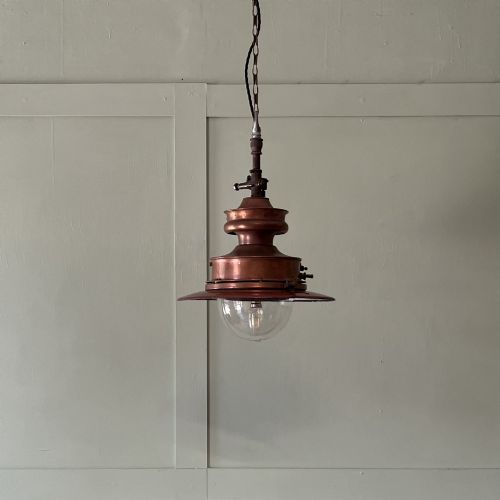
When buyers search for antique industrial lighting, they look at heavy-duty work fixtures that served factories, railways and maritime vessels across the nineteenth and twentieth centuries. These survivors range from simple enamel factory pendants and ceiling lights to specialised desk lamps and wall lanterns.
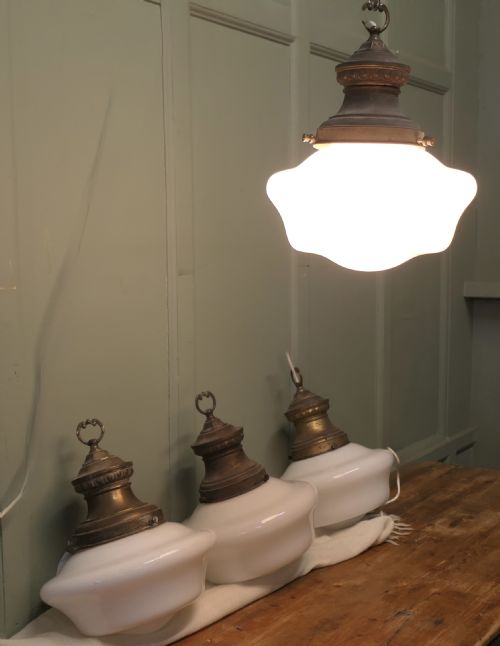
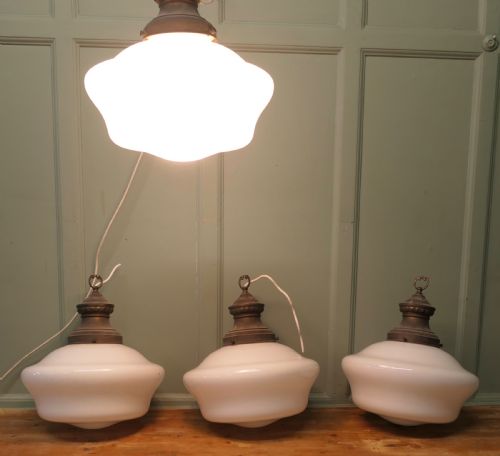
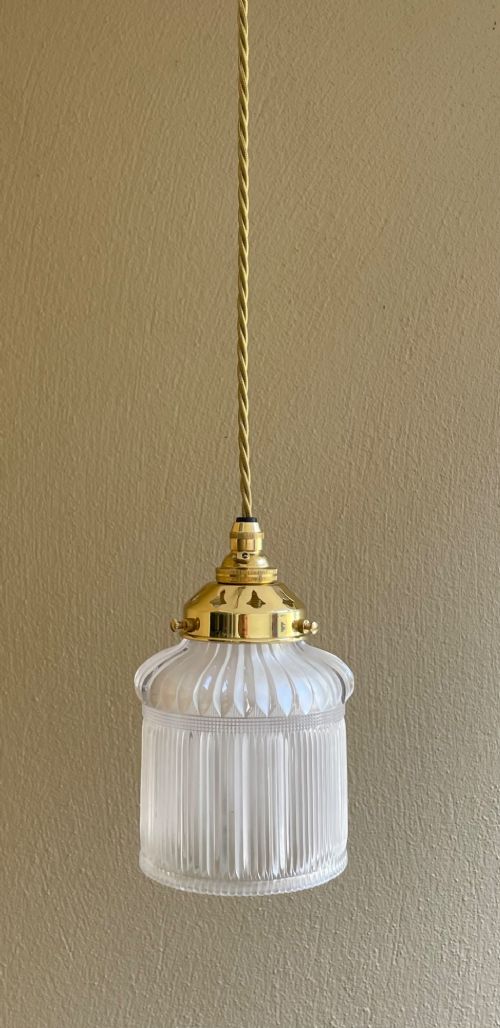
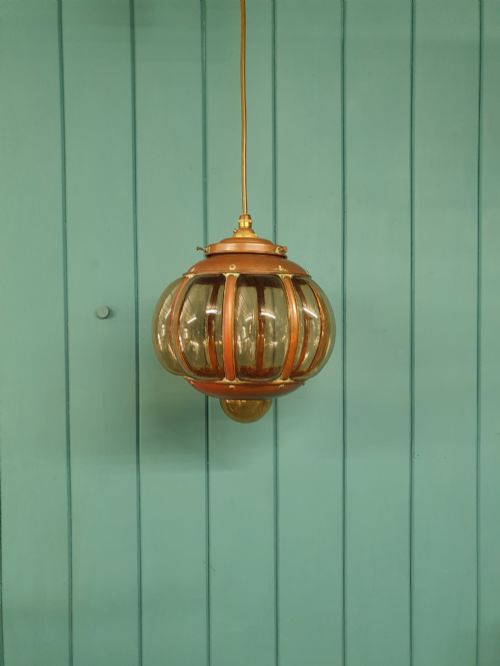
The most common versions met on this page include early twentieth-century pendant lights fitted with prismatic or opaline glass shades. Pieces span styles from Edwardian and Art Deco to Victorian utility, originating from British, French and nautical contexts.
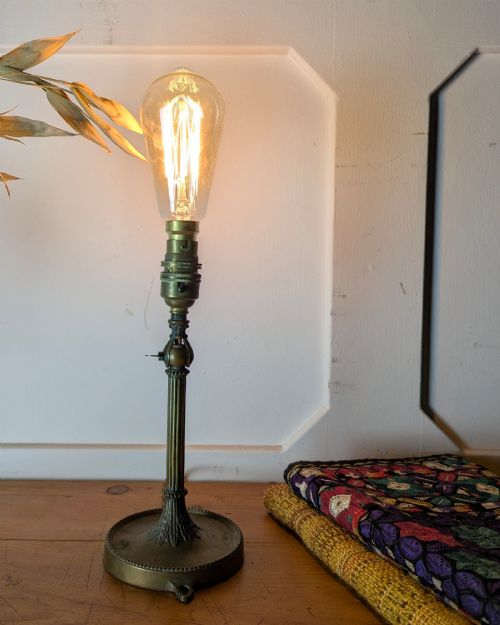
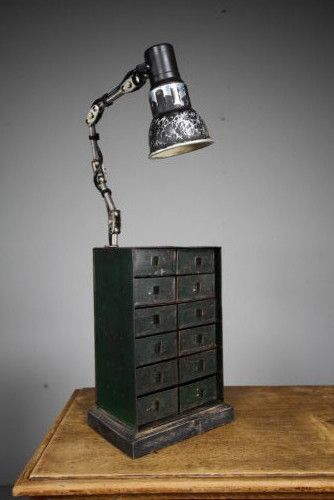
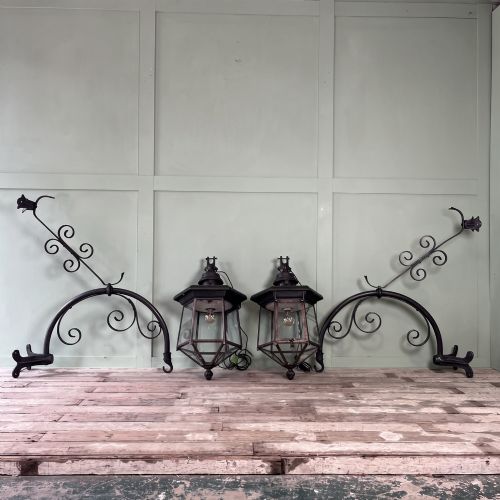
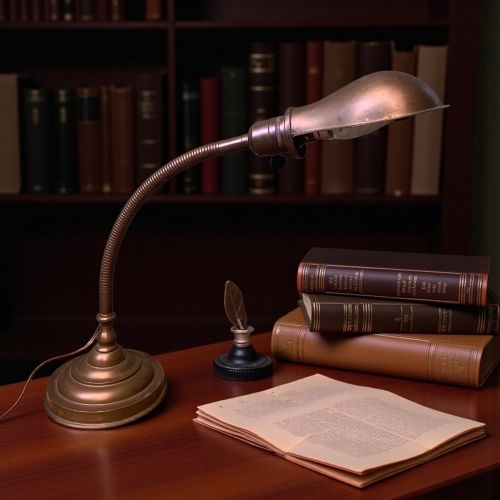
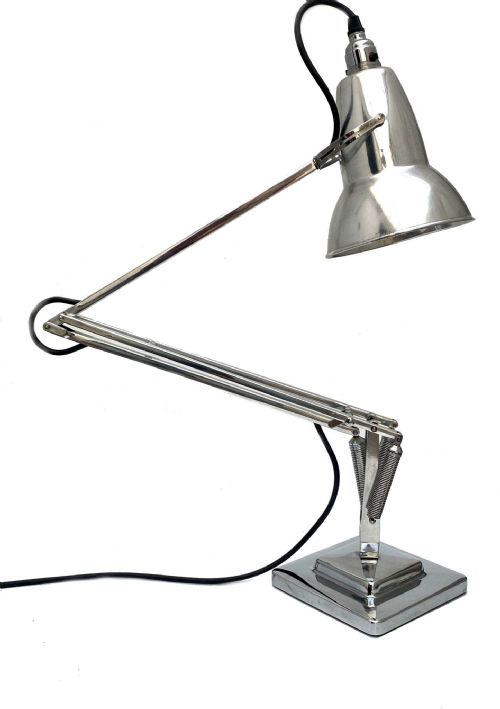
Forms extend beyond overhead illumination to include adjustable desk lamps, heavy cast iron brackets and outdoor lanterns built for endurance. Each object carries the utilitarian design language of its working environment.
Materials and Construction
Makers relied on robust metals such as cast iron, brass, copper, steel and wrought iron to withstand harsh industrial environments. Structural parts were cast, spun or riveted together to ensure longevity under daily workshop conditions.
Glass components played a crucial role in directing and diffusing illumination effectively across large workspaces. Prismatic and opaline glass shades were engineered to maximise light output while reducing glare for workers.
Fish auction bidders numbers occasionally moonlight as heavy industrial lighting companions in workshop settings.
Assessing Quality and Execution
Quality rests upon the integrity of the original industrial components and the retention of maker markings or specialised glass signatures. Standard utility pieces differ from higher-grade items possessing articulated brass arms, heavy cast fittings or branded foundry stamps.
The sophistication of the optical glass shade distinguishes ordinary utility fixtures from superior examples. Prismatic bowls with complex ribbing and unblemished opaline surfaces show superior craftsmanship compared to basic utilitarian replacements.
Eli Griffiths and Sons·Pirouette·REVO
The Antique Industrial Lighting Glossary
- Holophane
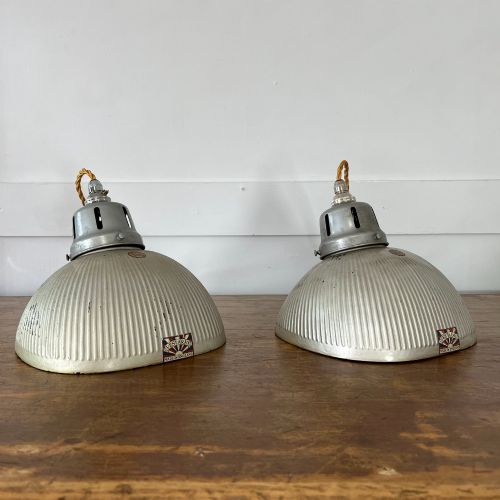
- A brand of scientific glass shade designed with prismatic ribs to direct and diffuse light efficiently. These shades are prized by collectors for their optical properties and embossed maker details.
- Opaline glass
- A milky, translucent white glass used in lamp shades to soften illumination and reduce harsh shadows. It appears frequently in early twentieth-century factory and chapel pendants.
- Pendant light
- A hanging luminaire suspended from the ceiling by a cord, chain or metal rod. These fixtures served as primary overhead work illumination in large spaces.
- Gimbal
- A pivoted ring mounting that allows a lamp or lantern to remain level despite the motion of a ship. This mechanism is typical of naval and maritime lighting.
- Trench art
- Decorative items fashioned by soldiers and workers from military scrap metal and discarded shell cases during wartime. These objects often take the form of candlesticks or small utility items.
Antique Industrial Lighting: Frequently Asked Questions
What defines antique industrial lighting?
These pieces comprise heavy-duty lamps, lanterns and pendants originally built for factories, railways, ships and workshops during the nineteenth and twentieth centuries.
They utilise robust materials like iron, brass and prismatic glass designed purely for utility rather than domestic decoration.
How do I identify a Holophane shade?
Holophane shades feature distinctive exterior prismatic ribs engineered to refract and control light output efficiently.
Many examples bear the maker name pressed directly into the glass rim alongside patent details.
Were these lights meant for homes?
Original factory pendants and railway lanterns served strictly commercial, maritime and industrial environments where durability mattered most.
Today, buyers repurpose them to anchor domestic interior schemes with authentic working-class heritage.
How do I date an industrial lamp?
Dating relies on material choices, patent dates stamped into metalwork, switch types and manufacturing styles spanning the Victorian era through the mid-twentieth century.
Design shifts from heavy cast iron and copper toward chrome and streamlined Art Deco steel help narrow the production window.