


Industrial Pendant Lamps
Industrial pendant lamps bring practical utility into domestic spaces through robust materials and straightforward design.
Industrial Pendant Lamps
Industrial pendant lamps are hanging light fittings originally designed for factories, railways, and public buildings during the Victorian, Edwardian, and mid-century periods. These fixtures provide direct downward illumination suited to high ceilings and large work spaces.
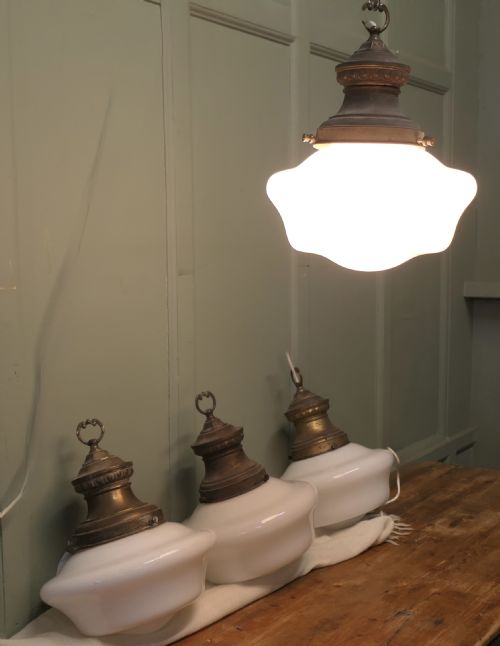
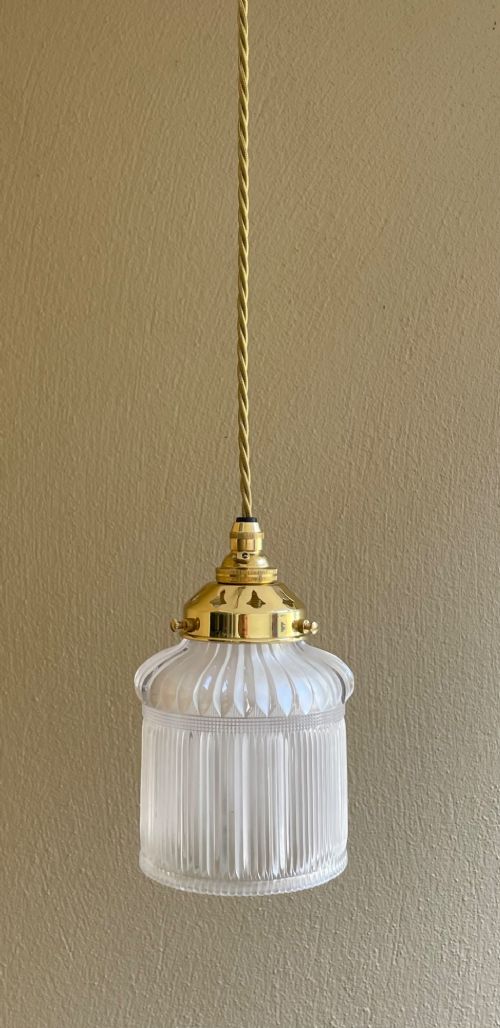
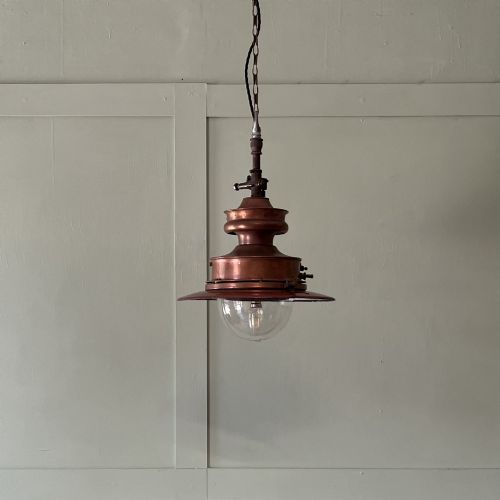
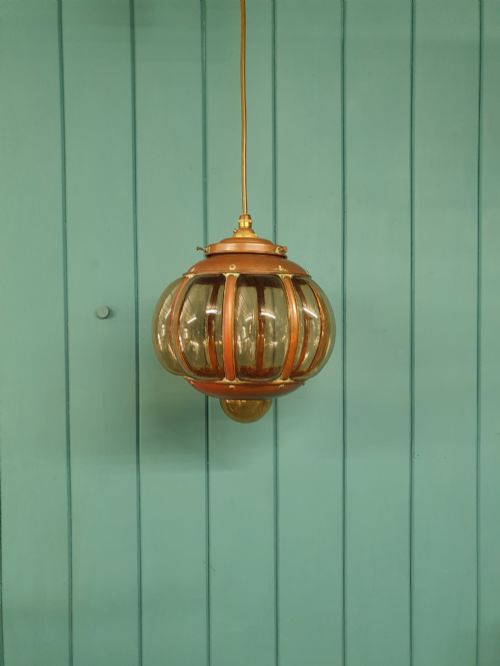
The selections available range from utilitarian enamel factory shades and copper railway lanterns to sophisticated prismatic glass pendants. Visitors most frequently encounter sturdy steel or iron fittings and glass shades produced in the early twentieth century.
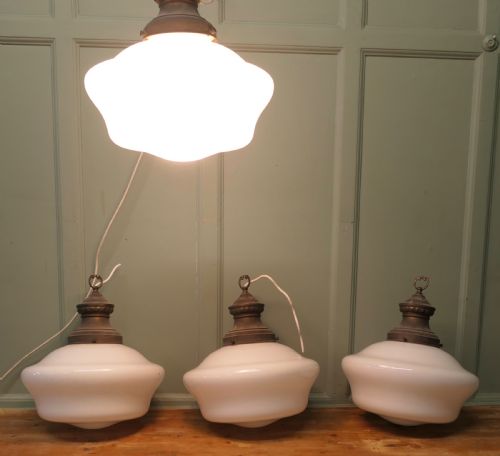
Forms vary from single hanging pendants to large sets of matching ceiling lights and multi-light chandeliers. These pieces transition easily from commercial origins into modern kitchens, dining areas, and hallways.
Materials and construction
Makers utilised durable metals such as brass, copper, steel, cast iron, and wrought iron to construct the galleries and hanging frames. These heavy-duty materials ensured the fixtures could withstand demanding industrial environments without structural failure.
Shades were formed from specialised glass, including opaline, smoked, mirrored, and prismatic types designed to diffuse light effectively. Enamel coatings were applied to metal shades to protect against corrosion and maximise light reflection.
Many of these hardy survivors spent decades illuminating dusty factory floors before finding sanctuary in modern dining rooms.
Standards of manufacture
Quality in these lighting fixtures rests upon the integrity of the original metalwork and the clarity of the glass. Superior examples feature robust galleries, heavy gauge metals, and specialised shade designs intended for commercial longevity.
The presence of maker signatures, specialised prismatic optics, and matched sets distinguishes exceptional specimens from standard utility pieces. Original surface patinas and intact enamel coatings further elevate the standing of individual lamps.
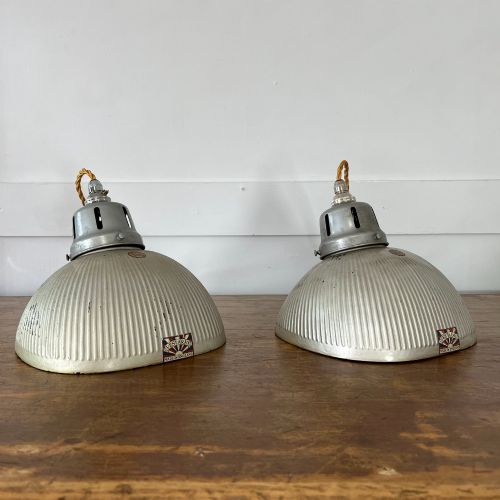
VESTARAY·Holophane
The Industrial Pendant Lamps Glossary
- Gallery
- The metal collar or mount that holds the glass shade and connects to the suspension cord or rod.
- Opaline glass
- A milky, translucent white glass that softens light output while providing an even, glowing illumination.
- Prismatic glass
- Glass moulded with intricate patterns of ribs or prisms designed to refract and direct light efficiently.
- Enamel
- A fused glassy coating applied to metal surfaces to provide a hard, protective, and reflective finish.
- Nautical
- A descriptive style referencing maritime environments, often featuring heavy copper or brass housings and protective cages.
Industrial Pendant Lamps: Frequently Asked Questions
How do I hang industrial pendant lamps?
These fixtures suspend from ceilings using rigid rods, chains, or braided cords connected to a central electrical point. Ensure the mounting surface can support the weight of heavy metal and glass fittings.
Professional installation by a qualified electrician is recommended to handle vintage wiring and secure the ceiling fixings safely.
Can I use these lights in low ceilings?
Most pendant lights are designed with longer drops intended for high commercial ceilings or spacious domestic rooms. Adjusting the suspension cord or chain length allows some adaptation to lower spaces.
Shorter ceiling light fittings and flush options are better suited if headroom is particularly restricted.
How do I clean opaline and prismatic glass?
Remove dust gently using a soft, dry cloth before wiping the glass with a damp sponge and mild soapy water. Avoid harsh abrasives that might scratch the surface or damage original finishes.
Dry the glass thoroughly with a lint-free cloth to restore clarity and prevent water spots on the shades.
What bulbs work best in vintage shades?
LED filament bulbs replicate the warm glow and visual appearance of traditional historic lighting while producing less heat. Choose clear or lightly frosted bulbs depending on whether the shade is transparent or opaque.
Check the maximum wattage limits of the original lamp holder before installing modern replacement bulbs.