

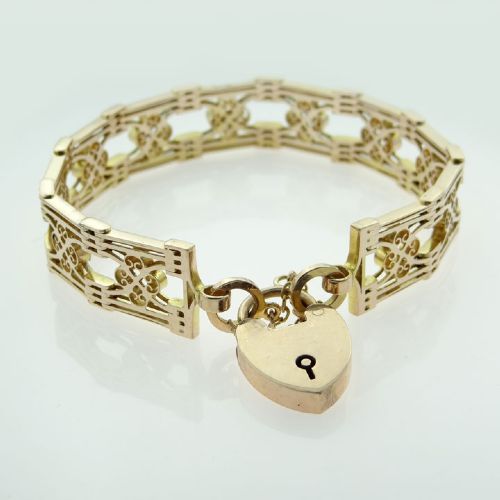
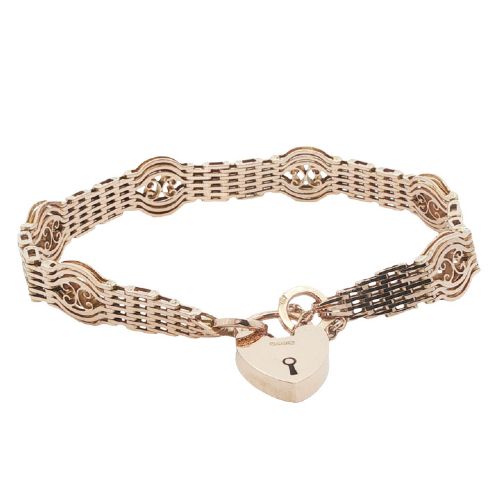
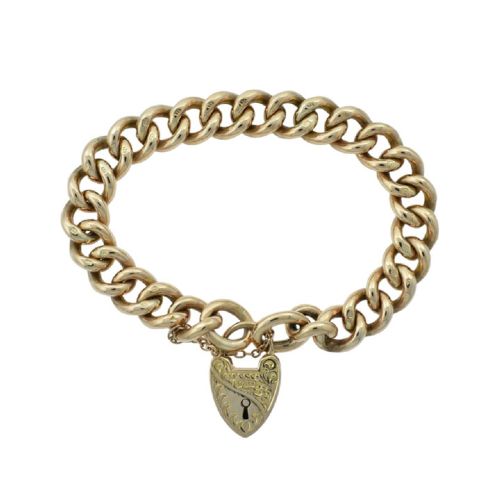
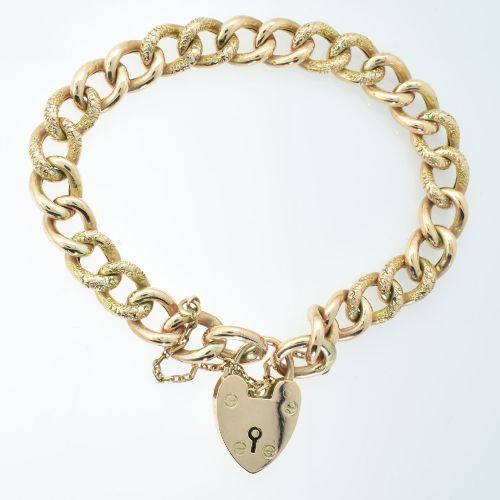


Edwardian Heart Bracelet
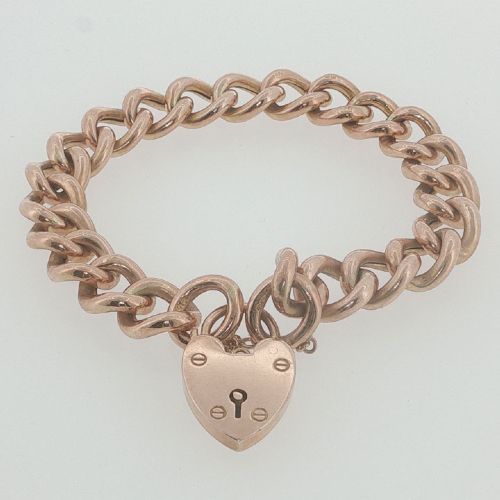
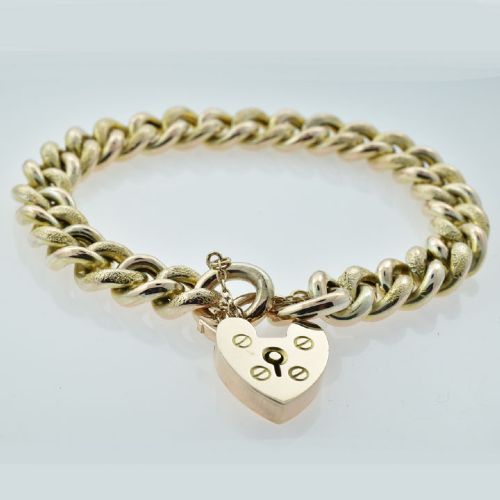
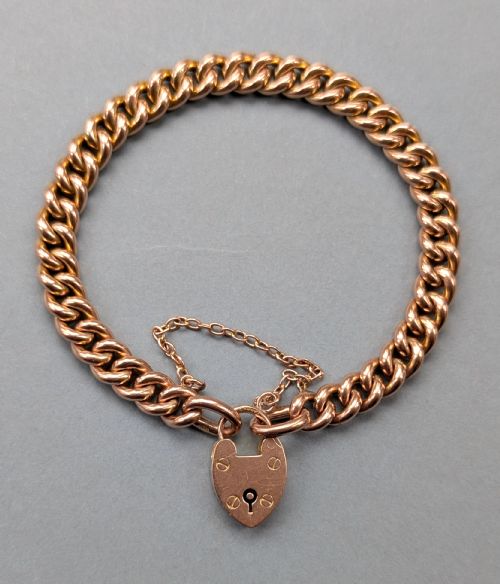
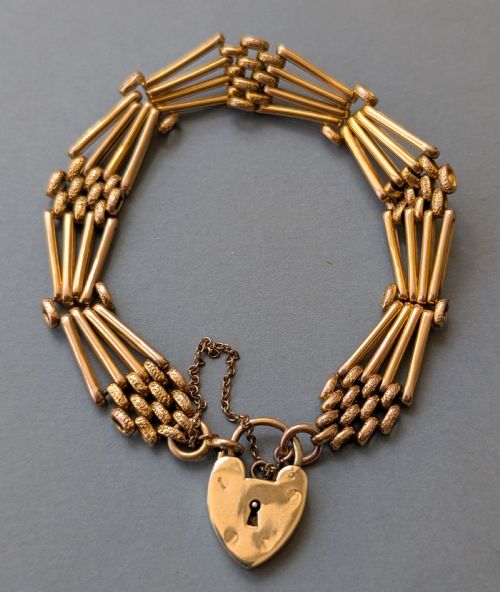
An edwardian heart bracelet combines the sentimental symbolism of the padlock fastening with the robust construction of curb, gate, or fancy link chains.
Edwardian Heart Bracelet
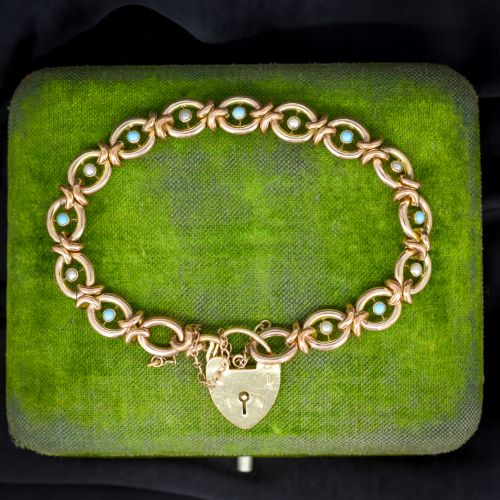
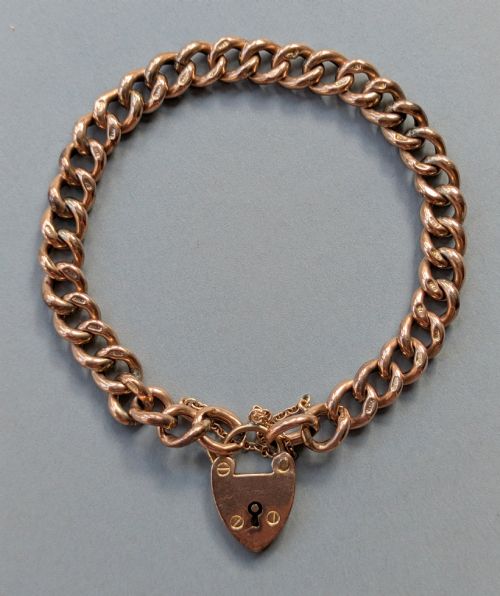
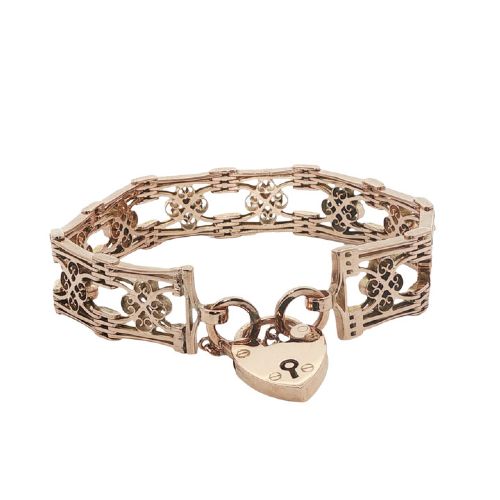
When you examine an edwardian heart bracelet, you are looking at wrist jewellery defined by a secure heart-shaped padlock clasp or a central heart motif. The items appearing here most frequently take the form of gate links, curb chains, and bangles incorporating seed pearls, amethysts, and diamonds.
The periods represented span the late Victorian era through the Edwardian decade, with occasional mid-century pieces and specific hallmarked dates around nineteen hundred to nineteen hundred and ten. These jewels served as tokens of affection and security, often functioning as wearable banks of gold fastened with spring-loaded padlocks.
Beyond standard chains, the selection includes bangles featuring double heart designs and pendants configured as opening purses or charms. The construction relies heavily on hollow or solid gold links designed to drape comfortably around the wrist while displaying the central heart securely.
How they were made
The metals utilised across these pieces are predominantly nine carat gold, nine carat rose gold, and fifteen carat gold, shaped into hollow or solid links. Goldsmiths formed gate links and curb chains by hand or with early mechanical assistance, soldering each joint before attaching the functional padlock mechanism.
Gemstones such as seed pearls, amethysts, diamonds, opals, and rock crystals are flush-set, bezel-set, or secured with tiny claws into the gold surface or directly onto the heart padlocks. Engraving was frequently applied by hand to half-engraved curb chains and patterned gate bracelets, creating linear and floral motifs across the metal.
Many items bear hallmarks indicating assay offices in cities such as London, Birmingham, and Chester alongside precise date letters. These assay marks provide direct evidence of the metal purity and the exact year of manufacture.
Edwardian Heart Bracelet Retail Price Guide 2026
Typical asking prices for edwardian heart bracelet among the pieces listed under this phrase on Sellingantiques today, from the lower quarter to the upper quarter. They describe what is for sale here now, not the wider market.
Listings demonstrate that nine carat rose gold is the predominant metal choice, frequently paired with seed pearls and amethysts.
What varies in quality
Quality in an edwardian heart bracelet rests upon the substantial weight of the gold and the integrity of the links rather than surface polish alone. Heavier pieces utilise thicker gauge wire and solid construction, whereas lighter examples rely on hollow stamped links that are more susceptible to denting.
The complexity of the mechanism also separates standard items from superior examples, particularly the spring tension within the heart padlock and the security of safety chains. Padlocks that snap shut firmly and retain their original keys or internal springs demonstrate higher manufacturing standards.
Gemstone selection dictates the upper tier of the range, where matched seed pearls, clear amethysts, and well-cut diamonds are grain-set into fifteen carat gold rather than nine carat settings. The crispness of hand engraving on half-engraved curb links further distinguishes master craftsmanship from simpler production.
The Edwardian Heart Bracelet Glossary
- Padlock clasp
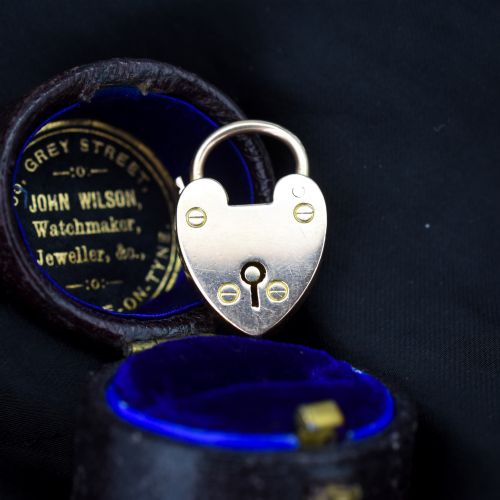
- A heart-shaped fastening mechanism operating on a spring hinge, designed to secure the bracelet while displaying an ornamental face. Many include a tiny keyhole or a push-button release.
- Gate link
- A style of bracelet construction formed from parallel bars connected by small vertical links, resembling a garden gate. This pattern allows the metal to flex smoothly around the wrist.
- Curb chain
- A series of uniform interlocking links that have been twisted and flattened to lie flat against the skin. It forms the primary chain style for many padlock bracelets.
- Seed pearl
- A very small, naturally occurring or cultured pearl used in clusters or crescents to accent heart padlocks and bezels. They are typically half-drilled and glued or pegged onto small gold pins.
- Hallmark
- An official stamp struck into the precious metal indicating the purity standard, the assay office, and the date letter for the year of creation. These marks authenticate the age and origin of the piece.
Edwardian Heart Bracelet: Frequently Asked Questions
How do I open the heart padlock?
Most heart padlocks on these bracelets operate via a concealed internal spring loaded by pressing a small projection or lifting the hinged bail. Once pressure is applied, the arm swings open to release the jump ring.
Older mechanisms can become stiff with age or accumulated wear, so gentle pressure is required rather than force. If the spring has weakened, a jeweller can often adjust the internal tension without altering the original gold.
Were these bracelets worn daily?
Edwardian gold bracelets were frequently worn as everyday ornaments by their original owners, serving as both decoration and sentimental tokens. The inclusion of safety chains on many examples indicates an awareness of the risk of loss during active daily routines.
While robust, the hollow links found on lighter variants require care to avoid crushing or deep scratching. Modern wearers often reserve them for occasional use to preserve the integrity of the clasp and engraving.
How can I tell the difference between Victorian and Edwardian pieces?
Distinguishing the two periods relies heavily on hallmarks, assay letters, and stylistic shifts in gemstone arrangement. Victorian pieces often display heavier proportions and darker stones, whereas Edwardian items frequently favour lighter rose gold and delicate seed pearl work.
When hallmarks are absent, the form of the gate link or the cut of the diamond provides clues. Edwardian design tended toward lighter, airier mountings like platinum-topped gold or fine filigree, though stylistic overlap remains common.