



Edwardian Harvest Scene Painting
Edwardian harvest scene painting captures rural British agricultural life on canvas and paper through pastoral and impressionistic works.
Edwardian Harvest Scene Painting
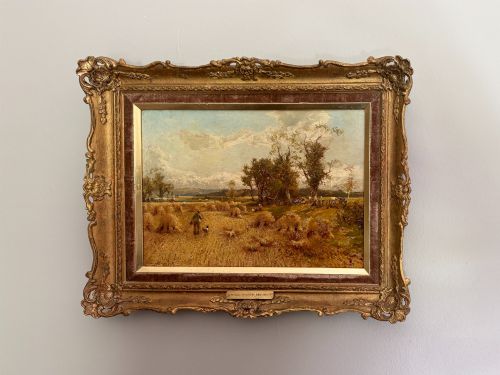
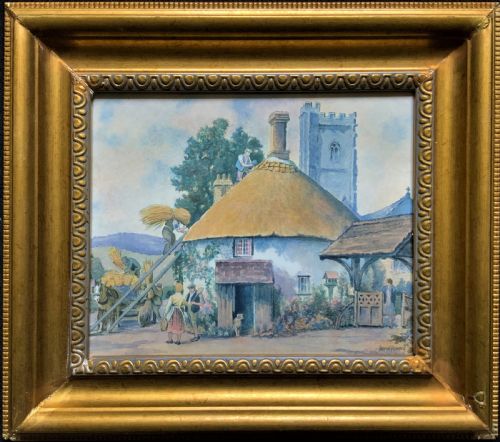
An edwardian harvest scene painting portrays agricultural labour and rural landscapes during the early twentieth century. These works depict hay carts, fields, and farmers working the land across various British regions. The selection comprises both watercolours on paper and oil paintings on canvas.
Most examples originate from the Edwardian period and adjacent decades, capturing traditional farming methods before mechanisation altered the countryside. Artists render these rural subjects through styles ranging from British Impressionism to realism and pastoral scenes. Each piece preserves a specific moment of agricultural activity, from initial cutting to the final load.
How they were made
Painters utilised oil paint on canvas or watercolour pigment on paper to create these rural depictions. Canvases receive layers of oil pigment applied with brushes, whilst watercolours rely on fluid washes across paper supports. Wood frames typically enclose and protect the paintings behind glass where executed on paper.
Makers constructed these works using traditional artist materials available during the late Victorian and Edwardian eras. Pigments derive from natural and synthetic sources applied to stretched canvas or heavy paper sheets. Glazing protects vulnerable watercolours from environmental moisture and handling damage.
Materials documented in these rural scenes include paper, canvas, wood, glass, oil paint, and watercolour pigment.
What varies in quality
Execution skill distinguishes finer works through precise handling of light, atmospheric conditions, and human anatomy. Master artists capture movement in horses and figures with confident brushwork rather than stiff rigidity. The composition of landscape elements creates depth and balance unique to each painter's hand.
Material preservation affects the overall integrity of the artwork over time. Works retaining original wooden frames and stable pigment surfaces maintain their historical character better than altered pieces. The vibrancy of watercolour pigments and the lack of cracking in oil layers reflect proper historical storage.
James William Booth·John Atkinson·Herbert Royle·Frederick J. Knowles·Henry John Kinnaird·Frederick William Jackson·Walter Duncan·George Hamilton Constantine·William Greaves·William Savage Cooper·David Heward·William Kay Blacklock·Wilmot Pilsbury·George Graham·Robert Thorne Waite·JE Hood
The Edwardian Harvest Scene Painting Glossary
- Edwardian
- Pertaining to the reign of King Edward VII, spanning from 1901 to 1910, though the aesthetic often extends slightly either side. It marks a distinct period of pastoral art in Britain.
- Watercolour
- A painting method where the paints are made of pigments suspended in a water-based solution. The technique relies on translucent washes applied to paper.
- Oil painting
- The process of painting with pigments that use a medium of drying oil as the binder. This medium allows for rich blending and textured application on canvas.
- British Impressionism
- An art movement focusing on light and everyday subjects painted with visible brushstrokes. Artists captured outdoor scenes en plein air.
- Hayrick
- A large stack of hay piled in the open air to dry and protect it until needed. It serves as a frequent focal point in rural harvest compositions.
Edwardian Harvest Scene Painting: Frequently Asked Questions
What subjects do these paintings show?
These works illustrate agricultural scenes including hay cutting, cart loading, and rural landscapes. Artists recorded traditional farming methods across different British counties.
Subjects focus on rural workers, horses, and fields during active harvest periods. The depictions reflect pastoral life in the early twentieth century.
How do watercolours differ from oils here?
Watercolour paintings utilise pigment on paper and require protective glass framing. They offer translucent effects and delicate handling of light.
Oil paintings use oil pigment on canvas supports without surface glazing. They provide heavier texture and richer colour saturation.
How should I display a framed watercolour?
Keep watercolours away from direct sunlight to prevent the pigments from fading over time. Environmental stability protects both the paper support and the framing.
Ensure the room humidity remains moderate to avoid paper warping or mould growth behind the glass. Proper placement preserves the original condition of the piece.