
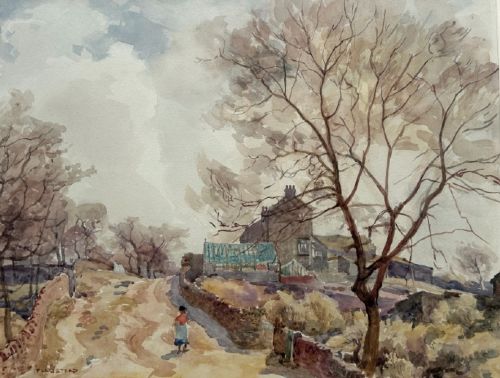
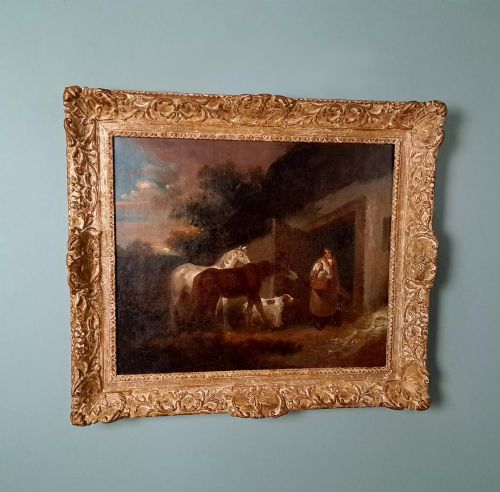
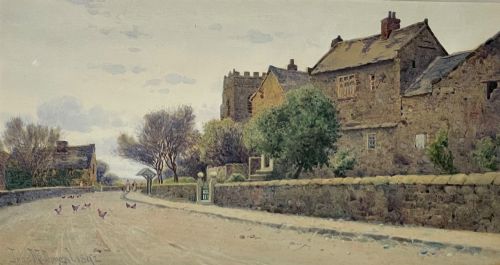
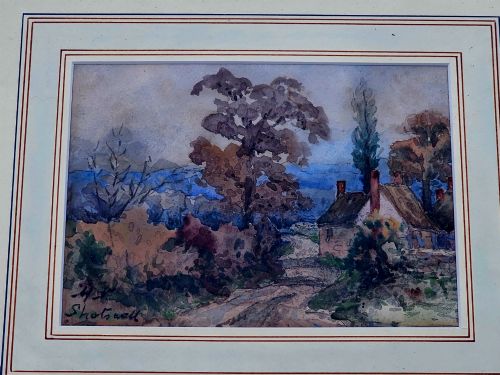
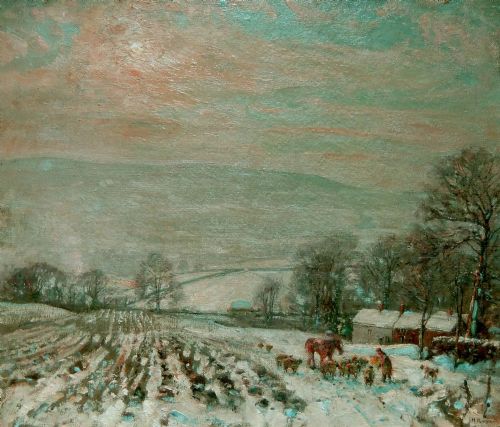
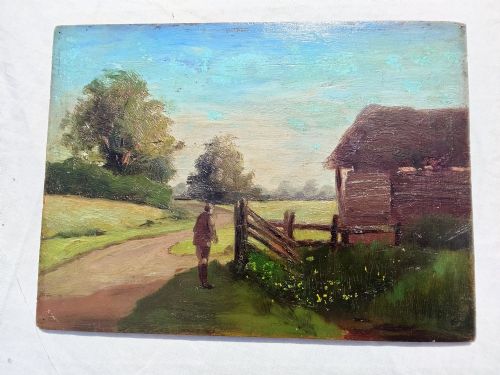
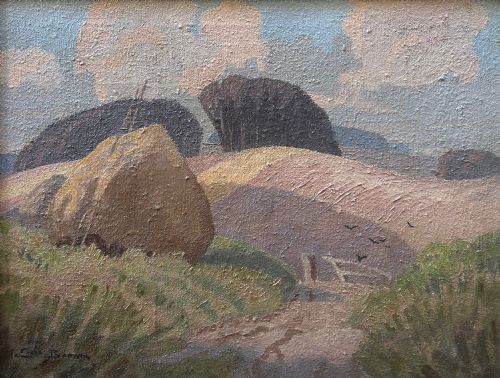

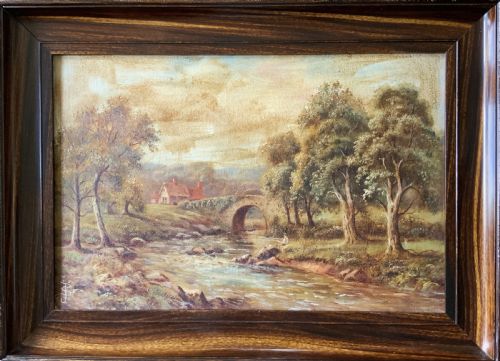


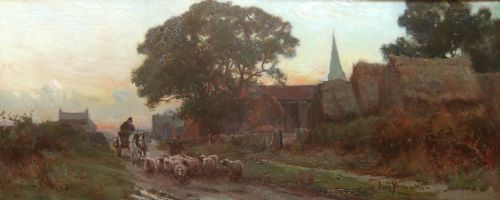


Brown Rural Landscape Painting
A brown rural landscape painting captures the quiet rhythm of the countryside through pastoral scenes and earthy tones.
Brown Rural Landscape Painting
A brown rural landscape painting portrays countryside views, farming scenes, and agricultural life rendered in earthy palettes. These works reflect the visual traditions of the nineteenth and early twentieth centuries, capturing agrarian subjects like hay carts, cottages, and working horses.
Most pieces encountered here originate from the Victorian and Edwardian eras through to the mid-century period. Common compositions include pastoral watercolours and oils depicting rivers, moorlands, and farmyards.
The selection ranges from detailed regional watercolours to broader impressionistic oil paintings on canvas and wooden board. Each piece records a vanished rural routine through subdued natural tones.
Determinants of Quality
Quality rests upon the artist's ability to handle light and atmosphere within a restricted earthen palette. Stronger works demonstrate confident brushwork and a convincing sense of space, distinguishing them from rigid or formulaic topographical records.
The choice of medium and surface interaction dictates the longevity and visual depth of the composition. Skilled handling of oil on canvas or pigment on paper preserves the immediacy of the pastoral scene without muddying the tonal contrasts.
Several canvases quietly record the stubborn patience of working shires and childhood ponies standing in autumn farmyards.
William Joseph Shayer Senior·John McDougal·Herbert Royle·Eric Brown·Herman S Melville·Sydney Yates Johnson·John Horace Hooper·Owen Bowen·Harry Freckleton·Raimond Louis Lecourt·Henry Charles Fox·Fred Lawson·James William Booth·Ernest Pile Bucknall·Samuel Joseph Clark·John Atkinson·William Greaves·John Linnell·Robert Finley McIntyre·Florence Hess·William Joseph Boyes·John Frederick Herring Jnr
The Brown Rural Landscape Painting Glossary
- Canvas
- A heavy woven fabric stretched across a wooden frame to serve as a firm painting support. It provides a textured surface well suited for traditional oil painting.
- Watercolour
- A paint consisting of pigment suspended in a water-soluble binder, typically applied to paper. It allows for translucent washes and delicate light effects.
- Impasto
- Paint applied thickly to a canvas or board so that the strokes stand visibly proud of the surface. This technique adds tactile depth and movement to foliage and earth.
- Pastoral
- A genre of art depicting rural life, shepherds, and agricultural scenes in an idealized or serene manner. It forms the primary subject matter for these countryside views.
- Provenance
- The documented history of a painting's ownership and origin. It helps verify the authenticity and dating of nineteenth and twentieth-century works.
Brown Rural Landscape Painting: Frequently Asked Questions
What subjects appear in these paintings?
The artworks primarily depict agricultural scenes, farmyards, haymaking, and river landscapes. Common elements include working horses, cottages, and sheep grazing in Yorkshire or regional countryside.
These compositions reflect the British pastoral tradition, focusing on the everyday rhythms of rural labourers and livestock.
How should I care for an oil painting?
Keep oil paintings away from direct sunlight and areas prone to extreme humidity or temperature fluctuations. Dust the surface gently with a soft, dry brush without applying pressure.
Avoid using water or chemical cleaners on the paint layer or the canvas back.
How do I identify a watercolour?
Watercolours are painted on paper supports and typically displayed under glass for protection. They show translucent washes of pigment where the white of the paper often serves as the brightest highlight.
Close inspection reveals paper fibres rather than the woven texture of a canvas.
What periods do these pieces span?
The works mostly date from the nineteenth century through the Victorian, Edwardian, and mid-century periods. Dates range from early nineteenth-century watercolours to mid-century British oils.
Styles transition from detailed nineteenth-century realism toward early twentieth-century impressionism.